
Houseplant
Rabbit's foot fern
Davallia fejeensis
Also known as Fiji davallia, Lacy paw fern, Davallia fejeensis
How to care for Davallia fejeensis. The Fijian fern whose furry rhizomes crawl over the pot rim, why they must never be buried, and how to grow one in a hanging basket.
At a glance
- Difficulty
- Moderate
- Water
- When the surface of the mix has just dried
- Light
- Medium indirect light or light shade. Never direct sun
- Temperature
- 16-24 deg C, and never below 10 deg C
- Humidity
- Moderate to high. The exposed rhizomes dry out faster than the roots
- Hardiness
- USDA 10-11, RHS H1b, hardy to 10 C
- Type
- Evergreen perennial fern, epiphytic and long-lived
- Height
- 30-50 cm
- Native to
- Fiji and the western Pacific
Humid tropical forest in Fiji and the western Pacific, growing as an epiphyte on trunks, branches and mossy rocks in warm shaded conditions with year-round rainfall. Growing on bark rather than soil is what produced the creeping surface rhizome and the fine airy root system, and it is why the plant needs an open mix and good air movement. It has no frost tolerance and is damaged below about 10 deg C.
Hardiness zones describe winter cold alone. Summer heat, humidity, rainfall and the length of the growing season decide as much, so treat the range as the outer limit rather than as a recommendation.
Not known to be toxic
Non-toxic. The ASPCA lists Davallia fejeensis among plants that are not harmful to cats, dogs or horses, and it appears on no RHS list of potentially harmful garden plants. There is no irritant sap, and neither the fronds nor the furry rhizomes present any hazard from handling or chewing. The rhizome fur is a covering of fine brown scales rather than anything irritant, and although it looks like an animal's paw it is a protective coating over a water-storing stem. This is one of the safest plants that can be grown in a hanging basket, which matters where a cat can reach a trailing plant.
Sources: ASPCA (Rabbit's Foot Fern, Davallia fejeensis), RHS potentially harmful garden plants
About
The rabbit’s foot fern is grown as much for its stems as for its fronds. Thick rhizomes covered in soft silvery brown fur creep across the surface of the pot, over the rim and down the outside, and on an established plant in a hanging basket they eventually surround the container completely.
Those rhizomes are not roots and must never be buried. They are stems, they store water, and they are built to sit exposed on bark in a humid forest. Potting one into compost with the rhizome covered is the standard way these plants are killed, usually within a few months and usually by somebody trying to tidy them.
The fronds themselves are the finest of any fern commonly grown indoors, cut into lace so delicate that a mature plant looks like green mist. That fineness is also why the plant wants better humidity than a blue star fern does.
Appearance and character
An epiphytic fern with creeping surface rhizomes 5 to 10 mm thick, densely covered in soft pale brown to silvery scales that give the furry paw appearance the plant is named for.
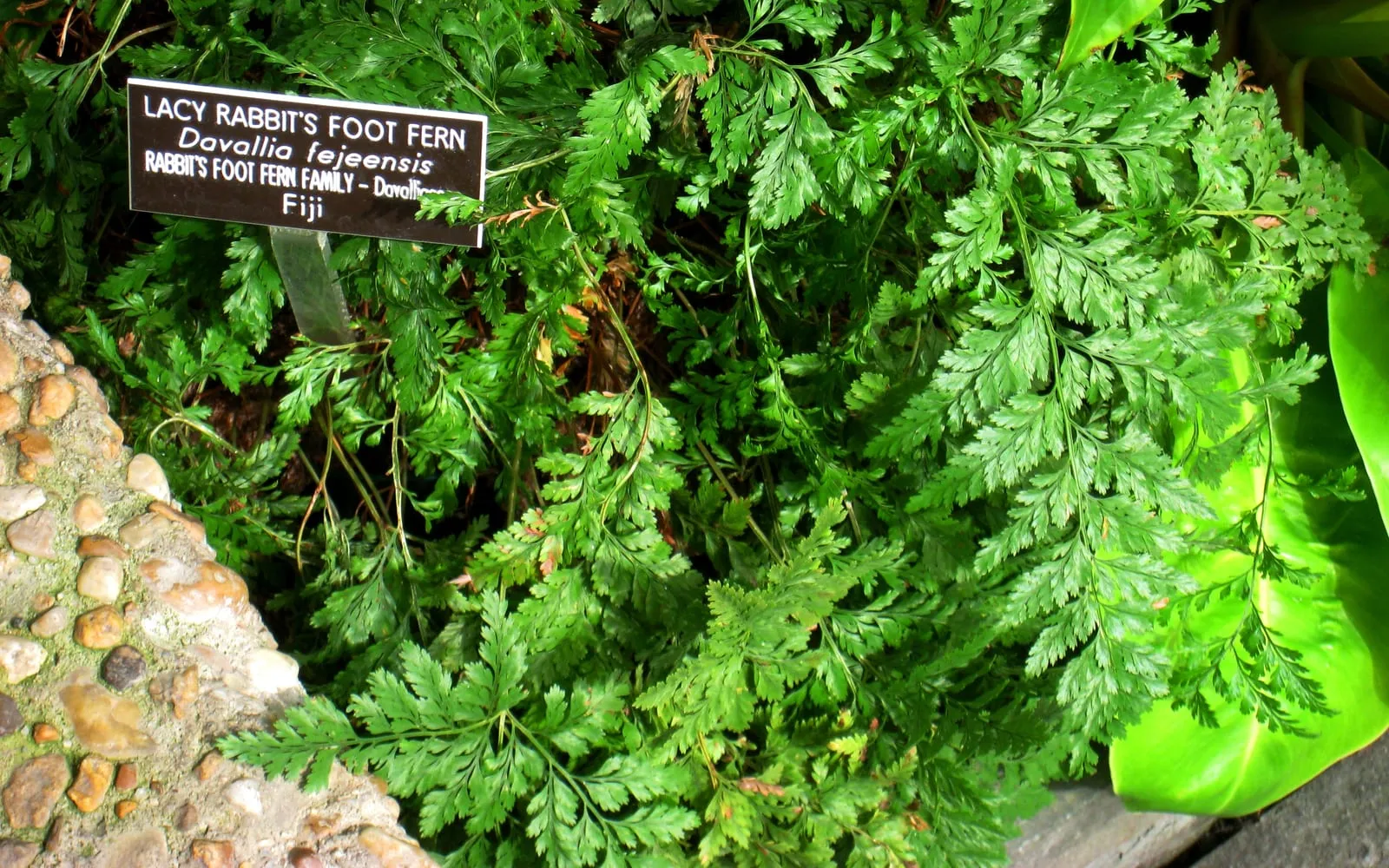
Fronds rise singly from the rhizomes on thin wiry stalks. Each is broadly triangular, 20 to 40 cm long, and divided three or four times into very fine segments, giving an intricate lacy texture and a light mid green colour.
Growth is moderate. The rhizomes extend a few centimetres a year and branch, and fronds are produced steadily through the growing season.
Individual fronds last around a year and then yellow and die, which is normal turnover rather than a problem.
Spore patches form as small cup-shaped structures at the margins of the frond segments on mature growth.
Davallia canariensis, the hare’s foot fern, is the closely related temperate species with coarser fronds and darker rhizomes, and the two are frequently confused and sold interchangeably.
Where it is from
Fiji and the surrounding western Pacific islands, growing as an epiphyte on tree trunks, branches and mossy rocks in humid tropical forest.
The epiphytic habit shapes everything. A fern rooted on bark is soaked by rain and drained within the hour, so it evolved a water-storing rhizome that lies exposed, a fine root system that needs air, and a tolerance of brief drying that a ground-layer fern lacks.
That exposure also creates the plant’s one unusual vulnerability. Because the rhizomes sit out in the open, they lose water to dry air directly rather than being protected by compost, so a room that would merely brown the tips of another fern shrivels the rhizomes of this one.
The genus contains around forty species across the Old World tropics and warm temperate regions, and several are grown as houseplants under the various furry paw names.
How it grows
Give it medium indirect light or light shade. It holds a dim position well.
Keep it out of direct sun, which scorches the fine fronds within a day.
Grow it in a very open bark-based mix, or mount it on bark or a wire basket lined with moss.
Keep the rhizomes on the surface. They will crawl over the rim and hang down the outside, which is the plant looking as it should rather than escaping.
Water when the surface of the mix has just dried, wetting the rhizomes as well as the mix, and let it drain completely.
Raise the humidity. This fern needs more than a blue star fern because both the fine fronds and the exposed rhizomes lose water quickly.
Keep it above 10 deg C and ideally between 16 and 24 deg C.
Feed every six to eight weeks at quarter strength through the growing season.
Grow it in a hanging basket or a raised pot if you can, since the trailing rhizomes are the point of the plant and need somewhere to go.
Repot every two or three years in spring, laying the rhizomes on the surface and never covering them.
Through the seasons
Spring brings the main flush of fronds and rhizome extension. Resume feeding, and repot now if the plant has outgrown its container.
Summer is steady growth. Water when the surface dries, feed every six to eight weeks, and maintain humidity.
Autumn slows it. Reduce watering and stop feeding from October.
Winter is the difficult season because of dry heated air. Keep the plant away from radiators, maintain humidity, and mist the rhizomes if they start to look shrivelled.
Care difficulty
Moderate, and the specific risks are unusual among houseplants.
Burying the rhizomes kills the plant, and it is the mistake most often made deliberately by somebody tidying up a plant that looks untidy.
Dry air affects this fern in two places at once, browning the fine fronds and shrivelling the exposed rhizomes.
Overwatering rots the rhizomes where they sit on wet compost, which is why the mix must be open and free-draining.
Mealybug in the rhizome fur is very hard to spot and harder to treat, since the scales hide the insects completely.
Watering
Water when the surface of the mix has just dried, roughly weekly in summer and every ten to fourteen days in winter.
Wet the rhizomes as well as the mix when you water, since they take up moisture directly.
Water thoroughly until it drains, then let the basket or pot drain fully rather than standing in water.
Use rainwater or filtered water where the supply is hard.
Underwatering shows as browning frond tips and, distinctively, as rhizomes that shrivel and go hard.
Overwatering shows as blackening, softening rhizomes and collapsing fronds.
Warning signs, diseases and pests
Shrivelled, hard, thin rhizomes are drought at the rhizome rather than at the root, usually from dry air. Raise the humidity and mist the rhizomes directly.
Blackening soft rhizomes are rot, from burial or from a mix that stays wet. Cut away the soft sections and repot into open bark with the rhizomes exposed.
Brown crisp frond tips are dry air or hard water.
Whole fronds yellowing one at a time is normal turnover, since each frond lasts about a year. Cut them off at the base.
Heavy frond loss shortly after a move is a normal shock response, and new fronds follow once the plant settles.
White cottony fluff among the rhizome scales is mealybug. Part the fur to check, since the scales hide them completely.
Small brown discs on the frond stalks are scale insects.
Scorched, bleached fronds are sun damage.
Growing environment
Medium indirect light or light shade.
Never direct sun.
Warm, 16 to 24 deg C, with 10 deg C as the floor.
Moderate to high humidity, higher than a blue star fern needs, because the exposed rhizomes lose water directly to the air.
A very open bark-based epiphyte mix in a hanging basket, a wide shallow pot or mounted on bark, always with the rhizomes on the surface.
A raised or hanging position so the rhizomes can trail.
Outdoors only in a warm humid frost-free climate in shade.
Avoid ordinary compost, buried rhizomes, radiators and direct sun.
Feeding
Feed every six to eight weeks from spring to early autumn with a balanced liquid houseplant fertiliser at quarter strength.
Stop feeding from mid-autumn to early spring.
Feed weakly. Ferns burn readily and show it as brown frond tips.
Repot every two or three years in spring into an open bark mix, laying the rhizomes on the surface.
Flush the mix occasionally with plain water to clear accumulated salts.
Troubleshooting
Can I bury the furry stems to tidy it up? No. They are rhizomes rather than roots, they store water, and they rot if covered. Burying them is the commonest way these plants are killed.
The furry stems have gone thin and hard. They have dried out, usually from dry air rather than dry compost. Raise the humidity and mist them directly.
A furry stem has gone black and soft. Rot, from burial or a mix that stays wet. Cut away the soft sections and repot into open bark with the rhizomes on the surface.
How is it different from a hare’s foot fern? Davallia canariensis is the hare’s foot, a temperate species with coarser fronds and darker rhizomes. This one is tropical, finer in the frond and needs more warmth.
Is it safe with a cat? Yes. The ASPCA lists it as non-toxic to cats, dogs and horses, which is useful in a hanging basket a cat can reach.
It dropped a lot of fronds after I moved it. Normal shock. New fronds follow once the plant settles into its new position.
What should I grow it in? An open bark-based mix, a mossed wire basket, or mounted on bark. Ordinary compost holds too much water around rhizomes built to sit exposed.
Fronds are yellowing one at a time. Normal turnover. Each frond lives about a year. Cut the dead ones off at the base.
Rabbit's foot fern problem guides
Not sure what is wrong? See the common houseplant pests guide.