
Houseplant
Hare's foot fern
Davallia canariensis
Also known as Canary Island davallia, Deer's foot fern, Davallia canariensis
How to care for Davallia canariensis. The Mediterranean fern that sheds its fronds in a dry summer and grows them back, why it takes a cold room, and how it differs from the Fijian one.
At a glance
- Difficulty
- Moderate
- Water
- When the top third of the mix has dried
- Light
- Medium indirect light or light shade. Never direct sun
- Temperature
- 10-21 deg C, and it takes brief spells near freezing
- Humidity
- Moderate. It tolerates drier air than the tropical davallias
- Hardiness
- USDA 9-11, RHS H3, hardy to -5 C
- Type
- Evergreen to summer-deciduous perennial fern, long-lived
- Height
- 20-40 cm
- Native to
- The western Mediterranean and the Canary Islands
Laurel forest and shaded rock in the Canary Islands, Madeira, Iberia and northwest Africa, in a Mediterranean climate of cool wet winters and hot dry summers. That summer drought is the fact that separates it from every other fern in cultivation, since the plant survives it by shedding its fronds and resting on its water-storing rhizomes. It is hardy to around -5 deg C on a sheltered wall and prefers a cool room to a warm one.
Hardiness zones describe winter cold alone. Summer heat, humidity, rainfall and the length of the growing season decide as much, so treat the range as the outer limit rather than as a recommendation.
Not known to be toxic
Non-toxic. The Davallia genus appears on no list of plants harmful to cats, dogs or horses, and the ASPCA lists its close relative Davallia fejeensis as non-toxic. It is absent from RHS lists of potentially harmful garden plants. There is no irritant sap and no hazard from handling the fronds or the furry rhizomes. Ferns as a group are among the safest plants to grow indoors, and this one adds the advantage of tolerating a cool unheated room, which puts it in porches and hallways where a curious animal is as likely to meet it as anywhere else in the house.
Sources: ASPCA (Rabbit's Foot Fern, Davallia fejeensis), RHS potentially harmful garden plants
About
The hare’s foot fern is the temperate member of a mostly tropical genus, and the difference shows in everything about how it is grown. It comes from a Mediterranean climate of wet winters and parched summers, and it has arranged its year around that.
The consequence is a fern that may shed most of its fronds in high summer and look finished. It is not. The furry rhizomes hold water and sit out the drought, and fronds return with cooler damper conditions in autumn. A plant treated as a year-round evergreen and watered heavily through a hot spell rots instead.
It is also the cold-tolerant one. Where a Fijian rabbit’s foot fern wants a warm room, this species prefers an unheated hall or a cool porch, and on a sheltered wall outdoors it survives around -5 deg C.
Appearance and character
An epiphytic and lithophytic fern with stout creeping rhizomes 1 to 1.5 cm thick, covered in dense brown scales that are coarser and darker than those of the tropical davallias.
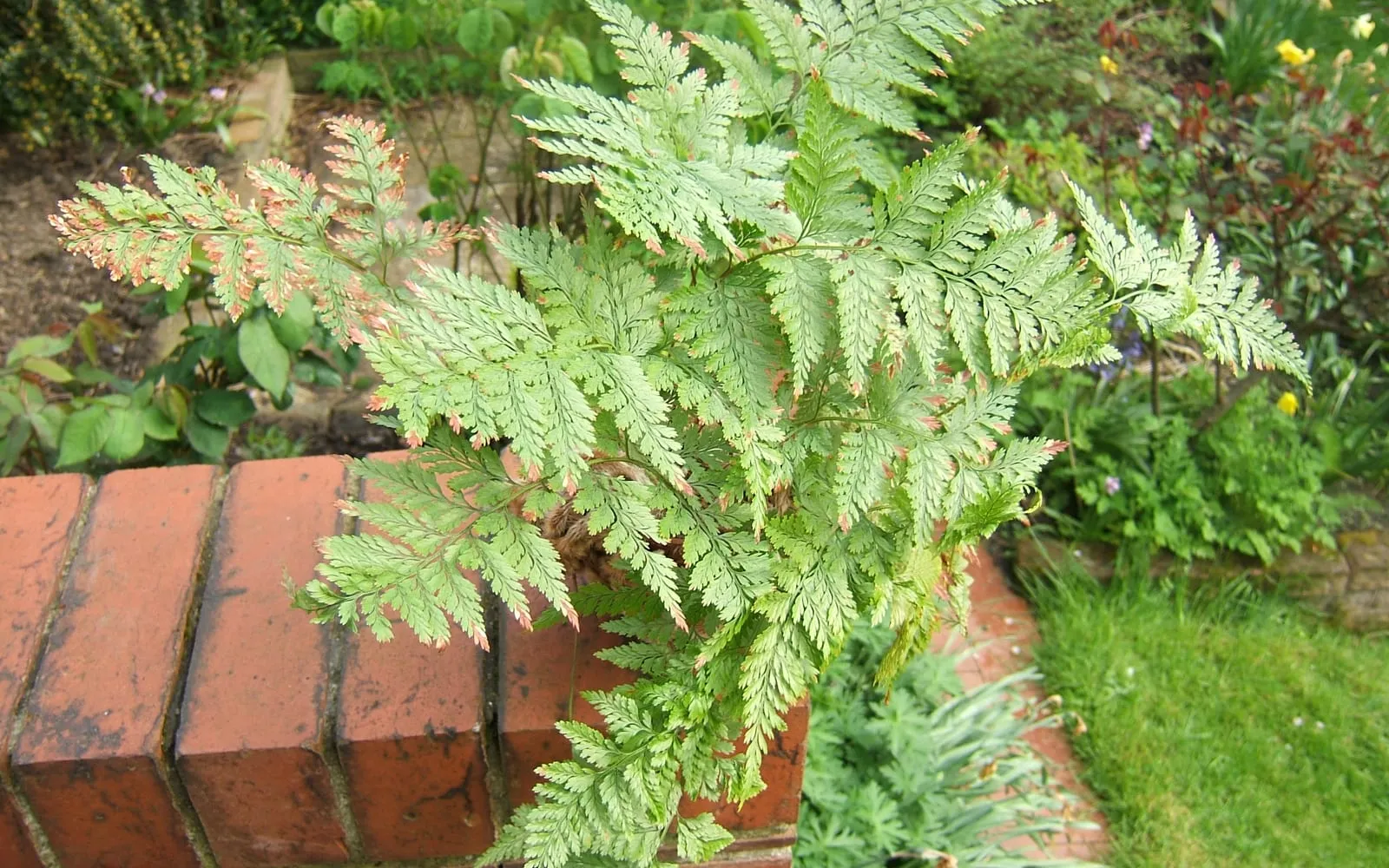
Fronds rise singly from the rhizome on stiff stalks. Each is broadly triangular, 20 to 40 cm long, and divided three or four times, though the segments are noticeably broader and more leathery than the fine lace of Davallia fejeensis.
The texture is the practical difference between the two species. A thicker frond loses water more slowly, which is what lets this plant cope with drier air.
Growth is moderate, with the rhizomes extending and branching across the surface and over the pot rim.
Spore patches form as small cups set just inside the margins of the frond segments.
Fronds may be shed entirely in a hot dry summer and regrown in autumn, or held year round in a cool humid position.
Where it is from
The Canary Islands, Madeira, Portugal, Spain and northwest Africa, growing on shaded rocks, walls and tree trunks, particularly in the laurel forests of the Atlantic islands.
The Mediterranean climate it evolved in has the growing season in the wrong half of the year by houseplant standards. Rain falls in the cool months and summer is hot and dry, so the plant grows through autumn, winter and spring and rests when it is warmest.
That inverted year is why a plant indoors sometimes loses fronds in July while its owner increases the watering, which is the response most likely to kill it.
Growing on rock and bark rather than in soil explains the surface rhizome and the need for a sharply drained open mix, exactly as it does in the tropical davallias.
The laurel forests of Madeira and the Canaries where it is most abundant are relict humid forests, a surviving fragment of a vegetation type that once covered much of the Mediterranean basin.
How it grows
Give it medium indirect light or light shade.
Keep it out of direct sun.
Keep it cool. Between 10 and 21 deg C suits it, and it tolerates brief spells near freezing. A heated living room is the wrong place for it.
Grow it in a very open mix, bark-based with added grit, in a shallow pot or mounted.
Keep the rhizomes on the surface, never buried.
Water when the top third of the mix has dried, thoroughly, and drain completely.
Reduce watering sharply if the plant sheds fronds in summer, giving just enough to stop the rhizomes shrivelling until new growth appears.
Feed at quarter strength every six to eight weeks during active growth, which for this species means autumn through spring rather than summer.
Repot in early autumn as growth restarts rather than in spring, laying the rhizomes on the surface.
Through the seasons
Autumn is the start of the growing year for this fern. New fronds appear as conditions cool and dampen. Resume feeding and repot now.
Winter is active growth in a cool room. Water when the top third dries and keep feeding lightly. This is the opposite of most houseplants.
Spring continues the growth and is the best time to divide the rhizomes.
Summer may bring a rest, with fronds yellowing and shedding in heat. Cut watering back hard, keep the plant cool and shaded, and wait rather than treating it.
Care difficulty
Moderate, and the difficulty is understanding the calendar rather than anything technical.
Summer frond loss is the thing that catches people out. A plant that browns in July is resting, and the correct response is less water rather than more.
Warm rooms are the second problem. This is a cool-climate fern and central heating stresses it year round.
Burying the rhizomes rots them, as with every davallia.
Overwatering during the summer rest is the most reliable way to kill an established plant.
Watering
Water when the top third of the mix has dried, thoroughly, and drain completely.
Water more freely through autumn, winter and spring while the plant is growing.
Cut back hard in summer, particularly if fronds are being shed, giving only enough to keep the rhizomes plump.
Wet the rhizomes when you water, since they absorb moisture directly.
Use rainwater or filtered water where the supply is hard.
Underwatering shows as shrivelled hard rhizomes, which is the signal to water even during a rest.
Overwatering shows as blackening soft rhizomes and collapsing fronds.
Warning signs, diseases and pests
Fronds yellowing and dropping in summer heat is a normal rest. Reduce watering, keep the plant cool, and wait for autumn.
Shrivelled hard rhizomes are drought and need water regardless of the season.
Blackening soft rhizomes are rot from burial or from a mix that stays wet.
Brown crisp frond tips are dry heated air or hard water.
White cottony fluff among the rhizome scales is mealybug, hidden by the coarse brown fur.
Small brown discs on the frond stalks are scale insects.
A plant that never produces fronds in autumn is usually too warm, since the cue for growth is cooling rather than lengthening days.
Scorched bleached fronds are sun damage.
Growing environment
Medium indirect light or light shade.
Never direct sun.
Cool, 10 to 21 deg C, and it takes brief spells near freezing. An unheated hall, porch or cool conservatory suits it better than a living room.
Moderate humidity, and it tolerates drier air than the tropical davallias.
A very open bark-based mix with grit, in a shallow pot or mounted, with the rhizomes on the surface.
Outdoors on a shaded sheltered wall in USDA 9 and warmer, where established plants take around -5 deg C.
Avoid warm rooms, radiators, buried rhizomes and heavy summer watering.
Feeding
Feed every six to eight weeks at quarter strength during active growth, which runs from autumn through spring for this species.
Stop feeding entirely through any summer rest.
Feed weakly, since ferns burn readily.
Repot in early autumn rather than spring, as growth restarts, keeping the rhizomes above the surface.
Flush the mix occasionally with plain water to clear salts.
Troubleshooting
It has lost most of its fronds in summer. A normal rest. This is a Mediterranean fern with its growing season in the cool months, and it sheds fronds through hot dry weather. Cut watering back and wait for autumn.
How is it different from a rabbit’s foot fern? Davallia fejeensis is tropical, finer in the frond and wants warmth. This one is Mediterranean, coarser, cold-tolerant and grows through the cool half of the year.
Can I bury the furry stems? No. They are water-storing rhizomes built to sit on the surface and they rot when covered.
Where should I put it? Somewhere cool and shaded. An unheated hallway, porch or cool conservatory suits it far better than a heated room.
Is it safe with pets? Yes. Davallias appear on no list of plants harmful to cats, dogs or horses.
When should I repot it? Early autumn, as growth restarts, rather than spring. This fern’s year runs differently from most houseplants.
Can it live outside? On a shaded sheltered wall in USDA 9 and warmer, where established plants take around -5 deg C.
The rhizomes have gone thin and hard. Drought. Water it even if the plant is resting, since shrivelled rhizomes will not recover once they pass a certain point.
Hare's foot fern problem guides
Not sure what is wrong? See the common houseplant pests guide.