
Edible
Psyllium
Plantago psyllium
Also known as Fleawort, Black psyllium, French psyllium, Plantago afra
How to grow Plantago psyllium, the plantain grown for its seed. A hardy annual sown in April, the mucilage that swells in water, and the three species sold under one name.
At a glance
- Difficulty
- Easy
- Water
- To establish the sowing, then rarely
- Light
- Full sun
- Temperature
- Hardy annual, sown in spring after the worst frosts
- Hardiness
- USDA 9-11, RHS H3, hardy to -5 C
- Type
- Hardy annual
- Height
- 20-50 cm
- Native to
- the Mediterranean basin, western Asia
- Best month
- April in the Northern Hemisphere, October in the Southern Hemisphere
A dry ripening is the whole requirement, because the husk swells on contact with water and rain on a maturing crop destroys it. That confines the crop to arid regions, and India grows almost all of it. Sow in spring and harvest before the autumn rains.
Hardiness zones describe winter cold alone. Summer heat, humidity, rainfall and the length of the growing season decide as much, so treat the range as the outer limit rather than as a recommendation.
Every month named in this guide is for the temperate Northern Hemisphere. If you garden in the Southern Hemisphere, shift each one by six months, so April becomes October. Closer to the equator the wet and dry seasons matter more than the calendar, and the shift stops being a useful guide.
Not known to be toxic
- Safe to eat
- The seed and its husk, which are a food ingredient
Psyllium seed and husk are food. They are sold worldwide as a fibre supplement and used as a binder in gluten-free baking, and the European Medicines Agency maintains herbal monographs on the seed and on the husk of the closely related Plantago ovata. The plant does not appear on the RHS list of potentially harmful garden plants, and the ASPCA does not list it among plants toxic to dogs, cats or horses. The instruction on every packet belongs in a growing guide too, because it describes a physical property rather than a toxicity. Psyllium absorbs many times its weight in water and swells, so it has to be taken with plenty of liquid, and taking it dry risks obstruction in the throat or the gut. Occupational allergy to psyllium dust is documented among people who handle it in bulk, such as pharmacy and food industry workers, which is a reason to avoid breathing the dust when threshing a home-grown crop.
Sources: European Medicines Agency herbal monograph, plantaginis ovatae semen, European Medicines Agency herbal monograph, plantaginis ovatae seminis tegumentum, RHS potentially harmful garden plants, ASPCA toxic and non-toxic plants
About
Psyllium is a plantain grown for its seed, and the seed is grown for what happens when it meets water. Each one is coated in a layer of mucilage that swells into a clear gel many times the seed’s volume, and that property is the whole commercial basis of the crop, in fibre supplements, in gluten-free baking and in pharmaceutical formulations.
Three species are sold under the name. Plantago ovata, the blond or ispaghula psyllium, is grown by the hectare in Gujarat and Rajasthan and supplies most of the world market. Plantago psyllium, also written Plantago afra, is the black or French psyllium of the Mediterranean, and Plantago indica is a third. This guide follows the app and covers Plantago psyllium.
For a grower in a cool climate it is a straightforward hardy annual. Sow in April, thin, water once and leave it in the poorest sunniest corner you have, and cut the seed heads in August. The interest is in the seed rather than in the look of the plant.
Appearance and character
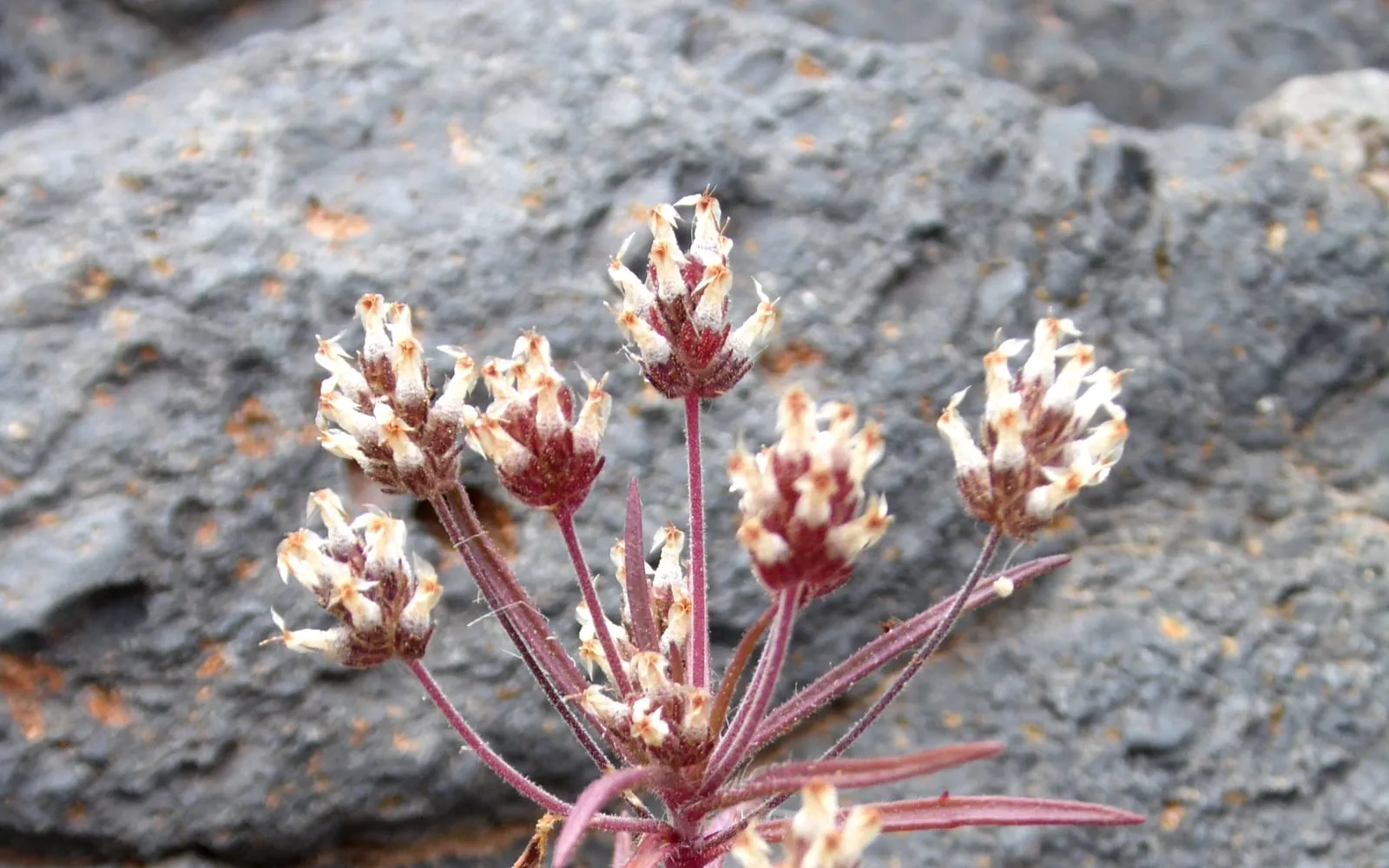
The plant branches from the base into a rather untidy upright bush 20 to 50 cm tall, with stems that are hairy and sometimes sticky to the touch, particularly towards the top.
The leaves separate it from the plantains people know as lawn weeds. Where greater plantain has broad ribbed leaves in a flat rosette, psyllium carries narrow linear leaves 2 to 8 cm long in opposite pairs up the stem, which makes it look more like a small flax than a plantain.
Flower heads are short and dense, about 1 cm long, on long stalks from the upper leaf axils, each holding many tiny brownish flowers with papery bracts. The seeds that follow are small, shiny, dark brown and boat-shaped, and two sit in each capsule.
Where it is from
Plantago psyllium is a Mediterranean plant, growing wild through southern Europe, north Africa and western Asia on dry sandy ground, roadsides and open scrub. It is an annual of poor open habitats rather than a plant of grassland or woodland.
It has a long European history. Psyllium seed appears in classical and medieval European medicine, and cultivation in southern France gave the name French psyllium to the black-seeded form.
Most modern production has moved to India, where Plantago ovata is grown on a large scale in Gujarat and exported as husk. Plantago psyllium is a minor crop by comparison and is grown mostly in southern Europe.
How it grows
It behaves as a spring-sown annual with a fast cycle. Seed germinates in ten to fifteen days in warm soil, the plant branches through May and June, flowers from June and ripens seed from late July.
The whole life cycle takes about four months, so a single sowing in April gives a crop in August. Sowings made much later run into autumn weather at the point where the seed needs to ripen dry.
Ripening is uneven, since the flower heads on one plant mature over several weeks. Growers cut the whole plant when most heads have browned and finish the drying under cover, which avoids losing early seed to shedding.
Through the seasons
Sow in April, thinly, in shallow drills 20 cm apart in a sunny well-drained bed. Thin the seedlings to 10 cm. The seed is small and needs only a light covering.
The plant grows through May and June with no attention beyond weeding. Water only to get it established, since it is adapted to dry ground and produces more seed on a lean regime.
Cut the whole plant at the base in August when most heads have turned brown. Dry it under cover on a sheet for a fortnight, then rub the heads to release the seed, and winnow in a light breeze. Wear a mask, since the dust is an irritant.
Care difficulty
Easy, and one of the least demanding plants in this collection. It wants a sunny spot, poor soil and no interference.
The two things that go wrong are wet and weeds. A wet July spoils the ripening seed and encourages downy mildew, and a young plant in a weedy bed is out-grown, since psyllium is not a strong competitor in its first month.
Harvest is the fiddly part rather than the growing. The seed is small, the heads ripen unevenly, and separating seed from chaff takes patience with a sieve and a breeze.
Watering
Water lightly to get the seed up, then leave the plant alone. It comes from dry Mediterranean ground and produces its best seed without irrigation.
Overwatering makes a soft leafy plant more prone to mildew and does nothing for seed yield. In an ordinary cool summer the crop needs no watering at all after germination.
If a drought is severe enough to wilt the plants during flowering, one deep soak protects the seed set. Anything beyond that is unnecessary.
Warning signs, diseases and pests
Slugs take seedlings, which is the main early loss and the reason to sow more thickly than the final spacing.
Downy mildew appears in wet summers as yellow blotching on the upper leaf surface with grey growth beneath, and it is worse on crowded plants. Wider spacing and a sunny open site prevent it better than anything sprayed.
Birds find ripening seed and can take a good share of a small patch. Netting from late July is worthwhile. Rain at harvest is the other loss, since wet seed heads mould rather than shed cleanly, so watch the forecast and cut on a dry spell.
Growing environment
Full sun and an open position. Shade produces drawn plants with few flower heads.
Soil should be light, sandy and free-draining, and poor rather than rich. A sunny bank, a gravel bed or the thin soil at the edge of a path all suit it better than a prepared vegetable bed.
It is hardy enough to sow in April in a cool climate, though a cold wet spring delays germination. There is no advantage in sowing early, since the seed sits until the soil warms.
Feeding
None. Psyllium is a plant of poor Mediterranean ground and produces more seed on lean soil than on rich.
Fertiliser produces tall soft plants that flop, catch mildew and set no more seed than a short hard-grown one.
If the soil is exhausted, a light dressing of general fertiliser before sowing is enough for the season. Nothing further is needed at any point.
Troubleshooting
Is this the same as the psyllium husk in the shops? Usually not. Most commercial husk comes from Plantago ovata, the blond or ispaghula psyllium grown in India. This species, Plantago psyllium, is the black or French psyllium, and the seed works in the same way.
Which part is used? The seed and, in the commercial product, the husk separated from it. The husk is the mucilage-bearing outer layer and swells most.
How do I harvest such small seed? Cut whole plants when most heads have browned, dry them under cover on a sheet for a fortnight, rub the heads by hand and winnow the chaff off in a light breeze. Wear a dust mask.
Is it related to the plantain weed in my lawn? Yes, the same genus. Greater plantain and ribwort plantain are relatives, and their seeds carry mucilage too, though in much smaller quantity.
Can I sow it in autumn? It is better sown in spring where winters are wet. Autumn sowings sit through the winter and give little advantage, and the plant needs warm dry weather to ripen its seed.
Why did my plants collapse in July? Downy mildew after a wet spell, most likely, particularly if they were crowded. Sow thinner and choose an open sunny position.
Does it self-seed? Yes, in open sandy ground it comes up again the following year from shed seed. It is easy to remove and does not persist in a closed border.