
Outdoor plant
Border phlox
Phlox paniculata
Also known as Garden phlox, Perennial phlox, Summer phlox
How to grow border phlox, Phlox paniculata. Scented heads through August, beating powdery mildew by thinning the stems, and the eelworm that kills whole clumps.
At a glance
- Difficulty
- Moderate
- Water
- Regular through the growing season
- Light
- Full sun to light shade
- Temperature
- Fully hardy, to about -35 deg C
- Hardiness
- USDA 4-8, RHS H7, hardy to -35 C
- Type
- Herbaceous perennial, long lived and dying back each winter
- Height
- 90-120 cm
- Native to
- Eastern and central North America, from New York south to Georgia
- Best month
- August in the Northern Hemisphere, February in the Southern Hemisphere
Powdery mildew is the problem that decides whether this plant looks well where you are. It is worst in humid air, in still positions and on dry roots, so space the plants for airflow, keep the soil moist and choose a resistant cultivar such as David or Jeana. Phlox eelworm distorts and thins the stems and needs plants lifted and destroyed rather than treated.
Hardiness zones describe winter cold alone. Summer heat, humidity, rainfall and the length of the growing season decide as much, so treat the range as the outer limit rather than as a recommendation.
Every month named in this guide is for the temperate Northern Hemisphere. If you garden in the Southern Hemisphere, shift each one by six months, so August becomes February. Closer to the equator the wet and dry seasons matter more than the calendar, and the shift stops being a useful guide.
Not known to be toxic
Border phlox is not listed by the RHS as a potentially harmful garden plant and is not recorded by the ASPCA as toxic to cats, dogs or horses. No part of it is a recognised poisoning hazard and it is a sound choice for a garden used by children and pets. The flowers are edible and are used as a garnish, with a mild sweetness, and several North American peoples used preparations of the roots and leaves medicinally. Where a plant is unlisted by both sources rather than positively assessed, the correct reading is that no hazard has been recorded rather than that one has been ruled out, so there is no reason to encourage anybody to eat it in quantity. Some people find the foliage mildly irritating to handle in hot weather, which is worth knowing when thinning the stems in spring, and gloves solve it. The scent is strong in the evening and a few people find it gives them a headache in a small enclosed garden.
Sources: RHS potentially harmful garden plants, ASPCA toxic and non-toxic plants
About
Border phlox flowers in August, when a great many herbaceous borders have run out of things to do, and it is scented in the evening.
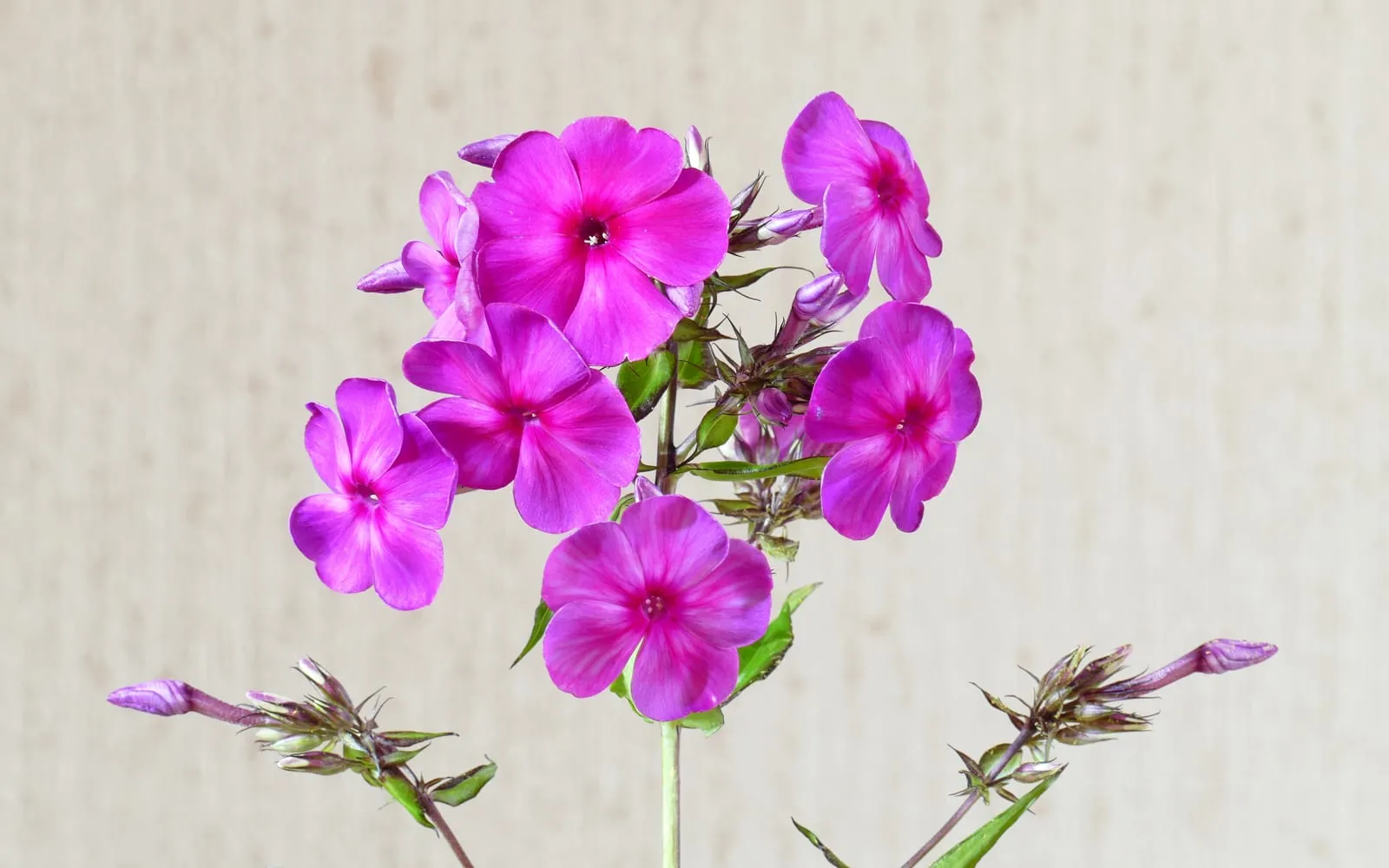
The heads are dense and domed, up to 20 cm across, in white, pink, salmon, magenta, lilac, purple and red, many with a contrasting eye. A group of three plants carries a border through the second half of summer and into September.
The problem is powdery mildew. Phlox is notorious for it, and by August a badly grown clump is a set of grey-white leaves under a good flower head.
Most of the cure is cultural rather than chemical. Mildew on phlox follows dry roots and crowded stems. Give it deep rich soil, a thick mulch, watering at the base rather than over the leaves, and thinning the stems in spring so air moves through the clump. Doing those four things makes far more difference than spraying.
Phlox eelworm is the other problem and it is more serious, since it distorts the growth, kills the clump and stays in the soil. Buying clean stock and propagating from root cuttings rather than division is how growers deal with it.
Appearance and character
A herbaceous perennial reaching 90 to 120 cm, forming a clump of upright unbranched leafy stems that die back each winter.
Leaves are lance-shaped, 8 to 12 cm long, mid-green, held in opposite pairs up the stem and closely spaced.
Flowers open from late July through August and September in dense domed panicles 10 to 20 cm across at the top of each stem.
Each floret is about 2.5 cm across with five flat lobes and a narrow tube, and many cultivars carry a contrasting eye at the centre.
Colours run through white, pale pink, salmon, coral, magenta, lilac, violet, purple and near-red. Bicolours and picotees are common.
Scent is strong and sweet, and it carries furthest in the evening, which is when moths work it.
Some cultivars carry variegated foliage. ‘Norah Leigh’ has cream-edged leaves and pale lilac flowers.
Self-sown seedlings revert towards a hard magenta, which is why old gardens end up with magenta phlox where something better was planted.
Where it is from
Eastern and central North America, from New York and Pennsylvania south to Georgia and west to Arkansas, growing in damp open woodland, along stream banks and in meadows.
That habitat sets the requirements. Sun or light shade, deep soil, and moisture through the growing season.
It reached Britain in the eighteenth century and became a fixture of the Victorian and Edwardian herbaceous border.
German and Dutch breeders did most of the twentieth-century work, and Karl Foerster’s nursery near Berlin produced a number of the cultivars still grown.
The name is Greek for flame, describing the intensity of the flower colour.
Phlox paniculata has naturalised in parts of Europe. In Britain it appears occasionally as a garden escape and has not become a problem.
Phlox eelworm, Ditylenchus dipsaci, is a microscopic nematode that has been a recognised problem in the crop since the nineteenth century and is the reason commercial propagation is done from root cuttings.
How it grows
Plant in autumn or spring into deep, rich, moisture-retentive soil.
Prepare the ground generously with compost or well-rotted manure worked in deeply. Phlox is a hungry plant and the soil does most of the work in preventing mildew.
Choose full sun or light shade, with air movement around the plant rather than a still enclosed corner.
Space plants 45 to 60 cm apart, which matters because crowding is half the mildew problem.
Thin the stems in spring. When the shoots are about 15 cm tall, reduce an established clump to five or seven of the strongest stems and cut the rest out at the base. This is the single most effective thing you can do about mildew, and it produces bigger flower heads at the same time.
Mulch thickly every spring with compost, keeping it clear of the crown.
Water at the base and not over the foliage. Wet leaves and dry roots is the exact combination mildew wants.
Feed once in spring, and again after the first flush if the soil is poor.
Deadhead the spent heads by cutting back to the first pair of side shoots, which often gives a second smaller flowering in September and stops seedlings appearing.
Cut the stems to the ground in late autumn or winter and clear the debris.
Divide every three or four years in spring or autumn, discarding the woody centre.
Propagate from root cuttings in winter rather than by division if eelworm is a concern, since the nematode lives in the stems and not the roots. Cut pieces of thick root 5 cm long, lay them flat in a tray of compost and cover lightly.
Buy from a reputable nursery and check for eelworm damage before planting.
Through the seasons
Winter is dormant, and this is the season for taking root cuttings.
Spring brings the shoots up in April, and they are thinned to five or seven in May when about 15 cm tall.
Summer flowers from late July through August, with mildew arriving in a dry season if the plant is crowded or thirsty.
Autumn continues the flowering into September, and the stems are cut down and cleared once they die back.
Care difficulty
Moderate. The plant grows readily and two diseases spoil it.
Powdery mildew is near-universal on badly sited or badly grown phlox and largely preventable by soil preparation, mulching, stem thinning and base watering.
Phlox eelworm is uncommon and much more serious, since there is no treatment and the soil stays infested.
Beyond that it is hardy, long-lived, needs no staking in shelter, and flowers reliably at a time of year when a border needs it.
Watering
Water regularly and generously through the growing season. Phlox is thirsty and drought is what brings on mildew.
Soak thoroughly at the base rather than sprinkling over the foliage.
Water in the morning rather than the evening in humid weather, so any splashed leaves dry quickly.
Mulch thickly in spring, which conserves more moisture than watering adds and is the better investment.
Established plants in deep prepared soil manage far better than plants in thin ground, which is worth the effort at planting.
Warning signs, diseases and pests
White powdery coating on the leaves from midsummer, starting at the base of the stems, is powdery mildew. Thin the stems in spring, mulch thickly, water at the base, space the plants, and remove the worst affected leaves. Cut the whole plant down after flowering and clear the debris. Some cultivars are markedly more resistant, so choose those when replacing.
Narrow, thread-like distorted leaves at the top of the stems, with swollen split stems and stunted growth, is phlox eelworm. There is no treatment. Dig up and burn the whole plant, do not compost it, and do not replant phlox in that soil for several years. Propagate clean stock from root cuttings rather than division.
Shoots eaten in spring is slugs and snails. Protect the clump as the shoots emerge.
Stems flopping in wind or heavy rain is usually an exposed position or an over-fed plant. Support with a ring in exposed borders.
Magenta flowers appearing where a named cultivar was planted means self-sown seedlings have taken over. Deadhead to stop it and remove the seedlings.
Leaves browning from the base upwards in a dry summer is drought.
Fewer and smaller heads on an old clump is congestion. Divide it and discard the centre.
Growing environment
Full sun to light shade, with some air movement rather than a still enclosed corner.
Deep, rich, moisture-retentive but free-draining soil with plenty of organic matter. This is the foundation of growing it well.
Fully hardy to about -35 deg C.
Allow 45 to 60 cm per plant, and resist planting them closer, since crowding causes mildew.
It suits a herbaceous border, a cottage garden, a mixed border with shrubs or a cutting bed.
Plant it towards the back or middle of a border and put something in front, since the lower leaves are the first to mildew and are worth hiding.
Grow it with plants that flower at the same time. Rudbeckia, echinacea, helenium, japanese anemone and grasses all overlap with it in August.
Its wildlife value is good. Butterflies and long-tongued bees work the flowers by day and moths work them at dusk, when the scent is strongest.
Choose mildew-resistant cultivars when buying. ‘David’ in white and several of the modern introductions hold clean foliage far better than the older sorts.
Feeding
Feed in spring with a balanced general fertiliser as the shoots emerge.
Feed again after the first flush on poor soil.
Mulch thickly every spring with compost or well-rotted manure, keeping it clear of the crown. This matters more than the fertiliser because it holds moisture.
Avoid heavy nitrogen alone, which gives soft growth that flops and mildews. Balanced feed with potash is better.
A weak plant with small heads is usually short of moisture and organic matter rather than short of feed.
Troubleshooting
The leaves have gone white and powdery. Powdery mildew, which follows dry roots and crowded stems. Thin the clump to five or seven stems in spring, mulch thickly, water at the base rather than over the leaves, and space plants 45 to 60 cm apart.
How do I thin it? When the spring shoots are about 15 cm tall, cut out all but five or seven of the strongest at the base. Air moves through the clump and the remaining heads are bigger.
The top leaves have gone thin and thread-like and the stems are split. Phlox eelworm. There is no cure. Dig up and burn the plant, do not compost it, and do not replant phlox in that ground for several years.
All my phlox have turned magenta. Self-sown seedlings have replaced the named cultivars. Deadhead after flowering and pull the seedlings out.
Will it flower twice? Often, in a smaller way. Cut the spent heads back to the first pair of side shoots and many cultivars give a second flush in September.
When do I divide it? Every three or four years in spring or autumn, discarding the woody centre and replanting the outer pieces.
How should I propagate it? From root cuttings taken in winter, which avoids carrying eelworm into new plants. Cut 5 cm lengths of thick root, lay them flat in compost and cover lightly.
Which cultivars resist mildew? ‘David’ is the best-known white with clean foliage, and several modern introductions are bred for resistance. Ask at the nursery, since it varies more between cultivars than most people expect.
Is it safe for children and pets? Yes. It is not listed as harmful by the RHS and not recorded as toxic by the ASPCA.