
Edible
Fig
Ficus carica
Also known as Common fig, Edible fig
How to grow figs, Ficus carica. Restricting the roots to force fruiting, which embryo figs to keep over winter, and the sap that burns skin in sunlight.
At a glance
- Difficulty
- Moderate
- Water
- Regularly through summer, and sparingly in winter
- Light
- Full sun against a south or west-facing wall
- Temperature
- Hardy to about -10 deg C in wood. The embryo figs are tender
- Hardiness
- USDA 7-10, RHS H4, hardy to -12 C
- Type
- Deciduous tree or large shrub, very long-lived
- Height
- 2-3 m with restricted roots, 8 m or more unrestricted
- Native to
- Western Asia and the eastern Mediterranean
- Best month
- August in the Northern Hemisphere, February in the Southern Hemisphere
The eastern Mediterranean and western Asia. It is hardy to about -12 deg C with the top killed and the roots surviving colder, so the limit on fruit is summer heat rather than winter cold. Common figs set fruit without pollination; Smyrna types need the fig wasp and are worth avoiding outside the regions that have it.
Hardiness zones describe winter cold alone. Summer heat, humidity, rainfall and the length of the growing season decide as much, so treat the range as the outer limit rather than as a recommendation.
Every month named in this guide is for the temperate Northern Hemisphere. If you garden in the Southern Hemisphere, shift each one by six months, so August becomes February. Closer to the equator the wet and dry seasons matter more than the calendar, and the shift stops being a useful guide.
Toxic if eaten
- Safe to eat
- The ripe fruit
- Do not eat
- The milky sap in leaves, stems and unripe fruit
- Harm from
- Handling it and eating it
- Affects
- People, cats and dogs
The ripe fruit is food and the sap is an irritant that deserves respect. Break a fig leaf or pick an unripe fruit and it bleeds a white latex containing ficin, a proteolytic enzyme, along with furanocoumarins. On skin that latex causes irritation and, in sunlight, phytophotodermatitis, a delayed chemical burn producing redness, blistering and long-lasting brown staining. Pruning a fig on a sunny day in shorts and a t-shirt is a recognised way to acquire painful forearms a day later. Wear gloves and long sleeves, wash any sap off promptly, and keep the area out of the sun for a day or two. The ASPCA lists Ficus carica as toxic to cats and dogs, again through the sap, causing mouth irritation, drooling, vomiting and skin inflammation on contact. Ripe figs themselves are harmless to eat and are fine for people. Unripe figs are unpleasant and full of the same latex, so there is no reason to eat one.
Sources: ASPCA (Fig, Ficus carica), RHS potentially harmful garden plants
About
Figs fruit properly in a cool climate only when you treat them badly. A fig planted into good soil with room to spread makes a magnificent leafy tree and almost no fruit, because the plant has no reason to reproduce while conditions are that comfortable.
Restricting the roots reverses it. Confine them to a pot, or to a lined pit of about 60 cm each way, and the plant switches from growing to fruiting.
The second thing to understand is the timing of the crop. In a cool climate the figs that ripen next August are already on the tree as pea-sized embryos this autumn, and getting those through the winter is the whole game.
Appearance and character
A deciduous tree or large shrub with smooth pale grey bark and a spreading habit, usually multi-stemmed in cool climates.
The leaves are how you know a fig at a glance. They grow up to 25 cm across, thick and rough on top, and each one is cut deeply into three or five blunt fingers. Crush one and the smell is unmistakable.
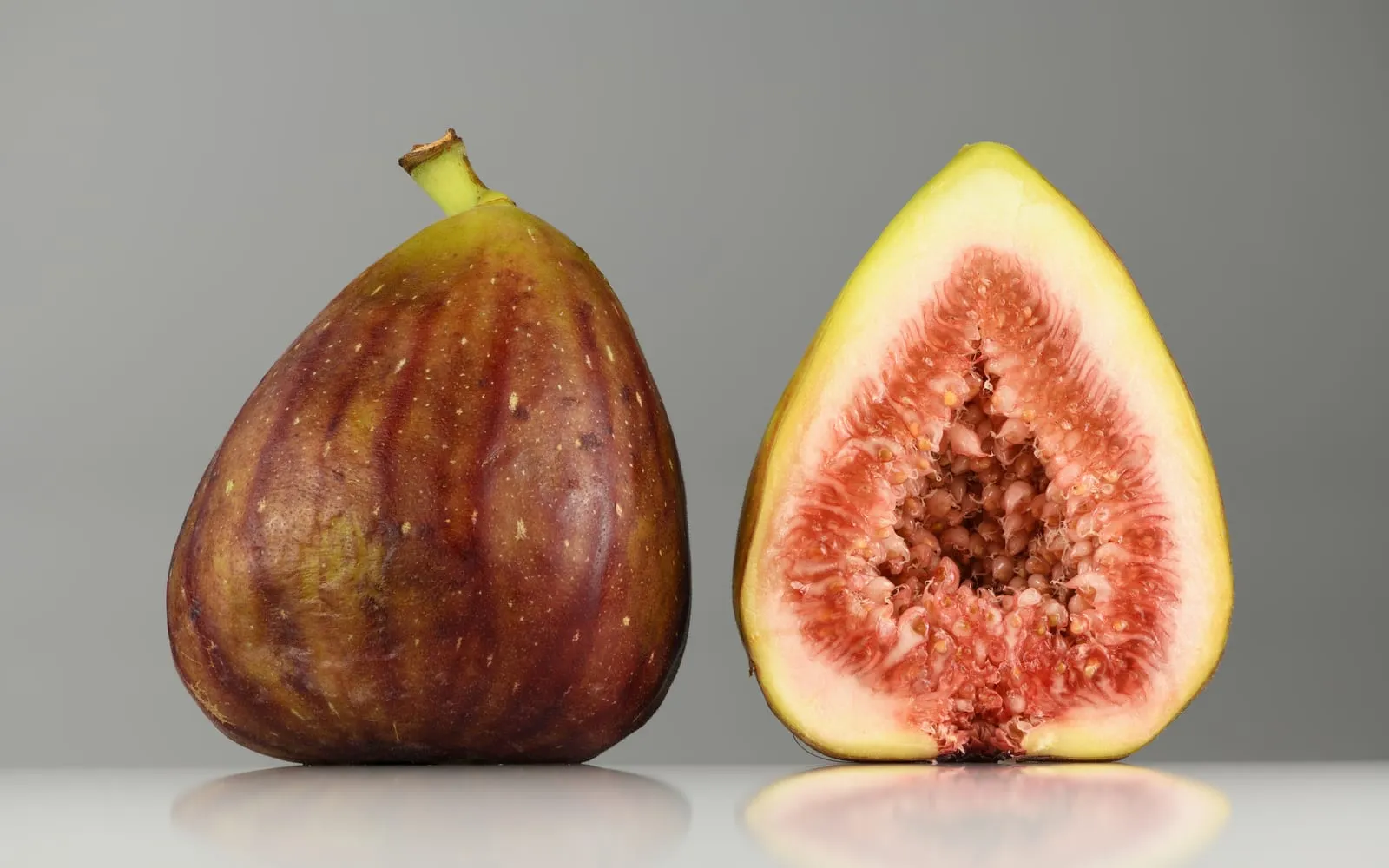
There are no visible flowers. The fig is a syconium, a hollow fleshy receptacle with hundreds of tiny flowers lining the inside, and what looks like fruit is that whole structure.
Fruit is pear-shaped, from green through brown to deep purple, with pink or amber flesh full of crunchy seeds.
Every part bleeds white latex when cut.
Wild figs in their native range are pollinated by a specific fig wasp that enters through a pore at the tip. Varieties grown in cool climates, including ‘Brown Turkey’ and ‘Brunswick’, are parthenocarpic and set fruit without pollination, which is why no wasp is needed here.
Where it is from
Western Asia and the eastern Mediterranean, where figs have been cultivated for at least eleven thousand years. Remains from the Jordan Valley predate cereal farming, which makes this arguably the oldest cultivated plant known.
Its habitat is hot, dry, rocky and often alkaline, with the roots forced into cracks and crevices. That confinement is exactly what root restriction imitates in a garden.
Figs are hardy in wood to around -10 deg C and lose their crop far sooner than that, because the overwintering embryo figs are damaged by hard frost.
In a Mediterranean climate a fig produces two crops a year, an early breba crop on last year’s wood and a main crop on the current season’s. A cool summer only ever ripens the breba crop, which is why the small autumn embryos matter so much.
The plant naturalises readily and is found growing out of walls and bridges across southern England.
How it grows
Restrict the roots. In the ground, dig a pit 60 cm square and 60 cm deep, line the sides with paving slabs, put 20 cm of rubble in the base, and fill with a mixture of soil and rubble rather than rich compost. In a pot, use 45 cm and no more.
Plant against a south or west-facing wall, which gives reflected heat and shelter.
Fan-training suits figs well and is the standard method against a wall, with the branches tied to horizontal wires.
Fruit for next year forms as pea-sized embryos at the shoot tips in late summer. Anything larger than a pea by October will not survive the winter and should be removed, and the small ones are the crop.
Prune in early spring, removing frost-damaged, crossing and congested growth, and in June pinch back the current season’s shoots to five or six leaves, which encourages the embryo figs to form.
Protect the embryos over winter in colder gardens by packing straw or fleece around the branches, or by moving a pot into an unheated greenhouse.
Ripe figs hang down, soften, and often show a bead of nectar at the eye and small splits in the skin. A fig picked before that point never ripens further.
Through the seasons
Winter is protection and dormancy. Fleece or straw the branches in cold gardens, or move containers under cover. Keep pots barely moist.
Spring is pruning and the start of growth. Prune in March, remove any frost-damaged wood, repot or top-dress containers, and begin watering as growth starts.
Summer is the crop and the work. Water regularly, feed fortnightly with a high-potassium feed, pinch back new shoots in June, and pick from August.
Autumn sets up next year. Remove every fig larger than a pea, leave the pea-sized embryos, and reduce watering as the leaves fall.
Care difficulty
Moderate. The plant grows easily and getting fruit from it requires deliberate restriction that feels counterintuitive.
Root restriction is the key technique and the one most often skipped, which is why so many figs in cool climates are large, leafy and barren.
Winter protection of the embryo figs decides the crop in colder gardens.
Watering a restricted plant is constant work in summer, since a confined root system in a hot spot dries out fast.
The plant itself is tough, long-lived and largely free of disease.
Watering
Water regularly and generously through the growing season. A restricted root system in full sun against a wall dries out very quickly and a dry plant drops its fruit.
Containers may need daily watering in July and August.
Keep the watering even. Swings between dry and drenched cause the fruit to split just as it ripens.
Reduce watering sharply in autumn as the leaves fall, and keep the plant barely moist through winter.
Mulch the surface to slow evaporation, keeping it clear of the stems.
Warning signs, diseases and pests
Figs that never ripen and drop off green are the commonest complaint. The usual causes are too little sun, too short a season, or figs that were already too large going into winter and were never going to make it. Grow against a warm wall, and strip anything bigger than a pea in October.
Masses of huge leaves and no fruit means the roots are unrestricted and the plant is too well fed. Root prune, replant into a restricted pit, and stop using nitrogen.
Blackened shoot tips after winter are frost damage. Cut back to live wood in spring. Repeated damage means the plant needs winter protection.
Split fruit follows irregular watering or rain just as the crop ripens.
Wasps and birds attack ripe figs and there is little to be done beyond picking promptly and, on a small tree, bagging individual fruit.
Mediterranean fruit fly stings ripening fruit to lay eggs, leaving a pinprick mark that develops into a soft rotting patch with small maggots inside. It is established across the Mediterranean, the Middle East and much of Central and South America, wherever figs are grown outdoors. Pick up and destroy fallen fruit, and net or bag fruit as it ripens where the pest is present.
Red spider mite affects figs under glass, producing fine pale stippling and webbing in hot dry air.
Yellowing leaves in midsummer usually mean the plant is hungry or dry rather than diseased.
Coral spot, showing as pink-orange pustules on dead wood, follows frost damage and is removed by cutting back to healthy growth.
Growing environment
Full sun, and as much heat as possible. A south or west-facing wall is the standard position in a cool climate and it makes the difference between fruit and no fruit.
Poor to moderate, free-draining soil. Figs tolerate alkaline ground and thrive on neglect. Rich soil is actively harmful because it encourages growth over fruiting.
Root restriction is essential. Use a lined pit of about 60 cm each way in the ground, or a container of around 45 cm.
Shelter from cold wind, which damages both the large leaves and the overwintering embryos.
A container has the advantage that it can be moved into a greenhouse or a porch for the winter, which reliably protects the crop.
Choose a variety suited to the climate. ‘Brown Turkey’ is the standard reliable fig for a cool climate, and ‘Brunswick’ and ‘White Marseilles’ also crop well here.
Feeding
Feed fortnightly with a high-potassium tomato fertiliser from late spring until the fruit ripens.
Avoid nitrogen. It produces the leafy barren plant that root restriction is designed to prevent.
Top-dress containers each spring with fresh compost, removing the top few centimetres first.
Repot container plants every two or three years, trimming the roots back rather than moving up a pot size.
Plants in a restricted pit need feeding as though they were in a container, because in effect they are.
Troubleshooting
Enormous leaves and no fruit. The roots are unrestricted and the plant is too well fed. Restrict the roots to a lined pit or a pot, and switch to a high-potassium feed.
The figs go yellow and drop off before ripening. Not enough sun or heat, or the figs were too big going into winter. Grow against a warm wall and remove anything larger than a pea in October.
Which figs do I keep over winter? The pea-sized embryos at the shoot tips. Remove everything larger, since those will not survive and will not ripen.
The shoot tips died back over winter. Frost. Cut back to live wood in spring and protect the branches with fleece or straw next winter.
The fruit split just as it ripened. Uneven watering, or heavy rain at ripening. Water steadily through the summer.
My arms blistered after pruning it. Fig sap in sunlight causes phytophotodermatitis. Wear gloves and long sleeves, wash the sap off, and keep the skin out of the sun afterwards.
When is a fig ripe? When it hangs down, feels soft, and often shows a drop of nectar at the eye and fine splits in the skin. A fig picked early never ripens.
Can I grow one in a pot? Yes, and it is the easiest way to get fruit in a cool climate. Use a 45 cm pot, feed and water through summer, and move it under cover for the winter.
Fig problem guides
Not sure what is wrong? See the common vegetable pests guide.