
Edible
Pecan
Carya illinoinensis
How to grow pecans, Carya illinoinensis. Why a tree hardy to minus 25 deg C can still fail to crop without a long, hot summer, why it rarely pollinates itself alone, and the tremors mouldy fallen nuts can trigger in a dog.
At a glance
- Difficulty
- Moderate
- Water
- Deep, regular watering while young; occasional deep watering once mature
- Light
- Full sun
- Temperature
- Fully hardy in winter; needs a long, hot summer to ripen nuts
- Hardiness
- USDA 6-9, RHS H5-H6, hardy to -25 C
- Type
- Large, long-lived deciduous tree
- Height
- 25-40 m
- Native to
- the south-central United States, Mexico
Winter cold is rarely what limits pecan outside its native range. Many cultivars survive well below minus twenty, but the tree still needs somewhere around 180 to 210 frost-free days and a hot, humid summer to fill and ripen a crop of nuts before autumn. A garden with cold-hardy winters but a short or cool summer will grow a healthy tree that never produces a worthwhile harvest.
Hardiness zones describe winter cold alone. Summer heat, humidity, rainfall and the length of the growing season decide as much, so treat the range as the outer limit rather than as a recommendation.
Edible, with limits
- Safe to eat
- Ripe, sound kernels
- Do not eat
- Moldy fallen nuts and hulls
- Harm from
- Eating it
- Affects
- Dogs
A sound, ripe pecan kernel is food, and there is nothing in the nut itself that is toxic to people, cats or dogs at ordinary quantities. The genuine risk sits with old, damp, or mouldy fallen nuts left on the ground, which can develop tremorgenic mycotoxins from Penicillium mould, the same fungal group responsible for well-documented mouldy walnut poisoning in dogs. A dog that eats mouldy nuts from under the tree can develop tremors, agitation and seizures within a few hours, which is a veterinary emergency. The straightforward precaution is to rake up and dispose of old fallen nuts regularly rather than leaving them to rot where a dog can reach them.
Sources: ASPCA toxic and non-toxic plants, RHS potentially harmful garden plants
About
Pecan is a large, long-lived tree grown for its sweet, oil-rich nut, the official state nut of several southern US states and the source of the classic pecan pie. It needs real space, a long and properly hot summer, and, for a reliable crop, a second compatible tree nearby for cross-pollination.
Winter cold tolerance is the least of the concerns for a grower outside its native range. Most cultivars tolerate severe cold once established. What determines whether a tree ever produces a worthwhile harvest is whether the local summer is long and hot enough to fill and ripen the nuts before the first autumn frost.
Appearance and character
Leaves are large and pinnately compound, made up of nine to seventeen narrow, pointed leaflets, giving the canopy a light, feathery texture despite the tree’s eventual great size. The bark is grey and deeply furrowed on a mature trunk, and the whole tree develops a broad, rounded crown given enough room to spread.
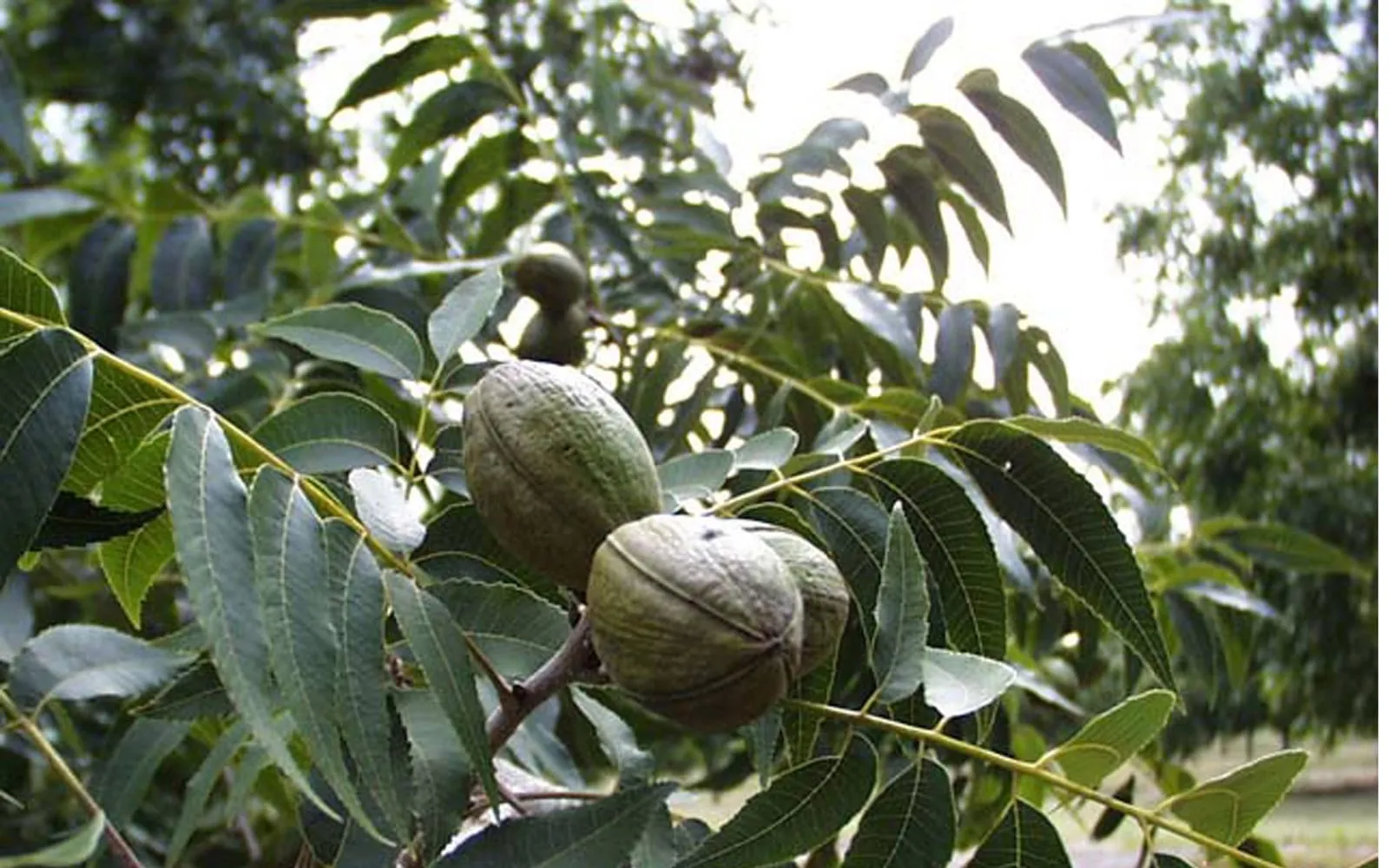
Flowers are wind-pollinated catkins, inconspicuous compared with the nuts that follow, and a single tree carries both male and female flowers that typically mature at different times, which is why a lone tree often sets a poor crop even when otherwise healthy. The nuts themselves develop inside a green, four-part husk that splits open at ripeness in autumn to release the familiar smooth, oval, thin-shelled nut.
A mature pecan is an imposing tree, among the largest of the hickories, with a canopy that can eventually shade a substantial area and a deep taproot that anchors it firmly but makes any tree past its first year or two very difficult to transplant successfully.
Where it is from
Carya illinoinensis is native to the river bottomlands and floodplains of the south-central United States, particularly through the Mississippi and its tributaries, extending into Texas and northern Mexico. It grows naturally in deep, fertile, moisture-retentive alluvial soil along watercourses, which is the closest approximation of ideal growing conditions a garden can offer.
Its native range experiences long, hot, humid summers, and the tree’s requirement for that heat to ripen a crop is a direct legacy of evolving in bottomland forest rather than a cooler upland climate. Cultivars bred further north and west have extended its practical range considerably, but the underlying heat requirement has not changed.
How it grows
Plant in deep, fertile, well-drained soil in full sun, allowing generous space for a tree that will eventually reach a very large size; a mature pecan needs a canopy spread of many metres in every direction.
Plant two different cultivars, or a cultivar alongside a seedling tree, if a reliable nut crop is the goal, since most pecans do not pollinate themselves effectively even though a single tree carries both sexes of flower. Nurseries selling grafted trees usually pair complementary cultivars for exactly this reason.
Water deeply and regularly while the tree is young, since the deep taproot that eventually makes it so drought tolerant takes several years to establish. Once mature, an established tree tolerates dry spells well but produces a better crop with consistent moisture, particularly while the nuts are filling in late summer.
Avoid transplanting a tree once it is more than a year or two old. The taproot is damaged easily by digging and the tree recovers poorly, so choosing the planting site carefully from the outset matters more than with most trees.
Through the seasons
Spring brings leaf growth and, later in the season, flowering, with male and female flowers often opening at different times on the same tree.
Summer is when nuts develop inside their green husks, a period that needs sustained heat and adequate moisture for the kernels to fill properly.
Autumn brings the harvest as the husks split and release the nuts, usually over several weeks as they ripen progressively through the canopy.
Winter is dormancy. The tree is fully hardy through cold winters, and no protection is needed once it is a few years established.
Care difficulty
Moderate. A pecan needs very little in the way of daily attention, no regular pruning beyond removing damaged wood and no complex feeding regime. Success depends instead on getting a few bigger decisions right from the start, giving it enough space, pairing it with a compatible pollination partner, and planting it in a climate that runs hot for long enough. A grower in the right climate with the right pairing gets a productive, largely self-sufficient tree; a grower missing any of those three gets a large, healthy tree that never crops well.
Watering
Water deeply and regularly through the first several years while the taproot establishes, aiming for infrequent but thorough soakings that reach well below the surface rather than frequent shallow watering.
Once established, a mature pecan tolerates dry spells reasonably well, but a consistent water supply through summer, particularly while nuts are filling, produces plumper kernels and a more reliable crop than a tree left to fend entirely for itself.
Warning signs, diseases and pests
Pecan weevil grubs develop inside the shell of a maturing nut, feeding on the kernel from within and often going unnoticed until the nut is cracked open at harvest. Cultural control through cleaning up fallen nuts and debris around the base reduces the population able to complete its life cycle each year.
Aphids gather on the undersides of leaflets and can become numerous enough to drip sticky honeydew onto anything beneath the canopy. Natural predators usually keep populations in check on an otherwise healthy tree.
Fall webworm and related caterpillars build silken webs and defoliate sections of branch in late summer. Removing and destroying webbed branches while infestations are small limits the damage.
Root rot develops in heavy or waterlogged soil, showing as poor vigour, yellowing foliage and dieback. Since pecan’s deep taproot needs consistently well-drained soil, planting on a poorly drained site is the underlying cause far more often than anything treatable afterwards.
Growing environment
Full sun is essential for good nut production, and a shaded position produces a tree that grows well vegetatively but crops poorly if at all.
Deep, fertile soil that drains well but retains some moisture suits the taproot best, mirroring the alluvial bottomland the species comes from. A shallow or compacted soil profile restricts root development and limits the tree’s eventual size and productivity.
A long, hot, humid summer is the environmental factor most growers outside its native range cannot change by better cultivation, and is the one to check against local climate data before planting for a nut crop rather than for shade alone.
Feeding
Apply a balanced fertiliser annually in early spring as growth resumes, paying particular attention to zinc, since zinc deficiency is common in pecans and shows up as small, distorted leaves known as rosetting.
A soil test every few years helps catch nutrient deficiencies before they affect the crop, and established trees generally need less frequent feeding than young ones still building their canopy and root system.
Troubleshooting
My tree flowers but never sets a crop. Almost certainly a pollination problem. A single pecan tree usually cannot pollinate itself reliably because its male and female flowers mature at different times, so planting a second, compatible cultivar nearby is the standard fix.
The leaves are small and oddly bunched at the shoot tips. A classic sign of zinc deficiency, common in pecans grown in alkaline or sandy soil. A zinc-containing fertiliser applied according to label directions usually resolves it over a season or two.
Nuts fell early and looked shrivelled inside. Often insufficient summer heat or an inadequate water supply while the kernels were filling, sometimes combined with pecan weevil damage. Checking for grubs inside a sample of the fallen nuts helps narrow down the cause.
Is it safe to let my dog play under the tree? Fresh nuts pose little risk, but old, damp nuts left to mould on the ground can develop toxins dangerous to dogs. Raking up fallen nuts regularly, especially once they have been on the ground for a while, removes the real hazard.
How many years before a young tree produces nuts? A grafted cultivar typically begins bearing within about five to eight years, while a seedling tree grown from a nut can take considerably longer, sometimes a decade or more, before it produces its first worthwhile crop.