
Edible
Butternut
Juglans cinerea
Also known as White Walnut
How to grow butternut, Juglans cinerea. Why an introduced fungal canker has made this tree endangered across most of its range, the juglone in its roots that stops tomatoes growing nearby, and why a healthy survivor is worth planting from seed.
At a glance
- Difficulty
- Moderate
- Water
- Regular water while young; deep-rooted and drought-tolerant once established
- Light
- Full sun
- Temperature
- Fully hardy; needs a real winter cold snap
- Hardiness
- USDA 3-7, RHS H7, hardy to -35 C
- Type
- Deciduous nut tree
- Height
- 15-25 m
- Native to
- eastern North America
A cold-continental tree of river valleys and lower slopes, hardy well beyond most gardeners' winters and unbothered by deep cold once dormant. Heat and humidity work against it rather than cold: butternut canker spreads fastest in warm, wet conditions, so the tree does relatively better where winters are hard and summers are short than in the milder, damper margins of its range.
Hardiness zones describe winter cold alone. Summer heat, humidity, rainfall and the length of the growing season decide as much, so treat the range as the outer limit rather than as a recommendation.
Skin irritant
- Safe to eat
- The ripe, hulled and dried nutmeat
- Do not eat
- The green husk, any mouldy nut, and wood or shavings used as bedding
- Harm from
- Eating it and handling it
- Affects
- Dogs and horses
Butternut is not on the main lists of plants poisonous to eat; the kernel inside the shell is a food, prized for a richer, oilier flavour than the related black walnut. The risks sit around the nut rather than in it. Every part of the tree produces juglone, a compound that suppresses many other plants growing near its roots; this is a soil chemistry problem for a vegetable bed planted underneath it rather than a poisoning risk to a person or an animal. The husk and any nut left to go mouldy on damp ground can carry tremorgenic fungal toxins that cause tremors and vomiting in a dog that eats them, and shavings or bedding made from walnut wood, more commonly reported for black walnut but a risk shared by the whole genus, are a well-documented cause of laminitis in horses within hours of contact. Fresh green husks can also stain and mildly irritate skin during hulling. None of this makes butternut a plant to avoid growing; it makes fallen, rotting nuts and walnut-wood bedding the two things worth keeping away from pets and horses.
Sources: ASPCA toxic and non-toxic plants, RHS potentially harmful garden plants
About
Butternut is a North American nut tree grown for a sweet, oily kernel richer than its close relative black walnut, held inside a sticky, ridged, football-shaped husk. It grows fast for a walnut, reaching a useful size within a few decades, and casts the light, dappled shade typical of the genus rather than the dense canopy of an oak or a maple. Its future is not straightforward. An introduced fungal canker disease has killed a majority of mature butternuts across its range since the 1960s, and the species is now assessed as endangered through most of the United States and Canada. Planting one today is as much a conservation act as a food-growing one.
Appearance and character
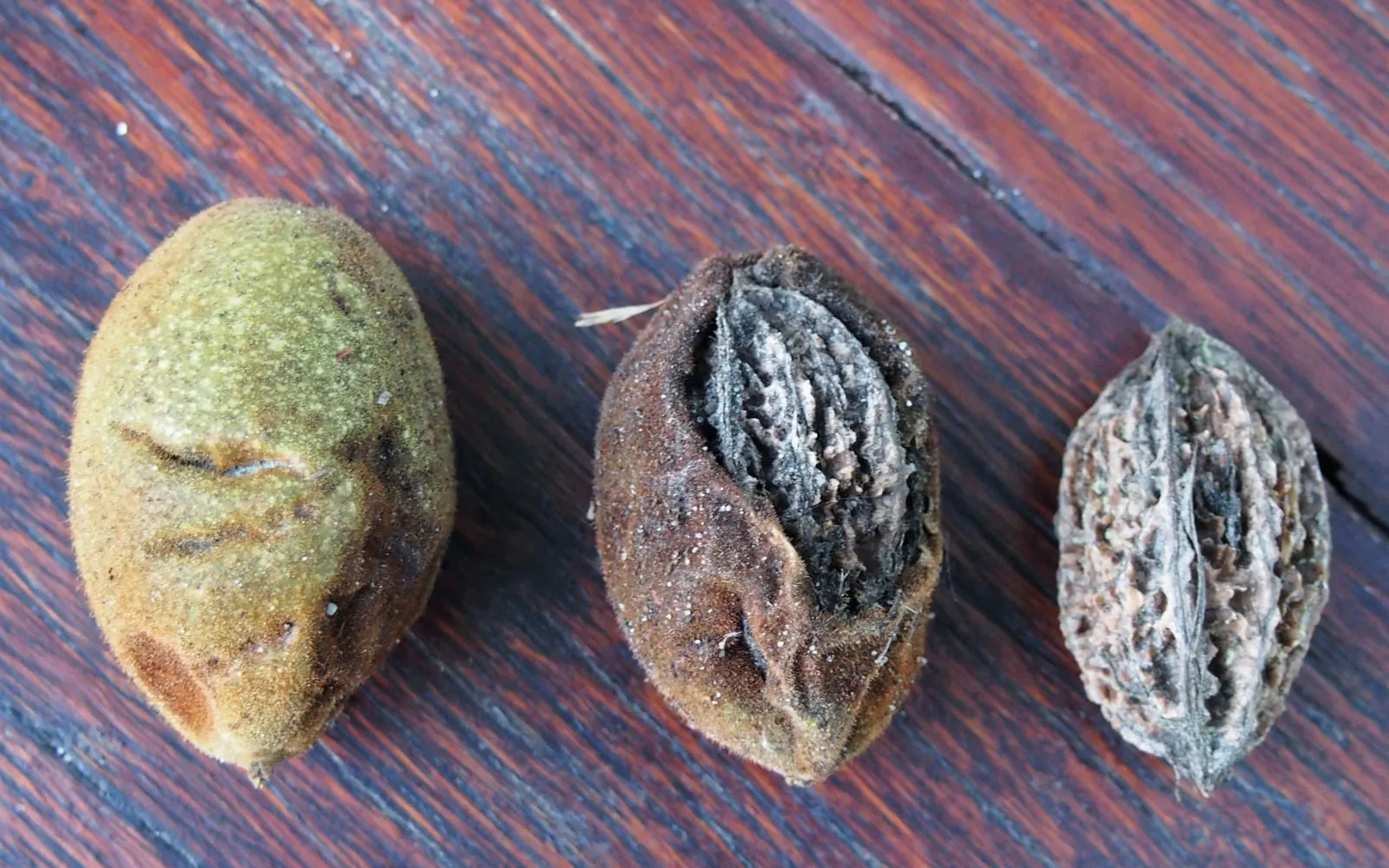
The bark is grey and deeply furrowed on a mature trunk, paler and smoother than black walnut’s near-black ridges. Leaves are pinnately compound, often 40 to 60 cm long with eleven to seventeen leaflets, downy underneath and aromatic when crushed. The husk that encloses each nut is oblong rather than round, covered in short sticky hairs that stain hands and clothing a persistent brown during harvest. Crack the ridged, deeply sculpted shell inside and the kernel is markedly oilier than a black walnut’s, with a sweeter, milder flavour that made it a valued food and trade item long before European settlement. A young tree grows quickly and openly, with widely spaced branches that give it an airy, informal shape rather than a dense, rounded crown.
Where it is from
Juglans cinerea is native to eastern North America, from the Great Lakes and southern Canada down through the Appalachians, typically found on moist, well-drained soil along river valleys and lower slopes rather than on dry ridgetops. It was a significant food and medicinal tree for many Indigenous nations across that range, and early settlers used the husks for dye and the wood, lighter and softer than black walnut, for furniture and carving.
Its range now tells a harder story. Butternut canker, caused by the fungus Ophiognomonia clavigignenti-juglandacearum, was first identified in the United States in the 1960s and is believed to have arrived from outside North America, since native butternut carries little resistance to it. The fungus girdles branches and trunks with sunken, elongated cankers, and an infected tree typically dies within a decade or two once the disease has spread through its crown. It has since killed the majority of mature butternuts across the tree’s range, and the species is listed as endangered by the IUCN, a decline that closely tracks what chestnut blight did to American chestnut a few decades earlier. Isolated trees showing little sign of infection are of real conservation interest, and breeding programmes are working to identify and propagate whatever natural resistance survives in the wild population.
How it grows
Plant in deep, moist, well-drained soil in full sun, giving it plenty of room; a mature butternut spreads wide and its roots release juglone, which suppresses many other plants growing beneath it, so keep sensitive vegetables, tomatoes especially, well clear of the root zone. It takes poorly to root disturbance and is usually best planted from a small container-grown tree rather than transplanted bare-root once established. Because canker enters through wounds and stressed bark, avoid unnecessary pruning cuts, mower damage or soil compaction around the trunk, all of which give the fungus an easier way in. Space trees generously if planting more than one, since crowding increases humidity within the canopy and canker spreads faster in damp, still air.
Through the seasons
Spring brings new leaf growth and, on a mature tree, catkins followed by the small female flowers that will become the year’s nut crop.
Summer is steady growth, with nuts swelling inside their husks through the season.
Autumn brings the nut drop, usually after the first hard frost loosens the husks, and is the best time to plant a new tree.
Winter is full dormancy, and the tree needs its share of real cold to stay healthy and productive.
Care difficulty
Moderate, and the difficulty lies less in ordinary cultivation than in the disease pressure the whole species now carries. A young, healthy butternut in good soil needs little routine attention. What it needs instead is watching: checking the bark each year for the sunken, dark cankers that mark an early infection, and avoiding the wounds and stress that let the fungus take hold in the first place. A tree that develops canker cannot be cured, only managed by removing affected limbs while the infection stays limited to the crown.
Watering
Water regularly through the first several years while the deep taproot develops, then expect an established tree to draw on its own reserves through all but the most prolonged drought. A deep, infrequent soak suits it better than frequent light watering, which encourages roots to stay shallow.
Warning signs, diseases and pests
Butternut canker is the disease that defines this species today. Watch for sunken, elongated, dark cankers on the trunk and branches, often with a blackish stain running down the bark below them; a tree with several cankers on its main trunk is unlikely to recover. There is no fungicide treatment available to an amateur grower, and the only real management is removing cankered limbs promptly, disinfecting pruning tools between cuts, and reporting an apparently resistant survivor to a local forestry or conservation body, since a tree with real tolerance is valuable for breeding work.
Walnut caterpillars feed in groups and can strip a branch bare of leaves within days in late summer; a light infestation causes little lasting harm to an established tree and can be left alone, while a heavy one on a young tree should be removed by hand.
Bacterial canker, a different problem from the fungal canker above, weeps dark sap from cracks in stressed bark. Distinguish it from butternut canker, since bacterial canker follows drought or waterlogging rather than the specific fungus behind butternut’s more serious disease.
Phytophthora root rot follows ground that stays wet around the roots, weakening and eventually killing a tree that looked healthy above ground until the decline was already advanced. Good drainage from the outset is the only reliable prevention.
Aphids cluster on new shoots in spring, doing little direct harm but fouling the leaves and anything beneath them with sticky honeydew, which then grows sooty mould.
Growing environment
Full sun and deep, moist, well-drained soil suit it best; it grows poorly in shallow, dry or compacted ground. A near-neutral pH is preferred, though it tolerates a reasonable range either side. Avoid planting where roots will sit wet for extended periods, and avoid crowding it against other trees, both because of the juglone it releases and because good air movement through the crown slows the spread of canker.
Feeding
Little supplementary feeding is needed on reasonable soil beyond an annual mulch of compost or well-rotted manure around, but not touching, the trunk. Avoid heavy nitrogen feeding, which pushes soft, fast growth more vulnerable to canker infection than wood grown at a steadier pace.
Troubleshooting
I have found dark, sunken patches on the bark. Is this the disease that is killing butternuts? Quite possibly. Photograph the affected area and compare it against reference images from a state forestry extension service or arborist, since butternut canker has a distinctive elongated, blackish appearance. A tree with cankers confined to one or two branches can sometimes be managed by removing them; extensive trunk cankers usually mean the tree will not recover.
Should I still plant a butternut, given how many are dying? Yes, with open eyes. Planting from seed collected off an apparently healthy, mature tree in an area with disease present supports the small chance that tree carries useful resistance, and every healthy specimen adds to what little genetic diversity the wild population has left.
Can I grow vegetables under a mature butternut? Not easily. Like black walnut, its roots release juglone, which many common vegetables, tomatoes and peppers among them, cannot tolerate nearby. Grow juglone-tolerant plants underneath instead, or keep a bed well clear of the root zone.
How long before a butternut produces a useful nut crop? Often ten to twenty years from seed, sometimes sooner from a grafted or otherwise precocious tree, and yields build gradually as the crown matures over subsequent decades.
Is the nut worth the trouble compared with a more disease-resistant walnut? For flavour, many growers say yes; the kernel is oilier and sweeter than black walnut. For reliability, a resistant hybrid or a different nut tree entirely is the safer choice where butternut canker is already established locally.