
Edible
Maypop
Passiflora incarnata
Also known as Purple Passionflower, Wild Passion Vine, Apricot Vine
Practical guidance for growing maypop, Passiflora incarnata, including root hardiness, trellising, seasonal dieback, ripe versus unripe fruit, pollination, and pruning.
At a glance
- Difficulty
- Moderate
- Water
- Regularly while establishing; drought-tolerant once rooted
- Light
- Full sun for the best flowering and fruit set
- Temperature
- Tolerates hard frost at the roots; new growth is tender
- Hardiness
- USDA 6-9, RHS H5, hardy to -20 C
- Type
- Herbaceous perennial vine, dying back to the roots each winter
- Height
- 3-8 m of vine growth in a season
- Native to
- the southeastern United States
The root system survives winters far colder than the top growth, dying back completely each autumn and regrowing from the crown once the soil warms. A long, hot summer determines whether fruit sets and ripens, since the vine needs several warm months to flower and mature a crop after such a hard dieback.
Hardiness zones describe winter cold alone. Summer heat, humidity, rainfall and the length of the growing season decide as much, so treat the range as the outer limit rather than as a recommendation.
Edible, with limits
- Safe to eat
- Ripe fruit pulp and arils, eaten fresh or juiced
- Do not eat
- Unripe fruit, and leaves and stems at any stage
- Harm from
- Eating it
- Affects
- People
Passiflora incarnata carries small amounts of cyanogenic compounds in its unripe fruit and in its leaves and stems, a defence common across the passionflower genus. The ripe fruit, wrinkled and mostly yellow, is what the plant is grown for and is eaten safely and widely, both fresh and processed into juice. The unripe green fruit and the foliage are not eaten in the same way, since crushing or chewing releases the cyanide-forming compounds in enough quantity to cause harm. Dried leaf preparations of this species have a long history of use as a mild traditional sedative, prepared in controlled, small doses rather than eaten raw off the vine. The National Capital Poison Center and the RHS's harmful garden plants index both point to mild gastrointestinal upset as the likely result of eating plant material outside the ripe fruit, rather than anything more serious.
Sources: RHS potentially harmful garden plants, National Capital Poison Center
About
Maypop is the hardiest passionflower grown outdoors in a temperate garden, a vigorous vine that dies back to ground level each winter and reappears from its roots once the soil warms in late spring. It earns its common name from the sound its ripe, air-filled fruit makes when trodden on and popped underfoot.
Given a trellis, fence or shrub to climb, a single plant can cover several metres of space in one growing season, climbing by tendril and flowering through summer into the flush of pale purple, intricately structured blooms the whole genus is known for.
Appearance and character
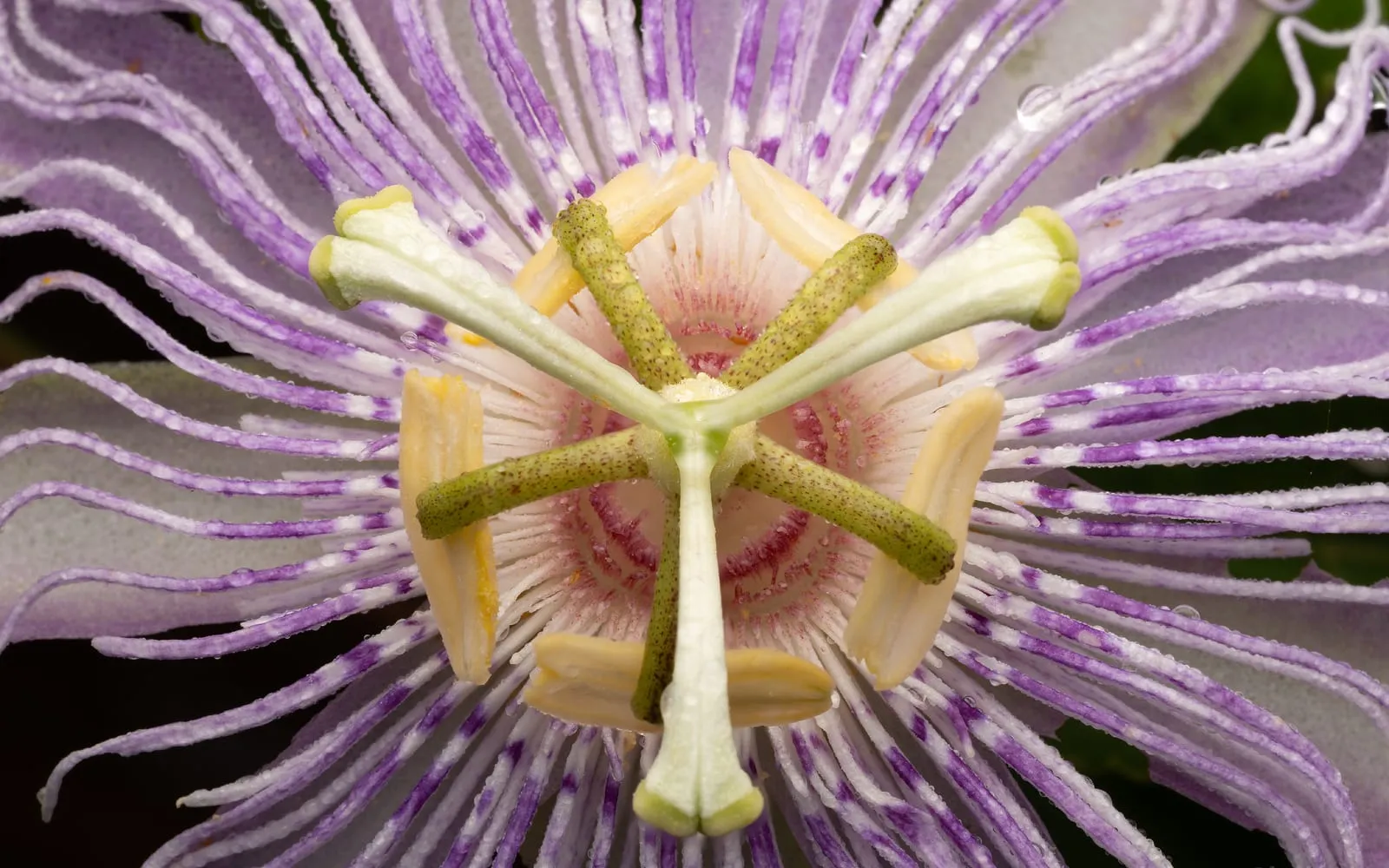
Each flower opens 6 to 8 cm across, ringed with thread-like purple and white filaments around a central column of stamens and a three-part stigma. A bloom lasts a single day, but a healthy vine produces a long, overlapping succession of them through the warmest months.
Leaves are deeply three-lobed and glossy, held on a climbing stem that grips with coiled tendrils rather than by twining, letting it scale wire, trellis or a neighbouring shrub with real speed once established. The fruit that follows is an oval, egg-sized berry, green while immature and turning yellow to yellow-green as it ripens, with a wrinkled skin signalling readiness.
Below ground, the plant spreads by suckering roots that can send up new shoots a metre or more from the original crown, which gardeners either welcome as free plants or contain with a buried barrier.
Where it is from
Passiflora incarnata is native across the southeastern United States, from Texas and Florida north into Virginia and as far as Pennsylvania in sheltered spots, growing in open fields, fencerows and the edges of woodland. Its native range gave it something most tropical passionflowers lack, a root system able to survive freezing winters by retreating underground rather than trying to hold leaves through the cold.
In a temperate garden the vine is expected to vanish completely above ground each winter. What returns every spring is entirely new growth from the roots, not a woody framework carried over from the previous year.
How it grows
Plant in full sun in any well-drained soil, since maypop tolerates poor, sandy or average ground far better than it tolerates wet feet over winter. Give it something sturdy to climb from the outset, such as a trellis, fence or arbour, since a single season’s growth can run several metres and needs support strong enough to carry it.
New shoots emerge late in spring, often well after other perennials, so mark the planting position to avoid disturbing the crown before growth resumes. Once growing, the vine climbs quickly by tendril and needs little guidance beyond the occasional redirection onto its support.
Propagate from root cuttings, division of an established clump’s suckers, or seed, which germinates slowly and is helped by a period of cold stratification. Root suckers are the easiest route to a new plant and appear readily around an established one without any deliberate propagation at all.
Through the seasons
Spring brings the vine back from bare ground, often not visible until well into the season. Growth accelerates once temperatures warm, and the first flowers can open within a couple of months of emergence.
Summer is the main show, a long succession of single-day flowers followed by developing fruit, with the vine at its most vigorous and needing regular water if the season turns dry.
Autumn ripens the fruit, wrinkling and yellowing as it matures, and the first hard frost blackens the top growth completely.
Winter leaves nothing visible above ground. The roots carry the plant through, and a mulch over the crown in the coldest regions gives useful extra insurance in a severe winter.
Care difficulty
Moderate, mostly because it spreads. Maypop needs little feeding, watering once established or winter protection within its hardiness range. Most seasons, the main task is training the vine onto its support and cutting back the previous year’s dead growth in spring.
Suckering roots can turn a single plant into a spreading patch within a couple of seasons if left unchecked. A gardener happy to let it colonise a bank or fencerow will find it almost no trouble at all; one growing it in a mixed border needs to stay ahead of the runners.
Watering
Water regularly through the first growing season while roots establish, then rely on rainfall in most climates once the plant is settled. It is drought-tolerant as a mature clump, and a stressed vine is far more often the result of poor drainage than too little water.
During flowering and fruit development in summer, extra water in a dry spell improves both the number of flowers produced and the size of the fruit that follows, though the plant survives a dry summer without dying.
Warning signs, diseases and pests
Aphids cluster on new shoot tips and flower buds in spring, distorting growth and fouling it with sticky honeydew. A strong jet of water or an insecticidal soap deals with light infestations quickly.
Gulf fritillary and other caterpillars feed on the foliage through summer, sometimes stripping a section of vine back to bare stems. The vine is a larval host plant for several butterfly species and regrows the leaves readily, so most gardeners leave the caterpillars alone as a fair trade for the flowers.
Spider mite can build up in hot, dry conditions, particularly on a vine grown against a warm wall, showing as fine speckling on the leaves. Raising humidity around the plant with a hose spray helps prevent it.
Root rot follows a winter where the crown sits in waterlogged soil rather than merely cold ground. Good drainage at planting time matters more than any treatment once rot has set in.
Growing environment
Full sun gives the best flowering and the surest fruit set; a vine grown in shade survives but flowers sparsely and rarely fruits well.
Soil matters less than drainage. Maypop grows in sandy, average or clay-rich ground provided it does not sit wet over winter, and it needs no special feeding regime to perform in ordinary garden soil.
A sturdy support matters as much as light or soil, since the vine’s tendrils need something to grip from the start of the season, and a plant with nothing to climb sprawls untidily across the ground instead.
Feeding
A light feed of a balanced or low-nitrogen fertiliser in spring, as new growth emerges, is enough for most plants in ordinary garden soil.
Avoid heavy nitrogen feeding, which pushes lush leaf growth at the expense of flowers and fruit. A maypop overfed in rich soil often grows enormous with a disappointing display of fruit at the end of the season.
Troubleshooting
Nothing came up where I planted it last year. Maypop is often slow to emerge in spring, sometimes not until early summer in a cool climate. Before assuming it has died, wait for the soil to warm fully and check for the swollen crown a few centimetres down.
The vine is spreading into the lawn and the border next to it. Root suckers, the plant’s normal habit rather than a problem. Mow or pull emerging shoots regularly to keep it contained, or install a buried root barrier around the planting area when first planting.
It flowers heavily but sets no fruit. Passiflora incarnata generally needs cross-pollination from a genetically different plant, and a single isolated vine, or one paired with a clone of itself, often flowers all summer without ever fruiting. A large carpenter bee is also the most effective pollinator, and a garden without them may set little fruit even with two plants present.
The fruit split or rotted before I could pick it. Both are usually a watering problem, either a dry spell followed by heavy rain that swells the fruit faster than the skin can stretch, or fruit left too long on wet ground after dropping. Pick fruit as soon as it yellows and drops rather than waiting for it to over-ripen on the vine.
Can I eat the fruit straight off the vine? Yes, once it has turned yellow-green and wrinkled, which is the sign it has ripened. Do not eat it while still firm and green, and treat the leaves and unripe fruit as something to leave alone rather than sample.