
Outdoor plant
Paper Birch
Betula papyrifera
Also known as Canoe Birch, White Birch
How to grow paper birch, Betula papyrifera. The chalky bark once stripped for canoes and paper, why a hot, humid summer threatens it more than a cold winter, and why its shallow roots dry out faster than those of most trees.
At a glance
- Difficulty
- Moderate
- Water
- Regularly, particularly through any dry or hot spell
- Light
- Full sun for the best bark colour and densest canopy
- Temperature
- Extremely hardy in cold; struggles through a hot, humid summer
- Hardiness
- USDA 2-7, RHS H7, hardy to -40 C
- Type
- Deciduous tree, fast growing but relatively short-lived
- Height
- 15-20 m
- Native to
- northern North America
Among the most cold-tolerant broadleaf trees in cultivation, native into the boreal forest and taking winter temperatures that kill most garden trees outright. The limit runs the other way. A hot, humid summer, common through much of USDA zone 7 and warmer, stresses the roots and opens the tree to the borers and dieback that rarely trouble it further north, so treat the top of its hardiness range as a climate ceiling rather than a floor.
Hardiness zones describe winter cold alone. Summer heat, humidity, rainfall and the length of the growing season decide as much, so treat the range as the outer limit rather than as a recommendation.
Not known to be toxic
Paper birch is not listed by the RHS among potentially harmful garden plants and does not appear on the ASPCA's toxic plant index for cats, dogs or horses. Nothing about the bark, leaves or catkins is a recognised poisoning hazard. The sap has a long history of being tapped and drunk fresh or boiled down into syrup by Indigenous peoples and modern foragers across its range, and the papery outer bark was used for canoes, containers and writing material rather than being treated as anything to avoid touching. It is planted close to houses, schools and playgrounds throughout its native range without any safety caveat attached to it.
Sources: RHS potentially harmful garden plants, ASPCA toxic and non-toxic plants
About
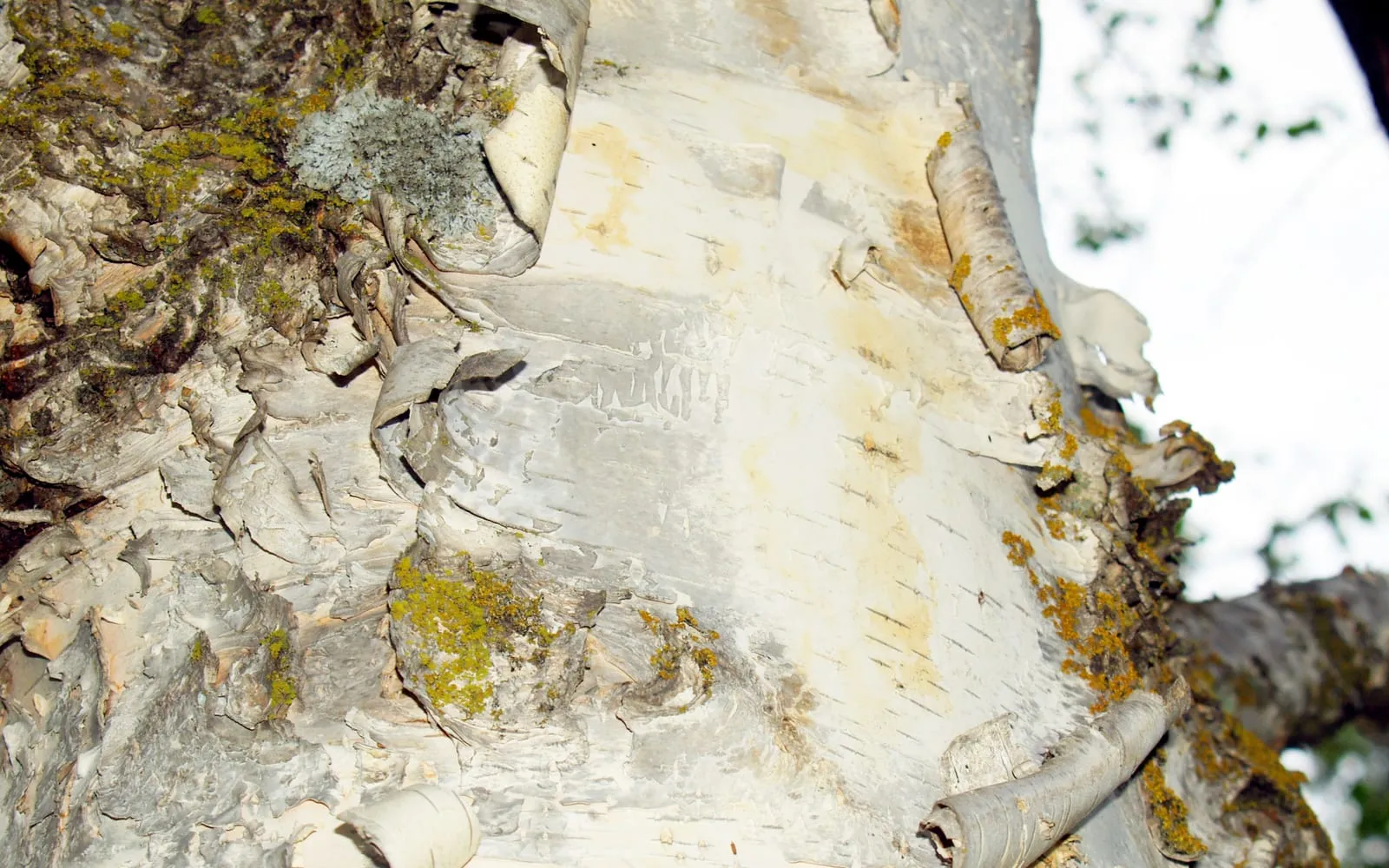
Paper birch is named for bark that behaves less like tree bark and more like a material, peeling away in thin, papery, curling sheets of chalky white that expose a fresh orange-brown layer underneath. That bark was functional long before it was ornamental, stripped in large sheets by Indigenous peoples across its range to build canoes, cover wigwams and serve as an early form of paper, uses that give the tree its other common name of canoe birch.
It is a fast-growing pioneer tree in the wild, one of the first species to colonise open or burned ground across the northern forests it comes from, and that same fast, eager growth carries through into cultivation. A young paper birch fills out quickly, though it is correspondingly shorter-lived than slower, sturdier trees, typically 80 to 140 years rather than the centuries some hardwoods manage.
Appearance and character
Bark is the defining feature at every stage past youth. Young trees carry reddish-brown bark that begins turning chalky white within a few years, developing the papery, horizontally peeling texture that gives the species its name, marked with dark horizontal lenticels that stand out clearly against the white.
Leaves are ovate to triangular, 5 to 10 cm long, with a toothed margin and a pointed tip, mid green through summer and turning a clear, bright yellow in autumn, one of the more reliable golden displays among cold-climate trees.
Catkins appear in spring, male catkins long and drooping, formed the previous autumn and hanging through winter before opening, female catkins shorter and more upright, developing into small winged seeds that shed from the tree in vast numbers through autumn.
Growth habit is upright and somewhat open when young, broadening into a more rounded crown with age, and the species is very often grown as a clump of two or three stems from a single base rather than as a single-trunked tree, which shows off more of the white bark at once.
Where it is from
Betula papyrifera grows across a vast swathe of northern North America, from Alaska and the Yukon through Canada’s boreal forest and south into the northern United States, reaching into the Appalachian and Rocky Mountains at higher, cooler elevations further south.
That boreal and montane origin explains both ends of the tree’s temperament in cultivation. It tolerates winter cold that would kill most garden trees outright, having evolved among some of the harshest winters any broadleaf tree tolerates, but it has no real adaptation to sustained summer heat and humidity, conditions its native range does not experience.
Indigenous peoples across its range, including the Anishinaabe and many other nations, developed an extensive material culture around the bark, and the tree remains culturally significant well beyond its ornamental value in gardens today.
How it grows
Plant in moist, well-drained, slightly acid soil, in full sun for the brightest bark colour and the densest canopy, though it tolerates light shade reasonably well.
Water regularly, particularly through the first several growing seasons and during any hot or dry spell afterwards. Paper birch has a shallow, wide-spreading root system that dries out faster than the roots of many deeper-rooted trees, and drought stress is the single biggest factor behind a decline into pest and disease problems.
Mulch generously around the root zone with well-rotted organic matter, which helps the shallow roots retain moisture and keeps grass and weeds, which compete strongly for the same surface-level water, away from the trunk.
Choose a cool, open site rather than a sheltered suntrap, particularly in the warmer half of its hardiness range, since this is a tree that performs better with airflow and cooler root conditions than with reflected summer heat.
Prune, if needed, in summer rather than late winter or early spring, since cutting a birch while sap is rising causes heavy bleeding from the wound that a summer cut avoids.
Through the seasons
Spring opens long male catkins that formed the previous autumn, followed by fresh green leaves and the shorter female catkins that will go on to shed seed.
Summer is the main growing season, when watering matters most, particularly through any hot or dry stretch that stresses the shallow root system.
Autumn turns the foliage a clear bright yellow and releases the season’s crop of small winged seeds from the female catkins in large numbers.
Winter shows the bark at its best, chalky white against a dark background, with the next spring’s male catkins already visible, hanging stiffly from the bare branches.
Care difficulty
Moderate, and the difficulty is climate-dependent rather than constant. In a cool, moist climate that resembles its native range, paper birch grows fast and needs little beyond regular watering while young.
In a hot, humid or drought-prone climate it needs closer attention, consistent watering through summer and a site chosen for shade from the harshest afternoon sun, since heat stress rather than cold is what opens the tree to serious pest and disease problems.
Watering
Water regularly and deeply, especially through the first several growing seasons and during any hot or dry period afterwards, since the shallow root system draws mostly from the top layer of soil that dries fastest.
An established tree in a cool, consistently moist climate needs comparatively little supplementary watering, but one growing in a warmer or drier climate benefits from watering through summer even once mature, since drought stress is the single largest risk factor for decline.
Mulching the root zone helps considerably, both by conserving moisture and by keeping surface roots cooler through hot weather.
Warning signs, diseases and pests
Aphids cluster on new shoots and the undersides of young leaves, leaving behind sticky honeydew that can attract sooty mould. A strong jet of water or an insecticidal soap treatment controls a light infestation without lasting harm to the tree.
Leaf miner tunnels through the leaf tissue, leaving pale, blotchy trails across the foliage, cosmetic rather than seriously damaging unless the infestation is heavy across the whole canopy in successive years.
Honey fungus can attack a stressed or drought-hit tree, showing as gradual dieback in the crown and, eventually, fungal growth visible at the base near soil level. There is no reliable cure once it takes hold, and a stressed birch is considerably more vulnerable than a well-watered, healthy one.
Bracket fungi and wood decay enter through old wounds, pruning cuts made in the wrong season, or storm damage on a mature trunk, weakening the wood internally over years without always showing external symptoms until decay is advanced. Prune only in summer and avoid unnecessary damage to the bark to reduce entry points.
Growing environment
Full sun brings out the brightest white bark and the densest canopy, though the species also tolerates light shade reasonably well, particularly useful shelter from the harshest afternoon sun in a warm climate.
Moist, well-drained, slightly acid soil suits it best. It performs poorly in dry, compacted or strongly alkaline ground, where iron deficiency and general stress become common.
A cool, open site with reasonable airflow suits it better than a sheltered, heat-trapping corner, especially towards the warmer end of its hardiness range.
Allow room for a wide, shallow-rooted canopy, and avoid planting directly over the root zone with anything that needs regular cultivation, since the surface roots are easily disturbed.
Feeding
Apply a balanced feed in spring for the first several years while a young tree establishes, following the product’s guidance for a young ornamental tree.
An established paper birch in reasonably fertile, moist soil rarely needs supplementary feeding, and a yearly mulch of well-rotted organic matter around the root zone supplies most of what it needs beyond that, while also helping the shallow roots retain moisture.
Avoid heavy nitrogen feeding, which pushes soft, fast growth more vulnerable to pest damage and less able to cope with the drought stress this species is already prone to in a warm climate.
Troubleshooting
Why is the bark peeling and curling away from the trunk? This is normal for a mature paper birch rather than a sign of damage. The outer bark sheds naturally in thin papery layers, revealing fresh orange-brown bark underneath before that too turns white with age.
My tree looks stressed and thin in a hot summer. Paper birch tolerates extreme cold far better than heat, and a long hot, humid summer stresses the shallow root system considerably. Increase watering through summer and consider whether the site offers any afternoon shade, particularly if you garden towards the warmer end of its hardiness range.
Can I tap the sap like a maple? Yes, birch sap has a long history of being tapped in early spring and drunk fresh or reduced into syrup, though it takes a much larger volume of sap to make the same amount of syrup as maple.
The leaves have pale, blotchy trails across them. Leaf miner, tunnelling through the leaf tissue. It is cosmetic in most years and rarely needs treatment on an otherwise healthy tree.
Is it safe to plant near where children play? Yes. It is not listed as harmful by the RHS or the ASPCA, and the bark and sap have a long history of everyday use rather than any safety caveat.