
Edible
New Jersey Tea
Ceanothus americanus
Also known as Redroot, Mountain Sweet
Practical guidance for growing New Jersey tea, Ceanothus americanus, including drought tolerance, nitrogen-fixing roots, dried-leaf tea, poor soil, hard pruning, and cold hardiness.
At a glance
- Difficulty
- Easy
- Water
- Regular while establishing; drought-tolerant once rooted
- Light
- Full sun to light shade
- Temperature
- Fully hardy
- Hardiness
- USDA 4-8, RHS H6, hardy to -30 C
- Type
- Hardy deciduous shrub, dying back partway in a hard winter
- Height
- 0.5-1.2 m
- Native to
- eastern North America
Native across a large stretch of eastern and central North America and hardy through a hard continental winter without protection. Poor, dry soil suits it far better than a rich, damp border, since the nitrogen-fixing roots that make it so undemanding for feed are also the part most likely to rot in heavy, waterlogged ground.
Hardiness zones describe winter cold alone. Summer heat, humidity, rainfall and the length of the growing season decide as much, so treat the range as the outer limit rather than as a recommendation.
Not known to be toxic
- Safe to eat
- Dried leaves, brewed as a tea substitute
New Jersey tea is not listed as harmful by the RHS or the ASPCA. Its dried leaves have a long history of use as a caffeine-free tea substitute in eastern North America, most famously during the American boycott of imported British tea, and the root bark has a separate history of use in traditional herbal medicine. No part of the plant is documented as a poisoning risk to people or pets, and it is a reasonable choice for a garden used by children or animals.
Sources: RHS potentially harmful garden plants, ASPCA toxic and non-toxic plants
About
New Jersey tea is a low, hardy North American shrub grown for its undemanding nature as much as for the dried-leaf tea substitute that gives it its name. Once established, it needs no feeding, little watering and a spot most other flowering shrubs would find too poor and dry to thrive in.
Its roots carry nitrogen-fixing nodules, formed with a soil bacterium in much the same way a bean or clover plant fixes its own nitrogen, which explains why it grows so well in soil too thin to support many other flowering shrubs.
Appearance and character
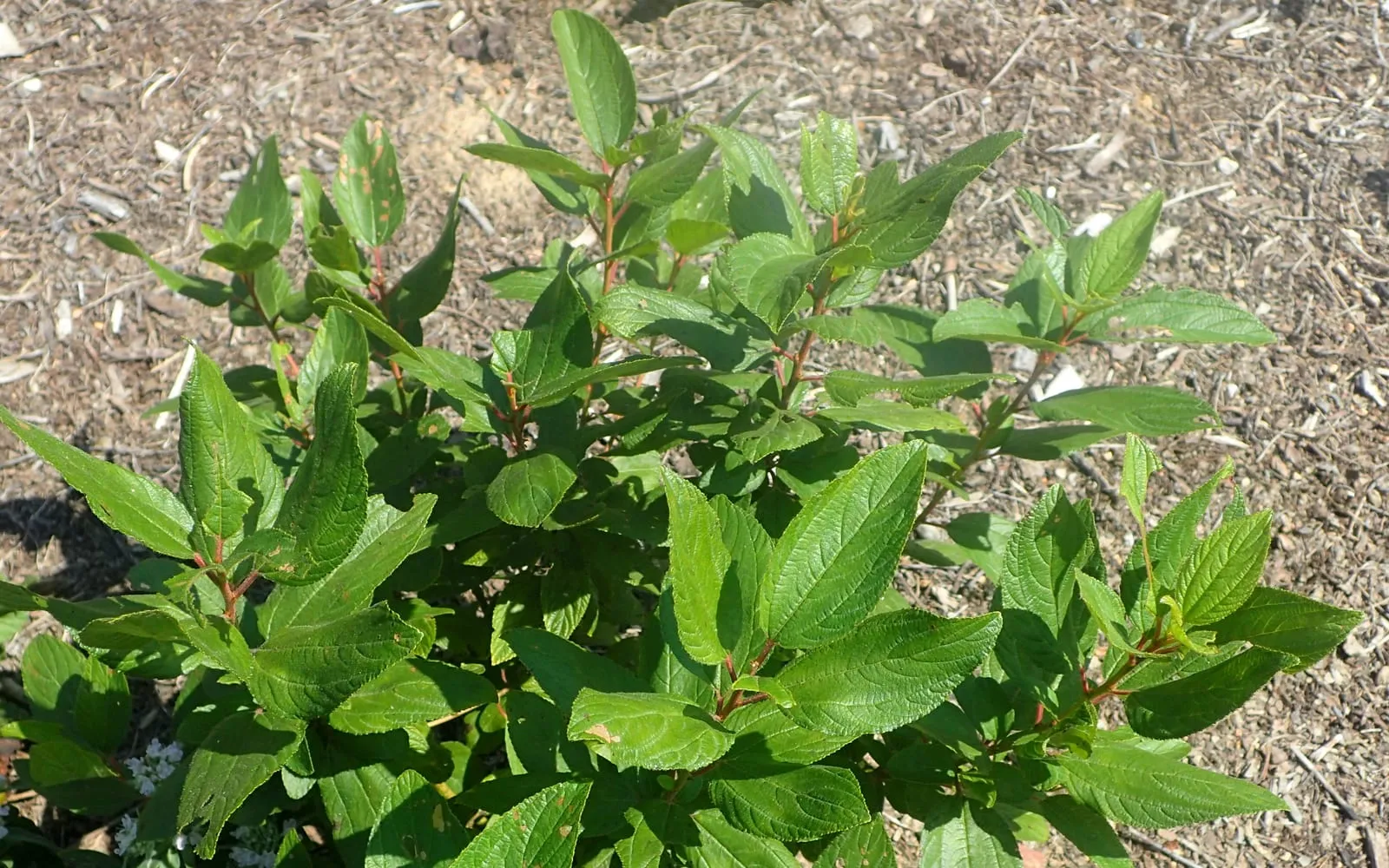
Growth is low, twiggy and spreading, built on a woody base that thickens with age while the younger stems stay slender and pliable. Leaves are oval, finely toothed and a fresh mid-green, with three prominent veins running from the base, a detail that helps separate it from similar small shrubs at a glance.
Clusters of small white flowers cover the plant in early summer, held on short stalks in dense, rounded heads that give the whole shrub a frothy, snow-dusted look for several weeks. They are followed by small, three-lobed seed capsules that dry and split open once ripe.
Below ground, the roots are notably thick and reddish, the source of the alternative name redroot, and they carry the nitrogen-fixing nodules that make the plant so tolerant of poor soil.
Where it is from
Ceanothus americanus is native across a wide swathe of eastern and central North America, from southern Canada down through the eastern United States, growing on dry, open, often sandy or rocky ground at woodland edges and in prairie remnants.
Its native range spans a harsh continental climate, cold winters and often lean, fast-draining soil. In cultivation, it suits poor ground and real winter cold better than rich, fertile border conditions.
How it grows
Plant in full sun to light shade in dry to average, well-drained soil, including ground too poor or sandy for most other flowering shrubs. Rich, regularly watered soil does it no favours and can encourage the kind of soft, lush growth that this naturally tough plant is not built for.
It dies back close to the ground in a hard winter across the colder part of its range and regrows strongly from the woody base each spring, flowering on new growth the same season, so winter dieback here is normal rather than a sign of trouble.
Cut back hard in early spring before growth resumes, removing old, dead or straggly stems, since the plant flowers on new wood and responds well to a firm annual cut that keeps it compact and floriferous.
Propagate from seed, which benefits from a period of cold stratification and sometimes a brief scorching or scarification to break dormancy, in imitation of the fire and freeze-thaw cycles it experiences in the wild, or from semi-ripe cuttings taken in summer.
Through the seasons
Spring is when new growth resumes from the woody base, following any winter dieback, and when hard pruning is best carried out before growth starts.
Summer brings the main flowering display, clusters of white flowers covering the plant for several weeks, followed by developing seed capsules.
Autumn sees the seed capsules ripen and split, and growth slows as the plant heads toward dormancy.
Winter brings dieback to the ground in the coldest part of its range, with the roots surviving hard freezing undisturbed underground.
Care difficulty
Easy, and among the most forgiving flowering shrubs for poor, dry soil and a cold winter. It needs no feeding in most soils, little watering once established, and only one firm pruning session a year to stay compact and floriferous.
Rich, damp, well-fed borders cause more trouble than neglect. Keep it in lean, dry ground rather than trying to improve the soil around it.
Watering
Water regularly through the first growing season while the root system, including the nitrogen-fixing nodules, establishes itself. After that, rely on rainfall in most climates and water only during a real, extended dry spell.
Avoid watering on a fixed schedule regardless of conditions, since consistently damp soil is a far greater risk to this plant than drought, and a deep, infrequent soak during a real dry spell suits it better than frequent light watering.
Warning signs, diseases and pests
Root rot follows soil that stays wet, whether from heavy ground, poor drainage or well-meant overwatering, showing as yellowing leaves and a general decline. Improving drainage and cutting back watering is the only real fix, since the nitrogen-fixing roots most valuable to this plant are also the most vulnerable to rot.
Powdery mildew coats leaves in a pale, dusty film in humid, still conditions with poor air movement. Thinning growth during the annual pruning to improve airflow through the shrub helps prevent it.
Aphids cluster on soft new spring growth, distorting leaves and covering them with sticky honeydew. A strong jet of water or insecticidal soap controls light infestations.
Scale insects appear as small, flat, brownish bumps along older woody stems, sapping the plant as they feed. Treat with horticultural oil, or scrape off light infestations by hand.
Growing environment
Full sun produces the densest flowering; light shade is tolerated but generally reduces both flower quantity and the tight, compact habit sun-grown plants keep naturally.
Dry to average, well-drained soil, including poor or sandy ground, suits it better than a fertile, regularly watered border, and no soil amendment or feeding is needed to help it establish in lean conditions.
Open exposure to winter cold is not something to protect against. This species is hardy well beyond most gardens’ winters and needs no shelter or covering through even a severe cold spell.
Feeding
None is needed in most garden soils. The plant’s nitrogen-fixing root nodules supply much of what it needs, and feeding tends to push soft, lush growth at some cost to flowering rather than improving the plant.
Where soil is exceptionally poor even by this species’ undemanding standards, a single light feed in spring is enough; more than that is rarely an improvement.
Troubleshooting
The whole plant died back to the ground over winter. Normal for this species in a cold climate rather than a sign it has died outright. Wait until late spring before giving up on it, since strong new growth from the woody base is the usual pattern after a hard winter.
It is growing lush and leafy but flowering poorly. Rich soil, regular feeding or frequent watering are the likely causes, all of which push this naturally lean-ground plant toward soft growth at the expense of flowers. Stop feeding and cut back watering to the bare minimum once it is established.
Leaves are covered in a pale, powdery coating. Powdery mildew, most likely from still, humid air around a crowded plant. Thin the growth at the next pruning to improve airflow, and avoid wetting the foliage when watering.
Can I brew a drinkable tea from the leaves? Yes. Dried leaves of this species were widely used as a tea substitute historically and still are today, producing a mild, caffeine-free infusion with a flavour distinct from true tea.
Why does it grow so well in soil nothing else will tolerate? Its roots carry nitrogen-fixing nodules formed with a soil bacterium, in the same way many legumes fix their own nitrogen, which lets it thrive in poor, sandy or otherwise infertile ground that starves less self-sufficient shrubs.