
Houseplant
Never-Never Plant
Ctenanthe setosa
How to grow never-never plant, Ctenanthe setosa. Why its leaves fold upright every evening and flatten again by morning, and telling hard-water leaf scorch from simple dry-air browning.
At a glance
- Difficulty
- Moderate
- Water
- Keep evenly moist; water again once the top of the mix has dried
- Light
- Bright indirect light. Low light dulls the leaf pattern; direct sun scorches it
- Temperature
- 18-24 deg C. Below 13 deg C causes lasting damage
- Humidity
- 60% or higher. Dry air browns the leaf edges and invites spider mite
- Hardiness
- USDA 10b-11, RHS H1b, hardy to 12 C
- Type
- Evergreen rhizomatous tropical perennial
- Height
- 60-90 cm
- Native to
- Brazil
An understorey rhizome from the humid coastal forests of eastern Brazil, growing in the constant warmth and filtered light beneath taller trees rather than in open ground. It has no frost tolerance and no real dormancy, so it needs steady warmth and humidity year round rather than a seasonal rest, and it shows the gap between its native forest floor and a dry heated room faster than most houseplants do.
Hardiness zones describe winter cold alone. Summer heat, humidity, rainfall and the length of the growing season decide as much, so treat the range as the outer limit rather than as a recommendation.
Not known to be toxic
Ctenanthe belongs to the prayer plant family, Marantaceae, and no member of that family in general cultivation is documented as toxic. Neither the RHS list of potentially harmful garden plants nor the ASPCA's toxic and non-toxic plant list carries an entry flagging this genus as a hazard, and its closest well-documented relatives, including Calathea and Maranta, are specifically listed as non-toxic to cats and dogs. A pet that chews the fibrous leaves may vomit from the texture alone, the same nuisance reaction almost any tough houseplant leaf can trigger, but there is nothing here that calls for keeping this plant out of reach.
Sources: RHS potentially harmful garden plants, ASPCA toxic and non-toxic plants
About
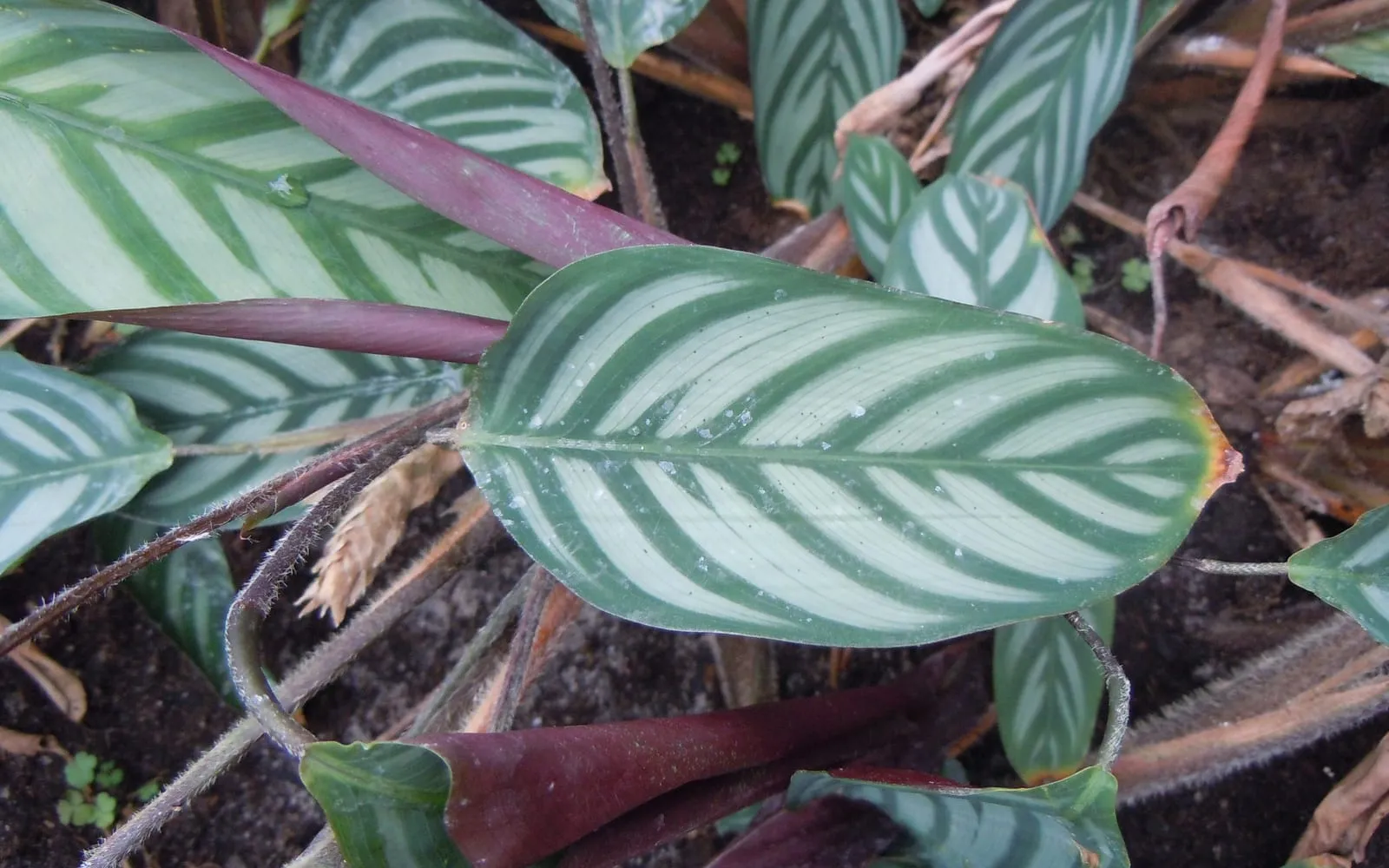
Never-never plant is grown for the feathered pattern that runs the length of each leaf, a darker herringbone marking laid over silvery grey-green, with an undersurface that reads almost maroon by comparison. Like several of its relatives in the prayer plant family, it lifts and folds its leaves in the evening and lowers them again by morning, a slow, visible movement that is easy to miss unless you happen to catch it happening.
It needs more humidity than an average living room offers and does not hide the shortfall quietly, browning at the leaf edges within weeks of being kept too dry. Get the humidity and light right and it rewards the effort with dense, upright clumps of consistently well-marked foliage.
Appearance and character
Lance-shaped to elliptical leaves, 20 to 30 cm long, held upright on long stalks that arch slightly under the leaf’s weight. The upper surface is a soft grey-green overlaid with a darker feathered pattern that follows the lateral veins out from the midrib, while the underside is a deep wine-red to maroon that shows clearly whenever a leaf lifts or turns.
Growth is clumping rather than trailing, with new leaves and stems rising steadily from spreading underground rhizomes to form a dense, upright stand over time rather than a single stem.
Like other members of the prayer plant family, the leaves rise and fold together in the evening and open flat again through the day, a response driven by a small hinge-like structure, called a pulvinus, at the base of each leaf stalk. Small white flowers can appear on a mature clump but are a minor feature compared with the foliage.
Where it is from
Ctenanthe setosa grows in the humid coastal forests of eastern Brazil, rooted in leaf litter on the forest floor beneath a canopy that filters the tropical sun into constant, dappled light rather than direct exposure.
That forest floor origin explains most of what this plant needs indoors. Light there is bright but never harsh, which is why direct sun through a window scorches the leaves while too dim a spot dulls the colour and pattern that make the plant worth growing. Humidity under a tropical canopy sits high and steady through the year, a condition an average heated room rarely matches without help.
The nightly leaf movement is thought to help the plant track available light through the day and shed excess rainwater efficiently in a wet forest climate, a trait shared across the wider Marantaceae family this species belongs to.
How it grows
Pot it in a rich, moisture-retentive but free-draining mix, and keep it somewhere bright but out of direct sun, with humidity raised above what an average room offers on its own.
Growth is steady through the warmer months, with new leaves unfurling from the centre of the clump and the rhizome gradually spreading to widen the plant’s footprint in the pot. A well-grown specimen fills its container within a couple of growing seasons.
Divide an overgrown clump at repotting time by separating sections of rhizome, each with its own leaves and roots attached, and pot them individually. This is the reliable way to propagate the plant and also the moment to refresh compost that has been in the pot for a couple of years.
Wipe dust from the leaves periodically with a damp cloth, both for appearance and because a dusty leaf photosynthesises less efficiently than a clean one.
Through the seasons
Spring restarts active growth. Divide an overgrown clump if needed, begin monthly feeding, and increase watering as new leaves appear.
Summer is the main growing season. Keep the mix evenly moist and humidity high, and watch for spider mite in any particularly hot, dry spell.
Autumn slows growth gradually. Reduce feeding towards the end of the season as demand for nutrients drops.
Winter is a quieter period rather than a true dormancy. Water a little less often, keep the plant well away from cold glass and draughts, and hold off on feeding until spring.
Care difficulty
Moderate, and humidity determines most outcomes. A plant kept in average room humidity survives but browns steadily at the leaf tips and margins, a slow decline that is easy to blame on watering when the real cause is dry air.
Water quality is the other common trip point. Like several of its Marantaceae relatives, this species reacts to the chlorine, fluoride and dissolved salts in hard tap water with crisping leaf edges, so switching to rainwater or filtered water solves a problem that adjusting the watering schedule alone will not.
Watering
Keep the mix evenly moist through the growing season, watering again once the top layer has dried rather than letting the whole pot dry out, since this species has little tolerance for drought stress.
Use soft, filtered or rested tap water where possible. Hard water straight from the tap is a common cause of browning leaf edges on this plant, more so than on many other houseplants.
Water thoroughly and let any excess drain away rather than leaving the pot standing in it, since the roots dislike sitting permanently waterlogged as much as they dislike drying out completely.
Warning signs, diseases and pests
Spider mite favours warm, dry indoor air and shows as fine pale speckling on the leaves, sometimes with faint webbing on the undersides in bad cases. Raising humidity is both prevention and part of the cure.
Mealybug hides in the leaf bases and along new shoots, showing as small white, cottony tufts. Remove them with a cotton bud dipped in diluted alcohol.
Scale insects appear as small, flat brown discs on the undersides of older leaves. Treat the same way as mealybug and check the plant regularly, since scale can build up gradually before it is noticed.
Root rot follows a mix that stays waterlogged, showing as lower leaves that yellow and a clump that looks generally unwell despite regular watering. Repot into fresh, free-draining mix and water less often if it has already taken hold.
Growing environment
Bright indirect light suits it best. Too little light dulls the leaf pattern and slows growth, while direct sun, especially through glass in summer, scorches the foliage and fades its colour.
Keep the room between about 18 and 24 deg C. Any exposure near 13 deg C or below causes lasting damage, and this species has no tolerance for cold at any point in its cycle.
Humidity of 60% or higher suits it best. A pebble tray, a humidifier, or grouping it with other humidity-loving plants all help more than occasional misting, which raises humidity only briefly.
A rich, moisture-retentive but free-draining mix suits the roots. A general houseplant compost with some added perlite for drainage works well.
Feeding
Feed monthly through spring and summer with a balanced liquid houseplant fertiliser, diluted according to the product’s guidance, which is enough to support steady leaf production without pushing soft, over-lush growth.
Stop feeding entirely from autumn through winter, when growth slows and unused fertiliser builds up as salts in the mix rather than being taken up by the plant.
Flush the compost with plain water every couple of months to clear accumulated salts, particularly important for a species already prone to leaf-edge browning from water quality.
Troubleshooting
The leaf edges are browning and crisping. Dry air or hard water are the two most likely causes, often together. Raise humidity around the plant and switch to rainwater or filtered water if the tap water in your area is hard.
The leaf pattern looks faded and dull. Not enough light. Move the plant somewhere brighter, avoiding direct sun, and new leaves should come in with stronger contrast.
The leaves fold up during the day as well as at night. A stress response, usually to underwatering, cold, or a sudden change in conditions. Check the compost moisture and the room temperature, and the leaves should reopen once the underlying cause is corrected.
Lower leaves are yellowing even though I water regularly. Likely overwatering rather than underwatering, especially if the compost feels constantly wet. Let the surface dry a little more between waterings and check the roots are not sitting in standing water.
Why does the plant fold its leaves up every evening? Normal behaviour shared across the prayer plant family, driven by a small hinge at the base of each leaf stalk. It is not a sign of distress and needs no intervention.
Never-Never Plant problem guides
Not sure what is wrong? See the common houseplant pests guide.