
Houseplant
Bottle Palm
Hyophorbe lagenicaulis
Also known as Bottle Palm Tree
How to grow bottle palm, Hyophorbe lagenicaulis. The whole wild population survives on one island off Mauritius, and while an established plant tolerates drought, salt and wind, any real frost does lasting damage.
At a glance
- Difficulty
- Moderate
- Water
- Regularly while young and establishing; drought-tolerant once mature
- Light
- Full sun once established; young plants tolerate light shade
- Temperature
- Above 10 deg C; damaged by any real cold
- Humidity
- Average to high humidity
- Hardiness
- USDA 10b-11, RHS H1c, hardy to -1 C
- Type
- Evergreen tropical palm
- Height
- 3-4 m, occasionally more, reached very slowly over decades
- Native to
- Mauritius
Down to a single wild population on Round Island off Mauritius, an exposed volcanic islet with thin soil and constant salt-laden wind, which is why an established bottle palm tolerates coastal exposure and drought that would stress most other palms. None of that toughness extends to frost. A young plant is killed by anything approaching freezing, and even a mature trunk takes lasting damage from more than the briefest, lightest chill.
Hardiness zones describe winter cold alone. Summer heat, humidity, rainfall and the length of the growing season decide as much, so treat the range as the outer limit rather than as a recommendation.
Not known to be toxic
Hyophorbe lagenicaulis is not documented as toxic to people, cats, dogs or horses, and carries no entry on the RHS list of harmful garden plants. A pet that chews a frond may vomit from the sheer toughness and fibre of the leaf material, the same reaction any coarse plant matter can cause in quantity, rather than from any poison in the tissue. This is a palm you can grow without factoring pets or small children into the decision.
Sources: ASPCA toxic and non-toxic plants, RHS potentially harmful garden plants
About
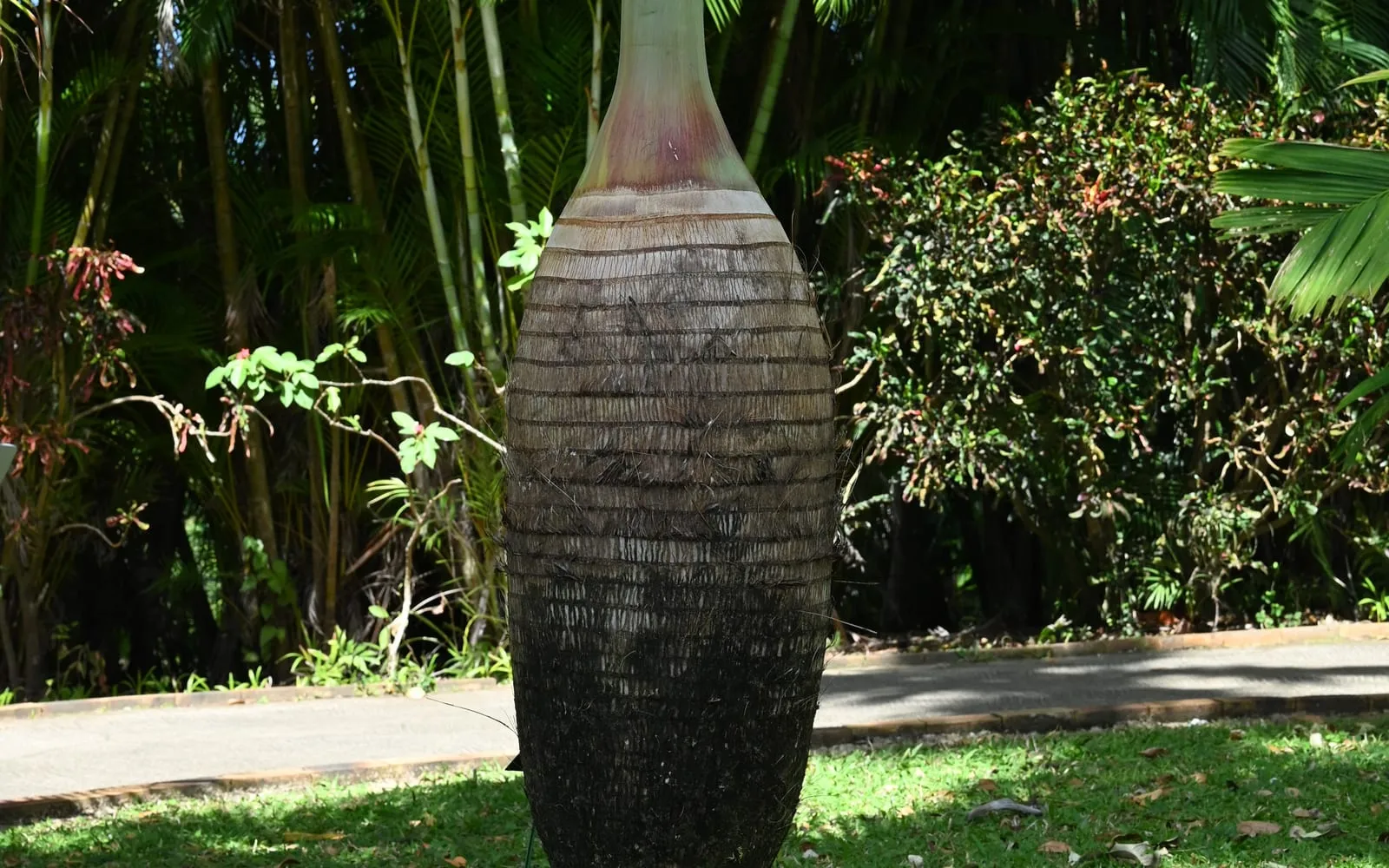
Bottle palm is grown almost entirely for the shape of its trunk. A mature specimen swells into a smooth, grey, bulbous base that narrows again below the crownshaft, a form no other commonly grown palm shares, topped by a short head of stiff, arching, feather-shaped fronds.
It is slow, taking many years to develop the full bottle shape, and it needs warmth, strong light and sharp drainage rather than frequent attention. Cold is what limits where it can be grown outdoors; everything else about its native habitat has made it remarkably tolerant of poor soil, salt and drought once its roots are established.
Appearance and character
The trunk is the defining feature: pale grey, ringed with the scars of old leaf bases, and swollen into a rounded bulge that can reach 60 to 90 cm across on an older plant before narrowing sharply into the green crownshaft above. Younger plants show only the beginning of this shape, a gentle thickening rather than a full bottle, and the form becomes more pronounced with every passing year.
Four to six stiff, arching fronds make up the crown at any one time, each divided into narrow, dark green leaflets held at a slight upward angle. Small cream flowers appear in branched clusters below the crownshaft on a mature plant, followed by small, dark, olive-shaped fruit.
Growth is slow throughout its life, and a plant grown from seed can take a decade or more to show a real bottle shape, which is part of why larger specimens command a high price.
Where it is from
Hyophorbe lagenicaulis survives in the wild on Round Island, a small, uninhabited volcanic islet off the northern coast of Mauritius, where introduced rabbits and goats reduced the native population to a handful of trees before those animals were removed and the island’s vegetation began to recover. It grows on thin, rocky soil exposed to strong, salt-laden wind, with no shelter and long dry spells between rains.
That history explains both its resilience and its price as a garden plant. Its tolerance of poor soil, drought and coastal exposure comes directly from an islet with almost nothing to offer a plant except sun and salt. Because the wild population is so small, nearly every cultivated specimen now starts as nursery-raised seed grown on palm farms across the tropics.
How it grows
Plant it in full sun once established, in sandy, free-draining soil; a young plant appreciates light shade for its first year or two while its root system develops, then does best moved into full sun.
Water regularly while it is young, letting the topsoil dry between sessions rather than keeping the ground constantly damp, which encourages root rot in a palm bred for sharp drainage. Established plants tolerate extended dry spells well and need supplemental water mainly during prolonged drought.
Feed through the growing season with a fertiliser formulated for palms, which carries the magnesium, manganese and potassium this family needs in larger amounts than a general-purpose feed supplies. A deficiency in any of the three shows up first as discoloured or frizzled older fronds rather than affecting the whole plant at once.
Grown in a container, it needs a large, deep pot to accommodate its root system and excellent drainage, and it should be moved to full sun and the warmest, most sheltered spot available once temperatures allow.
Through the seasons
Spring brings the start of the main growing season. Increase watering as temperatures rise and begin the feeding programme.
Summer is the period of fastest growth and, on a mature specimen, when flowering and fruiting are most likely.
Autumn slows growth gradually. Taper off feeding towards the end of the season and watch overnight temperatures if it is grown outdoors near the cooler edge of its range.
Winter calls for protection from any cold. Move a potted plant well indoors or under cover before temperatures approach freezing, and reduce watering while growth is slow.
Care difficulty
Moderate. An established outdoor plant in a reliably warm, frost-free climate needs very little beyond occasional feeding and deep watering in drought. The difficulty concentrates at the two ends of its life: young plants are markedly more cold-sensitive and prone to root problems than mature ones, and a container-grown specimen anywhere outside the tropics needs active winter protection every year without exception. Its very slow growth also means mistakes take a long time to grow out of, so getting light, drainage and feeding right early matters more than it does with a faster-growing palm.
Watering
Water young plants regularly through the growing season, enough to keep the root zone lightly moist without staying waterlogged, and let the surface dry between waterings.
Once established, cut back to deep watering only during extended dry spells; the swollen trunk itself stores some water, and a mature specimen in the ground is properly drought-tolerant. A container-grown plant has no such reserve in the surrounding soil and needs more consistent attention than one planted out.
Warning signs, diseases and pests
Scale insects appear as small, flat, brownish bumps on the fronds and stem, sapping the plant and sometimes leaving a sticky residue behind. Treat with horticultural oil or soap, covering the undersides of fronds where scale tends to cluster.
Red palm weevil is a serious pest wherever it has become established, boring into the crown and trunk in a way that can kill a palm before any external damage is obvious. Report a suspected infestation to the local agricultural authority rather than treating it as a routine houseplant problem.
Potassium and magnesium deficiency are common in palms grown in soil those elements have been depleted from, showing as yellow-orange spotting or frizzled, discoloured tips on the oldest fronds while newer growth stays green. A palm-specific fertiliser corrects it over several growing seasons, though damaged fronds themselves do not recover and are best left in place until they die back naturally, since a palm draws nutrients back out of an ageing frond before dropping it.
Root rot follows soil that stays wet, particularly around a young plant before its root system has filled the pot or planting hole. Improve drainage and water less often rather than treating the plant while the soil is still saturated.
Growing environment
Full sun brings out the best growth and the most pronounced trunk shape; a plant kept in shade for years grows leggier and slower without ever developing the same bulge.
Warmth is essential. Growth stalls below about 15 deg C and the plant takes real damage anywhere near freezing, so outside a tropical or warm subtropical climate it needs to spend winter under cover.
Sandy, free-draining soil suits it best, and a plant in heavier ground benefits from grit or coarse sand worked in to improve drainage before planting.
Feeding
Apply a fertiliser formulated for palms, which supplies extra magnesium, manganese and potassium alongside the standard nutrients, three to four times through spring and summer.
Reduce or stop feeding in autumn and winter as growth slows, since nutrients applied when the plant is barely taking up water sit unused in the soil rather than reaching the roots.
Troubleshooting
The oldest fronds have gone yellow and frizzled at the tips. Potassium deficiency is the most likely cause, common in palms grown in soil where that nutrient has been used up. Switch to a palm-specific fertiliser; the damaged fronds themselves will not recover, but new growth should come in healthier.
My young plant’s trunk shows no sign of swelling. Patience, most likely. The bottle shape develops gradually over years rather than appearing on a young plant, and a specimen bought small may take a decade or more to show a pronounced bulge.
The leaves have gone brown and mushy at the base after cold weather. Cold damage, and there is no reversing it once it has happened. Move a potted plant to a warmer, more sheltered position for future winters, and remove badly damaged fronds once new growth confirms the plant has survived.
Can I grow this indoors permanently? Only with very strong light, since indoor conditions rarely match the full sun this palm needs for good growth. It tolerates a bright indoor spot for a period but does best moved outside into full sun whenever the weather allows.
Why is growth so slow compared with other palms I have grown? This species is naturally slow-growing at every stage, trunk swelling included, and no amount of feeding or ideal conditions will speed it to the pace of a fast-growing palm. Consistent warmth and light are what keep it growing steadily rather than what make it grow fast.
Bottle Palm problem guides
Not sure what is wrong? See the common houseplant pests guide.