
Houseplant
Coffee Plant
Coffea arabica
How to grow coffee plant, Coffea arabica. Why a plant can grow for years without ever flowering, telling a dramatic thirst-wilt from silent root rot, and keeping the caffeine in its leaves and raw cherries away from pets.
At a glance
- Difficulty
- Moderate
- Water
- When the top few centimetres of mix dry out, typically weekly
- Light
- Bright indirect light, with some gentle morning sun
- Temperature
- 18-24 deg C. Below 15 deg C slows growth and below 5 deg C damages the plant
- Humidity
- 50% or higher. Dry indoor air browns the leaf edges
- Hardiness
- USDA 10-11, RHS H1b, hardy to 5 C
- Type
- Evergreen tropical shrub or small tree
- Height
- 1-2 m indoors; 4-6 m unpruned outdoors in the tropics
- Native to
- Ethiopia, tropical Africa
A highland tropical species that grows between about 800 and 2,000 metres in its native range, where the altitude keeps temperatures moderate year round rather than tropically hot. It needs warmth without extremes, no frost at any point, and a short cool, drier spell to trigger the flush of flowers that ripens into cherries. Given constant heat and no seasonal change, a plant grows leaves steadily but flowers only sparingly.
Hardiness zones describe winter cold alone. Summer heat, humidity, rainfall and the length of the growing season decide as much, so treat the range as the outer limit rather than as a recommendation.
Toxic if eaten
- Do not eat
- Leaves and the raw, unroasted seeds inside the cherry
- Harm from
- Eating it
- Affects
- Cats, dogs and people
The caffeine that makes a roasted, brewed cup safe for most adult humans is exactly what makes the raw plant a hazard for a pet that chews it. The ASPCA lists Coffea arabica as toxic to cats and dogs through the methylxanthines it contains, the same class of compound found in chocolate, with vomiting, restlessness, a racing heart and, in a large enough dose, tremors. A dog that eats a mouthful of fallen cherries or a cat that shreds a leaf is the realistic scenario rather than a curious nibble, and either warrants a call to a vet if it happens. In people, eating raw leaves or unroasted beans in quantity can cause the same stimulant symptoms, though a plant kept out of reach of small children removes most of the practical risk. Roasted, brewed coffee as people drink it is a different matter entirely and is not what this entry is about.
Sources: ASPCA (Coffee, Coffea arabica), RHS potentially harmful garden plants
About
Coffee plant is grown indoors for its foliage long before anyone harvests a bean from it. A young plant kept as a houseplant may never flower at all, and one that does flower needs several years of growth first. What it offers meanwhile is a neat, glossy shrub that tolerates a living room better than most people expect from a tropical crop plant.
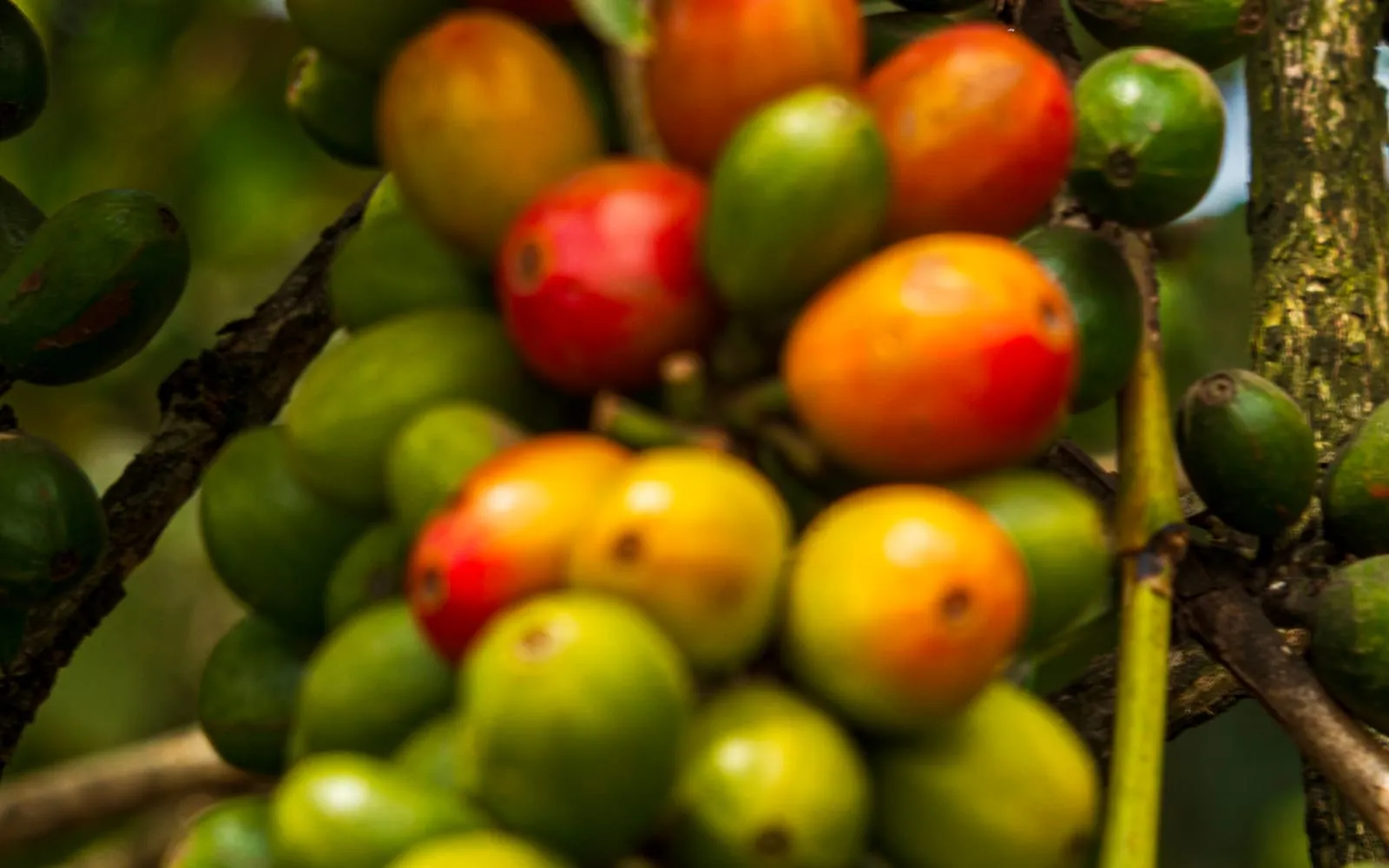
Grow it for the leaves. They are dark green, deeply veined and permanently glossy, arranged in opposite pairs along stems that branch low and stay compact with light pruning. Given several years, warmth, and a spell of slightly cooler, drier weather to trigger flowering, a mature plant produces small white star-shaped flowers followed by the green cherries that ripen to red and hold the two beans inside.
Appearance and character
The paired, elliptical leaves are 10 to 15 cm long, dark glossy green above and paler beneath, with a wavy margin and a network of veins pressed slightly into the surface. New leaves emerge a lighter, almost bronze green before darkening.
Stems branch in a distinctive tiered pattern, each side shoot growing roughly level with the ones opposite it, which is what gives an outdoor tree its layered, almost pagoda-like shape. Indoors, where growth is slower and usually pruned, the effect is subtler but still visible in a plant left unclipped for a season or two.
Flowers, when they appear, are small, white, star-shaped and clustered tightly along the stem at the leaf joints, with a scent some growers compare to jasmine. They last only a day or two each but a mature plant can flush repeatedly over several weeks. Green cherries follow, taking around eight months to ripen through yellow to a deep red, each one holding the two seeds that become coffee beans once dried and roasted.
Where it is from
Coffea arabica is native to the highland forests of southwestern Ethiopia and adjacent parts of South Sudan, growing as an understorey shrub beneath taller trees at altitudes that keep the air cooler than the lowland tropics around it. Wild populations still grow in that forest today, alongside the vast cultivated plantations descended from a narrow slice of that original genetic diversity.
That understorey habitat explains the light it needs indoors. A plant that evolved filtering sun through a forest canopy scorches in direct midday light on a windowsill but grows leggy and pale if kept too dim, so bright, indirect light with perhaps an hour of gentle morning sun suits it best.
The altitude also explains the flowering trigger. A short period of cooler, drier weather in the wild highlands signals the plant to flush flowers, which is one reason a plant kept at a constant warm temperature all year round can grow steadily for years without flowering at all.
How it grows
Pot it in a rich, free-draining, slightly acidic mix, a general houseplant compost with some added perlite works well, and keep it somewhere bright but out of direct midday sun.
Growth is fastest in spring and summer, when new leaf pairs appear every few weeks on a happy plant. Pinch out the growing tips of young plants to encourage the branching, tiered shape rather than a single bare stem.
A plant grown from seed or a young nursery specimen typically takes three to four years before it is mature enough to flower, and flowering indoors is inconsistent even on a mature plant unless it gets a genuine seasonal change in light and temperature.
Repot every year or two in spring as the roots fill the pot, moving up one container size at a time rather than into something dramatically larger, since a coffee plant’s roots dislike sitting in a large volume of damp, unused compost.
Through the seasons
Spring is the main growth flush. Repot if needed, resume regular feeding, and increase watering as new leaves appear.
Summer continues strong growth. Watch for dry air and direct sun through a hot window, both of which mark the foliage.
Autumn slows growth gradually. Reduce feeding towards the end of the season as the plant’s demand for nutrients drops.
Winter is the quiet season indoors. Water more sparingly, keep the plant away from cold glass and draughts, and hold off on feeding until spring growth resumes.
Care difficulty
Moderate, and the two things that catch people out are humidity and water consistency rather than anything exotic. Indoor air, especially with central heating running, sits far drier than the plant’s native cloud forest, and the leaf edges brown in response over weeks rather than days, which makes the cause easy to miss at first.
Watering swings between too much and too little cause more visible trouble than humidity does. A coffee plant wilts dramatically when thirsty and recovers within hours of a good soak, which is a useful early warning that overwatered, waterlogged roots do not give in the same obvious way.
Watering
Water when the top few centimetres of the mix have dried, checking with a finger rather than a fixed schedule, since the interval shifts with light, warmth and pot size through the year.
Water thoroughly until it runs from the drainage holes, then let any excess drain away completely rather than leaving the pot standing in it. Consistently soggy compost is the more common cause of a sick plant than the odd missed watering.
A drooping, slightly curled leaf is the plant’s clear signal that it needs water. It responds quickly once watered, usually recovering its posture within a few hours, which makes thirst one of the easier problems on this plant to diagnose and fix.
Warning signs, diseases and pests
Mealybug shows as small white, cottony tufts wedged into leaf joints and along new shoots. Wipe them away with a cloth dipped in diluted alcohol or treat with horticultural soap.
Scale insects appear as small, flat brown discs fixed to stems and the undersides of leaves, often with a sticky residue on nearby surfaces. Treat the same way as mealybug, and check regularly since scale can be slow to notice.
Spider mite favours warm, dry air and shows as fine pale speckling across the leaves with faint webbing in advanced cases. Raising humidity and rinsing the foliage periodically helps keep numbers down.
Root rot follows compost that stays wet for too long between waterings, showing as leaves that yellow and drop while the mix underneath still feels damp. Repotting into fresh, free-draining mix and cutting back watering is the only real fix once it has taken hold.
Growing environment
Bright, indirect light suits it best, with an hour or so of gentle morning sun tolerated well. Strong, direct midday sun through glass scorches the leaves, showing as pale, crisped patches.
Keep the room between about 18 and 24 deg C for steady growth. Growth slows noticeably below 15 deg C, and any exposure near 5 deg C or below causes lasting damage to the foliage.
Humidity above 50% keeps the leaf edges from browning. A cluster of plants, a pebble tray, or a spot in a naturally humid room such as a kitchen or bathroom all help more than occasional misting does.
A rich but free-draining, slightly acidic mix suits the roots. Standard houseplant compost with extra perlite worked in, or a mix sold for citrus or acid-loving plants, both work well.
Feeding
Feed monthly through spring and summer with a balanced liquid houseplant fertiliser, or one formulated for acid-loving plants such as citrus, following the product’s dilution guidance.
Reduce feeding as growth slows in autumn and stop entirely over winter, when the plant is using very little and unused fertiliser accumulates as salts in the mix.
A plant that is never repotted benefits from slightly more regular feeding than one moved into fresh compost every year or two, since fresh mix carries its own store of nutrients for the first season.
Troubleshooting
The leaf edges are turning brown and crispy. Dry air is the usual cause, especially in a centrally heated room over winter. Raise the humidity around the plant and keep it away from radiators and heating vents.
It has never flowered even though it looks healthy. Age and a lack of seasonal change are the two likely reasons. A plant needs several years of growth before it can flower at all, and a spell of slightly cooler, drier conditions helps trigger the flush even on a mature plant kept too evenly warm all year.
The leaves have gone pale and the plant looks leggy. Not enough light. Move it closer to a bright window, avoiding direct midday sun, and expect new growth to come in darker and more compact once it gets more light.
Cherries formed but they never turned red. Ripening from green through yellow to red takes around eight months, so cherries that still look green after a few weeks are not there yet. Warmth and steady care through that period support the process; nothing speeds it up.
Is it safe to keep with a cat that chews houseplants? No. The leaves and unroasted seeds contain caffeine, which is toxic to cats and dogs in the quantities a determined chewer can manage. Keep the plant out of reach or in a room the animal cannot access, and contact a vet if a pet has eaten plant material and shows restlessness, vomiting or a racing heart.
Coffee Plant problem guides
Not sure what is wrong? See the common houseplant pests guide.