
Outdoor plant
Moonflower
Ipomoea alba
Also known as Moon Vine, Tropical White Morning Glory
Practical guidance for growing moonflower, Ipomoea alba, including night-blooming flowers, hawk moth pollination, seed scarification, day-length flowering triggers, and toxic seeds.
At a glance
- Difficulty
- Moderate
- Water
- Regular watering through the growing season
- Light
- Full sun for the strongest flowering
- Temperature
- Killed outright by frost; needs consistent warmth to grow well
- Hardiness
- USDA 10-12, RHS H1c, hardy to 5 C
- Type
- Tender perennial climber, almost always grown as an annual
- Height
- 3-5 m in a single season from seed
- Native to
- tropical America
Where it is perennial, moonflower survives on a large, tuberous rootstock that resprouts each warm season, but that range is narrow and frost ends the top growth outright anywhere colder. Almost every gardener growing it does so as an annual raised from seed each spring, and the practical limit on a good display is rarely the last frost date alone: the vine needs a long run of warm weather afterwards to grow to flowering size before shortening autumn days trigger bloom, which can arrive too late for a short growing season to make full use of it.
Hardiness zones describe winter cold alone. Summer heat, humidity, rainfall and the length of the growing season decide as much, so treat the range as the outer limit rather than as a recommendation.
Toxic if eaten
- Do not eat
- Seeds, which contain ergoline alkaloids related to lysergic acid
- Harm from
- Eating it
- Affects
- People, cats, dogs and horses
Moonflower seeds contain ergoline alkaloids, including lysergic acid amide, chemically related to the compounds in morning glory seeds and to LSD itself, though far weaker in effect. Eating a significant number of seeds can cause vomiting, dilated pupils, disorientation and hallucination in a person, and similar digestive and neurological signs in a dog, cat or horse. The flowers, leaves and stems carry far less of the alkaloid than the hard-coated seeds do, and the practical risk centres almost entirely on a child or a foraging pet finding and chewing a handful of seed pods left to ripen on the vine. Deadheading spent flowers before they set seed removes most of the risk in a garden with children or pets that explore by mouth, and stored seed saved for next year's sowing should be kept well out of reach.
Sources: ASPCA toxic and non-toxic plants, RHS potentially harmful garden plants
About
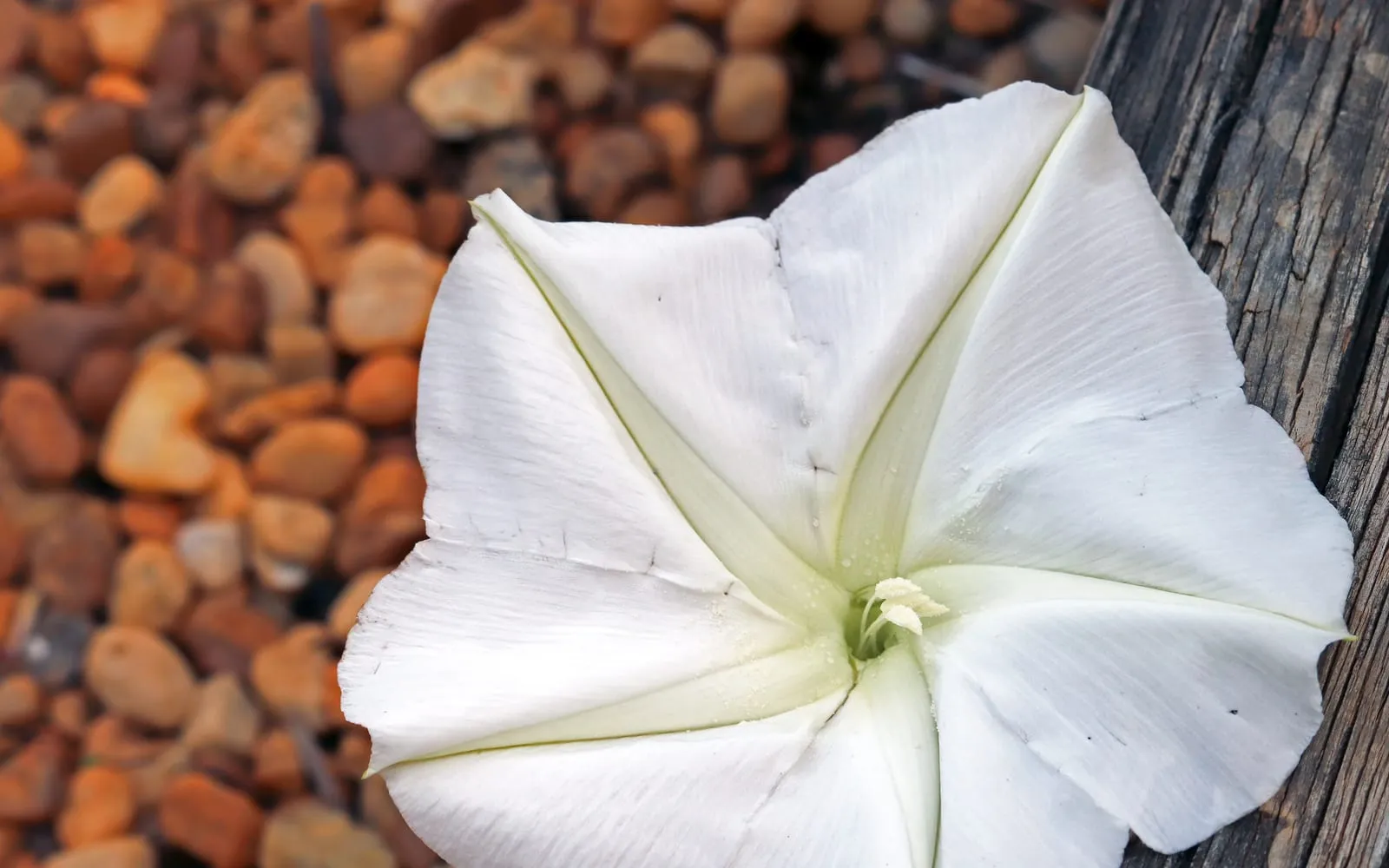
Moonflower opens its huge white trumpets at dusk and closes them again by the following morning, timing that gives the whole plant its name and that makes it a fixture of gardens planned to be enjoyed after dark. Each individual flower lasts a single night, but a well-grown vine in full season produces new ones every evening for weeks on end.
Its fragrance, released almost entirely at night, is one of the strongest of any commonly grown climber and exists for a specific reason: the flower is built for hawk moths, large nocturnal pollinators with a proboscis long enough to reach nectar at the base of its narrow floral tube.
Growing it well from seed each year takes a bit more planning than most annual vines, since both frost and the calendar itself limit how much of a display a short growing season allows.
Appearance and character
Leaves are large, heart-shaped and bright green, held on long twining stems that wind counter-clockwise around any support they meet, climbing by twining rather than by tendrils or aerial roots.
Flowers are the plant’s whole reason for being grown: pure white, funnel-shaped and 10 to 15 cm across, opening rapidly in the space of a few minutes at dusk and visibly wilting by the following morning if the day is sunny. A mature vine in the height of its season can carry a dozen or more open flowers on a single evening.
In climates warm enough for it to persist for more than one season, the plant develops a large, tuberous root below ground, storing enough energy to resprout vigorous new top growth once conditions warm again, though most gardeners never see this stage and grow it as a fast, one-season climber instead.
Where it is from
Ipomoea alba is native across a broad stretch of tropical America, from Mexico through Central America and the Caribbean into South America, growing in warm, humid lowland habitats where it flowers for much of the year without the interruption of frost.
Its night flowering and heavy scent evolved alongside hawk moths in that range, and the relationship is close enough that the flower’s shape, a long narrow tube holding nectar at its base, matches the length of the moth’s proboscis with real precision. A garden lacking hawk moths still gets the display, though not always the same pollination and seed set a tropical American garden would see.
How it grows
Sow seed indoors four to six weeks before the last expected frost, having first nicked the hard seed coat with a file or soaked the seed overnight in water, since an intact seed coat can otherwise take weeks longer to germinate than a scarified one does.
Transplant out only once the soil has warmed and all frost risk has passed, since young plants set back by cold rarely recover the lost time before the season ends. Give it full sun and a sturdy support to twine around from the start: a trellis, an obelisk or a length of netting all work, provided it offers something narrow enough for the stem to wrap.
Water consistently through the growing season rather than letting the soil swing between wet and dry, and feed monthly with a balanced fertiliser to support the vigorous growth needed to reach flowering size within a single season.
Where the growing season is short, choosing a site with reflected warmth, such as a south-facing wall, can bring the first flowers forward by several weeks compared with an open bed.
Through the seasons
Spring is for starting seed indoors after scarifying it, and for planting out once frost has passed and the soil has warmed.
Summer is vigorous vegetative growth, climbing rapidly toward its support with the first flowers usually arriving as days begin to shorten.
Autumn brings the main flowering display in most temperate climates, triggered by shortening day length, continuing until the first frost ends the season outright.
Winter kills the top growth wherever frost occurs; only where the climate stays frost-free year round does the tuberous root survive to resprout the following spring.
Care difficulty
Moderate. The start of the season needs the most care. Scarify the seed to get germination going, and time the move outdoors against the local frost date. Once established and climbing, the vine is vigorous and largely self-sufficient, needing only regular water and an occasional feed.
Watering
Water regularly and consistently through the growing season, keeping the soil evenly moist rather than letting it swing between saturated and bone dry, since both extremes check growth on a plant working to reach flowering size in a single season.
A container-grown plant, common where garden space or climate makes a large support impractical, needs closer attention to watering than one grown in open ground, particularly during hot weather.
Warning signs, diseases and pests
Whitefly clusters on the undersides of leaves, rising in a small cloud when the foliage is disturbed. Yellow sticky traps and a strong jet of water both help control a light infestation.
Spider mite thrives in hot, dry conditions, showing as fine speckling on the leaves with faint webbing in a bad case. Raising humidity around the plant and rinsing the foliage helps prevent it taking hold.
Aphids sometimes cluster on soft new shoot tips, distorting new growth. A strong jet of water usually clears a light infestation.
Powdery mildew can appear late in the season as nights cool and humidity rises, coating leaves in a pale film. It is mostly cosmetic this late in a vine’s single-season life and rarely needs treatment.
Growing environment
Full sun gives the strongest, most vigorous growth and the best chance of reaching flowering size within a single warm season.
Fertile, well-drained soil suits it best, with enough moisture retention to avoid the plant drying out during the peak of summer growth.
Warmth matters more than almost any other factor. A cool, damp start to the season sets growth back further than it costs a more temperate-climate annual, since this is a tropical vine asked to complete a full growth and flowering cycle in a much shorter window than it evolved for.
Feeding
Apply a balanced, general-purpose fertiliser monthly through the growing season, supporting the rapid vegetative growth the vine needs before it can flower.
Avoid heavy nitrogen feeding late in the season, which encourages soft new growth at the expense of the flower buds beginning to form as days shorten.
Troubleshooting
My seeds never sprouted. The hard seed coat is the usual cause. Nick it with a file, taking care to avoid the pale spot where the root will emerge, or soak the seed in water overnight before sowing, either of which speeds germination considerably.
It grew all summer but never flowered before frost. A short growing season is the likely explanation. Moonflower often waits for shortening autumn day length to trigger flowering, which can arrive too close to the first frost in a cooler climate. Starting seed earlier indoors and choosing the warmest possible planting spot both help bring flowering forward.
The flowers only last one night. Is that normal? Yes, and it is the defining trait of the species. Each individual bloom opens at dusk and fades by the next morning, but a healthy, established vine produces new flowers every evening through its flowering season.
Can I keep it going as a perennial? Only in a climate that stays frost-free year round, where the tuberous root can survive winter and resprout. Anywhere frost reaches the ground, treat it as an annual and raise fresh seed each spring.
Is it dangerous if my dog eats a seed pod? Treat it seriously if a real quantity of seed has been eaten. The hard black seeds carry ergoline alkaloids capable of causing vomiting and disorientation in a pet, and deadheading spent flowers before they set seed is the simplest way to avoid the risk in a garden pets have access to.