
Outdoor plant
Monkshood
Aconitum napellus
Also known as Aconite, Wolfsbane, Devil's helmet
How to grow Aconitum napellus, the most poisonous plant in temperate gardens. Handling it safely, dividing it in gloves, staking the stems, and why the root is the danger.
At a glance
- Difficulty
- Easy
- Water
- Regularly in dry weather
- Light
- Partial shade, or full sun where the soil stays damp
- Temperature
- Very hardy, to -20 deg C
- Hardiness
- USDA 3-7, RHS H7, hardy to -35 C
- Type
- Herbaceous perennial from a tuberous root, long-lived
- Height
- 1-1.5 m
- Native to
- Western and central Europe, including native Britain
- Best month
- September in the Northern Hemisphere, March in the Southern Hemisphere
Cool damp shade and moisture-retentive soil suit it, and it does poorly in hot dry summers. Cold is never a consideration. The reason to be careful is the root, which concentrates aconitine and has been mistaken for horseradish with fatal results. Aconitine crosses intact skin, so gloves are not optional when dividing it, and it is the most poisonous plant commonly grown in temperate gardens.
Hardiness zones describe winter cold alone. Summer heat, humidity, rainfall and the length of the growing season decide as much, so treat the range as the outer limit rather than as a recommendation.
Every month named in this guide is for the temperate Northern Hemisphere. If you garden in the Southern Hemisphere, shift each one by six months, so September becomes March. Closer to the equator the wet and dry seasons matter more than the calendar, and the shift stops being a useful guide.
Poisonous if eaten
- Do not eat
- Every part, and the tuberous root above all
- Harm from
- Eating it and handling it
- Affects
- People, cats, dogs and horses
Monkshood is the most poisonous plant commonly grown in temperate gardens and it deserves to be treated accordingly. Every part contains aconitine and related alkaloids, concentrated most heavily in the tuberous root, and the RHS places it in its highest category as harmful if eaten and able to poison through the skin. Two grams of root has been enough to kill an adult. Poisoning begins with tingling and numbness of the lips, tongue and face, spreading to the limbs, followed by burning pain, nausea, muscle weakness, disturbed heart rhythm and death from cardiac arrhythmia or respiratory paralysis. There is no antidote, and treatment is supportive only. The property that sets aconite apart from other garden poisons is absorption through unbroken skin. Handling the roots without gloves, particularly when dividing a clump or clearing a bed, has produced numbness and cardiac symptoms in gardeners, and the risk rises sharply where there are cuts or grazes on the hands. Wear waterproof gloves for any work involving the roots, wash your hands and tools afterwards, and keep the plant away from vegetable beds where a root could be mistaken for something edible. Fatalities have followed roots being confused with horseradish. Site it away from paths where children play, and consider whether you want it at all in a garden used by young children, since the flowers are attractive to pick. Cats, dogs and horses are all susceptible. Ordinary care makes it a safe plant to grow, and the care is not optional.
Sources: RHS potentially harmful garden plants, ASPCA toxic and non-toxic plants
About
Monkshood earned the name queen of poisons and has kept it for two thousand years. Aconite was used on arrow tips and on bait left out for wolves, which is where wolfsbane comes from, and it has been the agent in enough murders to have its own literature.
It is also a first-rate garden plant. Spires of hooded indigo flowers in late summer and autumn, on stems that need no staking in shelter, in the damp partial shade where delphiniums sulk.
The two facts sit together without much difficulty. Grow it, wear gloves when you touch the roots, keep it out of the vegetable garden, and it is no more trouble than a delphinium. The precautions matter because aconitine passes through unbroken skin, which almost no other garden poison does.
Appearance and character
An upright herbaceous perennial, 1 to 1.5 m tall, growing from a cluster of fleshy tuberous roots.
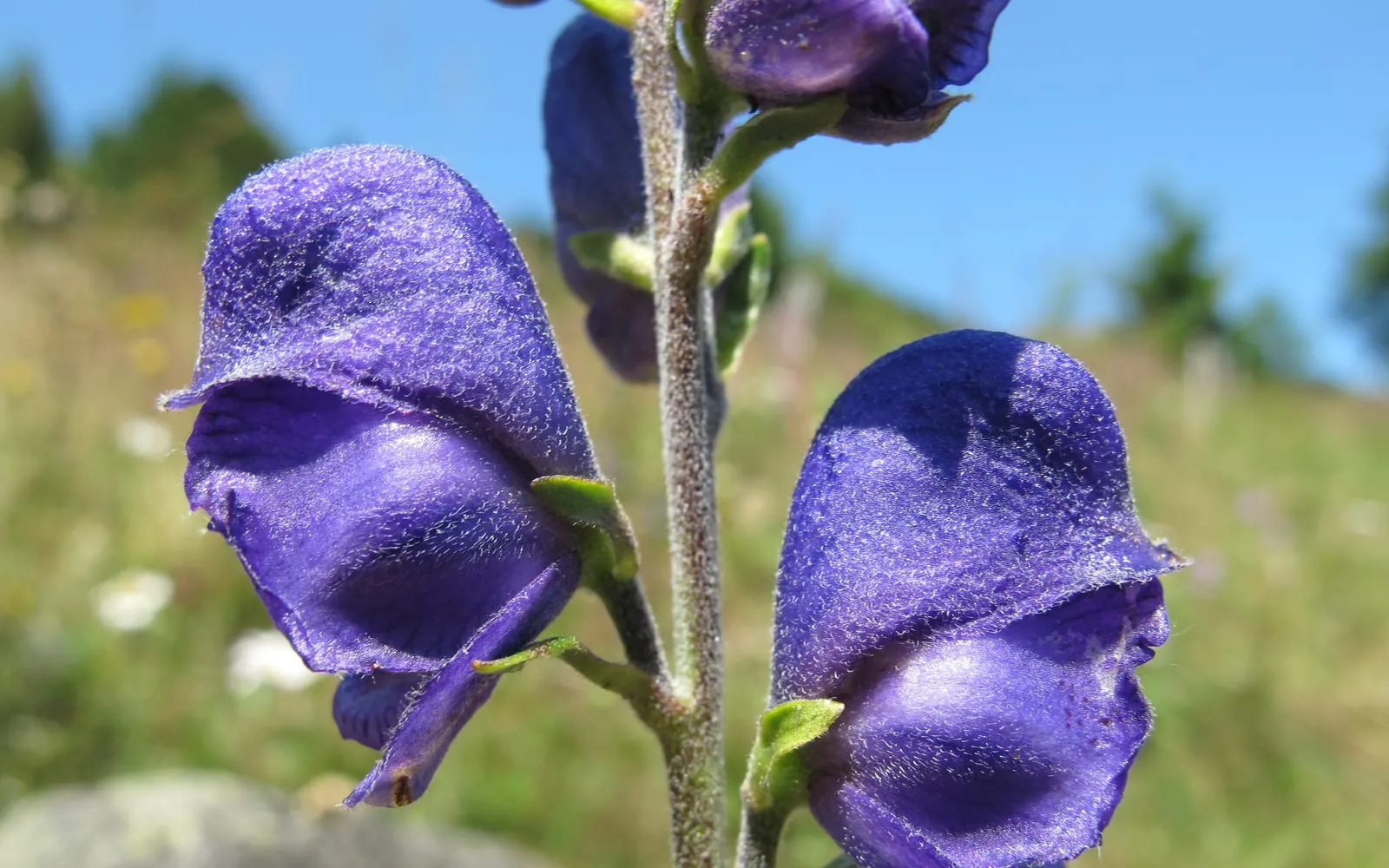
Flowers open from July to September in dense terminal spires, deep indigo to violet-blue, and each one is shaped like a hood or a helmet.
The hood is a modified sepal rather than a petal. It arches over the top of the flower and conceals two nectar-bearing petals inside, an arrangement that only a long-tongued bumblebee can reach, which is why bumblebees work the plant heavily and honeybees ignore it.
Leaves are dark green and glossy, deeply divided into five or seven lobes, each lobe cut again into narrow segments, giving a fine palmate outline.
Roots are the dangerous part. Each plant sits on a cluster of pale, fleshy, tapering tubers, and it is these that resemble a small parsnip or a horseradish root closely enough to have killed people.
Seed pods follow the flowers, splitting to release black seeds.
Related garden species are grown and are all equally poisonous. Aconitum carmichaelii flowers later into October, and ‘Bicolor’ is white with blue margins.
Where it is from
Western and central Europe, including Britain, where it is a genuine native confined to a small number of damp shaded stream banks in south-west England and south Wales.
Its wild habitat is exactly what it wants in a garden. Damp ground beside running water, in the partial shade of trees, in rich soil that never dries out.
The plant’s medicinal and toxic history runs through most of Europe and Asia. Preparations of aconite were used for pain and fever into the nineteenth century with a narrow margin between a dose and a fatal one, and it appears in Chinese medicine in a carefully processed form.
Greek myth gave it an origin in the saliva of Cerberus, and it was said to have been used by Medea. The Latin napellus means little turnip and refers to the root.
Its use on wolf bait gave wolfsbane, and its use on arrow tips is recorded from ancient Greece through to nineteenth-century central Asia.
How it grows
Plant in autumn or spring into moist, fertile, humus-rich soil, in partial shade or in sun where the ground stays damp.
Wear waterproof gloves for planting, dividing and any work that brings you into contact with the roots.
Space plants 45 cm apart, and set the crown at the depth it grew before.
Mulch in spring with well-rotted manure or compost, which keeps the roots cool and damp.
Stake in an exposed position. The stems are strong and a heavy flower spike after rain will lean.
Cut the stems down after flowering, or leave them into winter for the seed heads and cut in early spring.
Divide every three or four years in autumn or early spring to keep the clump vigorous. This is the one job where gloves are essential rather than sensible, since it involves handling the tubers directly.
Wash gloves, tools and hands afterwards, and put the trimmings straight in the green waste rather than leaving them where an animal or child might find them.
Through the seasons
Winter is dormancy. The plant disappears completely. Mark the position so it is not dug into by accident.
Spring brings the shoots in March and April. Mulch, feed, divide if needed, and watch for slugs on the young growth.
Summer is growth and the start of flowering. Water in dry spells, stake if exposed, and expect powdery mildew in a dry season.
Autumn is the main display, with the spires at their best in September. Bumblebees work them until the frosts.
Care difficulty
Easy. Monkshood is a straightforward hardy perennial that lives for years and needs very little.
Moisture is the only real requirement. It resents dry soil and will scorch and mildew in a hot dry border.
The handling precautions are the part that needs remembering rather than skill. Gloves for the roots, and no siting it near a vegetable patch.
Slugs take the spring shoots and powdery mildew marks the leaves in a dry summer, and neither threatens the plant.
Division every few years keeps it flowering well.
Watering
Water in dry weather through summer. Monkshood evolved beside streams and shows drought stress quickly.
Mulch thickly each spring, which does more for the plant than watering does.
Keep the soil damp rather than waterlogged. Standing winter wet rots the tubers.
Newly planted divisions need watering through their first summer.
Containers are possible in a large deep pot with careful watering, though a plant of this size and thirst is happier in the ground.
Warning signs, diseases and pests
Powdery mildew coats the leaves in white in a dry summer, particularly on a plant in a hot border or against a wall. It is a sign that the soil is too dry. Mulch, water, and move the plant somewhere damper if it recurs.
Aphids gather on the flower spikes and stems in early summer.
Slugs graze the emerging shoots in March and April, and the damage is worst on a newly planted division.
Verticillium wilt causes whole stems to yellow and collapse from the base while others stay healthy. Remove and destroy affected plants, and do not replant aconitum in the same soil.
Leaves scorching brown at the margins in midsummer means the plant is too dry.
Few flowers on an old clump usually means it needs dividing.
A plant that fails to reappear in spring has usually rotted over winter in waterlogged ground.
Growing environment
Partial shade is ideal, and full sun works where the soil is reliably damp.
Moist, fertile, humus-rich soil that never dries out. Heavy loam and clay both suit it.
The edge of a pond, a damp border, a woodland edge or a north-facing bed are all good positions.
Shelter from strong wind, or stake the stems.
Site it away from paths used by small children, away from vegetable beds, and away from anywhere a dog digs.
It combines well with late-season perennials. Japanese anemones, asters and persicaria all flower at the same time and want similar ground.
Avoid a hot dry sunny border, where it mildews and scorches every year.
Feeding
Mulch each spring with well-rotted manure or garden compost.
A general-purpose fertiliser in spring suits a plant on poor ground.
Avoid heavy nitrogen, which produces soft stems that flop.
Divide every three or four years, which does more for vigour than feeding.
Container plants need a slow-release feed in spring and repotting every second year.
Troubleshooting
How dangerous is it? Extremely. Every part is poisonous, the root most of all, and aconitine is absorbed through unbroken skin. Two grams of root can kill an adult and there is no antidote. Wear waterproof gloves for any work involving the roots.
Can I grow it with children or pets around? Many people do, sited away from paths and play areas and well away from vegetable beds. The flowers are attractive to pick, so think about whether the position invites that.
What do I do if I get sap on my skin? Wash it off thoroughly with soap and water. Tingling or numbness of the lips, tongue or fingers after handling the plant is a reason to seek medical advice straight away.
Do I need gloves just to deadhead it? Gloves are sensible for all handling and essential for anything involving the roots, which is where the concentration is highest.
The leaves have gone white and powdery. Powdery mildew from dry soil. Mulch, water, and consider moving it somewhere damper.
It flopped over after rain. A heavy spike on a tall stem. Stake it in an exposed position.
Fewer flowers than it used to have. The clump needs dividing, which is best done in autumn or early spring, wearing gloves.
Can I compost the prunings? Yes, in a domestic compost heap or green waste collection. The alkaloids break down. Do not leave cut material lying where an animal might eat it.