
Edible
Large Thyme
Thymus pulegioides
Also known as Broad-leaved Thyme, Lesser Wild Thyme
How to grow large thyme, Thymus pulegioides. Telling it from wild thyme by its square, ridge-haired stems, the lemon-camphor flavour that sets it apart from kitchen thyme, and why it copes with a cool, damp summer better than Mediterranean thyme species do.
At a glance
- Difficulty
- Easy
- Water
- Almost never once established
- Light
- Full sun
- Temperature
- Fully hardy, to about -20 deg C
- Hardiness
- USDA 4-9, RHS H6, hardy to -20 C
- Type
- Hardy evergreen sub-shrub
- Height
- 10-25 cm
- Native to
- Europe
Native across most of Europe on calcareous grassland, it copes with a cooler, wetter growing season than the Mediterranean thyme species behind most kitchen plants, though it still needs the same sharp winter drainage every thyme demands. Bees and the large blue butterfly both depend on it where it grows wild.
Hardiness zones describe winter cold alone. Summer heat, humidity, rainfall and the length of the growing season decide as much, so treat the range as the outer limit rather than as a recommendation.
Not known to be toxic
- Safe to eat
- Leaves and flowers
No thyme species appears on the RHS list of potentially harmful garden plants, and the ASPCA lists thyme as non-toxic to dogs, cats and horses. Large thyme is edible and has a place in cooking, with a flavour closer to lemon and camphor than the more familiar taste of common thyme, so it try it in its own right rather than treated as a substitute. As with other thyme species, the distilled essential oil is a concentrated exception, carrying enough thymol to irritate skin undiluted, and it is not something to give a pet.
Sources: ASPCA toxic and non-toxic plants, RHS potentially harmful garden plants
About
Large thyme grows wild across most of Europe on chalk and limestone grassland, and it earns its common name next to the low, tight-mat forms of wild thyme rather than next to the shrubby common thyme grown for the kitchen. It sits between the two, a looser, more upright, larger-leaved plant than either.
It suits a garden the way any thyme does, given a dry, sunny, sharply drained spot where it can be left alone. What sets it apart is a real tolerance of a cool, damp growing season, since its native range runs well north of the Mediterranean hillsides most kitchen thyme comes from.
Appearance and character
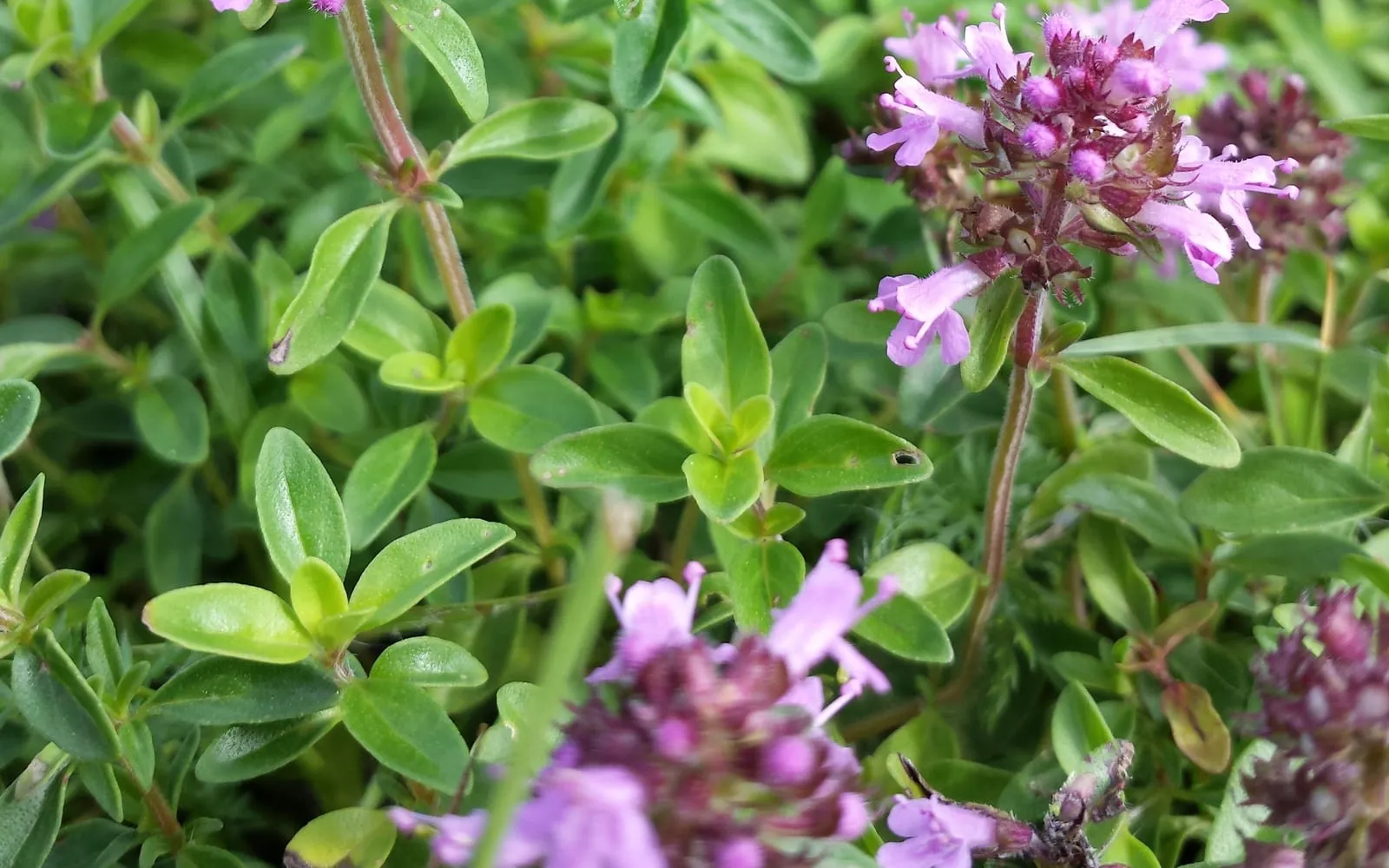
The stems are the surest way to tell it apart from its relatives. They are square in cross-section and hairy only along the angles, or ridges, of the square, rather than being hairy all round like wild thyme’s rounded stems or bare like common thyme’s more evenly haired ones. A hand lens or even close eyesight on a dry stem settles an identification the leaf alone will not.
Leaves are elliptic and noticeably broader than wild thyme’s tiny oval ones, 5 to 10 mm long, dark green and aromatic when crushed, with a scent that leans towards lemon and camphor rather than the warmer, more familiar smell of common thyme.
Growth is a loose, sprawling mat or low tussock rather than the tight, ground-hugging carpet of wild thyme, reaching 10 to 25 cm rather than staying flat against the soil. Flowers cover it from June to August in dense whorls of pink to purple, worked constantly by bees and, in parts of its native range, by the large blue butterfly.
Where it is from
Thymus pulegioides is native through most of Europe, from Britain and Scandinavia south to the Mediterranean fringe and east into western Asia, found on calcareous grassland, dry meadows and open scrub wherever the soil is thin and well-drained.
Its range sits further north on average than the Mediterranean thyme species cultivated mainly for cooking, and it grows through a cooler, wetter summer than they typically face. That background is why it copes better with a damp temperate growing season than common thyme does, without ever tolerating actual winter wet at the roots, which no thyme survives for long.
How it grows
Buy plants or raise from seed, which germinates readily though named selections need propagating from cuttings or division to come true.
Plant in spring into sharply drained soil in full sun, working grit or coarse sand into heavy ground beforehand. It tolerates poorer, thinner soil than most garden plants and performs worse, not better, on rich ground.
Space plants 20 to 30 cm apart for a mixed planting, or closer for a denser groundcover effect, since it spreads less aggressively than a true creeping thyme and benefits from starting a little tighter.
Trim lightly after flowering to keep growth compact and to stop the base becoming bare and woody, which happens to an untrimmed plant within a few years regardless of how well it is otherwise sited.
Take softwood cuttings in early summer if you want more plants from a particular specimen, since seed-raised plants vary in flower colour and leaf scent.
Through the seasons
Spring brings new growth from April. Trim away any winter-damaged tips and divide congested clumps if needed.
Early summer starts the main flowering, from June, drawing bees in steadily as more flowers open.
Midsummer is the time to shear the plant lightly once flowering finishes, encouraging fresh compact growth rather than letting it go leggy.
Autumn needs little beyond keeping fallen leaves off the crown, since anything left lying on it holds damp against stems that need to stay dry.
Care difficulty
Easy on the right soil, and the wrong soil is the only real obstacle. Sharp drainage and full sun are non-negotiable; without both, root rot becomes likely within a wet winter or two regardless of anything else done right.
Beyond siting, it needs very little. No feeding, minimal watering once established, and a single light trim after flowering are enough to keep a plant healthy and compact for years.
Watering
Water new plants weekly through their first summer while roots establish properly in the surrounding soil.
An established plant needs watering only during a real drought, and even then a single deep soak is more useful than frequent light watering, which encourages shallow roots rather than the deep run this plant prefers.
Container-grown plants need more regular watering through summer than plants in open ground, since a pot dries out faster, but should still dry out fully between waterings rather than staying constantly moist.
Warning signs, diseases and pests
Root rot follows ground that stays wet over winter rather than merely damp, showing as a plant that collapses or blackens at the base with no obvious cause above ground. Improve drainage or move the plant, since there is no cure once rot has set into the crown.
Powdery mildew whitens the foliage in a crowded, still position with poor airflow. Space plants further apart and cut out affected growth to improve circulation around the rest of the plant.
Grey mould can take hold on the crown during a cold, wet spring, blackening stems near ground level. Cut out affected growth promptly and improve drainage if it recurs.
Slugs and snails sometimes graze young, newly planted stock before it has toughened up, though an established plant’s aromatic foliage deters most further interest once it is growing strongly.
Growing environment
Full sun is essential. A plant grown in shade turns leggy, flowers poorly and becomes far more prone to the fungal problems that thrive in still, damp air.
Sharp drainage matters more than soil fertility. Chalky, sandy or stony ground suits it naturally, and heavy clay needs substantial grit worked in or a raised bed to keep the roots from sitting wet.
Neutral to alkaline soil, in the region of pH 6.5 to 8, mirrors the calcareous grassland it grows on in the wild, though it tolerates a wider pH range than that in cultivation provided drainage is good.
A gravel garden, dry bank, raised bed or the gaps in paving all suit it well, and any of them beats a conventional border where soil tends to stay richer and damper than this plant needs.
Feeding
None needed. Large thyme grown on poor, sharply drained soil performs better than one fed and grown on rich ground, producing tighter, more aromatic growth rather than soft, floppy stems.
Avoid mulching with garden compost, which holds moisture against the stems. A mulch of grit or gravel does the opposite job, keeping the base of the plant dry through winter.
A container-grown plant tolerates a weak balanced feed once in spring if growth looks unusually poor, though refreshing the compost every second year is generally more useful than any feeding regime.
Troubleshooting
How do I tell it apart from wild thyme in the garden? Check the stems. Large thyme has square stems, hairy only along the angles, and a looser, more upright habit reaching up to 25 cm; wild thyme has rounder, evenly hairy stems and stays flat against the ground.
Is it the same as the thyme I cook with? Related but different. Large thyme has a lemon-camphor character rather than the warmer, more familiar flavour of common thyme, and it use it on its own terms rather than as a straight substitute in a recipe written for Thymus vulgaris.
The centre of the plant has gone bare and woody. Normal ageing in an untrimmed thyme. Take cuttings from the healthy outer growth in early summer and replace the old plant once the new ones have rooted.
It survived a hard frost but died after a wet winter. Winter wet kills far more thyme than winter cold does. Improve the drainage at the site, or move the replacement to a raised position, before assuming the plant itself was at fault.
Do bees really prefer this to other thyme? They visit it readily alongside other flowering thyme species, and where large thyme grows wild in quantity on chalk grassland it can be an important nectar source, but in an ordinary garden bees generally work whichever thyme is in flower nearest to hand.