
Outdoor plant
Spotted laurel
Aucuba japonica
Also known as Japanese laurel, Gold dust plant, Aucuba
How to care for Aucuba japonica. The gold-splashed shrub that grows in dry shade where nothing else will, why you need two plants for berries, and what causes the black patches.
At a glance
- Difficulty
- Easy
- Water
- Only in prolonged dry spells once established
- Light
- Deep to partial shade. Full sun scorches and bleaches it
- Temperature
- Hardy outdoors, and it dislikes hot dry positions
- Humidity
- Undemanding once established
- Hardiness
- USDA 6-10, RHS H5, hardy to -15 C
- Type
- Evergreen perennial shrub, long-lived
- Height
- 2-3 m
- Native to
- Japan, Korea, Eastern China
Woodland understorey in Japan, Korea and eastern China, in humid temperate forest with cold winters and mild summers. It is hardy to around -15 deg C and takes deep shade, drought at the root and urban pollution once established, which is why it survives conditions that finish most evergreen shrubs. Heat is the real limit rather than cold. In climates with hot dry summers the leaves scorch, and it needs shade and some soil moisture there to look presentable.
Hardiness zones describe winter cold alone. Summer heat, humidity, rainfall and the length of the growing season decide as much, so treat the range as the outer limit rather than as a recommendation.
Harmful if eaten
- Do not eat
- The berries and leaves
- Harm from
- Eating it
- Affects
- People
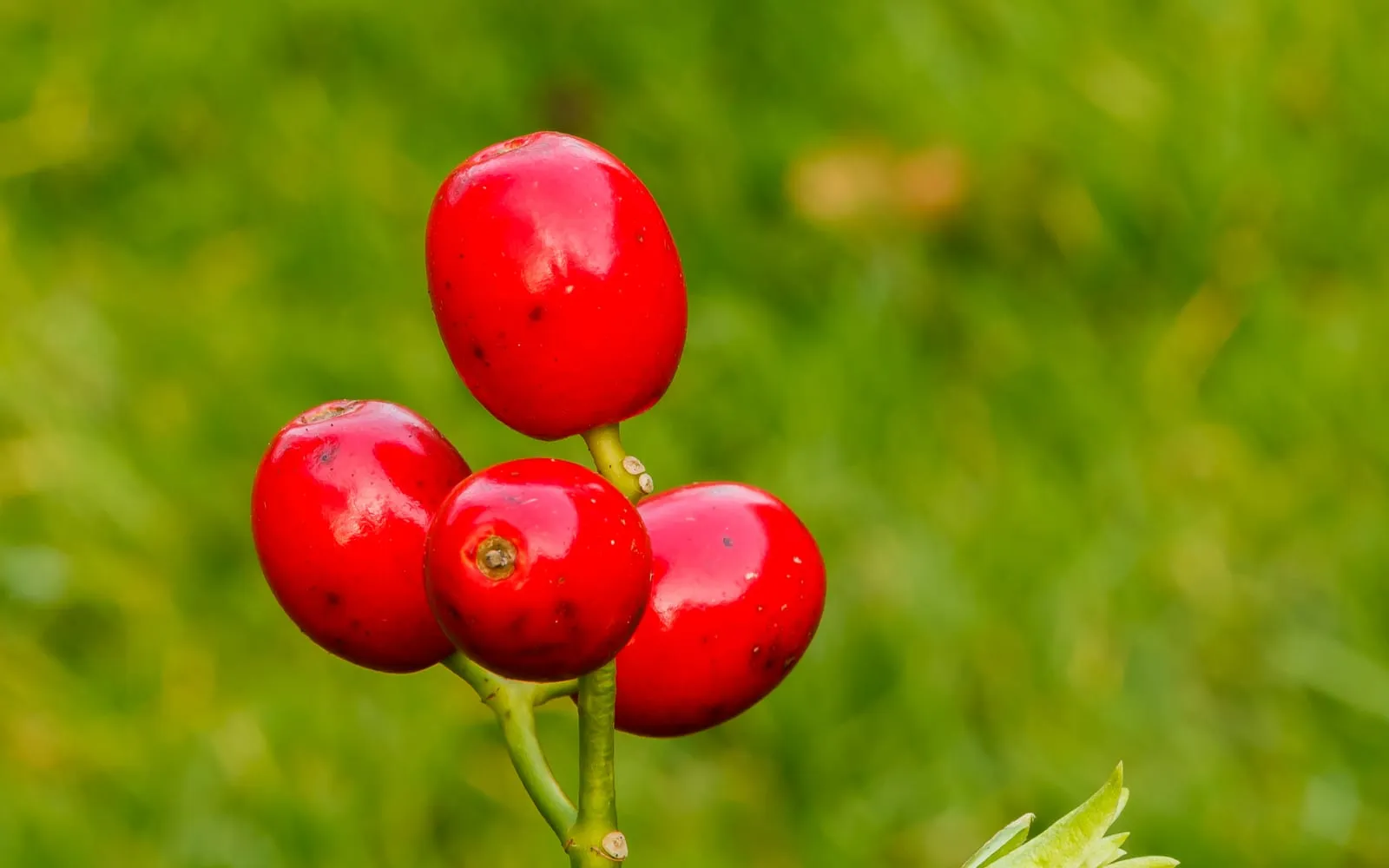
Aucuba japonica appears on the RHS list of potentially harmful garden plants, where it is noted as harmful if eaten. The bright red berries are the part most likely to attract a child, and eating them can cause stomach upset with nausea, vomiting and diarrhoea, though the effects are mild and serious poisoning is not reported. The leaves contain aucubin, a compound found across the genus, which is responsible for the irritant effect. The ASPCA does not list the species among plants toxic to cats, dogs or horses. Treat it as a shrub whose fruit is worth keeping out of small hands rather than as a dangerous plant, and note that berries only appear on female plants pollinated by a male, so many garden specimens never produce any.
Sources: RHS potentially harmful garden plants, NC State Extension, Aucuba japonica
About
Dry shade under established trees is the hardest position in any garden. The soil is poor, the roots of the tree take the water first, and the light is bad for the whole growing season. Spotted laurel is one of a very short list of evergreen shrubs that will fill it and still look like a plant rather than a survivor.
It earned a poor reputation through overuse. Victorian gardeners planted the gold-splashed forms everywhere, then twentieth-century taste turned against variegation and against Victorian planting generally, and the shrub went out of fashion for decades. The plant itself was never the problem.
Two things determine whether it looks good. Keep it out of sun, since full exposure bleaches the leaves to a sickly yellow-green and scorches them black at the edges. And if you want the winter berries, understand that you need a female plant with a male somewhere nearby, because a lone female fruits no better than a lone male does.
Appearance and character
A dense rounded evergreen shrub with stout green stems and large glossy leathery leaves, reaching 2 to 3 m in time and about as wide.
Leaves are oval to lance-shaped, 10 to 20 cm long, thick, glossy and coarsely toothed towards the tip. The plain species is deep green. The familiar garden forms are speckled and splashed with yellow, which is where the name gold dust plant comes from.
Flowers appear in spring and are small, purple-brown and inconspicuous. Plants are either male or female, and only females carry fruit.
The berries are the main ornament, ripening bright scarlet through autumn and holding on the plant right through winter, often into the following spring. They sit among the foliage rather than above it.
‘Crotonifolia’ is heavily gold-speckled and female. ‘Rozannie’ is compact, plain green and self-fertile, which makes it the practical choice where there is room for only one plant. ‘Variegata’ is the classic speckled female.
Growth is moderate and the shrub responds well to cutting back.
Where it is from
Woodland in Japan, Korea and eastern China, growing as an understorey shrub in humid temperate forest.
Growing beneath a deciduous canopy in a climate with cold winters explains its two most useful traits. Deep shade tolerance comes from the habitat, and hardiness to around -15 deg C comes from the winters.
It reached European gardens in the late eighteenth century, and for many years only a variegated female form was in cultivation, which meant nobody in Europe saw a berry. A male plant was introduced in the mid-nineteenth century by Robert Fortune, and fruiting became possible.
Its tolerance of soot and pollution made it a standard shrub in industrial cities, planted in the sort of dark, dry, smoke-laden gardens where little else lived.
The genus contains around ten species from the Himalayas to Japan.
How it grows
Plant it in deep or partial shade. This is the condition it is grown for, and full sun is the commonest siting error.
Give it any reasonable soil. It tolerates dry shade, poor soil, chalk and clay, though it establishes faster in soil improved with leaf mould.
Water regularly through the first two growing seasons while it establishes, and after that only in prolonged drought.
Plant a male nearby if you want berries on a female, or choose the self-fertile ‘Rozannie’ where there is room for one shrub only.
Feed once in spring with a general fertiliser, or mulch with leaf mould, which suits it better.
Prune in spring if needed, cutting back with secateurs rather than shears. Shears cut through the large leaves and leave brown-edged fragments that look bad for months.
Cut an old overgrown plant back hard in spring. It resprouts from old wood readily and can be renovated over one or two seasons.
Grow it in a large container in a shaded courtyard or basement area, where it does well provided it does not dry out completely.
Through the seasons
Spring brings the new growth and the inconspicuous flowers. Prune now, feed or mulch, and plant new shrubs.
Summer needs nothing except water in a prolonged drought and shade from the strongest sun.
Autumn is when the berries colour on female plants, turning from green to scarlet.
Winter is when the plant earns its place, holding glossy evergreen foliage and red berries through the dullest months. Cold wind rather than cold itself is what damages it.
Care difficulty
Easy, and among the most tolerant evergreen shrubs available for difficult positions.
Sun is the main mistake. In full exposure the leaves bleach to yellow-green and develop black scorched patches, and the plant looks permanently unwell.
Cold drying wind produces the same black patches in winter, particularly on exposed sites.
Waterlogged soil is the one thing it will not take. It tolerates dry shade happily and heavy wet clay poorly.
Fruitlessness is a frequent complaint and is almost always a pollination problem rather than a cultural one.
Watering
Water new plants regularly through their first two summers while the roots establish.
After that, water only in prolonged dry spells. An established spotted laurel tolerates dry shade better than almost any other evergreen.
Water deeply and infrequently when you do, soaking the root zone rather than sprinkling the surface.
Container plants need far more attention, since a pot in a shaded courtyard still dries out and this shrub is large enough to empty one quickly.
Underwatering shows as drooping and then browning of leaf margins, mostly on young or container plants.
Overwatering, or heavy soil that stays wet, causes yellowing and root rot, and it is the one condition that kills established plants.
Warning signs, diseases and pests
Black patches on the leaves have three common causes. Sun scorch produces them on the exposed side, cold drying wind produces them at the margins in winter, and physical damage produces them where the leaf has been knocked. All are cosmetic.
Bleached yellow-green leaves mean too much sun. Move the plant or accept the colour.
Small brown or white discs on the stems and leaf undersides are scale insects, which are the main pest of this shrub. Sticky honeydew and sooty mould follow.
Yellowing leaves with poor growth in wet heavy ground is root rot. Improve the drainage or move the plant.
No berries on a female plant means no male nearby. Plant one, or choose a self-fertile cultivar.
Plain green shoots on a variegated plant is reversion. Cut them out at the base, since they grow faster and take over.
Leaves cut across by shears go brown at the wound and stay that way. Prune with secateurs.
Growing environment
Deep to partial shade, including dry shade under established trees.
Never full sun in a climate with hot summers.
Hardy outdoors to around -15 deg C, growing in USDA 6 and warmer. Shelter from cold drying wind improves the winter appearance.
Any reasonable soil that is not waterlogged, including poor, chalky and dry ground.
A large container in a shaded courtyard, provided it is watered.
Tolerant of urban pollution and coastal exposure, which is why it survives in town gardens where other evergreens fail.
Feeding
Feed once in spring with a balanced general fertiliser, or mulch with leaf mould or garden compost, which suits it better and conserves moisture.
Avoid rich feeding. This is a plant adapted to poor woodland soil and it needs very little.
Feed variegated forms sparingly, since generous feeding encourages plain green reversion.
Container plants need a balanced liquid feed monthly through the growing season, since a pot holds no reserves.
Top-dress containers each spring with fresh compost.
Troubleshooting
The leaves have black patches. Sun scorch, cold drying wind or physical damage. All three look similar and all are cosmetic. Move the plant into shade and shelter if it keeps happening.
The leaves have gone pale yellow-green. Too much sun. This is a shade shrub and full exposure bleaches it.
Why has it never produced berries? It is either a male plant, or a female with no male nearby. Plant a male, or choose the self-fertile ‘Rozannie’.
Sticky leaves with black mould. Scale insects on the stems and leaf undersides, producing honeydew that sooty mould grows on.
Are the berries poisonous? The RHS lists the plant as harmful if eaten. The berries can cause stomach upset, so keep them away from small children, but serious poisoning is not reported.
Can I cut it back hard? Yes. It resprouts from old wood, so an overgrown plant can be renovated in spring over one or two seasons.
My variegated one is going plain green. Reversion. Cut the green shoots out at the base as soon as you see them, since they grow faster than the variegated growth.
Will it grow in dry shade under a tree? Yes, and that is what it is for. Water it through its first two summers while it establishes, and after that it will manage on its own.