
Outdoor plant
Guernsey Lily
Nerine bowdenii
Also known as Bowden Lily
How to grow Guernsey lily, Nerine bowdenii. Why the flowers appear before the leaves rather than after, why a bone-dry summer rest matters more than any winter cold, and why dividing a crowded clump sets flowering back instead of improving it.
At a glance
- Difficulty
- Moderate
- Water
- Water while the leaves are growing; keep dry through summer dormancy
- Light
- Full sun, ideally against a warm, south-facing wall
- Temperature
- Hardy where established, but the flower spikes dislike a hard early frost
- Hardiness
- USDA 7-10, RHS H4, hardy to -15 C
- Type
- Bulbous perennial, with leaves following the flowers rather than the usual way round
- Height
- 45-60 cm
- Native to
- South Africa
An established clump against a warm wall, planted with its bulb necks at or just below soil level, survives a colder winter than the raw zone number suggests, because the bulbs bake in reflected summer heat the way they would on a sun-facing slope at home. A newly planted or exposed clump is more tender, and a hard frost arriving before the flower spikes have opened can ruin that year's display even where the bulb itself survives.
Hardiness zones describe winter cold alone. Summer heat, humidity, rainfall and the length of the growing season decide as much, so treat the range as the outer limit rather than as a recommendation.
Harmful if eaten
- Do not eat
- All parts, and the bulb most of all
- Harm from
- Eating it
- Affects
- People, cats, dogs and horses
Nerine belongs to the Amaryllidaceae, the same family as daffodil and snowdrop, and carries the same lycorine alkaloid in its tissue, most concentrated in the bulb. Eating any part causes vomiting, drooling and stomach upset in cats, dogs and horses, and stomach upset in people, rarely anything more serious unless a large quantity of bulb is eaten. The RHS lists Nerine among its potentially harmful garden plants for this reason. The practical risk is low: the bulbs sit underground for most of the year and the flowers hold little of the toxin, so a passing nibble is far more likely than a serious dose, but keep dug bulbs away from pets and small children all the same.
Sources: RHS potentially harmful garden plants, ASPCA toxic and non-toxic plants
About
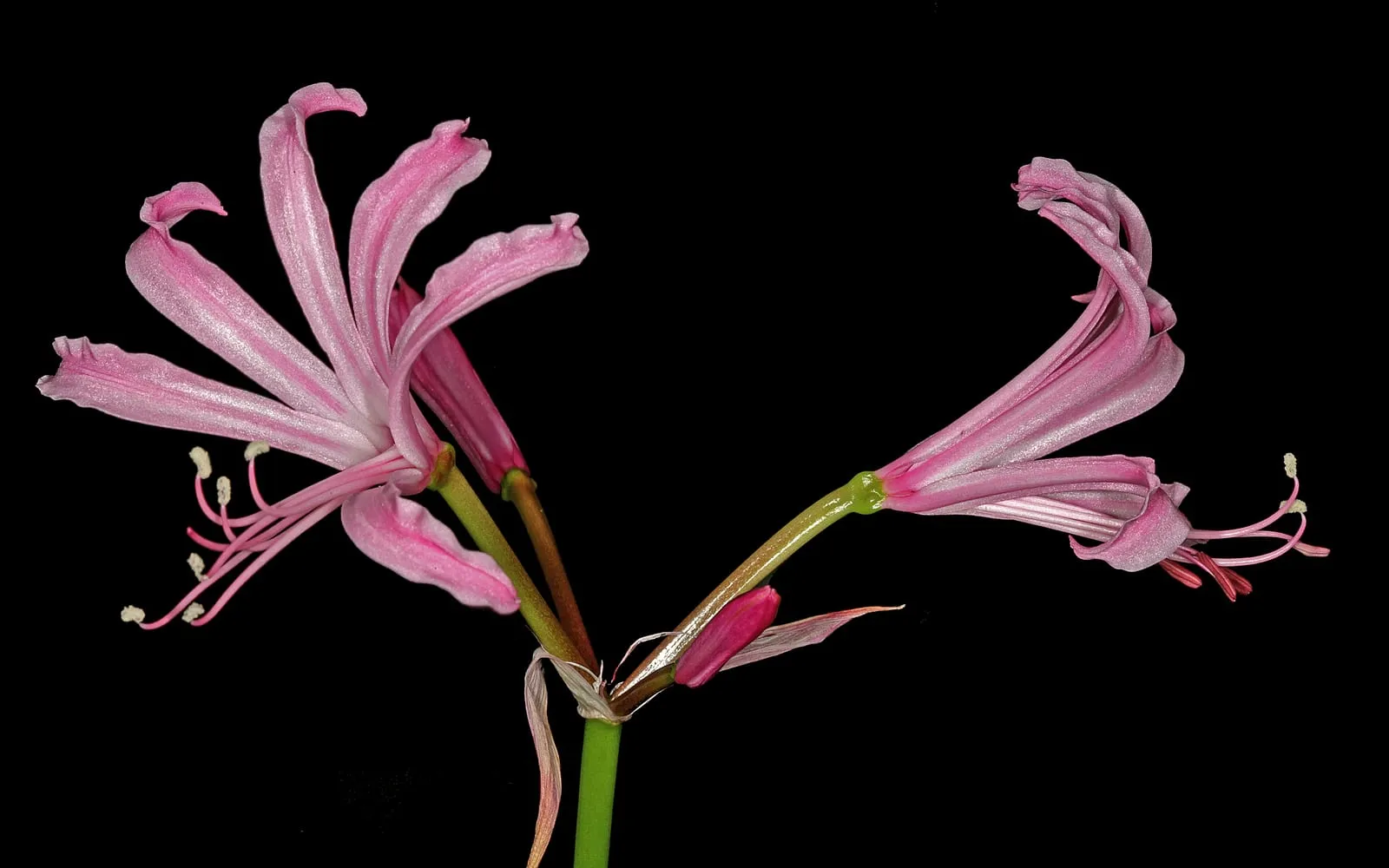
The Guernsey lily flowers backwards compared with most bulbs. Bare pink stems push up from dry soil in early autumn and open into heads of frilled flowers with no leaves in sight, and only once the show is over do the straplike leaves finally appear, growing on through winter and dying back again the following summer.
That habit makes it one of the few bulbs worth planting for a display that starts in September or October, exactly when most of a garden is running out of colour. Give it a warm, sheltered spot and leave the clump undisturbed, and it builds into a dense stand that flowers more freely with every year it goes unmoved.
Appearance and character
Flower stems are stiff, upright and entirely leafless, 45 to 60 cm tall, each carrying a rounded head of six to twelve flowers at the top. Individual blooms are a bright, glowing pink, with narrow, waved petals that curl and twist as they age, giving the whole head a shaggy, firework-like look rather than a neat one.
Leaves follow the flowers rather than accompanying them, strap-shaped and mid-green, emerging from the same bulb once flowering finishes and persisting through winter before dying back for the bulb’s summer rest.
The bulb itself sits with its neck at or just proud of the soil surface, unlike most bulbs, which prefer full burial, and that exposed neck is part of what helps it catch and store summer heat.
Where it is from
Nerine bowdenii grows wild on the Drakensberg escarpment of South Africa, at altitude on rocky, well-drained slopes that see a wet summer growing season followed by a dry, sunny autumn.
That dry autumn is the trigger for flowering. The bulb reads the shift from summer rain to autumn dryness as the cue to send up a flower spike before committing to leaves, a strategy that gets the flowers open and pollinated quickly while conditions are still warm enough for insects to be about.
It reached British gardens in the early twentieth century through the Cornish plantsman Athelstan Cornish-Bowden, whose name it carries, and proved far hardier outdoors than the tender Nerine sarniensis already grown under glass, for which the “Guernsey lily” name had been used for two centuries before that. Gardeners kept the name for the newer, hardier species once it became the one most commonly grown outdoors.
How it grows
Plant bulbs in late summer with the neck sitting at or just above soil level, in free-draining soil against a warm, south-facing wall where possible. A cool, exposed spot in heavy soil is the surest way to get a clump that survives but never flowers well.
Choose a position that gets baked by full sun through summer, since it is that summer heat against the wall or in a raised bed that ripens the bulb and sets the coming autumn’s flowers, in much the same way a fruit tree needs summer warmth to ripen wood.
Leave an established clump entirely alone. Nerine bowdenii flowers more freely the more congested it becomes, and lifting and dividing it, unlike most bulbs, sets flowering back for a year or two rather than improving it.
Water while the leaves are in growth through autumn, winter and spring, then stop completely as the foliage dies back in early summer and let the bulbs bake dry until the flower spikes appear again.
Through the seasons
Autumn is the flowering season, followed by the leaves emerging once the blooms fade.
Winter keeps the leaves growing steadily; water during dry spells but never let the bed become waterlogged.
Spring is the last of the leaf growth before it starts to slow.
Summer is complete dormancy. Withhold water entirely and let the bare soil above the bulbs bake in the sun.
Care difficulty
Moderate, and almost all of it comes down to choosing the right spot and then resisting the urge to interfere with it. A warm, sheltered, free-draining site against a wall needs no further work once the bulbs are in. A clump left undisturbed for years produces more flowers. The plants that disappoint are usually the ones planted in cool, damp, shaded ground, or divided too often out of tidiness.
Watering
Water thoroughly while the leaves are actively growing, from autumn through to late spring, letting the soil dry between waterings rather than keeping it constantly damp.
Stop watering completely once the foliage begins to die back in early summer. The bulbs need a properly dry rest through summer to flower well the following autumn, and watering through that rest is one of the commoner reasons a clump grows leaves but never blooms.
Resume watering as soon as the flower spikes appear in early autumn, and keep the soil around them just moist while they are in bloom.
Warning signs, diseases and pests
Mealybug hides among the bulb necks and at the base of the leaves, showing as small white cottony tufts. Wipe it away with a damp cloth or treat with horticultural soap.
Grey mould can appear on the flower heads in a wet autumn, showing as fuzzy grey growth on damaged or ageing petals. Remove affected flowers promptly and improve air movement around a crowded clump.
Root rot follows soil that stays wet through the summer dormancy, when the bulbs are least able to tolerate damp. Improve drainage, or lift and replant in a raised bed if the ground is naturally heavy.
Vine weevil grubs attack the roots of pot-grown clumps particularly, leaving a plant that wilts despite damp compost. Check the roots of any container plant that declines for no obvious reason.
Slugs and snails can shred the soft flower spikes as they emerge in early autumn, before the tissue has toughened. Protect emerging spikes if slugs are a known problem in the bed.
Growing environment
Full sun and a warm, sheltered position, ideally against a south or west-facing wall, suit it best. A cooler, more open spot still grows leaves but flowers far less reliably.
Free-draining, only moderately fertile soil is what it needs. Rich, moisture-retentive ground pushes leafy growth at the expense of flowers and increases the risk of the bulbs rotting through their dry summer rest.
Plant the bulb neck at or just above soil level rather than burying it deeply, and add a dry mulch of grit or gravel around the necks in a cold winter for extra protection.
Feeding
Feed with a high-potash liquid feed, the kind sold for tomatoes, monthly while the leaves are actively growing.
Stop feeding completely once the foliage dies back for the summer rest, since the bulb needs that period dry and undisturbed rather than prompted into any further growth.
Troubleshooting
Why has my clump never flowered? Almost always too much shade, too rich a soil, or watering through the summer dormancy. Move it to a sunnier, drier spot against a wall if you can, and let it bake completely dry through summer.
Should I divide a congested clump? Generally no. Unlike most bulbs, Nerine bowdenii flowers better the more congested it becomes, so leave it alone unless the clump has become so dense it is visibly struggling.
The leaves came up but there were no flowers first. That sequence is reversed from normal; flowers should appear before the leaves. A clump producing leaves without flowering first usually needs a warmer, drier, sunnier position to trigger blooming.
Is it safe to grow where pets graze the garden? The toxicity is mild, and the bulbs sit underground out of easy reach for most of the year. Keep any lifted or divided bulbs away from pets while they are out of the ground.
Can I grow it in a container? Yes, in a free-draining compost with added grit, and it is a good option where garden soil is heavy. Keep the pot in full sun and let it dry out completely over summer just as you would in open ground.