
Outdoor plant
Common Bent
Agrostis capillaris
Also known as Colonial bent, Browntop bent
How to grow common bent as a fine lawn grass. Its spreading stolons, tolerance of very close mowing, and why it is a mainstay of golf and bowling greens.
At a glance
- Difficulty
- Moderate
- Water
- Regular watering for fine turf use, more drought-tolerant left longer
- Light
- Full sun to light shade
- Hardiness
- USDA 4-9, RHS H7, hardy to -30 C
- Type
- Hardy perennial grass
- Height
- 10-30 cm unmown, a few centimetres when regularly mown
- Native to
- Europe
Fully hardy through ordinary temperate winters and well suited to cool, moist climates in particular, where it forms the dense, fine turf prized on traditional bowling and golf greens. It tolerates very close, regular mowing better than most grasses, a trait bred and selected for extensively in fine turf strains, and performs less well in hot, dry summer conditions than in a cool, humid climate.
Hardiness zones describe winter cold alone. Summer heat, humidity, rainfall and the length of the growing season decide as much, so treat the range as the outer limit rather than as a recommendation.
Not known to be toxic
Common bent has no toxicity listing from the RHS or the ASPCA and is considered safe around pets and children. It has no documented history of poisoning.
Source: RHS
About
Common bent is one of the finest-leaved grasses widely used for turf, spreading by short surface stolons into a dense, even sward capable of tolerating closer, more regular mowing than almost any other common grass species. It is the foundation of many traditional bowling greens and a component of many golf course putting greens, prized for the smooth, tight surface it produces under intensive management, a very different role from the taller, coarser pasture and meadow grasses covered elsewhere in this collection.
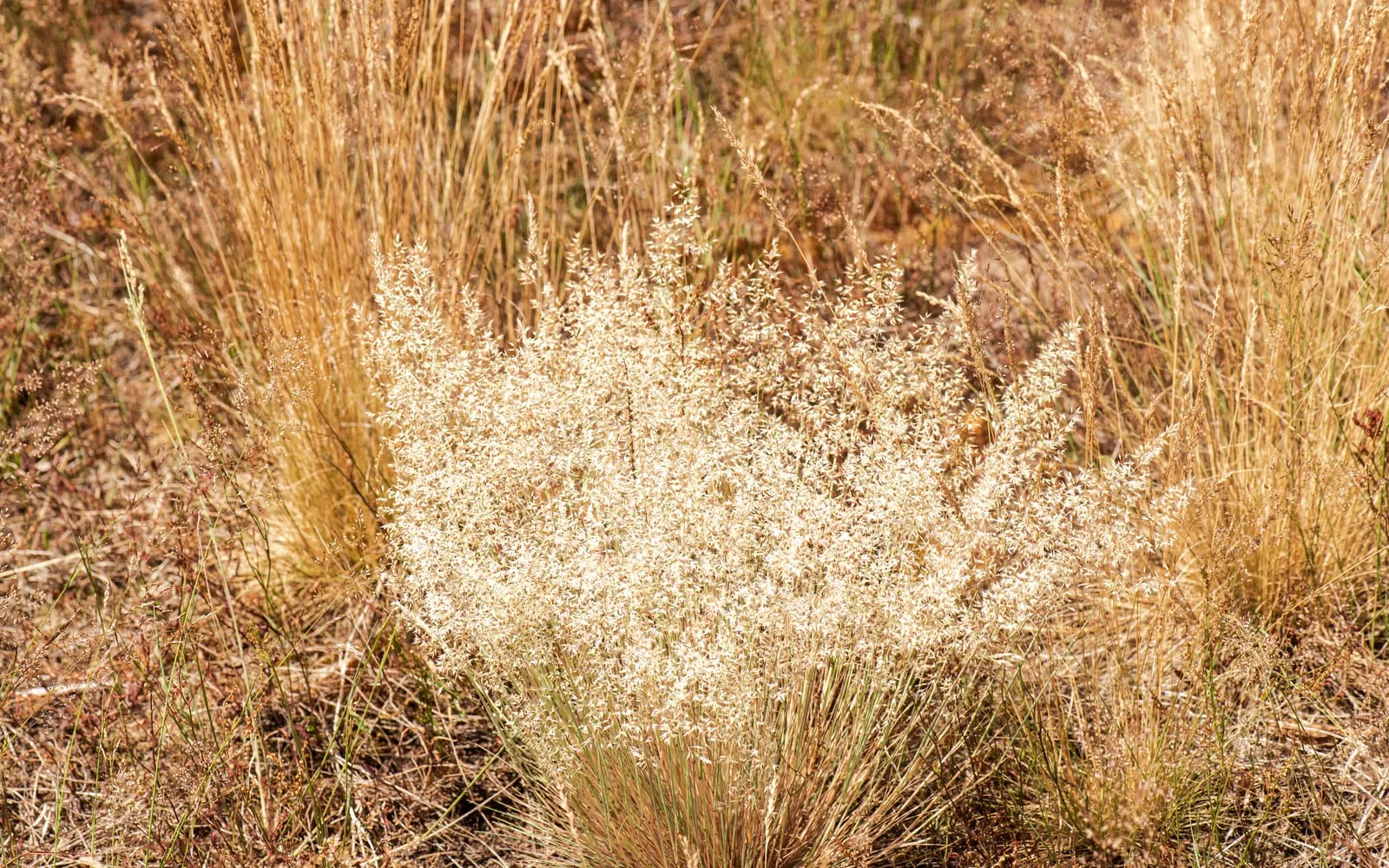
Outside a specialist fine-turf setting, it also occurs widely as a component of ordinary lawns and unimproved grassland across its native range, where it grows less densely and much taller if left unmown, showing a soft, open flower head quite different from the tight, uniform surface it forms under intensive turf management.
Appearance and character
Very fine, narrow leaves spread via short stolons that creep just above or along the soil surface, rooting as they go and gradually knitting neighbouring plants into a dense, interconnected turf. Left unmown, it produces a light, airy, purplish-tinged flower head on thin stems well above the leaves; under the close, regular mowing of a fine lawn or green, this flowering growth is removed before it develops, and the grass instead forms the tight, low, cushion-like surface it is grown for.
Its fine leaf texture and spreading, self-repairing growth habit are what set it apart from coarser lawn and pasture grasses, letting it heal over minor damage and thin patches more readily than a purely tufted, non-spreading species would.
Where it is from
Grassland, heath and open ground across Europe, tolerant of a wide range of soil types including distinctly acidic ground that many other grasses struggle with, and generally thriving best in a cool, moist climate rather than one with hot, dry summers.
That preference for cool, moist conditions is why this species performs so well in the cooler, more humid parts of the temperate world, and less reliably in a hot, dry summer climate, where other, more heat- and drought-tolerant turf grasses are often chosen instead for fine lawn use.
How it grows
A hardy perennial spreading by short stolons that root at intervals along their length, gradually filling in gaps and knitting a dense, even sward over time, a trait particularly valuable in fine turf, since it lets damaged or worn patches recover without reseeding. Growth responds strongly to regular mowing, thickening and densifying under a close, frequent cutting regime rather than being weakened by it the way some other grasses would be.
Left unmown or mown only occasionally, the same species instead grows taller and more open, producing visible flower heads and behaving more like an ordinary meadow or lawn grass than the tight, manicured turf it is capable of forming under intensive management.
Through the seasons
Spring growth resumes strongly as temperatures rise, particularly in a cool, moist spring that suits this species well.
Summer growth can slow in hot, dry conditions, when this species performs less well than some more heat-tolerant turf grasses, though it recovers readily once cooler, moister weather returns.
Autumn growth often picks up again as temperatures cool and rainfall increases, a favourable period for this species.
Winter the fine turf persists through cold weather with little visible change, tolerant of significant winter cold.
Care difficulty
Moderate for fine turf use, which demands frequent, precise mowing and regular feeding to maintain the tight, even surface associated with a bowling green or putting green. In an ordinary lawn or informal setting, mown less intensively, this species is much easier to manage and blends in as one component among several common lawn grasses.
Watering
Fine turf under intensive management needs regular, relatively light and frequent watering to sustain the dense, closely mown surface expected of it. In a more informally managed lawn, mown less closely, this species tolerates drier conditions reasonably well, needing supplemental watering mainly during an extended dry spell.
Warning signs, diseases and pests
Red thread and other fine turf diseases can develop in poorly drained or nutrient-poor conditions, showing as reddish or pink thread-like growth across affected patches, and are generally addressed by improving drainage and feeding regime rather than direct chemical treatment in most amateur settings. Leatherjackets, the larvae of crane flies, can damage roots in lawn settings generally, showing as patches of weak or dying turf.
Thin, patchy turf in a fine lawn setting often reflects insufficient feeding or mowing height set too low for the current conditions, and adjusting either, alongside checking for the pests and diseases above, usually restores denser growth over subsequent weeks.
Growing environment
Full sun to light shade both suit it, and this species tolerates distinctly acidic soil better than many other turf grasses, making it a useful choice on ground that would otherwise limit turf options. A cool, moist climate brings out its best performance, with hot, dry summer conditions being its main limitation.
Feeding
A balanced turf feed, applied several times through the growing season for intensively managed fine turf such as a bowling or putting green, supports the dense, even growth this use demands. A more informal lawn containing this species as one component among several needs much less frequent feeding to look acceptable.
Troubleshooting
Turf looks thin and patchy despite regular mowing. Check feeding levels and mowing height, since insufficient nutrients or too low a cut for current conditions both weaken this species’ density over time.
Reddish or pink thread-like growth has appeared on the turf. This is red thread disease, often linked to poor drainage or low nutrient levels. Improve both and the condition typically clears without further treatment in most amateur lawn settings.
Patches of turf are weak or dying in a lawn setting. Check for leatherjacket damage to the roots, particularly in autumn or spring when these crane fly larvae are most active near the soil surface.
The grass is struggling through a hot, dry summer. This reflects the species’ general preference for cooler, moister conditions rather than a specific problem; increased watering helps during the hottest weeks, and growth typically recovers once cooler conditions return in autumn.