
Outdoor plant
Dutch Hyacinth
Hyacinthus orientalis
Also known as Garden Hyacinth, Common Hyacinth
How to grow Dutch hyacinths, Hyacinthus orientalis. Why a forced bulb's first indoor display is never matched again, the blistering rash bulb handling can cause, and the winter chill it needs to flower well.
At a glance
- Difficulty
- Easy
- Water
- Moderate through growth and flowering; dry once dormant
- Light
- Full sun to light shade
- Temperature
- Hardy, but needs a real winter chill to flower well
- Hardiness
- USDA 4-8, RHS H5, hardy to -15 C
- Type
- Bulbous perennial, often grown fresh each year for the densest display
- Height
- 20-30 cm
- Native to
- the eastern Mediterranean, western Asia
Cold tolerance is not what limits this bulb. Flowering does, because it needs a sustained period below about 9 degrees C to complete the process that produces a full flower spike, and a mild winter or a warm indoor storage spot leaves the display short and sparse the following spring regardless of how hardy the bulb itself is. Commercial growers and anyone forcing bulbs indoors chill them artificially for this reason, and gardeners in a warm winter climate often replant fresh, pre-chilled bulbs each autumn rather than relying on an established planting to rebloom well.
Hardiness zones describe winter cold alone. Summer heat, humidity, rainfall and the length of the growing season decide as much, so treat the range as the outer limit rather than as a recommendation.
Toxic if eaten
- Do not eat
- The bulb most of all
- Harm from
- Eating it and handling it
- Affects
- People, cats, dogs and horses
The bulb contains calcium oxalate crystals and alkaloids that cause vomiting, drooling and diarrhoea in cats, dogs and horses if eaten, and the ASPCA lists hyacinth as toxic on that basis. The same crystals cause a real, well-documented hazard for people: handling a large number of bulbs, as commercial planters and florists sometimes do, can bring on an itchy, blistering contact dermatitis known informally as bulb worker's itch, from the crystals penetrating the skin rather than from any allergy. Gloves solve the problem for anyone planting more than a handful. Eating the bulb causes nausea, stomach pain and vomiting in people too, generally resolving without treatment, though a large quantity eaten by a small child or a pet is worth a call to a doctor or vet. The flowers and leaves are far less concentrated and a nibble of either is unlikely to cause more than mild stomach upset.
Sources: ASPCA (Hyacinth), RHS potentially harmful garden plants
About
The Dutch hyacinth is the bulb behind the dense, waxy flower spikes sold every autumn for forcing indoors and every spring for bedding outside, bred over centuries in the Netherlands from a wild Mediterranean species with a far looser, smaller flower head.
Its scent is the main reason people grow it. A single forced bulb in a glass on a windowsill can fill a room, and a bed of them in a spring border does much the same outdoors on a still day. The flip side of that intensity is a display that rarely matches its first year again: a bulb forced once and then planted out settles into a smaller, looser spike in subsequent springs, still useful in a garden but never quite the show it started as.
Appearance and character
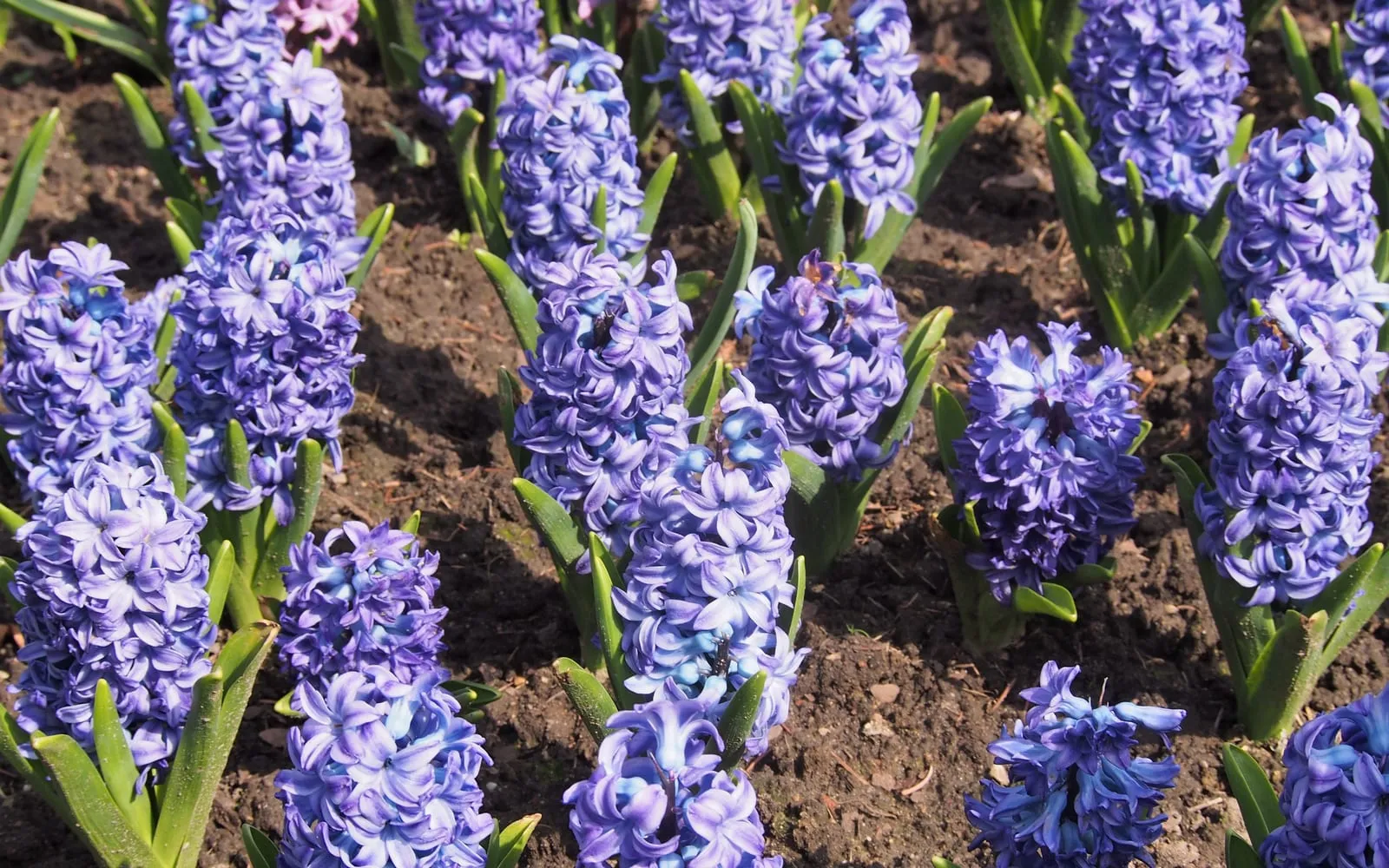
Flowers are small, waxy, star-shaped bells packed tightly around a single upright spike, in colours running from white and pale yellow through pink, red and blue to deep purple depending on the cultivar. The scent is heavy, sweet and unmistakable, carrying well beyond the plant itself.
Leaves are strap-shaped, glossy and fleshy, emerging in a loose rosette around the base of the flower spike and persisting after the blooms fade to feed the bulb.
The bulb is large, rounded and tunicated, meaning it has a papery outer skin, unlike a lily bulb’s bare scales, which makes it considerably more tolerant of dry storage and handling than most of the bulbs it is sold alongside.
Where it is from
Hyacinthus orientalis grows wild on rocky hillsides and scrubland across the eastern Mediterranean and into western Asia, through what is now Turkey, Lebanon, Syria and neighbouring areas, where it flowers early in spring ahead of summer drought.
It was cultivated in Ottoman gardens for centuries before reaching western Europe in the sixteenth century, where Dutch growers took it up with the same intensity they later applied to the tulip. Breeding in the Netherlands from the seventeenth century onward produced the tightly packed, oversized flower spikes sold today, a considerable departure from the smaller, more open flower head of the wild species.
That Dutch bulb industry is why the plant carries this common name at all, and the Netherlands remains the source of most hyacinth bulbs sold worldwide, grown in the same bulb fields around Haarlem that made the country’s name synonymous with commercial bulb growing more broadly.
How it grows
Plant bulbs in early to mid autumn, 10 to 15 cm deep, in free-draining, fertile soil, giving them the earliest possible start on the root growth that happens before the ground turns cold.
Choose full sun or light shade. A position too shaded produces taller, weaker flower spikes that flop rather than stand upright.
To force a bulb for an indoor display, chill it in a cool, dark place for eight to ten weeks before bringing it into warmth and light, or buy bulbs already sold as pre-chilled or “prepared” for forcing, which removes the guesswork.
After an indoor display finishes, cut the spent flower spike but leave the leaves to die back naturally, then plant the bulb outside once the weather allows. It will flower again outdoors the following spring, though with a smaller, looser spike than the forced display produced.
Through the seasons
Autumn is planting time, and the start of forcing for anyone growing bulbs indoors for winter flowers.
Winter brings indoor flowering for forced bulbs, while outdoor plantings sit through their essential chilling period underground.
Spring is the main outdoor flowering season, followed by the leaves dying back once the display is over.
Summer is dormancy. Lift and store bulbs if the bed will be replanted with something else, or leave them in the ground to flower again the following spring.
Care difficulty
Easy, and mostly a matter of timing rather than skill. Plant at the right depth in the right season, give the bulb the winter chill it needs, and it flowers reliably with almost no further input. The one adjustment worth making is accepting that a forced bulb’s first display, indoors in a glass of water or a bowl of fibre, is the best it will ever produce; planted outside afterwards it settles into ordinary garden performance rather than repeating that first spectacular spike.
Watering
Water moderately while the plant is in growth and flower, keeping the soil just moist rather than wet.
A bulb forced in water alone, the traditional hyacinth glass method, needs the water level kept just below the base of the bulb rather than touching it, since constant contact encourages rot.
Once flowering finishes and the leaves begin to yellow, reduce watering and let the soil or compost dry out as the bulb moves into its summer rest.
Warning signs, diseases and pests
Root rot follows soil or a pot that stays wet through the bulb’s summer dormancy, turning the base soft and dark. Improve drainage or lift and store bulbs somewhere dry over summer if the ground is naturally heavy.
Grey mould can appear on the flower spike in cool, damp spring weather, showing as fuzzy grey patches on the flowers themselves. Remove affected blooms and improve air movement around a crowded planting.
Aphids cluster on the developing flower spike and the leaf bases, sapping the plant and fouling flowers with sticky honeydew. Wipe them off or treat with horticultural soap.
Slugs and snails graze on the soft new shoots as they push through in early spring, before the leaves toughen. Protect emerging growth where slugs are a known problem.
Growing environment
Full sun to light shade produces the sturdiest, most upright flower spikes. Deep shade causes weak, floppy stems that need support.
Free-draining, fertile soil suits it best. It tolerates most garden soil types provided they do not stay waterlogged through the bulb’s dormant summer period.
Hardy to around minus 15 degrees C, and untroubled by an ordinary cold winter, which is in any case what the bulb needs to flower at its best the following spring.
Feeding
Feed once after flowering finishes, with a balanced bulb fertiliser worked into the soil around the base of the leaves, which builds the bulb up for the following year’s display.
Avoid feeding a forced bulb grown in water alone, since it is generally treated as a single-display plant and discarded or planted outside afterwards rather than fed for a repeat indoor performance.
Troubleshooting
Why did this year’s flowers come out smaller and looser than last year’s? Normal for a bulb that was originally forced. A hyacinth’s first, densest display uses reserves built up before forcing, and later years in the garden settle into a smaller, more relaxed spike, which is still healthy rather than declining.
My hands got itchy and blistered after planting a tray of bulbs. Bulb worker’s itch, caused by calcium oxalate crystals in the bulb skin penetrating bare skin. Wear gloves when handling more than a bulb or two and the reaction stops.
Can I regrow a hyacinth forced in water? Yes. Once the flowers fade, cut the spent spike but leave the leaves to die back naturally, then plant the bulb outside at normal depth to flower again the following spring.
Why has my outdoor planting stopped flowering well after a few mild winters? Insufficient chilling. This bulb needs a real spell of cold below about 9 degrees C to flower fully, and a run of mild winters weakens the display even where the bulb itself survives perfectly well.
Is it safe to keep where pets can reach the bulbs? Only if the bulbs stay in the ground. A dug-up or stored bulb chewed by a cat or dog can cause vomiting and stomach upset, so keep any loose bulbs well out of reach.