
Outdoor plant
Glory of the Snow
Chionodoxa forbesii
Also known as Scilla forbesii
Practical guidance for growing glory of the snow, Chionodoxa forbesii, including naturalising in turf, planting depth, dry summer dormancy, squirrel damage, and mild bulb toxicity.
At a glance
- Difficulty
- Easy
- Water
- Rarely needed once established beyond normal rainfall
- Light
- Full sun to light shade; thrives under deciduous trees before the canopy closes over
- Temperature
- Fully hardy; a real winter chill is part of what brings it into flower
- Hardiness
- USDA 3-8, RHS H7, hardy to -30 C
- Type
- Hardy bulbous perennial, dormant from early summer to autumn
- Height
- 10-20 cm in flower
- Native to
- western Turkey
Among the hardiest small bulbs grown in gardens, surviving winters far colder than most temperate gardens see. In summer, the dormant bulb needs soil that drains and dries out at least somewhat while it is dormant. A border kept damp all year, or a heavy clay that never quite dries, shortens its life even though the cold itself was never the problem.
Hardiness zones describe winter cold alone. Summer heat, humidity, rainfall and the length of the growing season decide as much, so treat the range as the outer limit rather than as a recommendation.
Toxic to cats and dogs if eaten
- Do not eat
- The bulb most of all
- Harm from
- Eating it
- Affects
- Cats and dogs
The ASPCA does not list Chionodoxa forbesii by name, but current botanical treatments place this species within the genus Scilla, and the ASPCA's entry for squill, Scilla species, describes scilliroside, a cardiac glycoside found across that bulb group, with signs ranging from vomiting and drooling to a slowed or irregular heartbeat in cats and dogs that eat a significant quantity. In practice the risk to a pet in an ordinary garden is low: the bulbs sit several centimetres underground, are small individually, and are not a plant animals typically dig for and eat in bulk. A dog that excavates and chews a handful after planting time, while the bulbs are freshly disturbed and exposed, is the realistic scenario worth being aware of.
Sources: ASPCA (Squill, Scilla), RHS potentially harmful garden plants
About
Glory of the snow is one of the earliest bulbs to flower, opening its star-shaped blooms while frost is still a real possibility and often before the last of the snow has cleared in colder gardens, which is where the common name comes from. It is small, unfussy and quick to settle, and a handful of bulbs planted one autumn can be a substantial drift within three or four years.
It flowers in short grass, under deciduous trees and shrubs, and in the open border alike, needing nothing more than free-draining soil and a position that gets reasonable light before deeper shade sets in for summer. Once planted, it is left entirely alone. It needs no lifting, no dividing unless a clump has become congested, and no watering beyond what the season provides.
Appearance and character
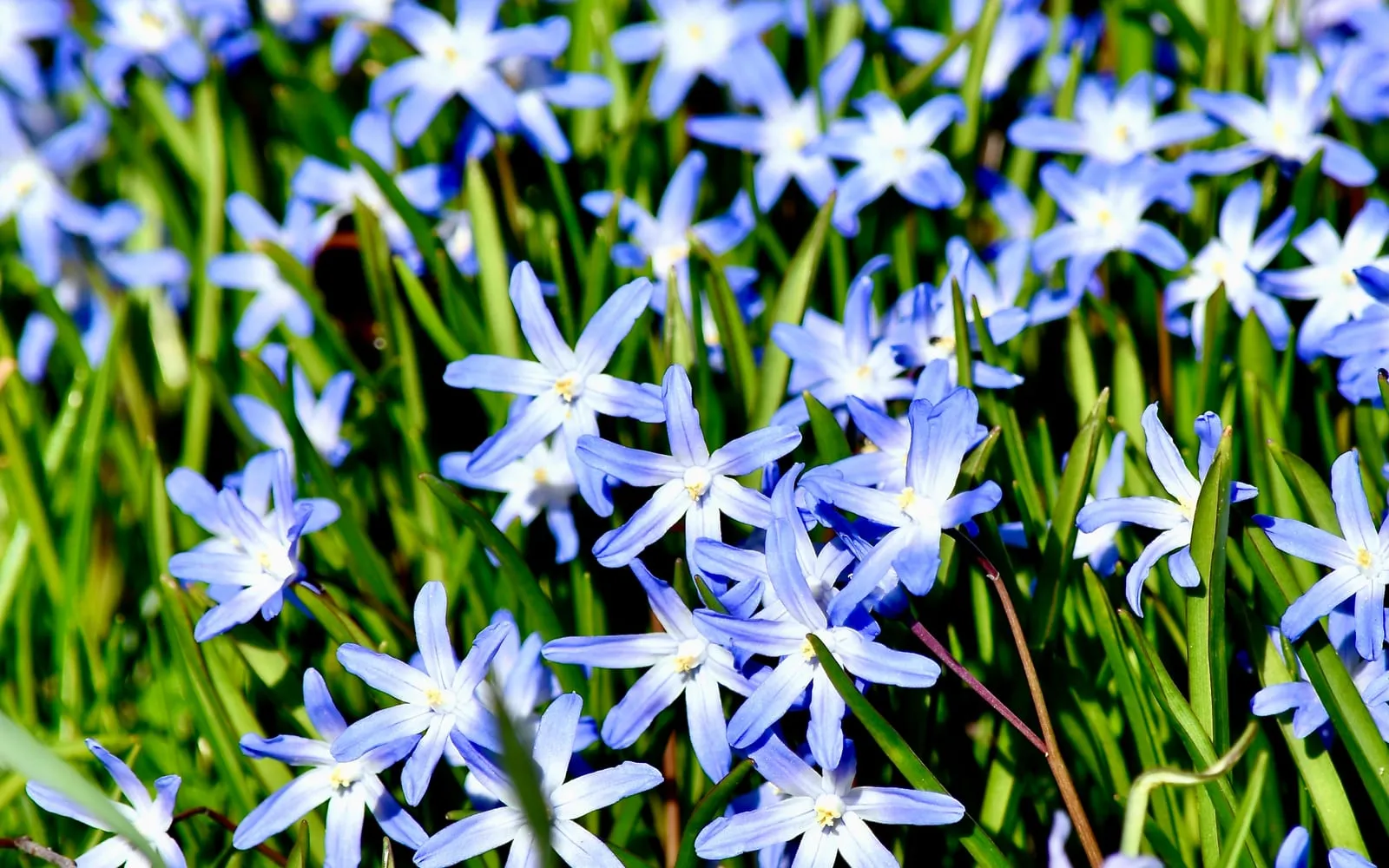
Each bulb sends up one or two narrow, strap-shaped leaves and a single short stem carrying several star-shaped flowers, typically a clear blue with a paler, almost white centre, though pink and white forms exist and are sold alongside the species. The flowers face upward and outward on short stalks, opening flat in sun and closing partway on cold or overcast days.
The whole plant sits low, rarely reaching much above 15 or 20 cm even in full flower. It works best as a drift, where the flowers make a haze of blue across turf or bare border soil. A small patch looks thin beside a naturalised spread.
Foliage dies back within a few weeks of flowering finishing, and by early summer there is no visible trace of the plant above ground until the following winter’s cold triggers new growth again.
Where it is from
Chionodoxa forbesii is native to the mountains of western Turkey, growing at moderate to fairly high altitude where snow cover is normal through winter and where the ground dries out considerably once the snowmelt has passed and summer heat arrives. The bulb is adapted to a cold, snow-covered winter followed by a dry, baking summer.
It was introduced into European cultivation in the nineteenth century and has since become one of the most widely planted small spring bulbs across temperate gardens, valued for flowering earlier than almost anything else and for how readily it naturalises without becoming a nuisance.
How it grows
Plant bulbs in autumn, roughly 5 to 8 cm deep and a similar distance apart, in free-draining soil in full sun or a position that gets good light before nearby trees leaf out. Group them generously rather than spacing them evenly, since a loose, irregular drift looks far more natural than a grid and is closer to how the bulbs spread on their own over time.
It naturalises readily by seed as well as by bulb offsets, so an established patch spreads gradually outward and self-sows into nearby bare soil or thin turf without needing any encouragement. If a lawn is being used to host it, mowing needs to wait until the foliage has died down naturally, usually six weeks or so after flowering, so the bulbs can build up enough reserve to flower again the following year.
Established clumps rarely need lifting or dividing. Where a patch has become congested enough to flower more thinly than it used to, lift and separate the bulbs just after the foliage yellows, replanting immediately rather than letting them dry out.
Through the seasons
Winter brings the first flowers, often opening in the final cold weeks of the season while snow can still fall, ahead of nearly every other bulb.
Spring is the main flowering display, followed by seed set and the gradual yellowing of the foliage as the bulb moves toward dormancy.
Summer is spent entirely underground and dormant. The ground above can be cultivated lightly or planted with something else, provided the bulbs below are not disturbed by deep digging.
Autumn is planting time for new bulbs and the period when established clumps begin building the root growth that supports the following winter’s flowers.
Care difficulty
Easy. Give it a reasonably well-drained spot and a single planting session, then leave it alone. It needs no routine watering, feeding or dividing. The two common failures are consistently waterlogged summer soil, which rots the dormant bulb, and deep shade after flowering, which stops the bulb ripening properly and weakens the display over successive years.
Watering
No supplemental watering is needed once bulbs are established, beyond whatever rain the season brings. During the first autumn and winter after planting, water lightly if the soil is unusually dry to help roots establish, but stop as soon as regular rainfall resumes.
Avoid watering the area over summer dormancy, particularly if the bulbs are planted somewhere that also receives irrigation for nearby summer bedding or a lawn, since consistently damp summer soil is the single biggest threat this bulb faces.
Warning signs, diseases and pests
Slugs and snails sometimes graze the earliest emerging leaf tips in a mild, wet winter, leaving ragged holes but rarely doing lasting damage to an established clump.
Squirrels and mice dig up and eat freshly planted bulbs, particularly in the weeks right after planting before the soil has settled. A layer of chicken wire pegged over a new planting, removed once shoots appear, protects the bulbs through the vulnerable period.
Waterlogging over summer dormancy causes bulbs to soften and rot below ground, showing up the following winter as a gap where a clump used to flower. Improve drainage before replanting rather than replanting into the same wet spot.
Grey mould occasionally appears on flowers and leaves in a cold, wet spring, showing as a fuzzy grey coating on damaged or dying tissue. It is rarely serious on this bulb and usually clears on its own once drier weather returns.
Growing environment
Full sun to light shade suits it well, and a position under deciduous trees works particularly well, since the bulb completes its whole above- ground cycle before the canopy closes over for summer.
Free-draining soil matters more than fertility. A heavy clay that stays wet through summer shortens the bulbs’ life considerably, and adding grit or planting on a slight slope both help where drainage is naturally poor.
It tolerates being grown in grass, provided mowing is held off until the foliage has died down naturally, and copes with cultivation around it in a mixed border as long as the bulbs themselves are not disturbed by deep digging.
Feeding
A light application of bonemeal or a proprietary bulb feed, scattered over the soil surface as the flowers fade and the leaves are still green, supports strong flowering the following year, though it is far from essential in reasonable soil.
Avoid feeding once the foliage has died down, since a dormant bulb takes up very little and unused fertiliser sits in soil that ideally should be drying out rather than staying enriched and damp.
Troubleshooting
My bulbs have stopped flowering after a few good years. Overcrowding is the likeliest cause, once a clump has built up several seasons of self-sown offspring competing for the same patch of soil. Lift the clump just after the leaves yellow, separate the bulbs, and replant them more widely spaced.
Something dug up my new bulbs overnight. Squirrels or mice, almost certainly, drawn by freshly disturbed soil. Pin chicken wire or mesh over the planting area until shoots appear above ground, then remove it.
Can I grow it in a lawn? Yes, and it is one of the better bulbs for naturalising in turf, provided the first mow of the season waits until the foliage has died down naturally, usually about six weeks after flowering finishes.
The flowers barely opened this year. A cold, overcast spring is the most likely cause, since the flowers open widest in direct sun and stay partly closed on dull days. They should open normally again once brighter weather arrives.
Is it safe to plant where a dog digs in the garden? The bulbs carry a cardiac glycoside related to the one in squill, so a dog that unearths and eats a quantity of freshly planted bulbs is a genuine, if uncommon, risk. Once bulbs are settled and covered by soil and growth, the practical risk drops considerably.