
Houseplant
Fragrant fern
Microsorum punctatum
Also known as Climbing bird's nest fern, Cabbage fern, Microsorum punctatum
How to care for Microsorum punctatum. The upright strap fern with no scent despite the name, why the crested forms cost more, and how it grows on bark without soil.
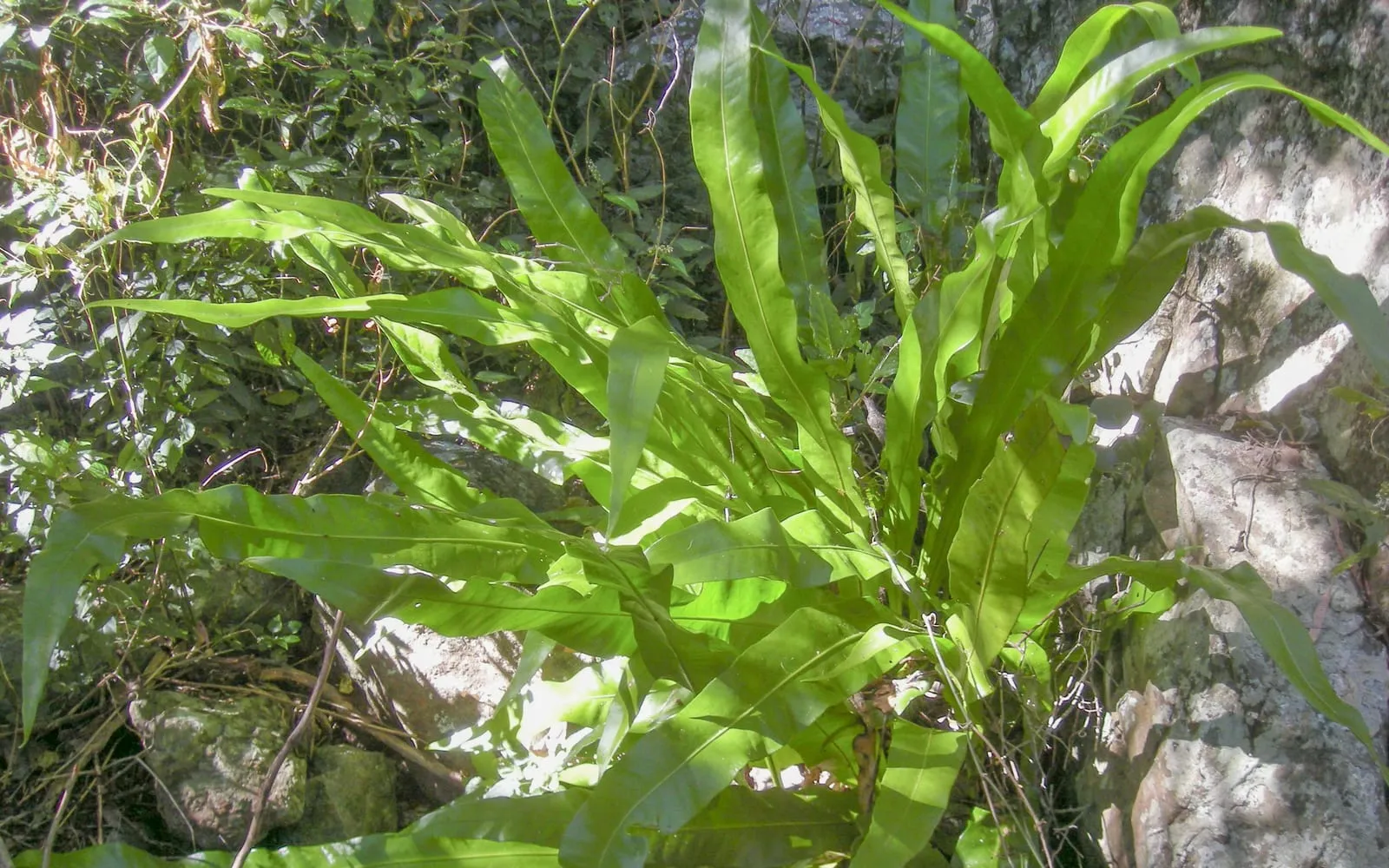
At a glance
- Difficulty
- Moderate
- Water
- When the surface of the mix has just dried
- Light
- Medium indirect light or light shade. Never direct sun
- Temperature
- 18-27 deg C, and never below 13 deg C
- Humidity
- High. It is an epiphyte and dries out from the air rather than the pot
- Hardiness
- USDA 10-12, RHS H1b, hardy to 13 C
- Type
- Evergreen perennial fern, epiphytic and clump-forming
- Height
- 30-60 cm
- Native to
- The Old World tropics
Tropical Africa, southern Asia, northern Australia and the Pacific, growing as an epiphyte on trunks and branches and sometimes on rock, in warm humid forest with no cold season. Its wide equatorial range means constant warmth and humidity with no seasonal rest, which is why it declines in a cool room and why it is damaged below about 13 deg C. It needs an airy root run rather than compost and high humidity rather than heavy watering.
Hardiness zones describe winter cold alone. Summer heat, humidity, rainfall and the length of the growing season decide as much, so treat the range as the outer limit rather than as a recommendation.
Not known to be toxic
Non-toxic. Microsorum punctatum appears on no list of plants harmful to cats, dogs or horses, and it is absent from RHS lists of potentially harmful garden plants. Ferns as a group carry no irritant sap and present no hazard from handling or from an animal chewing a frond. The common name is misleading, since the plant has no scent at all; it appears to have arisen from confusion with another species, and nothing about it is aromatic or edible. The round brown spore patches scattered across the frond undersides are reproductive structures and are frequently mistaken for scale insects, which leads to healthy plants being sprayed.
Sources: ASPCA (Bird's Nest Fern, Asplenium nidus), RHS potentially harmful garden plants
About
The fragrant fern has no scent. The name appears to have travelled to this species from another plant and stuck, and it is the first thing anyone asks about.
What it does have is an unusual shape for a fern. The fronds are simple undivided straps, stiff and upright, rising in a loose rosette from a creeping green rhizome that runs across the surface. The plain form looks like a clump of broad grass; the crested cultivars fork and ruffle at the tips into dense frills, and those are the ones usually sold at a premium.
It is an epiphyte, which decides almost everything about growing it. The roots want air, the rhizome must stay on the surface, and the plant loses water to dry air faster than it loses it from the pot. A fragrant fern browning at the edges in a centrally heated room is short of humidity rather than short of water.
Appearance and character
An epiphytic fern with a short, thick, green to brown creeping rhizome carrying scattered scales, running across the surface of the growing medium.
Fronds are undivided straps, 30 to 60 cm long and 3 to 8 cm wide, stiff, upright to slightly arching, and a fresh mid green. They taper at both ends and are held close together so that a plant forms a loose shuttlecock.
The plain species has smooth-edged fronds. ‘Grandiceps’ forks heavily at the tips into a dense crest. ‘Serratum’ has toothed margins, and several crested selections are grown under trade names.
Growth is moderate. A plant reaches 30 to 60 cm and spreads along its rhizome to form a wider clump over several years.
Spore patches are round, brown and scattered irregularly across the underside of mature fronds rather than arranged in rows, which is the feature most often mistaken for an infestation.
Old fronds yellow and die one at a time and should be cut out at the base.
Where it is from
A very wide tropical range covering Africa, southern and Southeast Asia, northern Australia and many Pacific islands, growing as an epiphyte on trunks, branches and rocks in warm humid forest.
That equatorial distribution means no cold season anywhere in its range, which is why the plant tolerates cold so poorly. Where the holly fern and the hart’s tongue come from climates with real winters, this one has never met one.
The epiphytic habit explains the rest. A fern growing on bark is drenched and drained within the hour, so it needs an open airy root run and cannot sit in wet compost, and its exposure means it depends on humid air rather than on a reservoir at the root.
It is grown widely in tropical gardens as a groundcover and on tree trunks, and the crested forms are popular in the aquarium and terrarium trade.
The genus Microsorum also contains the Java fern grown submerged in aquariums, which is a good illustration of how far the group tolerates wet conditions at the root when the water is moving and oxygenated.
How it grows
Give it medium indirect light or light shade. It holds a dim position well.
Keep it out of direct sun, which scorches the fronds.
Grow it in a very open bark-based epiphyte mix, or mount it on bark or cork. Ordinary potting compost holds too much water around a rhizome built for a branch.
Keep the rhizome on the surface, never buried.
Water when the surface of the mix has just dried, thoroughly, and drain completely.
Raise the humidity as high as you can manage. This is the condition that decides whether the plant looks good, and a terrarium, a bathroom or a humidifier all help far more than misting.
Keep it above 13 deg C and ideally between 18 and 27 deg C. This fern needs warmth, unlike most of the ferns sold beside it.
Feed every six to eight weeks at quarter strength through the growing season.
Divide the rhizome in spring to propagate, taking sections with roots and at least one growing point.
Through the seasons
Spring brings the main flush of fronds, unfurling as croziers along the rhizome. Resume feeding, and divide or repot now.
Summer is active growth. Water when the surface dries, feed every six to eight weeks, and keep the humidity up.
Autumn slows it. Reduce watering and stop feeding from October.
Winter is the hardest season, since heating dries the air and cools the room at the same time. Keep the plant above 13 deg C, away from radiators, and maintain humidity.
Care difficulty
Moderate, and harder than the temperate ferns on the same shelf.
Humidity is the whole difficulty. An epiphyte with broad exposed fronds browns at the edges in dry heated air, and no amount of watering the pot compensates.
Cold is the second issue. This is an equatorial plant with no winter in its history, and it suffers below 13 deg C where a holly fern would be comfortable.
Burying the rhizome rots it, as with every epiphytic fern.
Spore confusion leads to healthy plants being sprayed for pests they do not have.
Watering
Water when the surface of the mix has just dried, roughly weekly in summer and every ten to fourteen days in winter.
Water thoroughly until it drains, then let the pot drain fully rather than standing in water.
Wet the rhizome as well as the mix, since it absorbs moisture directly.
Use rainwater or filtered water where the supply is hard, since salts brown the frond margins.
Underwatering shows as browning frond edges and tips, which do not recover on the affected fronds.
Overwatering shows as a blackening softening rhizome and collapsing fronds.
Warning signs, diseases and pests
Round brown patches scattered irregularly across the frond undersides are spores. They are normal on mature fronds and are not pests.
Small brown discs found along the midribs and stalks, which scrape off and leave sticky honeydew, are scale insects.
Brown crisp frond margins are dry air, which is the standard indoor failure for this species.
A blackening soft rhizome is rot from burial or from a mix that holds water.
White cottony fluff among the rhizome scales is mealybug.
Yellowing of one frond at a time is normal turnover. Cut them off at the base.
Slow decline with no new fronds through a whole season usually means the room is too cold rather than too dark.
Scorched pale patches are sun damage.
Growing environment
Medium indirect light or light shade.
Never direct sun.
Warm, 18 to 27 deg C, with 13 deg C as the floor. This fern wants more warmth than most sold beside it.
High humidity, which is the decisive condition. A terrarium or a bathroom suits it far better than a living room.
A very open bark-based epiphyte mix in a shallow pot with drainage holes, or mounted on bark or cork, always with the rhizome on the surface.
Outdoors only in a warm humid frost-free climate in shade.
Avoid ordinary compost, buried rhizomes, cool rooms, radiators and direct sun.
Feeding
Feed every six to eight weeks from spring to early autumn with a balanced liquid houseplant fertiliser at quarter strength.
Stop feeding from mid-autumn to early spring.
Feed weakly, since ferns burn readily and show it as brown frond margins that look identical to dry air damage.
Repot every two or three years in spring into an open bark mix, keeping the rhizome above the surface.
Flush the mix occasionally with plain water to clear accumulated salts.
Troubleshooting
Does it smell of anything? No. The name appears to have transferred from another plant. There is no scent to the fronds or the rhizome.
There are brown dots all over the underside. Spores, scattered rather than in rows. They are normal on mature fronds. Scale insects sit along the midribs, scrape off and leave sticky honeydew.
The frond edges are brown and crisp. Dry air. This is an epiphyte and it loses water from its fronds faster than from the pot, so humidity matters more than watering.
Can I bury the creeping stem? No. It is a rhizome built to sit on bark and it rots when covered. Lay it on the surface of an open bark mix or mount the plant.
Is it safe with pets? Yes. Ferns present no hazard, and this one appears on no list of plants harmful to cats, dogs or horses.
It has stopped growing and the room is cool. Likely cold rather than dark. This is an equatorial fern with no winter in its history and it suffers below 13 deg C.
Why is the crested one so much more expensive? The crested cultivars are slower and are propagated by division rather than from spores, so a saleable plant takes considerably longer to produce.
What should I pot it in? An open bark-based epiphyte mix, or mount it on cork or bark. Ordinary compost holds too much water around the rhizome.
Fragrant fern problem guides
Not sure what is wrong? See the common houseplant pests guide.