
Houseplant
Maidenhair Spleenwort
Asplenium trichomanes
Also known as Asplenium trichomanes
How to grow Asplenium trichomanes, the maidenhair spleenwort, a hardy little fern with round pinnae on wiry black stems that likes rock and lime.
At a glance
- Difficulty
- Moderate
- Water
- Keep lightly, evenly moist; never waterlogged
- Light
- Bright indirect light to part shade
- Temperature
- Hardy; cool to cold, dislikes heat
- Humidity
- Average to high
- Hardiness
- USDA 4-8, RHS H6, hardy to -20 C
- Type
- Evergreen tufted fern
- Height
- 10 to 20 cm
- Native to
- Temperate regions worldwide
A small, hardy rock fern found across temperate regions worldwide, growing in crevices in walls, cliffs and rocks, often on limestone. It is fully hardy to hard frost, wanting cool conditions, bright shade and very sharp drainage, and it dislikes heat and a rich, wet root run. Unusually for a fern it tolerates lime and dry air better than damp, stagnant compost.
Hardiness zones describe winter cold alone. Summer heat, humidity, rainfall and the length of the growing season decide as much, so treat the range as the outer limit rather than as a recommendation.
Not known to be toxic
Ferns, including the spleenworts, are not listed as toxic by the ASPCA or the RHS, and no harmful compound is recorded in Asplenium trichomanes. A pet or child that chewed a frond would be unlikely to have more than a mild stomach upset.
Sources: ASPCA toxic and non-toxic plants, RHS potentially harmful garden plants
About
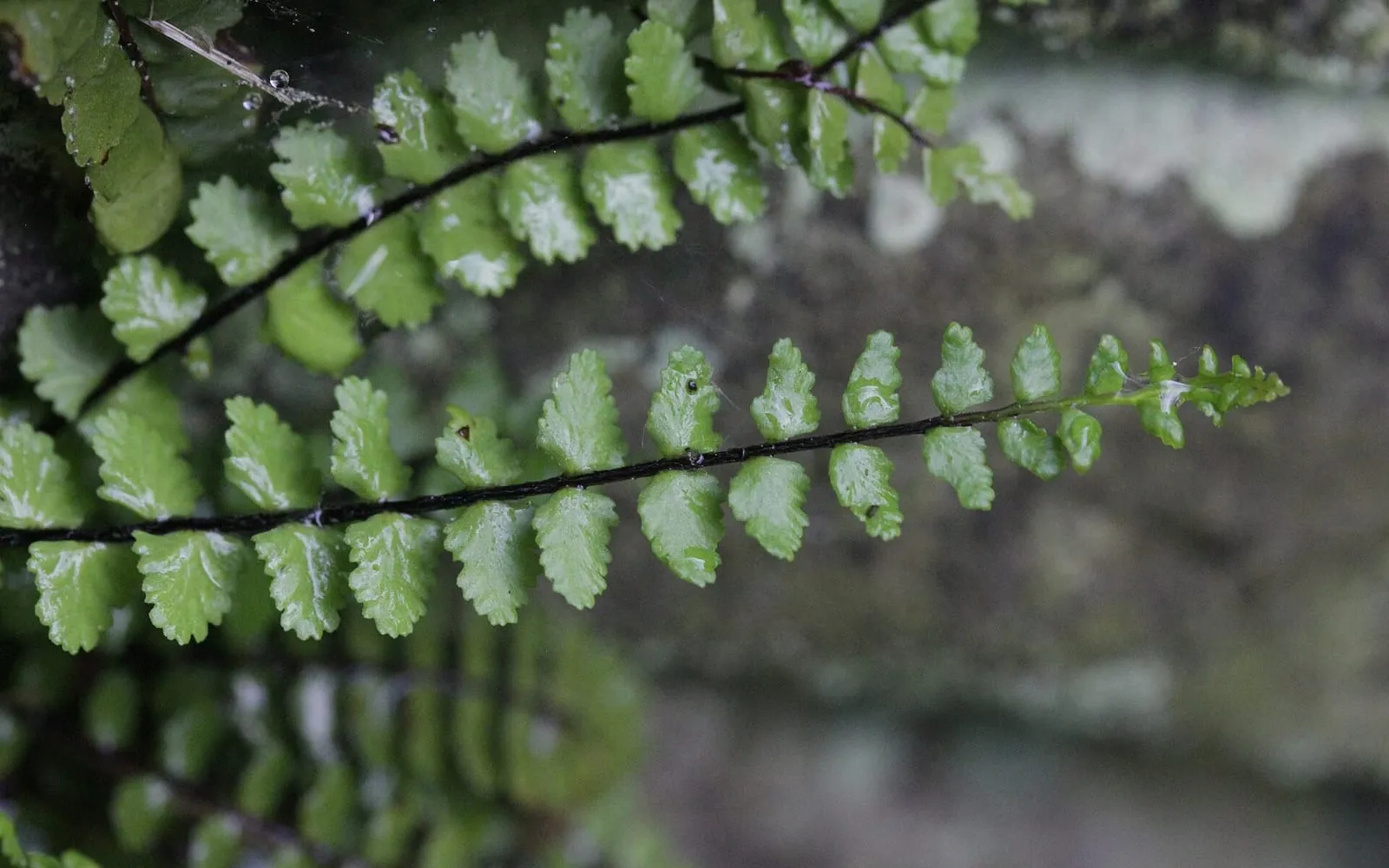
Maidenhair spleenwort is a small, tough fern of walls and rocks. Its narrow fronds are lined with rows of little round to oval green pinnae along a wiry, glossy black-brown midrib. They rise in neat tufts from a rock crevice or the mortar of an old wall. Only a hand’s-span high, it is one of the smallest hardy ferns and one of the most adaptable.
Unlike tender, humidity-loving ferns, it is a hardy plant found across the temperate world, growing in cracks in cliffs, walls and rocks, often on limestone. That crevice habitat means it needs sharp drainage and cool, bright shade instead of a rich, wet, warm root run. It tolerates lime and drier air better than most ferns, but dislikes heat and stagnant damp.
Grown in a gritty, sharply drained mix in a cool, bright, shaded spot, a trough or a wall crevice, it is a good fern for a cool room, an alpine collection or a shaded rockery. It is fully hardy outdoors, and its main needs are coolness, sharp drainage and protection from baking heat.
Appearance and character
The fronds are narrow and once-divided, lined with rows of small, round to oval green pinnae along a wiry, glossy dark midrib, and they rise in dense little tufts.
The dark, wiry midribs and the neat rows of round pinnae give it a ladder-like look, quite different from the broad or lacy fronds of many ferns.
It grows in small, evergreen tufts from a short rootstock, staying compact and clustering slowly instead of spreading widely.
It reproduces by spores borne beneath the pinnae, and in the wild it colonises the crevices of walls, cliffs and rocks, often on lime-rich stone.
Where it is from
Asplenium trichomanes grows across the temperate regions of the world, in crevices in walls, cliffs and rocks, often on limestone, in cool, bright shade with sharp drainage.
Give it cool conditions, bright shade and very sharp drainage. It tolerates lime and drier air, and is fully hardy to frost. It dislikes heat, a rich root run and stagnant, waterlogged compost, the reverse of many tender ferns.
How it grows
It grows slowly through the cooler, moister months, adding fresh tufts of fronds, and is evergreen and hardy through winter. Cool, bright, sharply drained conditions keep it healthy; heat, direct sun and stagnant damp harm it.
Grow it in a gritty, sharply drained mix, ideally with some limestone chippings, in a small pot, trough or wall crevice, and keep it lightly and evenly moist without ever waterlogging it. Sharp drainage matters far more here than for most ferns.
Give it bright shade or indirect light and cool conditions, out of direct sun and away from heat. It is happiest in a cool room, an unheated porch, an alpine house or a shaded rockery instead of a warm, humid spot.
Propagation is from spores, or by careful division of an established tuft.
Through the seasons
Spring brings fresh tufts of fronds in the cool, moist weather. Keep it lightly moist and give bright shade.
Summer is the season to guard against heat. Keep it cool, shaded and lightly moist, out of direct sun, which scorches the fronds.
Autumn is when growth slows as it cools. Keep it lightly moist and bright.
Winter is when the fern stays fully hardy and evergreen, needing no protection, though it should not sit in stagnant, wet compost.
Care difficulty
Moderate, and unusual among ferns in wanting cool, sharply drained, lime-tolerant conditions instead of warm, rich damp. Given cool, bright shade and very sharp drainage it is hardy and long-lived. It fails in heat and direct sun, which scorch the fronds, and in rich, wet, stagnant compost, which rots it. It is a fern for a cool grower instead of a warm, humid room.
Watering
Keep the gritty mix lightly and evenly moist, watering when the surface begins to dry, and never let it stand waterlogged, since its crevice roots want sharp drainage above all. It tolerates drier air than most ferns.
Ease back a little in winter, keeping it just moist, and avoid a rich, wet, stagnant root run at any time. Rainwater suits it, though it also tolerates the lime it grows on in the wild.
Warning signs, diseases and pests
Rich, wet, stagnant compost rots the roots, the most common cause of trouble, shown by blackening, collapsing fronds. Grow it leaner and more sharply drained, and keep it cool and only lightly moist.
Heat and direct sun scorch the fronds, browning and crisping them; move it into cool, bright shade. Scale insects can settle on the fronds and be wiped off and treated with horticultural oil.
Tired, browned fronds can be trimmed off at the base to keep the tuft fresh, and fresh fronds arise from the rootstock.
Growing environment
Bright shade or indirect light suits it, out of direct sun, which scorches the delicate fronds. It grows in the bright shade of a wall crevice or a rockery instead of deep gloom or full sun.
Cool conditions are important, since it dislikes heat. It is fully hardy to frost and happiest in a cool room, an unheated porch, an alpine house or a shaded rockery. It tolerates drier air than most ferns.
Grow it in a gritty, sharply drained mix, with some limestone chippings, in a small pot, trough or wall crevice, in cool, bright shade.
Feeding
Feed sparingly, once or twice in the growing season, with a very dilute balanced feed. It needs very little, and a rich root run harms it.
Give nothing in winter. Fresh gritty mix supports a repotted or divided plant through its first season.
Troubleshooting
The fronds are blackening and collapsing. Rot from rich, wet, stagnant compost. Grow it leaner and more sharply drained, keep it cool, and water only lightly.
The fronds are browning and crisp. Heat or direct sun. Move it into cool, bright shade, out of direct sun, and keep it lightly moist.
Why does it want lime when other ferns hate it? It grows naturally in limestone crevices, so unlike many ferns it tolerates lime, along with sharp drainage and cool shade.
Can it grow outdoors? Yes, it is fully hardy and grows well in a shaded rockery, wall crevice or trough, needing no winter protection, provided the drainage is sharp.
Is it safe around pets? Yes. Ferns, including spleenworts, are not listed as toxic, so this little rock fern is safe to grow around cats, dogs and children.
Maidenhair Spleenwort problem guides
Not sure what is wrong? See the common houseplant pests guide.