
Houseplant
Dancing Lady
Oncidium flexuosum
Also known as Dancing Doll Orchid, Golden Shower Orchid
Practical guidance for growing dancing lady orchid, Oncidium flexuosum, including branching flower sprays, pseudobulb watering, moderate cold tolerance, and mounting versus potting.
At a glance
- Difficulty
- Moderate
- Water
- Regularly while the pseudobulbs are actively growing, reduced once mature
- Light
- Bright indirect light with an hour or two of gentle direct sun
- Temperature
- 12 to 27 deg C
- Humidity
- 40-60 percent
- Hardiness
- USDA 9b-11, RHS H1c, hardy to 7 C
- Type
- Evergreen epiphytic orchid, flowering yearly from mature pseudobulbs
- Height
- 20-30 cm foliage; flower sprays trailing to 60 cm or more
- Native to
- South America
From subtropical to warm temperate forest across southern Brazil, Uruguay, Paraguay and northern Argentina, a range with a noticeably cooler and more seasonal climate than most orchids sold as houseplants. It tolerates a winter minimum other orchids on this site would not survive, and it flowers more freely for a distinct cooler, slightly drier autumn and winter rather than one unbroken warm season. It still has no frost tolerance and needs protection below about 7 deg C.
Hardiness zones describe winter cold alone. Summer heat, humidity, rainfall and the length of the growing season decide as much, so treat the range as the outer limit rather than as a recommendation.
Not known to be toxic
Oncidium carries no documented toxic compounds, in keeping with the orchid family's generally clean safety record. The ASPCA lists Oncidium as non-toxic to cats and dogs, and it does not appear on the RHS list of potentially harmful garden plants. No part of it, including the pseudobulbs a curious pet might dig at, is considered a poisoning risk. A small number of people report mild skin irritation from handling the roots or repotting mix of some Oncidium relatives, more a contact sensitivity than a true toxicity, so gloves are a sensible precaution for anyone with sensitive skin rather than a strict necessity for most growers.
Sources: ASPCA toxic and non-toxic plants, RHS potentially harmful garden plants
About
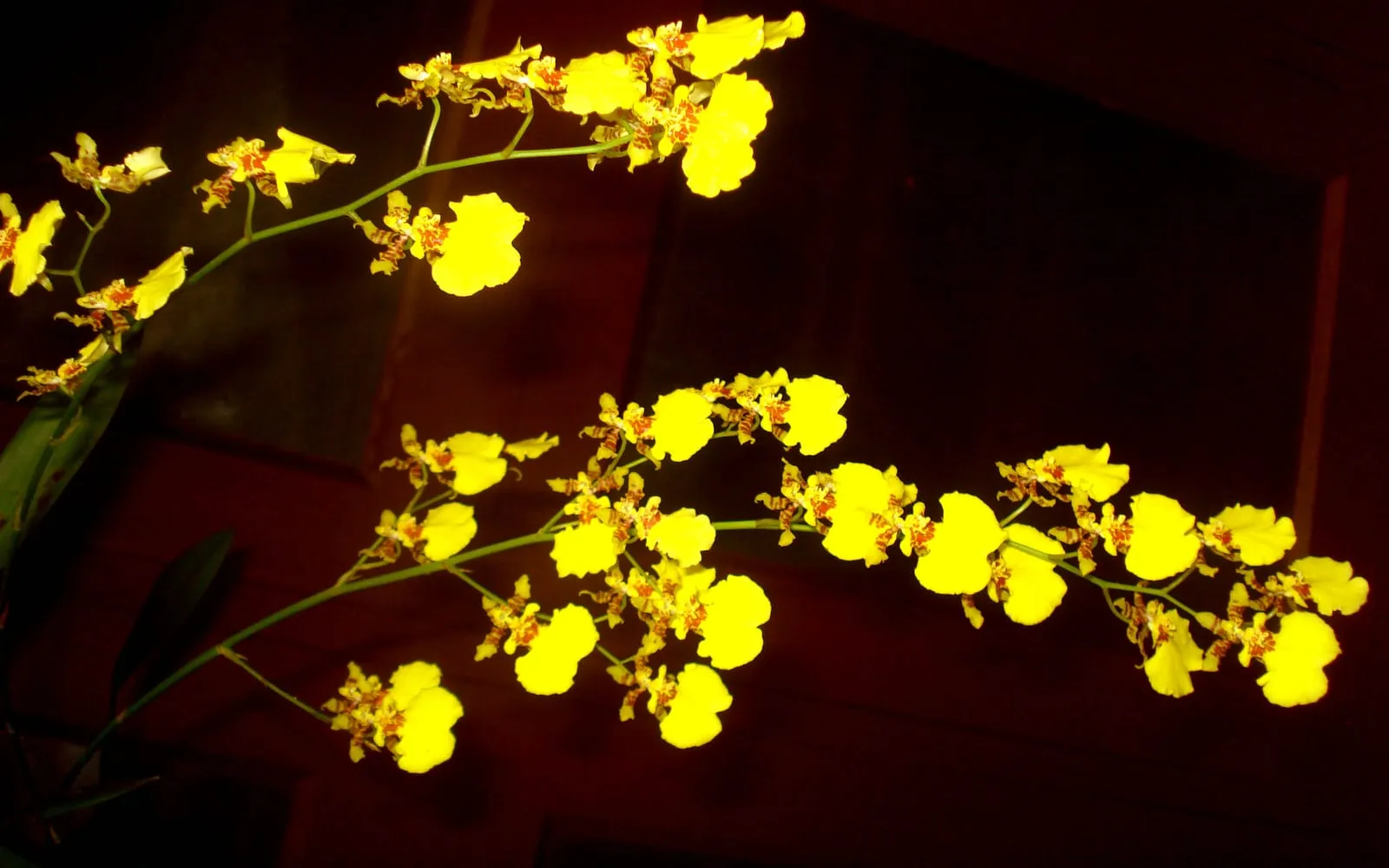
Dancing lady is named for the shape of its flowers, small and yellow-brown with a broad, ruffled lip that flares out like a skirt below a narrower upper hood, giving each one a distinct dancing-figure silhouette when a whole spray sways in a breeze. Unlike an orchid that carries a handful of flowers on a stiff spike, this species produces long, branching sprays that can hold fifty or more blooms at once.
It grows in compact clusters of small, flattened pseudobulbs, each one a water reserve for the strap-like leaves it supports and, eventually, for a flowering season of its own. Among Oncidium species it is a relatively easy-going one, tolerant of cooler conditions than most orchids kept indoors.
Appearance and character
Pseudobulbs are small, oval and somewhat flattened, clustering tightly at the base of the plant and each carrying one or two narrow, semi-succulent leaves. Older pseudobulbs shrivel slightly as they age and give up their reserves to newer growth, which is normal rather than a sign of a problem.
Flower sprays emerge from the base of a maturing pseudobulb and branch repeatedly as they lengthen, arching outward and downward under their own weight. Individual flowers are small, 2 to 3 cm across, in warm shades of yellow through reddish brown, with a proportionally large, ruffled lip that gives the flower its dancing shape. A well-grown plant can produce a spray carrying dozens of flowers at once, often with a light, sweet fragrance.
The overall plant is compact and clump-forming, spreading gradually as new pseudobulbs form at the base of older ones.
Where it is from
Oncidium flexuosum grows across a broad swathe of subtropical to warm temperate South America, through southern Brazil, Uruguay, Paraguay and into northern Argentina, generally as an epiphyte on tree branches in forest and woodland edges. That range sits noticeably further from the equator, and at a cooler average temperature, than the tropical lowland forest most orchids sold as houseplants come from.
The result is a species with genuine cool tolerance built in. Where a typical tropical epiphytic orchid sulks below about 15 deg C, this one takes a proper winter chill in its stride and, if anything, flowers more reliably for a distinct seasonal dip than it does kept at one unvarying warm temperature.
How it grows
Pot it in a coarse, bark-based orchid compost in a pot only just large enough for the current pseudobulb cluster, or mount it on bark or cork once it is established enough to tolerate the more frequent watering mounted growing needs. Either method works well for this species.
Give it bright indirect light with a little gentle direct sun, ideally morning rather than the stronger midday sun. Leaves that develop a reddish tinge are taking slightly more light than is comfortable; leaves that stay deep, dark green without any red usually mean the plant could take more.
Water regularly while a new pseudobulb is actively forming, then taper off once it has finished growing and the leaf has hardened, since the pseudobulb itself carries enough reserve to see the plant through a drier spell.
Repot every one to two years, generally after flowering, once the bark has begun to break down or the clump has clearly outgrown its pot, dividing larger clumps at the same time if a second plant is wanted.
Through the seasons
Spring brings the start of new pseudobulb growth. Increase watering as the new growth lengthens and resume regular feeding.
Summer is the main growing season, with new pseudobulbs maturing and hardening off by its end. Keep watering and feeding steady through warm weather.
Autumn brings flower sprays from the season’s mature pseudobulbs on a well-timed plant, alongside a gradual cooling and drying as the season progresses.
Winter is a cooler rest that this species tolerates comfortably. Reduce watering and stop feeding, keeping it above 7 deg C.
Care difficulty
Moderate, and easier than many orchids of similar showiness thanks to its tolerance of cooler indoor conditions. The main skill is judging when to water generously, while a pseudobulb is actively growing, and when to hold back once it has matured, rather than watering on a fixed schedule regardless of what the plant is doing. Flowering follows reliably from healthy pseudobulb growth the previous season, so a plant that grows well in summer is very likely to flower well in autumn.
Watering
Water thoroughly while new growth is active, soaking the mix until water runs freely from the pot or mount, then letting it approach dryness before watering again.
Reduce watering markedly once the current season’s pseudobulb has finished maturing, and cut back further still through the cooler winter rest, when the plant is using very little and a wet mix at low temperature invites rot.
Warning signs, diseases and pests
Scale insects cluster along the pseudobulbs, appearing as small, flat brown bumps that are easy to overlook against the pseudobulb’s own mottling. Scrape them off and treat with horticultural soap.
Mealybug hides in the folds where new growth emerges from an older pseudobulb, showing as small white, cottony tufts. Treat the same way as scale, checking new growth carefully since it is most vulnerable while still soft.
Spider mite becomes more likely in the dry air of a heated room over winter, showing as fine speckling on the leaves with faint webbing in bad cases. Raising humidity slightly and wiping leaves down periodically both help.
Root rot follows a bark mix that stays wet, particularly through the cooler winter rest, showing as roots that turn brown and mushy. Unpot, trim away dead roots, and repot into fresh bark, watering less generously afterwards.
Growing environment
Bright indirect light with a little gentle direct sun keeps growth compact and flowering reliable; too much direct sun scorches the leaves, while too little produces soft, dark green growth that flowers poorly.
Moderate warmth through the growing season, with a genuine cooler dip over winter, suits it well. Keep it above 7 deg C, a lower minimum than most orchids on this site tolerate.
Moderate humidity, around 40 to 60 percent, is enough for healthy growth. This species copes better with average room humidity than many other epiphytic orchids.
Feeding
Feed weekly at around quarter strength with a balanced orchid fertiliser through spring and summer, reducing to monthly or stopping altogether once autumn’s pseudobulbs have matured.
Hold off feeding entirely through the cooler winter rest, when growth has slowed and unused fertiliser only builds up as salts in a mix the plant is watering very little.
Troubleshooting
The pseudobulbs are shrivelling even though I water regularly. Check whether the roots are healthy first, since shrivelled pseudobulbs with a damaged root system cannot take up the water you are giving even if the schedule is generous. Older pseudobulbs also shrivel naturally as they give up reserves to new growth, which is not a problem on its own.
It grew well all summer but has not flowered. Wait a little longer; flowering usually follows once the season’s pseudobulb has fully matured and hardened, sometimes into early autumn, rather than immediately after growth stops. If a full season passes with no spike at all, review light levels, since this is the commonest underlying cause.
The leaves have developed a reddish tinge. Slightly too much direct sun. A little colour change does no lasting harm, though it is worth moving the plant back from the brightest part of the window once the leaves look stressed rather than lightly blushed.
Roots have turned brown and mushy. Root rot from a mix kept too wet. Trim away the affected roots, repot into fresh bark, and water less generously, particularly through the cooler months.
Can I mount it instead of keeping it potted? Yes, and many growers prefer it once the plant is established, since a mounted specimen dries faster and rarely suffers root rot, though it then needs watering more often to compensate for that faster drying.
Dancing Lady problem guides
Not sure what is wrong? See the common houseplant pests guide.