
Outdoor plant
Crimson Fountain Grass
Cenchrus setaceus
Also known as Purple fountain grass, Pennisetum setaceum
How to grow crimson fountain grass in a container or border. Its arching purple-red foliage and foxtail plumes, and why it is banned as invasive in some regions.
At a glance
- Difficulty
- Difficult
- Water
- Regular watering while establishing, drought-tolerant once mature
- Light
- Full sun
- Temperature
- Damaged by frost, killed by hard freezing
- Hardiness
- USDA 9-11, RHS H2, hardy to -1 C
- Type
- Tender perennial grass, often grown as an annual
- Height
- 60-120 cm
- Native to
- North Africa, Middle East
Tender to frost and grown as a perennial only in a reliably mild, near frost-free climate; everywhere colder it is treated as an annual, replaced each year, or lifted and overwintered under cover. It thrives on heat and strong sun and performs poorly in a cool, overcast summer even where frost is not a concern.
Hardiness zones describe winter cold alone. Summer heat, humidity, rainfall and the length of the growing season decide as much, so treat the range as the outer limit rather than as a recommendation.
Not known to be toxic
Crimson fountain grass has no toxicity listing from the RHS or the ASPCA and is considered safe around pets and children. Its greater risk by far is ecological rather than toxic: this species is a recognised invasive weed in several warm regions, and its sale or planting is restricted or banned in parts of the United States and elsewhere.
Source: RHS
About
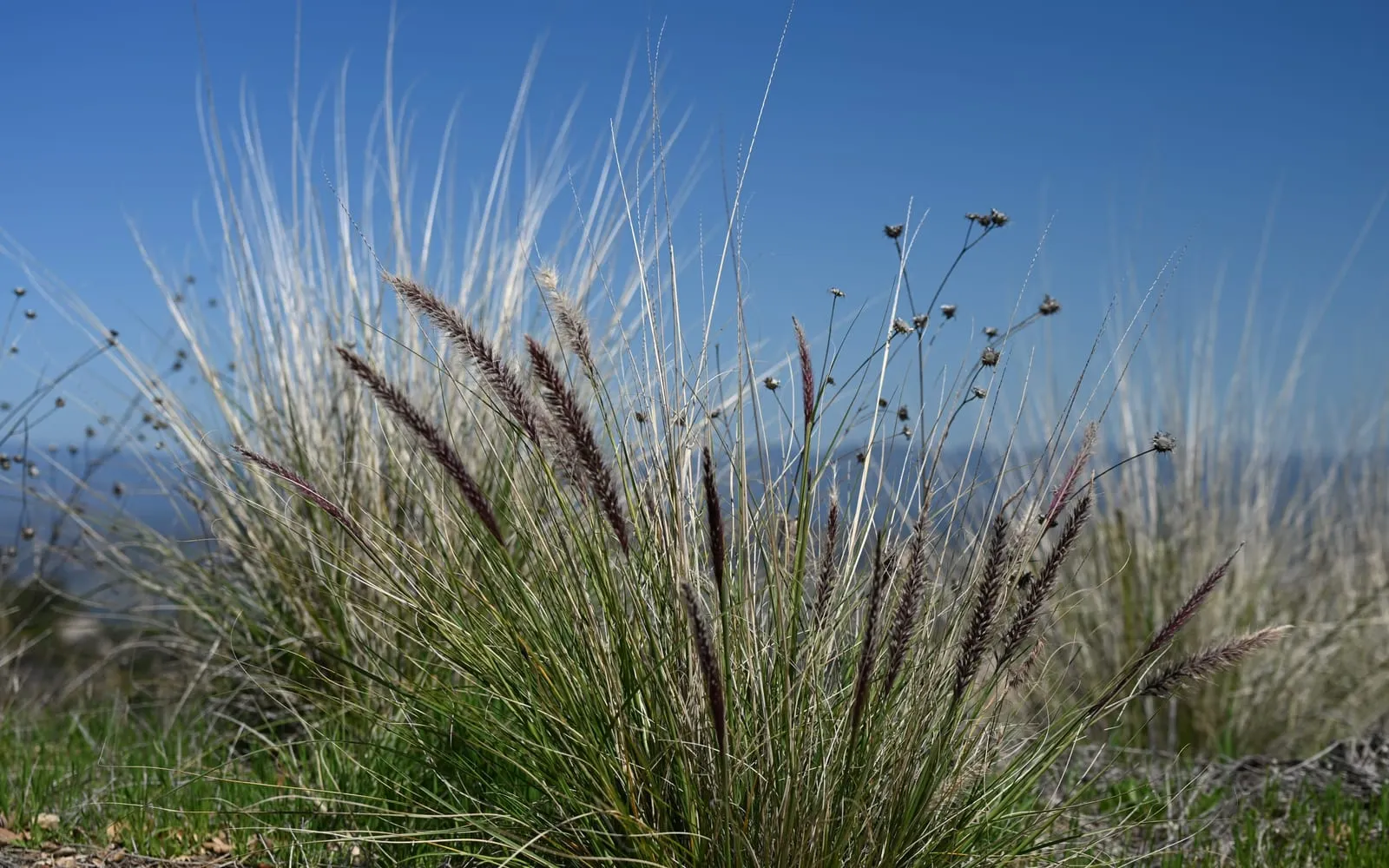
Crimson fountain grass is grown for its striking arching form and its foliage, which in the popular purple-leaved selections deepens to a rich burgundy-red through the growing season, topped with soft, bristly, foxtail-like flower plumes in a matching pink-purple. It is a familiar sight in warm-climate container displays and summer bedding schemes across much of the world, prized for the impact it adds with relatively little effort.
That same vigour and heat tolerance that make it such a reliable container and bedding plant have made it a serious invasive weed wherever it escapes into a naturally warm, dry climate, outcompeting native vegetation and, in some regions, increasing wildfire risk by adding to the fuel load; several US states and other jurisdictions now restrict or ban its sale and planting, so checking local rules before buying it matters more with this species than with most other ornamental grasses.
Appearance and character
Narrow, arching leaves form a loose, fountain-shaped clump, with the widely grown purple-leaved selections deepening from green to a rich wine-red as the season progresses and light levels remain strong. Soft, bristly flower plumes rise above the foliage from summer into autumn, a dusty pink to purple that closely matches the foliage colour on the purple forms and moves readily in the slightest breeze.
Unlike many ornamental grasses grown for winter structure, this tender species is usually cut down by the first real frost, and gardeners in a marginal or cold climate more often treat the whole plant as a single season’s display rather than expecting it to persist and develop the long-term structure a hardy grass would.
Where it is from
Warm, dry, sunny ground across North Africa and the Middle East, in a climate with intense summer heat and generally low rainfall.
That desert and semi-desert origin explains both the plant’s love of heat and strong sun in cultivation and its considerable invasive potential in any other warm, dry region it is introduced to, since conditions similar enough to its native range exist across large parts of the world’s subtropical and Mediterranean climate zones.
How it grows
A tender perennial that, given a warm, frost-free climate, builds into a substantial, long-lived clump over several years, but which is more often grown as a single-season annual or a container specimen lifted or discarded before winter in a cooler climate. Growth is fast and vigorous through a warm summer, with foliage and flower plumes both developing quickly given full sun and reasonable water.
Where it does persist and set seed in a suitable climate, it spreads readily. This is why it can become invasive outside cultivation: a single garden planting left to seed freely can spread into nearby ground.
Through the seasons
Spring plant out or begin growth from overwintered stock once the risk of frost has passed.
Summer is the main growing season, with foliage colour deepening and foxtail plumes developing given strong sun and heat.
Autumn flowering continues until temperatures drop; the first real frost typically ends the display outdoors in a temperate climate.
Winter in a frost-free climate the plant persists with minimal change; everywhere else it is usually treated as finished for the season, whether removed, composted or, for a valued specimen, lifted and kept frost-free under cover.
Care difficulty
Difficult to keep as a real long-term perennial outside a warm climate, though easy to grow well for a single season as a container or bedding specimen almost anywhere with a warm, sunny summer. The difficulty for most temperate gardeners comes down to a question of managing expectations around its tenderness rather than any complexity in day-to-day care.
Watering
Regular watering supports strong establishment and growth through the season. Once settled, it tolerates real drought reasonably well, though a consistently watered plant in full sun generally produces fuller, more colourful foliage than one left to fend for itself through a hot, dry summer.
Warning signs, diseases and pests
This species has few pests or diseases of note in typical cultivation, with rust disease an occasional but rarely serious issue, showing as orange-brown pustules on the leaves.
Pale, less vividly coloured foliage on a purple-leaved selection usually indicates too little direct sun, since strong light is what deepens and maintains the rich burgundy colouring these forms are chosen for; a plant moved to a shadier position will typically green up and lose much of its purple intensity.
Foliage that has collapsed and browned after a cold night is frost damage rather than disease, and in a frost-free climate typically resprouts from the base; in a colder climate it usually marks the end of that season’s display.
Growing environment
Full sun and real heat bring out the best colour and the most vigorous growth; in cooler or shadier conditions the plant performs noticeably less well and purple-leaved forms lose much of their characteristic colour. Free-draining soil suits it well, and it tolerates poor, dry ground without much complaint given enough sun.
Feeding
A balanced granular feed at planting, or once in spring for an overwintered specimen, is generally sufficient to support a strong season’s growth. This species is not particularly demanding of rich soil, performing well in ordinary garden conditions given enough sun and heat.
Troubleshooting
Purple foliage has faded toward green. Usually too little direct sun. Move the plant, or a container specimen, to the sunniest available position to restore stronger colour on new growth.
Foliage has collapsed and browned after cold weather. This is frost damage. In a frost-free climate, cut back damaged growth and expect resprouting from the base; in a colder climate this typically ends that season’s display outdoors.
You are unsure whether it is legal to plant this species locally. Check regional invasive species regulations before buying, since this grass is restricted or banned in parts of the United States and elsewhere due to its history of escaping cultivation and spreading aggressively in warm, dry climates.
You want to overwinter a valued specimen in a cold climate. Lift the plant before the first hard frost, pot it if not already containerised, and keep it in a bright, frost-free spot over winter, resuming normal watering and feeding once new growth appears in spring.