
Houseplant
Flying Goldfish Plant
Columnea gloriosa
Also known as Goldfish Plant
How to grow flying goldfish plant, Columnea gloriosa. Why its fish-shaped flowers need brighter light than the foliage alone, and what causes buds to drop before they open.
At a glance
- Difficulty
- Moderate
- Water
- When the top of the mix has just dried, typically weekly
- Light
- Bright indirect light, with some gentle direct sun to trigger flowering
- Temperature
- 18-24 deg C. Below 13 deg C stalls growth and flowering
- Humidity
- 60% or higher. Dry air causes bud drop and leaf browning
- Hardiness
- USDA 10b-12, RHS H1b, hardy to 10 C
- Type
- Evergreen trailing epiphyte
- Height
- Trails 60-100 cm; does not climb
- Native to
- Costa Rica
A cloud forest epiphyte from Costa Rica's mid-elevation forests, growing on mossy branches in constant, humid warmth rather than the hot, drier air of the lowland tropics. It has no meaningful tolerance for cold and stops flowering well before it stops growing altogether, so a room that is merely warm enough to keep the plant alive is not necessarily warm and bright enough to get it to bloom.
Hardiness zones describe winter cold alone. Summer heat, humidity, rainfall and the length of the growing season decide as much, so treat the range as the outer limit rather than as a recommendation.
Not known to be toxic
Columnea belongs to the same family as the African violet, and neither the RHS list of potentially harmful garden plants nor the ASPCA's toxic and non-toxic list carries an entry naming this genus as a hazard. Gesneriads as a family have no history of causing more than the mild, passing stomach upset that any houseplant foliage can trigger if eaten in quantity. The small, soft leaves and trailing habit put this plant within easy reach of a cat in a hanging basket, so expect a curious bite now and then rather than a reason to avoid growing it around pets.
Sources: RHS potentially harmful garden plants, ASPCA toxic and non-toxic plants
About
Flying goldfish plant earns its name from its flowers rather than its foliage, small orange-red blooms shaped uncannily like a leaping fish, complete with a pouched body and a flared, forked tail. It grows as a trailing epiphyte, best suited to a hanging basket where its stems can fall freely rather than a pot where they have nowhere to go.
Getting it to flower well indoors takes more light than most trailing houseplants want, along with the humidity its cloud forest origin demands. Given both, a well-grown plant can flush with dozens of flowers along its stems at once, dense enough to hide the foliage underneath for a few weeks.
Appearance and character
Small, oval leaves, 2 to 4 cm long, dark green and covered in fine soft hairs that give the whole plant a slightly fuzzy, velvety texture to the touch. They grow closely packed in opposite pairs along stems that lengthen steadily and trail rather than climb, reaching 60 cm or more in a mature hanging basket.
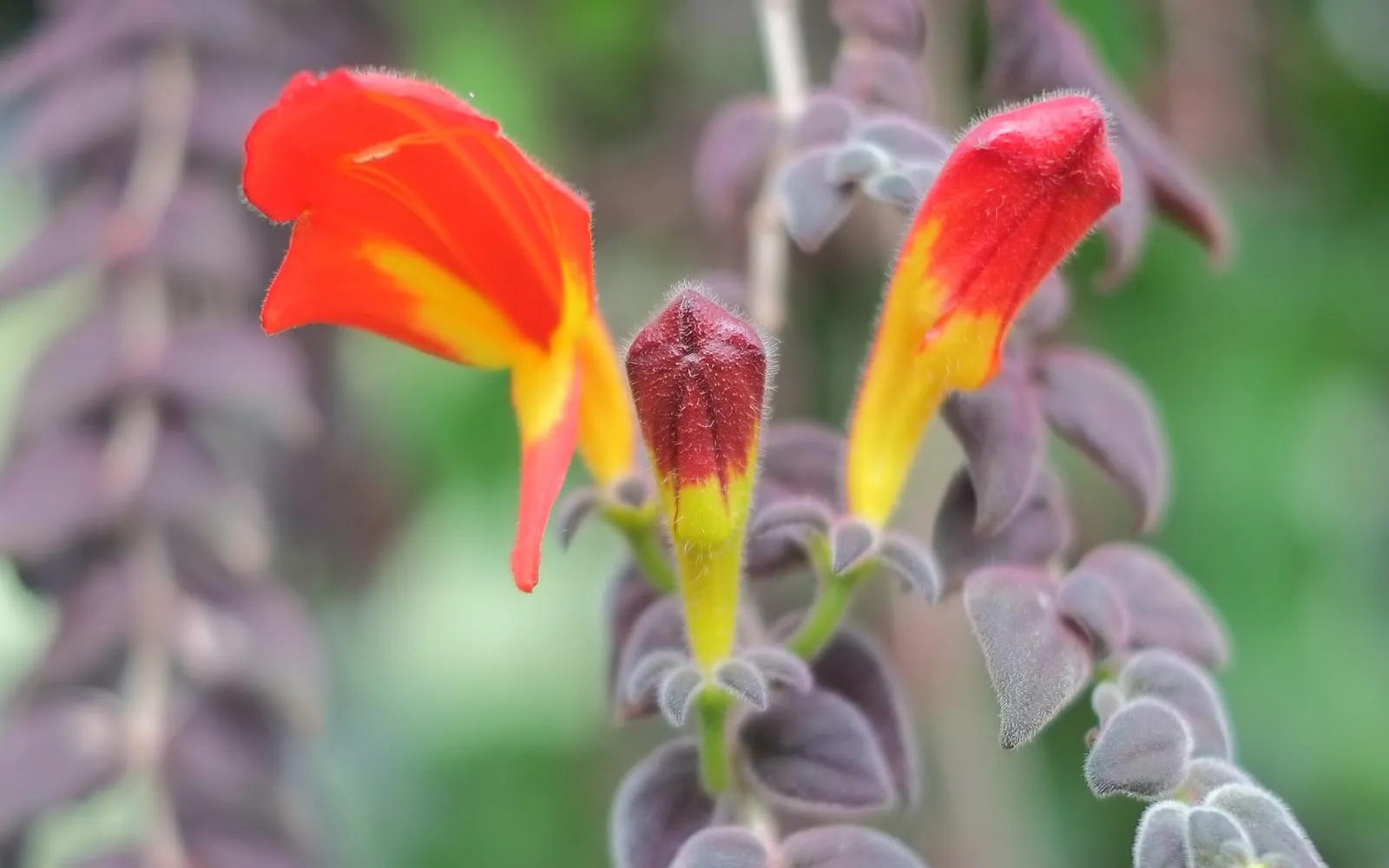
Grow it for the flowers. Each one is tubular, flaring into a shape that reads unmistakably as a fish leaping from water, with a swollen pouch at the base, a hooded upper lip, and a flared, two-lobed lower lip that trails behind like a tail fin. Colour is usually a vivid orange-red, sometimes with yellow markings inside the throat, and flowers appear singly at the leaf joints along the length of the stem rather than in a cluster at the tip.
A well-grown, mature plant can flower in flushes through much of the year given enough light and warmth, though a young or recently propagated plant may take a season or two to build up the growth needed for a heavy display.
Where it is from
Columnea gloriosa grows as an epiphyte in the mid-elevation cloud forests of Costa Rica, rooting into mossy bark on tree branches where mist and frequent rain keep the air constantly humid without ever soaking the roots for long.
That epiphytic habit explains why it dislikes a dense, water-retentive compost indoors, since its roots evolved for a thin layer of moss and bark rather than deep, damp soil. The cloud forest canopy filters strong equatorial sun into bright, diffuse light with occasional direct patches, which is close to what the plant needs on a windowsill: bright but not scorching, with a little real sun rather than none at all.
Humidity in that habitat rarely drops far, and it is the single biggest difference between the plant’s native conditions and an average heated home, which is why dry indoor air shows up first as browning leaf edges and dropped flower buds rather than any more dramatic symptom.
How it grows
Pot it in a light, free-draining mix, an African violet or orchid blend suits it well, in a hanging basket or a pot raised where the stems can trail freely rather than pool on a surface.
Growth runs fastest in spring and summer, with stems lengthening steadily and branching if the growing tips are pinched out occasionally, which keeps the plant fuller rather than a handful of long bare runners.
Flowering follows strong light more than any other single factor. Move a non-flowering plant somewhere brighter, including an hour or two of gentle direct sun, before assuming anything else is wrong.
Propagate from stem cuttings a few centimetres long, rooted in damp perlite or water. Cuttings taken from actively growing stems root readily and reach flowering size faster than seed-grown plants.
Through the seasons
Spring restarts strong growth. Resume fortnightly feeding, pinch back leggy stems to encourage branching, and expect the first flush of flower buds as light levels rise.
Summer is the main flowering season on a mature plant. Keep humidity up and watch for spider mite in hot, dry spells.
Autumn slows growth and flowering gradually. Reduce feeding towards the end of the season.
Winter is a rest. Water a little less often, keep the plant well away from cold glass and draughts, and expect little or no flowering until light levels rise again in spring.
Care difficulty
Moderate, with humidity as the main obstacle for most indoor growers. A plant kept in average room humidity survives but browns at the leaf tips and drops flower buds before they open, which is frustrating because the foliage otherwise looks perfectly healthy.
Light is the other lever that determines whether the plant just grows or flowers too. A spot that is bright enough to keep the leaves dark and glossy is not automatically bright enough to trigger blooming, and moving a reluctant plant closer to a window is usually the single most effective fix available.
Watering
Water when the top of the mix has just dried, typically weekly in a warm, bright spot and less often in cooler or dimmer conditions.
Water thoroughly until it runs from the drainage holes, then let any excess drain away rather than leaving the pot sitting in it. The light, open mix this plant prefers drains quickly, which suits its epiphytic roots but also means it dries out faster than a denser compost would.
Do not let the mix dry out completely for long stretches. Unlike some houseplants that recover readily from drought, this species holds little reserve in its thin stems and leaves, and prolonged dryness causes leaf drop that takes a while to regrow.
Warning signs, diseases and pests
Mealybug wedges into the tight leaf axils along the stems, showing as small white, cottony tufts. Remove them with a cotton bud dipped in diluted alcohol.
Spider mite thrives in warm, dry indoor air and shows as fine pale speckling on the leaves with faint webbing in bad cases. Raising humidity is both prevention and part of the cure.
Aphids cluster on soft new growth and unopened flower buds, distorting them and sometimes leaving a sticky residue behind. Rinse them off with a strong jet of water or treat with horticultural soap.
Root rot follows a mix that stays wet for too long between waterings, showing as stems that soften and leaves that yellow and drop while the compost underneath still feels damp. Repot into fresh, free-draining mix and water less often if it has already started.
Growing environment
Bright indirect light suits it best, with an hour or two of gentle direct sun tolerated and, for flowering, useful. A plant kept too dim grows but rarely flowers.
Keep the room between about 18 and 24 deg C. Growth and flowering both stall below about 13 deg C, and the plant has no tolerance at all for anything approaching frost.
Humidity of 60% or higher suits it best. A pebble tray, a humidifier, or grouping it with other humidity-loving plants all help far more than occasional misting, which raises humidity only briefly.
A light, free-draining mix suits the epiphytic root system. An African violet mix, an orchid blend, or a general houseplant compost cut with extra perlite and a little bark all work well.
Feeding
Feed fortnightly through spring and summer with a balanced liquid houseplant fertiliser diluted to half strength, which supports both leaf growth and the flowering the plant is grown for.
Reduce to monthly feeding over winter, when growth and flowering both slow, rather than stopping entirely, since this species keeps ticking over gently even in the quieter months if the room stays reasonably warm.
Flush the mix with plain water every couple of months to clear any build-up of fertiliser salts, which show up as browning leaf tips if left unchecked.
Troubleshooting
Flower buds form but drop before opening. Dry air is the usual cause. Raise the humidity around the plant with a pebble tray or humidifier, and check it is not sitting near a heating vent or radiator.
The plant grows well but has never flowered. Almost always not enough light. Move it somewhere brighter, including some gentle direct sun if the position allows, and give it time, since a plant needs a season or more of strong growth before it flowers heavily.
Leaf tips are browning and curling. Dry air, hard water, or both. Raise humidity and switch to rainwater or filtered water if the tap water in your area is hard.
The stems have gone bare and leggy with leaves only at the tips. Not enough light over time, and a habit that is hard to reverse on the existing growth. Move it brighter and pinch back the leggy stems to encourage new branching from further back.
Can I grow it in a regular pot instead of hanging it? You can, but the trailing stems need somewhere to fall, and a plant confined to a small pot without room to trail tends to look congested rather than graceful. A hanging basket or a raised shelf suits its natural habit far better.
Flying Goldfish Plant problem guides
Not sure what is wrong? See the common houseplant pests guide.