
Houseplant
Angel Wings
Caladium bicolor
Also known as Heart of Jesus
How to grow angel wings, Caladium bicolor. Why losing every leaf each year is dormancy rather than a dying plant, keeping the tuber dry through its rest, and the mouth pain calcium oxalate crystals cause if a leaf is chewed.
At a glance
- Difficulty
- Moderate
- Water
- Keep evenly moist while in leaf; stop almost entirely once dormant
- Light
- Bright indirect light. Direct sun scorches and bleaches the leaves
- Temperature
- 20-27 deg C while growing. Below 15 deg C triggers dormancy
- Humidity
- 50% or higher. Dry air browns the thin leaf edges
- Hardiness
- USDA 9-11, RHS H2, hardy to 10 C
- Type
- Tuberous tropical perennial, deciduous through a dry dormant season
- Height
- 30-60 cm
- Native to
- South America
A tuberous understorey plant from the seasonally flooded and seasonally dry forests of tropical South America, where a cooler, drier stretch of the year sends the plant dormant below ground rather than killing it outright. Warmth and moisture bring it back into leaf, and that rhythm is what a grower has to reproduce: the tuber survives a dry rest but not a cold or wet one, and it rots rather than merely pausing if kept damp while dormant in cool conditions.
Hardiness zones describe winter cold alone. Summer heat, humidity, rainfall and the length of the growing season decide as much, so treat the range as the outer limit rather than as a recommendation.
Toxic if eaten
- Do not eat
- All parts, particularly the leaves and tuber
- Harm from
- Eating it and handling it
- Affects
- People, cats and dogs
Every part of the plant carries needle-shaped calcium oxalate crystals, the same defence found throughout the Araceae family. The ASPCA lists Caladium as toxic to cats and dogs, causing immediate oral pain, intense drooling, difficulty swallowing and vomiting if a piece is chewed. People react much the same way; a bitten leaf or stalk causes a sharp burning sensation in the mouth within seconds, which is usually enough to stop anyone eating more of it. The tuber carries the highest concentration and is the part most likely to tempt a digging dog or a curious toddler if the plant is repotted with the tuber left exposed. Rinse the mouth with water, offer something cold, and contact a vet or doctor if swelling or breathing difficulty follows.
Sources: ASPCA (Caladium), RHS potentially harmful garden plants
About
Angel wings grows from an underground tuber and puts on a striking show of colour for much of the year before dying back completely into dormancy. Its large, thin, papery leaves are marked in combinations of green, white, pink and red that make it one of the most dramatic foliage plants available, and no two leaves on the same plant are usually marked quite the same way.
The dormant season that follows is the part that catches new growers out. A plant that loses every leaf and appears to have died is following its normal cycle rather than failing, and the tuber underneath needs a dry rest rather than continued watering through that period.
Appearance and character
Long-stalked, arrow to heart-shaped leaves, thin and almost papery in texture, 15 to 30 cm long, held upright to slightly arching on stalks that can be as long as the leaf itself.
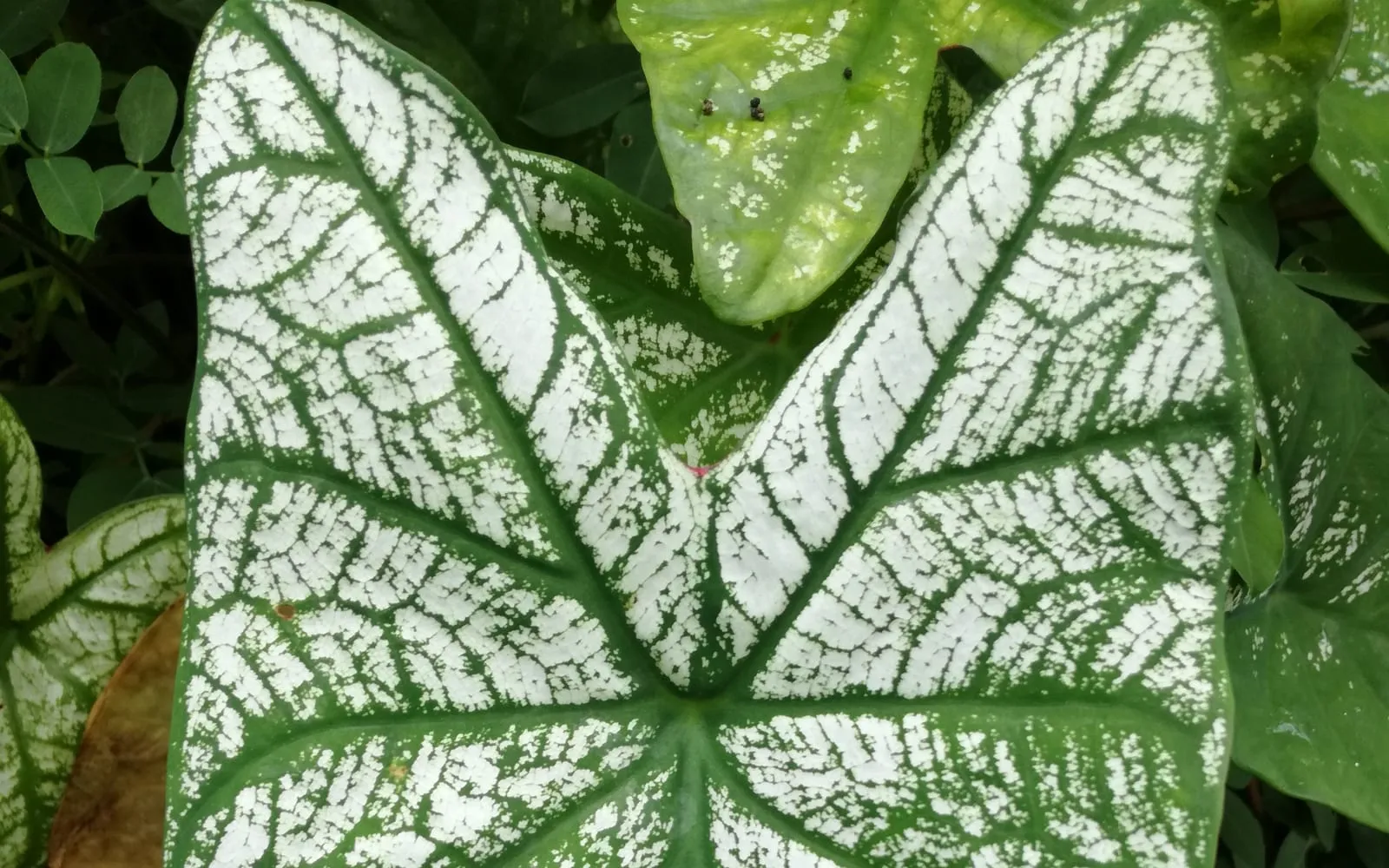
Colour is the defining feature and varies enormously between named forms, from leaves that are mostly white with green veins and margins, through pink or red centres fading to green edges, to forms with fine speckling or bold blotches rather than a clean pattern. The colour comes from pigments in the leaf tissue itself rather than any disease or deficiency, however unusual it looks compared with an ordinary green houseplant leaf.
A well-grown clump produces new leaves continuously through its growing season, each one unfurling tightly rolled from the centre before opening flat, and a mature tuber can support a dozen or more leaves at once during the height of summer growth.
Where it is from
Caladium bicolor grows through the tropical lowlands of South America, in forest understorey and along riverbanks that flood in the wet season and dry out for part of the year, a rhythm the plant’s tuber is adapted to survive.
That seasonal cycle is the single most important thing to understand about growing it. In the wild, the tuber sits dormant through the drier, sometimes cooler stretch of the year and produces its leaves only once warmth and moisture return, rather than growing leaves continuously the way many houseplants do.
Forest shade explains the light this plant needs indoors. Strong direct sun bleaches and scorches the thin leaves quickly, while the bright, filtered light of a spot near, but not directly in, a sunny window matches the dappled conditions under a forest canopy far more closely.
How it grows
Plant the tuber in a rich but free-draining mix, just below the surface, in a pot no larger than needed for the tuber’s size, and keep it warm and lightly moist until shoots appear, which can take several weeks.
Once leaves emerge, growth is fast through the warm season, with new leaves unfurling regularly as long as warmth, light and moisture stay steady. Keep the compost evenly moist without waterlogging it throughout this active period.
As temperatures drop or the plant’s internal cycle runs its course, leaves begin to yellow and die back one by one. This is the start of dormancy rather than a problem to fix. Reduce watering as it happens and stop almost entirely once the last leaf has died.
Store the dormant tuber in its pot, or lifted and kept in barely damp sand or vermiculite, somewhere warm, dark and dry until new growth signals the start of the next season. A tuber kept cold or wet while dormant is at real risk of rotting rather than resting.
Through the seasons
Spring brings new shoots as warmth returns. Increase watering gradually as leaves unfurl and begin fortnightly feeding once several leaves are open.
Summer is peak growth. Water regularly to keep the mix evenly moist, keep humidity up, and shade the plant from direct midday sun.
Autumn often brings the start of dieback as the season’s leaves age. Reduce watering as individual leaves yellow rather than trying to keep every one going.
Winter is dormancy for most plants grown on a natural cycle. Keep the tuber warm, dark and nearly dry until new shoots signal the next season is beginning.
Care difficulty
Moderate, and the difficulty is less about daily care during active growth, which is fairly straightforward, than about handling the dormant season correctly.
A plant that loses its leaves is easy to mistake for a dead one, and the instinctive response of watering it more to bring it back is exactly the wrong move, since a wet tuber sitting dormant in cool conditions rots rather than recovering. Learning to recognise and accept dormancy, then keeping the tuber dry and warm through it, is most of the care this plant needs.
Watering
Keep the mix evenly moist throughout active growth, watering as soon as the surface starts to dry rather than letting it dry out completely, since the thin leaves wilt quickly under drought stress.
Reduce watering gradually as leaves begin to yellow and die back at the end of the season, then stop almost entirely once the plant has gone fully dormant, watering only enough, if at all, to keep the tuber from shrivelling completely.
Resume watering once new shoots appear the following season, starting lightly and increasing as growth picks up.
Warning signs, diseases and pests
Spider mite favours warm, dry indoor air and shows as fine pale speckling on the leaves, sometimes with faint webbing in bad cases. Raising humidity and rinsing the foliage periodically helps prevent it.
Aphids cluster on soft new leaf stalks as they unfurl, distorting the young growth. Rinse them off with a strong jet of water or treat with horticultural soap.
Root and tuber rot follows compost kept wet during dormancy, the single biggest risk to this plant. A tuber that has rotted feels soft and discoloured rather than firm; there is no fix once it has happened, only prevention through keeping the dormant tuber properly dry.
Fungus gnats breed in constantly damp compost and are more nuisance than serious threat, though their larvae can damage fine roots in large numbers. Letting the surface dry between waterings during active growth keeps them down.
Growing environment
Bright indirect light suits it best. Direct sun, especially through glass in summer, scorches and bleaches the thin leaves within days.
Keep the room between about 20 and 27 deg C while the plant is in leaf. Temperatures below about 15 deg C signal the plant towards dormancy even outside its usual season, and the tuber has no tolerance for cold while it is wet.
Humidity of 50% or higher keeps the papery leaf edges from browning. A pebble tray or a naturally humid room helps more than misting, which raises humidity only briefly.
A rich, moisture-retentive but free-draining mix suits the tuber best. Ordinary houseplant compost with a little added perlite for drainage works well.
Feeding
Feed fortnightly through the growing season with a balanced liquid houseplant fertiliser, diluted according to the product’s guidance, to support the rapid, continuous leaf production this plant puts on when it is actively growing.
Stop feeding completely once the plant begins dying back for dormancy, and do not resume until new shoots appear the following season, since a dormant tuber takes up no nutrients and unused fertiliser only builds up as salts in the mix.
Troubleshooting
All the leaves have died and the pot looks empty. Normal dormancy rather than a dead plant, provided the dieback happened gradually towards the end of the growing season. Reduce watering to almost nothing, keep the tuber warm and dry, and expect new shoots once the next growing season begins.
The leaves are scorched with pale, crisp patches. Direct sun, almost certainly. Move the plant to bright indirect light out of the sun’s direct path, and any leaves already damaged will not recover, though new growth should be unaffected.
A shoot has not appeared even though it should be growing season. Patience is usually enough, since sprouting can take several weeks after a tuber is planted or wakes from dormancy. Check the tuber has not rotted by feeling for firmness before assuming the worst.
The tuber feels soft when I checked on it. Rot, most likely from being kept wet during dormancy. There is no reliable way to save a soft, mushy tuber, so treat it as a lesson for storing the next one properly dry.
Is it safe to grow with a cat that likes to dig in pots? Not ideally. Every part contains calcium oxalate crystals that cause immediate mouth pain if chewed, and the tuber carries the highest concentration, so keep the pot somewhere a digging cat cannot reach.
Angel Wings problem guides
Not sure what is wrong? See the common houseplant pests guide.