
Houseplant
Variegated Fig
Ficus variegata
Also known as Ficus variegata, Common Red-stem Fig
How to grow Ficus variegata, the variegated fig. Its broad leaves, figs borne on the trunk, fast growth, why the sap irritates, and how to grow it indoors.
At a glance
- Difficulty
- Easy
- Water
- When the top few centimetres of mix have dried
- Light
- Bright indirect light to some direct sun
- Temperature
- Warm; keep above about 13 deg C
- Humidity
- Average to high
- Hardiness
- USDA 10-12, RHS H1b, hardy to 12 C
- Type
- Evergreen fig tree
- Height
- Up to 20 m in the wild; small and pruned in a pot
- Native to
- Southeast Asia and the western Pacific
A fast-growing fig tree from the warm forests of Southeast Asia and the western Pacific, where it becomes a large tree hung with figs along its trunk. It needs warmth, bright light and steady moisture, and it cannot take frost or hard chill. It is safest above about 13 deg C, and cold, wet compost or a sudden move can make it drop its leaves.
Hardiness zones describe winter cold alone. Summer heat, humidity, rainfall and the length of the growing season decide as much, so treat the range as the outer limit rather than as a recommendation.
Harmful if eaten
- Do not eat
- The milky white latex sap
- Harm from
- Handling it and eating it
- Affects
- People, cats and dogs
Like other figs, this one bleeds a milky white latex when cut or broken, and that sap is a mild irritant. On skin it can cause redness and itching in sensitive people, and the ASPCA lists Ficus among the plants toxic to cats and dogs, which may drool, vomit or develop skin irritation from the sap. It is not a serious poison, and the ripe figs are edible, but wear gloves when pruning, wash off any sap, and keep pets from chewing the leaves.
Sources: ASPCA toxic and non-toxic plants, RHS potentially harmful garden plants
About
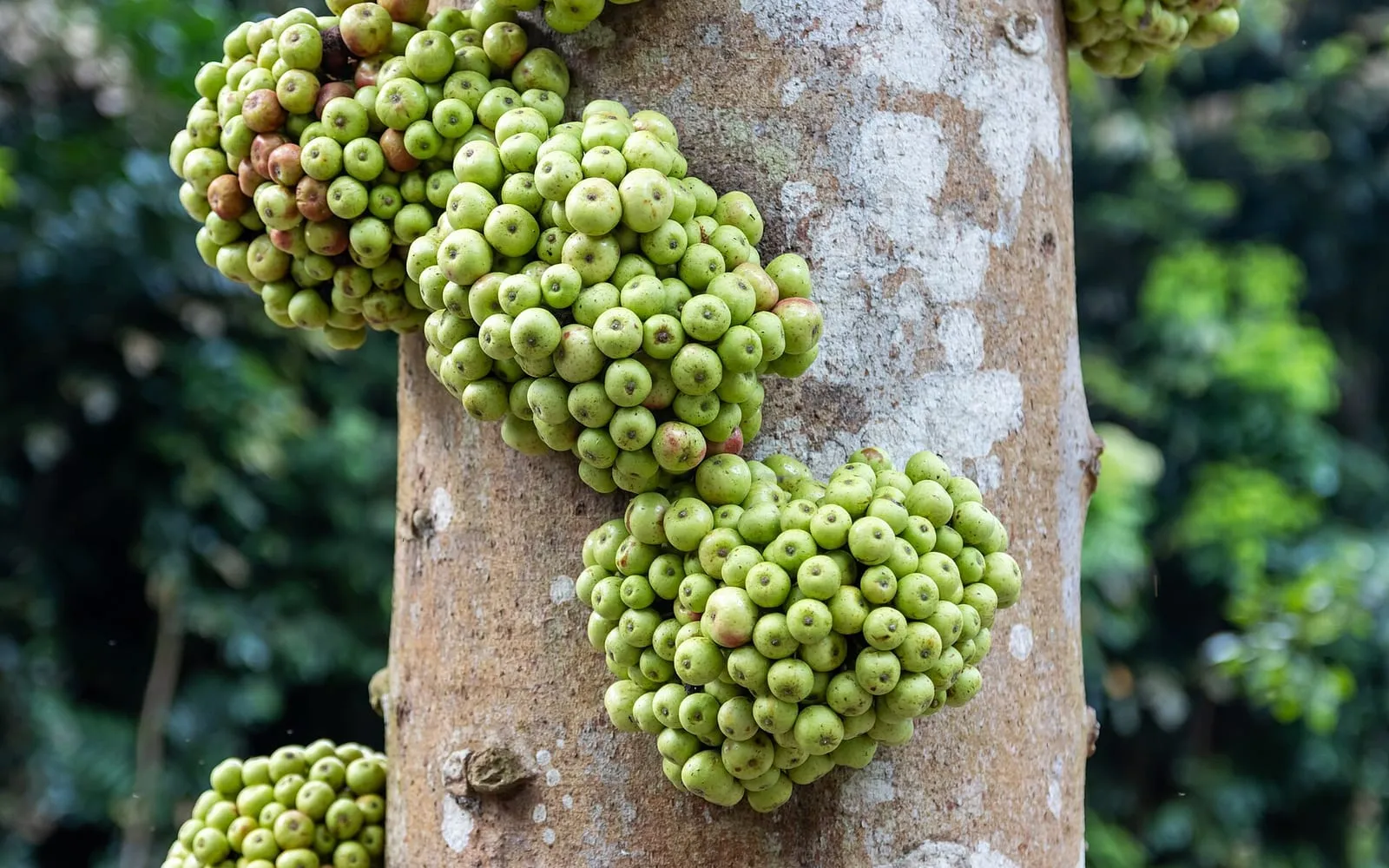
Variegated fig is a fast-growing fig tree, grown in the tropics as a shade tree and street tree and, indoors, kept small as a pot plant or bonsai. It carries broad, glossy, oval leaves on red-tinged stems, and mature trees are cauliflorous, hanging clusters of small figs directly along the trunk and branches instead of among the leaves. Those trunk-borne figs feed wildlife in its native forests.
It comes from the warm forests of Southeast Asia and the western Pacific, so it needs warmth, bright light and steady moisture. It grows fast when those are in place. It is easy and vigorous, though like other figs it dislikes sudden change and may drop leaves after a move, a chill or a dry spell, recovering once settled.
Grown in a bright, warm spot and pruned to keep it in bounds, it makes a lush, quick-growing foliage tree or a useful bonsai subject. Its milky sap is a mild skin irritant, in common with other figs, so it is pruned with gloves and kept from pets that chew. Given warmth, light and even watering, it is undemanding.
Appearance and character
The leaves are broad, glossy and oval, a fresh green, borne on red-tinged stems, giving a lush, leafy look on a fast-growing plant.
Mature trees are cauliflorous, hanging clusters of small figs directly on the trunk and older branches instead of among the foliage. This feature is seldom seen on a young potted plant.
It grows fast and spreading, becoming a large tree in the wild, so indoors it is pruned hard and often to keep it small, or trained as a bonsai.
Cut or broken, the stems bleed a milky white latex, in common with all figs, which is a mild skin irritant and the reason to prune with gloves.
Where it is from
Ficus variegata grows in the warm, humid forests of Southeast Asia and the western Pacific, becoming a large, fast-growing tree hung with figs along its trunk. It is a plant of constant warmth, bright light and steady moisture.
Give it warmth, bright light with some direct sun, and steady moisture. It cannot take frost or hard chill. Cold, wet compost or a sudden change of conditions can make it drop its leaves, so keep it warm and settled.
How it grows
It grows fast through the warm months, putting on lush leafy growth, and slows in winter. Warmth, light and even moisture keep it growing; cold, a dry spell or a sudden move check it and can drop its leaves.
Grow it in a free-draining but moisture-retentive houseplant mix, and water when the top few centimetres have dried, keeping it moderately moist in growth and a little drier in winter. Prune hard in spring to keep it small, wearing gloves against the sap.
Give it bright indirect light with some direct sun, and warmth above about 13 deg C, away from cold draughts. Try not to move it about, since figs often drop leaves after a change.
Propagation is easy from stem cuttings in warmth, taken with clean hands because of the irritant latex.
Through the seasons
Spring brings fast growth. This is the best time to prune hard, repot if needed, and resume feeding.
Summer is the main growing season. Keep it moderately moist, feed monthly, and give bright light.
Autumn slows growth as light fades. Reduce feeding and let the mix dry a little more between waterings.
Winter the plant rests. Keep it warm above about 13 deg C, only lightly moist, and away from cold draughts, which cause leaf drop.
Care difficulty
Easy and fast, given warmth, light and even moisture. It grows vigorously and roots readily from cuttings, and the main issue is leaf drop after a move, a chill or a dry spell. Cold, wet compost rots it. Keep it warm, bright and settled, prune to control its size, and it is an undemanding, quick plant. Its mild sap is the reason for gloves when pruning.
Watering
Water when the top few centimetres of the mix have dried, keeping it moderately moist through the growing season, since a fast, leafy plant drinks freely. Let it drain, and do not let it stand wet.
Water less in winter, letting the mix dry a little more, since cold, wet compost rots the roots. A dry spell, like a chill or a move, can cause leaf drop, so keep the watering steady.
Warning signs, diseases and pests
Leaf drop is the commonest complaint and usually follows a move, a chill or a dry spell, not disease. Settle it in a warm, bright, steady spot and water evenly, and it should grow new leaves.
Warm, dry air brings spider mites and scale; raise the humidity, wipe the leaves, and treat early. Root rot in cold, wet compost shows as yellowing, wilting leaves and a soft base; improve drainage and warmth.
Prune with gloves, since the milky sap is a mild skin irritant, and wash off any that gets on skin.
Growing environment
Bright indirect light with some direct sun suits it, giving strong, leafy growth. It tolerates a fairly bright spot but scorches in harsh, unacclimatised midday sun and grows leggy in deep shade.
Warmth above about 13 deg C and average to high humidity keep it growing, well away from cold draughts. It likes to be kept in one place instead of moved about.
Grow it in a free-draining but moisture-retentive mix in a warm, bright spot, pruned to control its size, and site it out of reach of pets that chew.
Feeding
Feed monthly through the growing season with a balanced liquid feed at half strength, to support the fast growth. Ease off in autumn and stop in winter.
An occasional plain-water flush clears any salts. Fresh mix supports a newly potted or pruned plant for its first weeks.
Troubleshooting
It is dropping its leaves. Usually a move, a chill or a dry spell, since figs dislike change. Settle it in a warm, bright, steady spot, water evenly, and it should grow new leaves.
The leaves are yellowing and wilting. Root rot from cold, wet compost. Improve drainage, keep it warmer, and water less.
Why does it bleed white sap? All figs carry a milky latex, which is a mild skin irritant. Prune with gloves and wash off any sap.
Can I keep it small? Yes. Prune it hard and often, in spring especially, to keep it in bounds as a pot plant or bonsai, since it is naturally a fast, large tree.
Is it safe around pets? The sap is a mild irritant and the ASPCA lists Ficus as toxic to pets, so keep pets from chewing the leaves. Serious poisoning is unlikely, but mouth upset and skin irritation are possible.
Variegated Fig problem guides
Not sure what is wrong? See the common houseplant pests guide.