
Outdoor plant
Evodia Fruit
Tetradium ruticarpum
Also known as Wu Zhu Yu, Evodia
How to grow evodia, Tetradium ruticarpum, an aromatic Chinese tree of the citrus family grown for the pungent fruit wu zhu yu, with bee-friendly flowers.
At a glance
- Difficulty
- Moderate
- Water
- While young and in dry spells
- Light
- Full sun
- Temperature
- Hardy to moderate cold; dies back to bare wood in winter
- Hardiness
- USDA 6-9, RHS H5, hardy to -15 C
- Type
- Deciduous tree
- Height
- Up to 10 m
- Native to
- China
A deciduous tree of temperate and warm-temperate China, hardy to moderate winter cold and losing its leaves each winter. It needs a warm growing season and a moist, fertile soil, and it copes with a fair range of conditions once established. It is far hardier than the tropical trees it is sometimes grouped with, and grows outdoors in a temperate climate.
Hardiness zones describe winter cold alone. Summer heat, humidity, rainfall and the length of the growing season decide as much, so treat the range as the outer limit rather than as a recommendation.
Harmful if eaten
- Do not eat
- The fruit, which is pungent and rich in alkaloids
- Harm from
- Eating it
- Affects
- People
The small fruit is grown and gathered as the Chinese herb wu zhu yu, and it is pungent, bitter and hot, rich in alkaloids such as evodiamine. Prepared and used deliberately as a remedy, it is a matter for a qualified practitioner, and eaten in quantity it can cause stomach upset, so the raw fruit is not a food. The tree itself is aromatic and safe to grow and handle. This guide covers growing it instead of using the fruit.
Sources: RHS potentially harmful garden plants, North Carolina Extension plant toxicity database
About
Evodia is an aromatic Chinese tree of the citrus family, grown for the small, pungent fruit used in Chinese medicine as wu zhu yu. It makes an upright deciduous tree with handsome pinnate leaves that smell of citrus and spice when crushed, as many plants in the citrus family do.
It is a close relative of the bee-bee tree, Tetradium daniellii, and shares that tree’s late clusters of small flowers, which are a valuable nectar source for bees at a time of year when little else is flowering. That makes it worth growing even where the fruit is not useful.
Unlike many of the medicinal plants grouped with it, evodia is hardy and grows outdoors in a temperate climate. For a grower it is an attractive, bee-friendly, aromatic tree, and this guide covers growing it instead of using the fruit, which has a medicinal role and should not be treated as food.
Appearance and character
Leaves are pinnate, made up of several pointed leaflets along a central stalk, dark green above and paler beneath, dotted with the oil glands of the citrus family and aromatic when bruised.
The tree is upright with a spreading crown, reaching up to around ten metres, deciduous, so it stands as bare branches through winter and produces fresh leaves in spring.
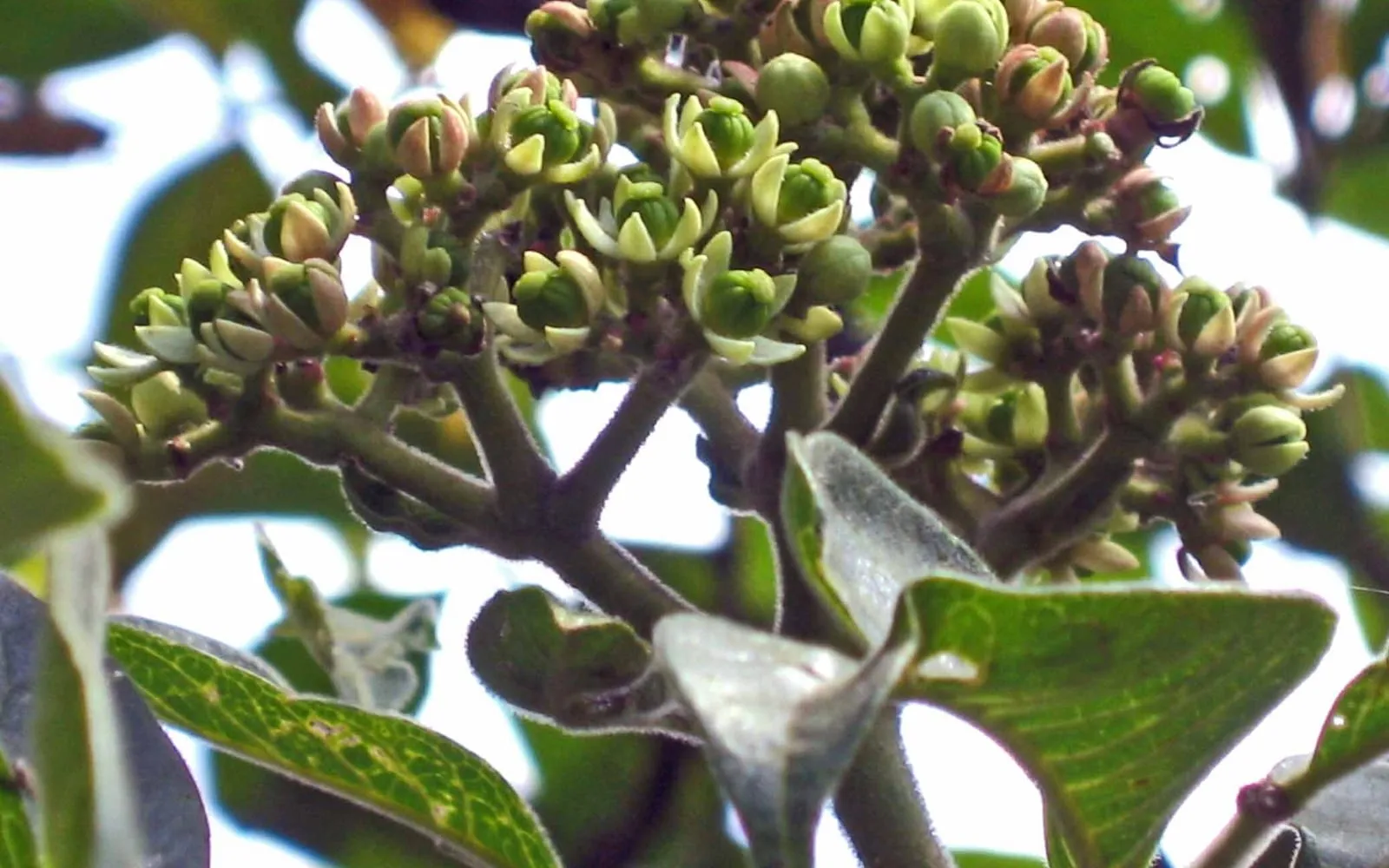
Flowers are small and white to greenish, borne in flat-topped clusters at the shoot tips in late summer, and they attract bees and other insects when much else has finished flowering.
Fruit follows on female trees as clusters of small reddish-brown capsules that split to show dark seeds, pungent and aromatic, and it is these that are dried as wu zhu yu.
Overall, it is a leafy, aromatic, bee-friendly deciduous tree, useful for its foliage, its late flowers and its fruit rather than for one single feature.
Where it is from
Tetradium ruticarpum is native to China and neighbouring parts of East Asia, growing in woodland and on hillsides in a temperate to warm-temperate climate. It grows in places with cold winters and warm summers.
Give it a warm growing season and a moist, fertile soil, and it tolerates moderate winter cold without trouble.
How it grows
It grows steadily into an upright deciduous tree in full sun on moist, fertile soil, flowering in late summer and, on female trees, fruiting into autumn. Given a reasonable site it is undemanding.
Plant it in full sun in moist, fertile, free-draining soil with room for a small tree, and water it through its early years to establish it. After that it is hardy and needs little routine care in a temperate climate.
Prune only lightly in winter to shape it or remove crossing branches, since it needs little. Grow it where its late flowers can be reached by bees and where its eventual size, up to ten metres, has room.
Grow it as an ornamental and bee tree, or for its fruit if that interests you, handling the fruit with its medicinal caution in mind. There is no need to eat any part of a garden tree.
Through the seasons
Spring brings fresh pinnate leaves on the bare branches as growth resumes.
Summer is leafy growth, building towards the late-summer flowering.
Late summer is the flowering period, with flat clusters of small flowers opening and attracting bees when few other trees are in bloom.
Autumn and winter the fruit ripens on female trees and the leaves fall, leaving the tree bare and dormant through the cold.
Care difficulty
Moderate, and easy in a temperate garden. Given sun and a moist, fertile soil it is hardy, healthy and not often troubled by pests, needing only light pruning and space for a small tree. Unlike the tropical medicinals, it stands winter cold, so its only real requirement is a warm growing season and room to grow.
Watering
Water young trees regularly through their early years to establish them, and in dry spells, since the tree favours moist soil. Steady moisture supports good growth while it is building its roots.
An established tree needs little watering in a temperate climate and copes with ordinary dry spells, though it grows best where the soil does not bake hard.
Warning signs, diseases and pests
Aphids may gather on soft new growth in spring and can be washed off or left to natural predators. The tree is otherwise little troubled by pests once established.
There are few serious problems on a healthy tree in a suitable site, which is part of its appeal as a hardy bee tree.
The tree is aromatic and safe to grow and handle. The one caution is the pungent fruit, which is rich in alkaloids and not a food, and which has a medicinal use best left to a qualified practitioner.
Growing environment
Full sun suits it, giving the best growth, flowering and fruiting. It tolerates a little shade but is at its best in an open, sunny position.
The soil should be moist, fertile and free-draining, of the kind that suits most deciduous trees. It is not fussy once that is provided, and it stands moderate winter cold well.
Give it room for a small spreading tree, ideally where bees can reach its late flowers, in a mixed planting or as a specimen. It can be grown alongside other aromatic members of the citrus family such as lime pricklyash and the American prickly-ash in a warm garden.
Feeding
Feed lightly. A balanced feed or a compost mulch in spring keeps a young tree growing well, and an established tree in reasonable soil needs little. Heavy feeding is unnecessary and pushes soft growth.
Troubleshooting
Why does it flower so late? Late-summer flowering is normal for this tree and is part of its value, since it gives bees nectar when little else is in flower. The flat clusters of small flowers normally appear at that time.
Why has my tree set no fruit? It may be male, or a lone female with no male nearby, since the sexes are largely on separate trees. Fruit needs both in the vicinity, and the tree is worth growing for its flowers and foliage in any case.
Is it hardy? Yes, more so than the tropical medicinals it is sometimes listed with. It is a temperate Chinese tree that stands moderate winter cold and grows outdoors in a temperate garden.
Can I use the fruit as wu zhu yu? The dried fruit is the wu zhu yu of Chinese medicine, but it is pungent, rich in alkaloids and not a food, and any use is a matter for a qualified practitioner. Grow the tree as an ornamental and bee tree.
Is it related to citrus? Yes. It belongs to the citrus family, so its leaves are aromatic, and it is related to the prickly-ashes, sharing their gland-dotted, citrus-scented foliage.