
Outdoor plant
Chinese Moonseed
Stephania tetrandra
Also known as Fen Fang Ji, Stephania
How to grow Chinese moonseed, Stephania tetrandra, a twining vine grown for its root, and the serious safety history behind its medicinal name.
At a glance
- Difficulty
- Moderate
- Water
- Keep the soil moist in the growing season
- Light
- Partial shade to full sun
- Temperature
- Half-hardy; cut back by hard frost
- Hardiness
- USDA 8-10, RHS H3, hardy to -5 C
- Type
- Twining perennial vine from a tuberous root
- Height
- 2 to 4 m
- Native to
- China
A twining vine of warm-temperate and subtropical China, half-hardy at best, cut back or killed by hard frost. It grows from a tuberous root and can resprout after a light freeze in a mild area, but in a cold climate it needs a warm, sheltered wall or a frost-free glasshouse. It needs a warm growing season and a moist, fertile soil, and dislikes cold, wet winters.
Hardiness zones describe winter cold alone. Summer heat, humidity, rainfall and the length of the growing season decide as much, so treat the range as the outer limit rather than as a recommendation.
Toxic if eaten
- Do not eat
- The root, which contains active alkaloids
- Harm from
- Eating it
- Affects
- People
The root is used in traditional Chinese medicine, where it is called fen fang ji or han fang ji, and it contains the alkaloid tetrandrine and related compounds, so it is not something to dig up and take. The fleshy fruits of the moonseed family resemble small grapes and are also not food, so keep them away from children. There is also a serious safety history behind the name. In the past this root has been confused with, or replaced by, the root of an Aristolochia sold under a similar name, and that Aristolochia contains aristolochic acid, which has caused kidney failure and urinary cancers in people who took it, most infamously in a batch of slimming remedies. That episode is a warning about substitution and self-medication in general. Any use of this plant belongs strictly with a qualified practitioner using verified material, and this guide covers only growing it.
Sources: RHS potentially harmful garden plants, North Carolina Extension plant toxicity database
About
Chinese moonseed is a twining vine of warm-temperate China, grown for a root long used in Chinese medicine. It climbs by winding its stems around a support, carrying rounded, shield-shaped leaves, and it dies back to a tuberous root in cold weather.
It is best treated as a plant to grow for interest, not as a source of medicine. It comes with a serious safety history that is worth stating at the outset. Its medicinal name has been caught up in one of the best-known cases of herbal poisoning, through confusion with a toxic Aristolochia, which is covered in the safety section below.
For a grower, it is an unusual climbing perennial for a warm, sheltered spot, half-hardy and needing protection from hard frost. This guide covers growing the plant. Any medicinal use is a matter for a qualified practitioner using properly identified material, and nothing here is guidance on using the root.
Appearance and character
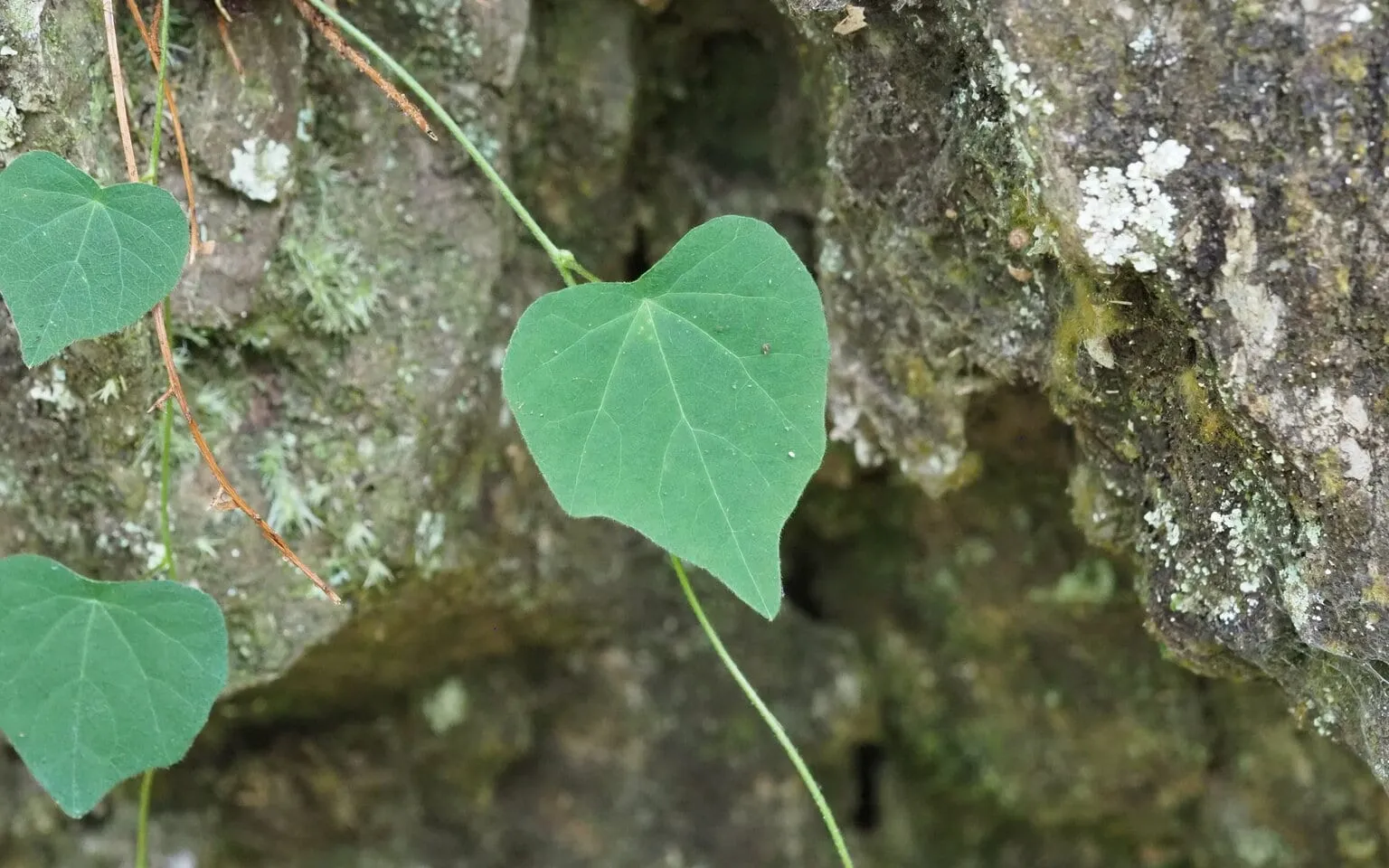
Leaves are the most distinctive feature above ground, rounded and shield-shaped, with the leaf stalk joining the underside a little in from the edge, so the leaf sits like a small shield or a peltate disc. They are soft green and carried along the twining stems.
Stems are slender, green and twining, winding around any support to climb a few metres in a season, and dying back towards the root when cold arrives.
Flowers are small and greenish, in modest clusters, easily overlooked, with male and female flowers on separate plants in the way of the moonseed family.
The root is a swollen, tuberous storage root, the part used in medicine and the part that carries the plant through winter and resprouts in spring.
The overall plant is a modest, leafy climber grown for its root history and its curious shield-shaped leaves instead of for a show of flowers.
Where it is from
Stephania tetrandra grows in warm-temperate and subtropical China, in scrub, thickets and the edges of woodland, twining over other plants on moist, fertile soils in sun or light shade. It is a plant of warm, humid country.
That origin sets its limits. It is only half-hardy, resprouting after a light frost in a mild area but cut back or killed by a hard one, so in a cold climate it needs a warm wall or glasshouse. It needs a warm season and a moist soil, and cold, wet winters do not suit it.
How it grows
It grows up each year from the tuberous root, twining over a support through the warm season and dying back with the cold. In a mild climate the root survives and resprouts; in a cold one it needs protection or a frost-free glasshouse.
Plant it in moist, fertile, free-draining soil against a warm, sheltered support in partial shade to full sun, and give it something to twine up. Keep it watered through the growing season, since it needs steady moisture in warmth.
Protect the root over winter in a cold area with a thick mulch, or grow the plant in a large pot that can be moved under frost-free cover. It can be raised from seed or by division of the root in spring.
Grow it as a botanical curiosity rather than for garden display, and handle the root with the safety history in mind. There is no reason to taste or use any part of a garden plant.
Through the seasons
Spring brings new twining shoots from the root as warmth returns. They grow quickly once the weather settles.
Summer is the main season of climbing growth, the shield-shaped leaves covering the support and the small greenish flowers appearing.
Autumn growth slows and the top begins to die back as the season cools, a time to mulch the root in a cold area.
Winter is when the top growth dies away and the plant rests as a tuberous root, which needs protection from hard frost to survive.
Care difficulty
Moderate, and mostly about warmth and winter protection. Given a warm, sheltered spot and a moist, fertile soil it grows readily as a twining vine, but its half-hardiness means it needs a mulch or frost-free cover in a cold climate. The more important caution is not about growing it at all: its root carries a serious safety history, and it must never be used casually.
Watering
Keep the soil moist through the growing season, watering in dry spells, since the plant comes from warm, humid country and grows best without drying out. It is not a drought plant.
Ease off watering as growth dies back in autumn, and keep a dormant potted root on the dry side through winter under cover, since cold and wet together will rot it.
Warning signs, diseases and pests
Aphids may gather on the soft new twining growth and can be washed off or left to natural predators outdoors. The plant is otherwise little troubled by pests.
Frost is the main physical threat, cutting back or killing the top growth and, in a hard winter, the root itself. Mulch the root or move a potted plant under cover to protect it.
The serious caution is the root and fruit. The plant is safe to grow and handle; what is dangerous is eating the fruit or using the root, especially from an unverified source. Any use belongs with a qualified practitioner.
Growing environment
Partial shade to full sun suits it, with a warm, sheltered position the key point in any climate near its cold limit. A sunny, sheltered wall gives it the warmth it needs.
The soil should be moist, fertile and free-draining, like the soil found at the woodland edges and thickets it comes from. Cold, heavy, wet ground does not suit it, especially in winter.
Give it a support to twine up, such as a trellis or wires on a warm wall, and in a cold climate a large pot that can go under frost-free cover for winter. It is a plant for a warm, sheltered corner instead of an exposed one.
Feeding
Feed lightly. A spring mulch of compost, or a balanced feed once or twice in the growing season, keeps it growing well. It is not a hungry plant, and heavy feeding only produces soft growth that aphids favour.
Troubleshooting
Why are the leaves shaped like little shields? That is natural. The leaf stalk joins the underside a little in from the edge, making a peltate, shield-shaped leaf, which is a normal feature of the plant and a useful identification point.
Will it survive my winter? Only in a mild climate, where the root resprouts after light frost. In a cold area it needs a thick mulch over the root or a frost-free glasshouse, since a hard freeze kills the top growth and can kill the root.
Is it safe to use the root? This is the important point. The root contains active alkaloids and its medicinal name has been caught up in serious poisoning through confusion with a toxic Aristolochia. Any use belongs strictly with a qualified practitioner using verified material, and it should never be dug up and taken from the garden.
What is the Aristolochia problem? In the past this root has been substituted with the root of an Aristolochia containing aristolochic acid, which has caused kidney failure and cancers. That history is a warning about the dangers of substitution and self-medication, not a property of the plant in your garden.
Can I grow it in a pot? Yes, and a large pot is often the best way in a cold climate, since it can be moved under frost-free cover for winter. Give it a support to climb and keep it warm and sheltered in the growing season.