
Outdoor plant
Lime Pricklyash
Zanthoxylum fagara
Also known as Wild Lime, Colima
How to grow lime pricklyash, Zanthoxylum fagara, a thorny, citrus-scented shrub with cat's claw prickles that hosts butterflies.
At a glance
- Difficulty
- Moderate
- Water
- While establishing, then rarely
- Light
- Full sun
- Temperature
- Tender to hard frost; happiest in warm, frost-poor climates
- Hardiness
- USDA 9-11, RHS H3, hardy to -3 C
- Type
- Evergreen or semi-evergreen shrub or small tree
- Height
- 3 to 10 m
- Native to
- The southern United States, Tropical America
A shrub of warm, dry country from Texas and Florida through Mexico into South America. It withstands a light frost to about -3 deg C once established, but hard freezes cut it back or kill it, so it is a plant for warm, frost-poor climates. It tolerates heat, drought and thin, limy soils, so it thrives on the dry brushland and coastal ground where it grows wild.
Hardiness zones describe winter cold alone. Summer heat, humidity, rainfall and the length of the growing season decide as much, so treat the range as the outer limit rather than as a recommendation.
Not known to be toxic
Lime pricklyash is not listed as a poisonous plant by the ASPCA or the RHS. Like others in the citrus family it is full of aromatic oils, and the leaves and fruit smell of citrus when crushed, but they are not recorded as poisonous. The bark and leaves hold alkaloids and alkylamides that numb and tingle the mouth if chewed, which is unpleasant but not usually dangerous. The real hazard is the spines, not poison: the stems carry sharp, recurved thorns that tear skin and clothing, so the plant should be sited and handled with that in mind. The peppery fruits of some relatives are used as a spice, but this species is mainly grown for wildlife, shelter and barrier planting.
Sources: RHS potentially harmful garden plants, ASPCA toxic and non-toxic plants
About
Lime pricklyash is a thorny, aromatic shrub of the citrus family, wild from Texas and Florida south through Mexico and into tropical America. Crush a leaf and it smells of citrus, which places it among the oranges, lemons and their relatives, and gives it the common name wild lime.
It grows as a dense, spreading, evergreen or semi-evergreen shrub or small tree, armed with small curved thorns that catch and hold like a cat’s claw. Those thorns and density make it a natural hedge and a refuge for wildlife, and it is grown in warm, dry regions as a stock-proof living fence and a habitat plant more than as an ornamental.
It also feeds butterflies. In its native range it is a food plant for the caterpillars of the giant swallowtail, one of several prickly-ashes that support that large and striking butterfly, alongside the American prickly-ash of cooler country.
Appearance and character
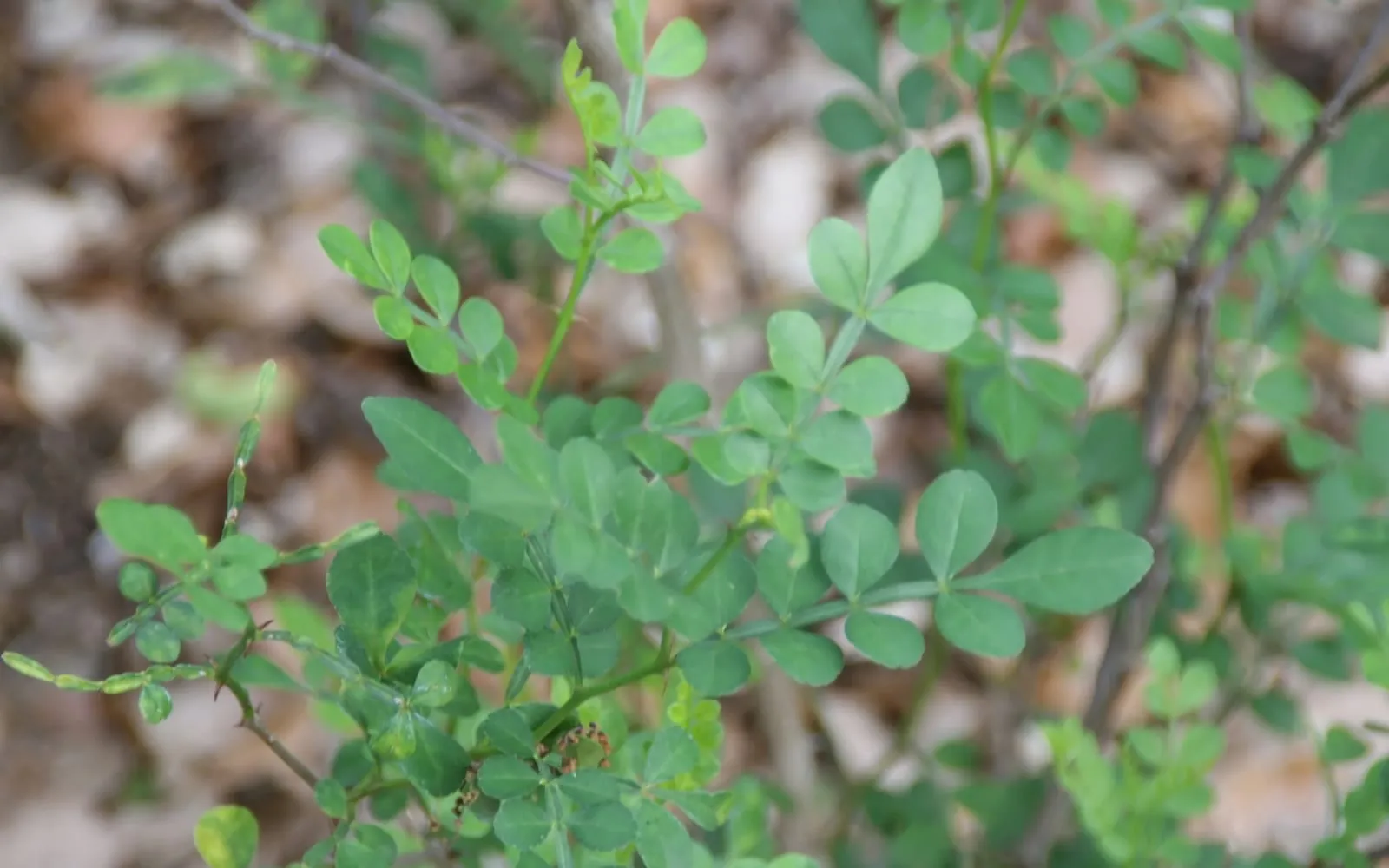
Leaves are pinnate and small, made up of several little glossy leaflets along a narrowly winged central stalk, evergreen in mild areas and aromatic when bruised. The winged leaf stalk is a useful identification point.
Thorns are short, stout and curved backwards, set along the stems in the manner of a rose or a cat’s claw, and they make the plant both effective as a barrier and awkward to handle.
Flowers are small, yellow-green and inconspicuous, borne in little clusters, with male and female flowers usually on separate plants, so only female plants set fruit.
Fruit is a tiny, rough, brownish capsule that splits to release a small black seed, aromatic like the rest of the plant and pungent if tasted.
The habit is dense and twiggy, building into a broad, spreading shrub or a small, many-stemmed tree, wider than it is tall in the open.
Where it is from
Zanthoxylum fagara ranges from the southern United States, through Mexico and Central America, into parts of South America, growing in dry brushland, coastal scrub, thorn forest and the edges of clearings. It is one of the most widespread prickly-ashes.
Warm, dry conditions and poor, often limy soils suit it. It tolerates drought, heat and thin ground that would defeat many shrubs, which is why it is such a feature of dry country and why it needs so little once it is established in a suitable climate.
How it grows
It grows steadily into a dense, thorny shrub in full sun, thriving on poor, free-draining soil and needing little attention once its roots are down. In the warm parts of its range it holds its leaves through the year.
Give it space and site it away from paths and play areas, because the recurved thorns catch anyone who brushes past. That same density, though, makes it valuable as a barrier hedge and a nesting and sheltering plant for small birds.
Prune, if at all, in gloves and long sleeves, to shape it or keep a hedge dense, after any risk of hard frost has passed. It regrows well from cutting back and tolerates clipping into a boundary hedge.
Water a young plant through its first dry season to establish it, then leave it to the rain. An established plant is strongly drought-tolerant and suffers more in soggy ground than in dry soil.
Through the seasons
Spring brings new growth and the small clusters of greenish flowers, most freely in the warmth after any cool spell.
Summer is steady growth and, on female plants, the ripening of the little aromatic capsules through the heat.
Autumn is when the fruit finishes and birds take the seed. Growth slows as the season cools.
Winter is when the plant holds its leaves in mild areas and rests. In its colder northern range a hard freeze can cut it back, and it reshoots when warmth returns.
Care difficulty
Moderate, and easy once the climate suits it. Given warmth, sun and sharp drainage it is tough, drought-hardy and almost trouble-free, needing little beyond space and careful siting around its thorns. Cold is the limit. A hard frost damages or kills it, so outside warm, frost-poor climates it is not a reliable outdoor plant.
Watering
Water a newly planted shrub through its first year to establish the roots, then water only in prolonged drought. The plant is adapted to dry country and tolerates rainless spells, whereas waterlogged ground can rot it.
An established hedge or specimen in the ground needs no routine watering in a climate that suits it, and over-watering does more harm than a dry summer.
Warning signs, diseases and pests
The thorns are the main risk, not for the plant’s health but for yours. The recurved prickles catch skin and clothing, so wear gloves and long sleeves to prune or plant it, and keep it clear of paths and children’s routes.
Pests are few. As a tough, aromatic, thorny shrub it has few problems, though scale insects occasionally settle on the stems in a sheltered spot and can be treated with horticultural oil if they build up.
The aromatic oils and peppery fruit are not a hazard, so the plant needs no special safety measures beyond respect for the thorns.
Growing environment
Full sun is what it needs, matching the open, sunny brushland it comes from. It grows thin and sparse in shade and is at its densest and most useful in strong light.
The soil should be free-draining, and the plant is unusually tolerant of poor, dry, sandy or limy ground. Rich, heavy, wet soil suits it far less well than the lean conditions of its native range.
Use it where its density and thorns are assets, as a boundary or barrier hedge, a wildlife thicket or a tough shrub for a hot, dry corner. Keep it away from anywhere people pass close by.
Feeding
Feed little. On the poor soils it favours it needs almost nothing, and a light dressing of a balanced fertiliser in spring is ample where the ground is very thin. Rich feeding produces soft growth that adds nothing to a plant grown for toughness and shelter.
Troubleshooting
It has sharp little hooked thorns. That is normal and is the cat’s claw defence the plant is known for. Wear gloves and long sleeves to handle it, and site it away from paths, since the thorns are the main reason to plant it with care.
Can I use the fruit as a pepper? Some prickly-ashes give the peppercorns used as a spice, and the fruit of this one is aromatic and pungent, but it is grown for wildlife and shelter instead of as a seasoning, and it is not a recognised culinary spice.
Will it survive frost? A light frost, yes, once established, especially in its northern range. A hard freeze cuts it back or kills it, so it is only a reliable outdoor plant in warm, frost-poor climates.
Why does my plant set no fruit? It is probably a male, or a lone female with no male nearby. The sexes are usually on separate plants, so fruit needs both a male and a female in the vicinity.
What is it good for in a garden? A dense, thorny, drought-tolerant hedge or wildlife thicket in a warm climate, giving shelter and nesting cover for birds and food for swallowtail caterpillars. It is more useful as a wildlife or barrier plant than as a showy ornamental.
Lime Pricklyash problem guides
Not sure what is wrong? See the common vegetable pests guide.