
Outdoor plant
Deodar Cedar
Cedrus deodara
Also known as Himalayan Cedar
How to grow deodar cedar, Cedrus deodara. Telling it apart from cedar of Lebanon by its drooping, nodding leader, why it grows a metre a year while young, and why it takes far less winter cold than its Mediterranean relative.
At a glance
- Difficulty
- Moderate
- Water
- Regularly for the first few years, then rarely
- Light
- Full sun
- Temperature
- Fully hardy in a sheltered site; young growth can be caught by a hard late frost
- Hardiness
- USDA 7-9, RHS H4, hardy to -12 C
- Type
- Evergreen conifer, long lived
- Height
- 25-40 m
- Native to
- the western Himalaya
Grows at altitude in the western Himalaya, where winters are cold and summers bring a monsoon, but it is markedly less cold-hardy in cultivation than its close relative cedar of Lebanon, which is the detail that most determines where each does well. A hard, sustained freeze can damage or kill an exposed deodar that a cedar of Lebanon in the same spot would tolerate, so a sheltered site or a milder climate matters more here than the general zone range suggests.
Hardiness zones describe winter cold alone. Summer heat, humidity, rainfall and the length of the growing season decide as much, so treat the range as the outer limit rather than as a recommendation.
Not known to be toxic
Deodar cedar is not listed by the RHS among potentially harmful garden plants and does not appear on the ASPCA's toxic plant index for cats, dogs or horses. No part of the living tree is a recognised poisoning hazard, though the resinous sap can irritate the skin of some people on contact, in common with most conifers. The timber is naturally resistant to insects and decay and has been used for temple and building construction across northern India for centuries, which speaks to the wood's durability rather than to any hazard from the standing tree. As with cedar of Lebanon, concentrated cedarwood oil products are a separate substance from the living plant and should be kept away from cats.
Sources: RHS potentially harmful garden plants, ASPCA toxic and non-toxic plants
About
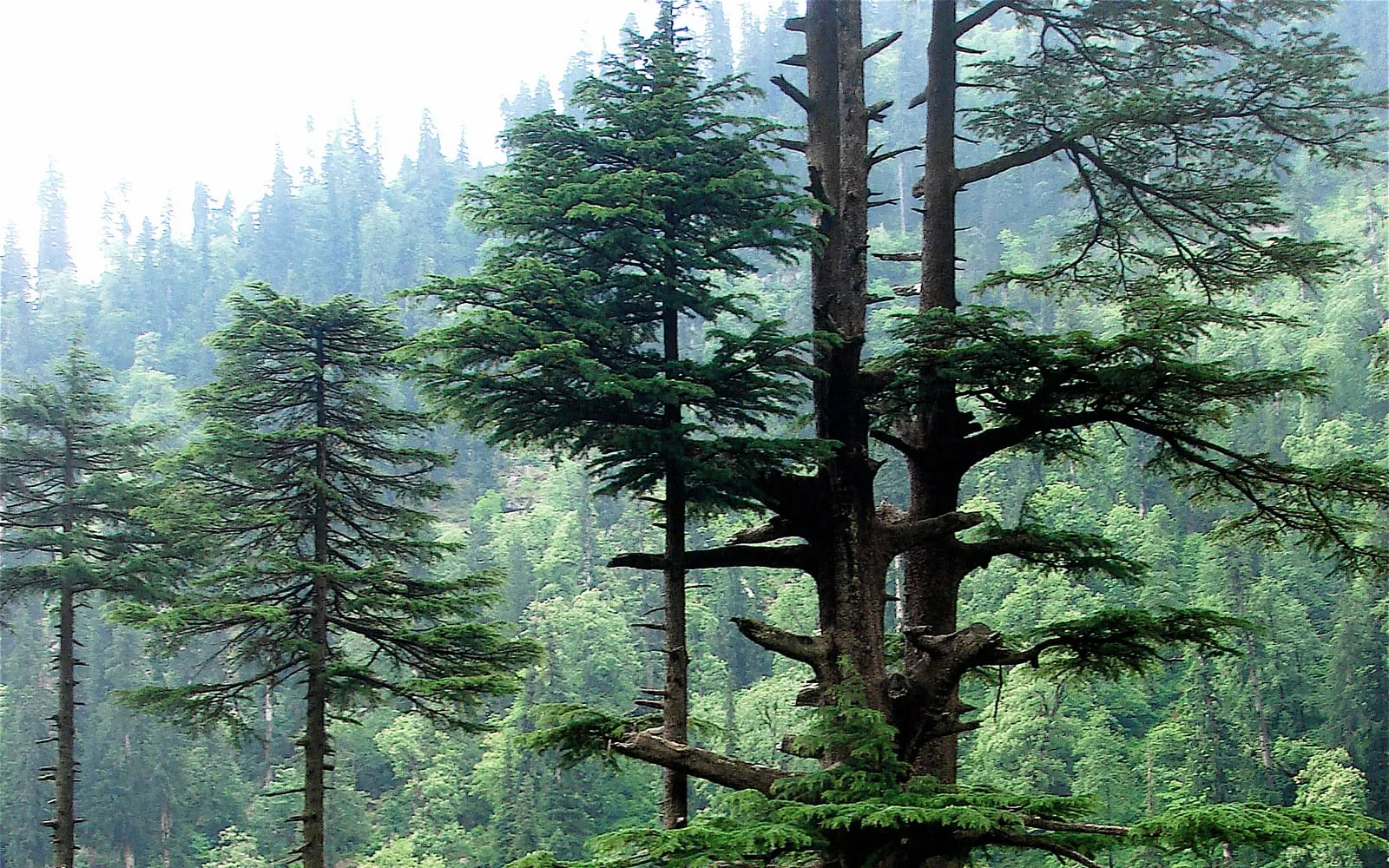
Deodar cedar carries itself very differently from its close relative cedar of Lebanon, and the difference is visible from a distance long before any needle or cone is examined. Where a mature Lebanon cedar holds its branches out flat and level in stiff, table-like tiers, a deodar droops. The leading shoot nods over rather than standing upright, and every branch tip hangs downward, giving the whole tree a graceful, weeping silhouette that reads as soft where the Lebanon cedar reads as architectural.
It also grows considerably faster while young, capable of a metre or more of growth a year on a happy tree in its first couple of decades, compared with the notoriously slow start a Lebanon cedar makes. That early speed makes it the more forgiving of the two cedars for a gardener who wants a large conifer to look like something within their own lifetime.
The name deodar comes from the Sanskrit devadaru, meaning wood of the gods, and the tree remains sacred in Hindu tradition, planted around temples across its native range for centuries.
Appearance and character
Needles are slender, 2.5 to 5 cm long, blue-green to silvery grey-green, borne in dense whorled rosettes on short spur shoots and singly on new growth, generally longer and softer to the touch than the shorter, darker needles of cedar of Lebanon.
The single best identification feature is habit rather than foliage. The leading shoot at the top of the tree nods and droops rather than growing upright, and every branch tip hangs down along its length, a pendulous quality that persists throughout the tree’s life rather than being a youthful phase it grows out of.
Cones are barrel-shaped, 7 to 12 cm long, standing upright on the upper branches, green or purplish when young and ripening to brown over about a year, disintegrating scale by scale on the tree at maturity rather than falling whole, exactly as a Lebanon cedar’s cones do.
Bark is dark grey-brown, smooth on young growth and becoming fissured into small, irregular plates with age, though rarely developing the same massive thickness as an ancient Lebanon cedar’s trunk within a comparable timeframe, since deodar tends to be the shorter-lived of the two species in cultivation.
Where it is from
Cedrus deodara grows wild across the western Himalaya, from Afghanistan through northern Pakistan, Kashmir and into Nepal, typically between 1,500 and 3,200 metres, where it forms extensive forests that receive both winter snow and the summer monsoon rains that its Mediterranean relatives never experience.
That monsoon-influenced climate, wetter through summer than either cedar of Lebanon or deodar’s Atlas cedar cousin experiences in North Africa, is part of why deodar tends to establish and grow faster in cultivation, coming from a native range with more reliable moisture through the growing season.
The tree holds deep religious significance in Hindu and Buddhist tradition across its native range, planted around temples and regarded as sacred, and its durable, insect-resistant timber has been used for temple construction, houseboats and railway sleepers across northern India for generations.
How it grows
Plant in deep, well-drained soil, in full sun and, unlike a cedar of Lebanon, in as sheltered a position as the garden allows, since deodar is markedly more sensitive to hard, sustained cold than its Mediterranean relative.
Water regularly through the first several years while the tree establishes a deep root system, then reduce watering considerably. An established tree copes reasonably well with a dry summer, though somewhat less so than cedar of Lebanon, reflecting its native monsoon-fed climate.
Growth is noticeably faster than cedar of Lebanon while young, often exceeding a metre a year in good conditions during the first couple of decades, before slowing as the tree matures.
Avoid pruning the leading shoot or major branches. The drooping, weeping character that defines the species develops on its own, and attempting to straighten or train it against that natural habit produces an awkward, unconvincing shape rather than a tidier one.
Choose the planting site with real care. A deodar towards the colder end of its hardiness range benefits enormously from shelter, whether from other trees, a building, or the coldest prevailing wind.
Through the seasons
Spring brings a flush of soft new growth at the branch tips, pale blue-green against the older foliage, and the period when a late hard frost poses the greatest risk to young shoots.
Summer extends the season’s growth rapidly on a young tree and ripens the current year’s cones on a mature one, generally tolerated well given the species’ monsoon-influenced native climate.
Autumn sees cones that formed the previous year finish maturing and begin breaking apart on the tree, scattering winged seeds and scales beneath the canopy.
Winter is the season of greatest risk for this species compared with its Mediterranean relatives. A hard, prolonged freeze can damage an exposed tree, particularly a young one, where cedar of Lebanon in the same conditions would typically be unaffected.
Care difficulty
Moderate, and somewhat more demanding than cedar of Lebanon on the one point of winter protection. Site selection matters most, since a position sheltered from hard cold makes the difference between a thriving specimen and one that struggles after a severe winter.
Once well sited, an established deodar needs little routine care beyond removing dead wood, and its faster early growth rewards the gardener with a substantial, characterful tree considerably sooner than its slower relative does.
Watering
Water deeply and regularly through the first several growing seasons after planting, supporting the faster early growth this species makes compared with cedar of Lebanon.
Once established, deodar tolerates a moderately dry summer reasonably well, though it benefits from occasional deep watering during a prolonged drought more than cedar of Lebanon does, reflecting its native monsoon-fed climate rather than the drier Mediterranean summer its relative evolved under.
Good drainage remains essential. Waterlogged winter ground causes root problems in this species just as readily as in any other cedar.
Warning signs, diseases and pests
Aphids sometimes colonise the shoots in a warm spring, leaving sticky honeydew that can attract sooty mould on the foliage below. A light infestation rarely needs treatment on an otherwise healthy, established tree.
Scale insects occasionally appear on older branches as small brown bumps sapping the plant’s vigour gradually. A horticultural oil treatment on accessible growth usually controls a light infestation.
Honey fungus can attack a stressed or waterlogged tree, showing as gradual dieback in the crown and, eventually, fungal growth visible at the base near soil level. There is no reliable cure once it takes hold.
Frost damage affects the soft new spring growth after a hard late frost, browning or killing young shoots at the branch tips, generally cosmetic on an established tree in a reasonably sheltered site but potentially more serious on a young, exposed specimen towards the colder end of the species’ hardiness range.
Growing environment
Full sun suits it best, and a sheltered position, out of the harshest winter wind, matters considerably more for this species than for either cedar of Lebanon or many other large conifers.
Deep, well-drained soil gives the strongest results, though an established tree tolerates a reasonable range of soil types.
Consider the local winter climate before planting. In a milder, sheltered garden towards the warmer end of its hardiness range, deodar performs superbly; in an exposed site with regular hard frost, cedar of Lebanon is usually the safer choice of the two.
Allow generous space in every direction, since a mature specimen’s wide, drooping crown needs as much room as a Lebanon cedar’s more level one.
Feeding
Apply a general-purpose feed in spring for the first few years while the tree establishes, following the product’s guidance rather than over-applying to a young root system.
An established tree in reasonable garden soil needs no routine feeding, and heavy fertiliser produces soft growth more vulnerable to wind and frost damage. A yearly mulch of well-rotted organic matter around the root zone supports establishment better than repeated fertiliser.
Troubleshooting
How do I tell my tree apart from a cedar of Lebanon? Look at the leading shoot and branch tips. Deodar’s leader nods over and every branch tip droops downward throughout the tree’s life, giving it a soft, weeping outline. Cedar of Lebanon holds its branches out flat and level, developing a stiff, table-like tiered crown with age.
Why did my young tree suffer badly after a cold winter? Deodar is noticeably less cold-hardy than cedar of Lebanon, and a hard, sustained freeze, particularly on an exposed young tree, can cause real damage. A sheltered site or a milder climate suits it considerably better.
Mine is growing much faster than I expected for a cedar. That is normal for this species rather than a sign of anything unusual. Deodar grows considerably faster than cedar of Lebanon while young, often exceeding a metre a year in good conditions during its first couple of decades.
Should I prune the drooping branch tips to make it look tidier? No. The pendulous habit is the species’ natural and defining character rather than a fault to correct, and pruning against it produces an awkward shape rather than a neater one.
Is it safe to plant near where children play? Yes, it is not listed as harmful by the RHS or the ASPCA. Concentrated cedarwood oil products are a separate substance from the living tree and should be kept away from cats specifically.