
Houseplant
Cooktown Orchid
Dendrobium bigibbum
Also known as Mauve Butterfly Orchid
How to grow Cooktown orchid, Dendrobium bigibbum. Healthy canes with no flowers usually mean too little light or too shallow a dry rest, it flowers on leafless older canes, and it takes almost no cold below 12 deg C.
At a glance
- Difficulty
- Difficult
- Water
- Heavily through the summer wet season, nearly withheld through the winter dry rest
- Light
- Very bright light, including several hours of direct sun
- Temperature
- 15 to 32 deg C
- Humidity
- 50-70 percent in growth, lower during the dry winter rest
- Hardiness
- USDA 10b-12, RHS H1b, hardy to 12 C
- Type
- Evergreen epiphytic or lithophytic orchid, flowering from mature canes each dry season
- Height
- 30-60 cm
- Native to
- northern Australia, New Guinea
From a tropical monsoon climate with a sharply defined wet and dry season, so the zone number covers only the coldest end of what this species needs. A wet summer of strong growth followed by a distinctly dry, sunny winter is the flowering trigger, and the plant has almost no tolerance for cold below about 12 deg C, considerably less than several other orchids on this site. It is the floral emblem of the Australian state of Queensland.
Hardiness zones describe winter cold alone. Summer heat, humidity, rainfall and the length of the growing season decide as much, so treat the range as the outer limit rather than as a recommendation.
Not known to be toxic
Dendrobium carries no documented toxic compounds, in keeping with the orchid family's generally clean safety record. The ASPCA lists Dendrobium as non-toxic to cats and dogs, and it does not appear on the RHS list of potentially harmful garden plants. No part of the plant is a recognised poisoning risk to people or pets, and a chewed cane or leaf causes nothing worse than mild mechanical irritation from the fibrous tissue. As with many wild-collected orchids historically, buying only nursery-propagated stock from a reputable specialist grower matters more for conservation than for safety.
Sources: ASPCA toxic and non-toxic plants, RHS potentially harmful garden plants
About
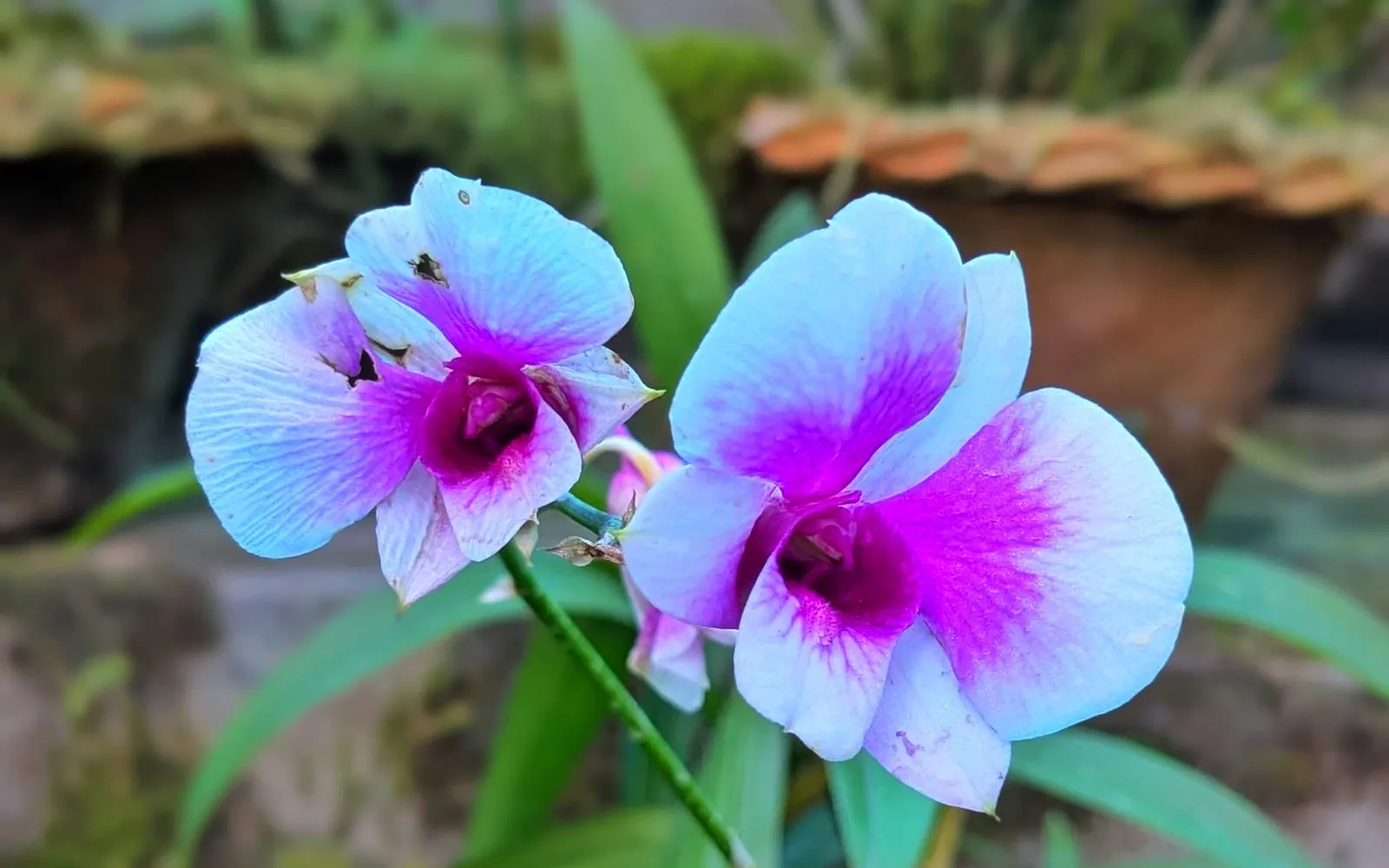
Cooktown orchid grows slender, upright canes rather than the rounded pseudobulbs of a cattleya, each one carrying a run of narrow leaves along its upper half and, at maturity, a spray of mauve to deep-purple flowers from the leafless upper nodes. It is the floral emblem of the Australian state of Queensland, where it grows wild across Cape York Peninsula, and carries the same purple-magenta colouring that gave it the alternative name mauve butterfly orchid.
Its native climate is sharply seasonal, a wet monsoon summer followed by a dry, sunny winter, and that dry season is the trigger for its flowering. A plant kept damp and shaded year round rarely flowers well, however healthy its canes look, where one given a proper dry, bright rest tends to flower reliably each year.
Appearance and character
Canes are slender, upright and slightly swollen towards the base, growing in a clustered clump and thickening with successive seasons of good growth. Narrow, leathery leaves run along the upper two-thirds of each mature cane, with the lower portion typically bare.
Flower sprays emerge from nodes near the top of a mature, often leafless, older cane, carrying several to a dozen or more blooms in a rich mauve to deep purple, each with a darker, contrasting lip. The flowers are long-lasting once open, often holding for several weeks, and a well-flowered clump can carry multiple sprays from different canes at once.
The overall habit is more upright and airy than a clustered pseudobulb orchid like a cattleya or an oncidium, with the canes standing distinctly apart from one another rather than crowding into a tight base.
Where it is from
Dendrobium bigibbum grows on Cape York Peninsula in far northern Queensland, Australia, and across parts of New Guinea, typically as an epiphyte on trees or a lithophyte on exposed rock near rivers and the coast. Its native range sits within a tropical monsoon climate, with a heavy, humid wet season through the Australian summer followed by a sharply defined dry season through the cooler months.
That dry season, intensely sunny and largely rain-free, is what triggers flowering on mature canes. The species has built its entire growth and flowering cycle around the contrast between the two seasons, which is also why it tolerates so little cold: even the dry season in its native range stays warm, and the plant has never needed to evolve tolerance for temperatures much below about 12 deg C.
How it grows
Pot it in a coarse, very free-draining bark mix, or mount it on bark or grow it in a slatted hanging basket, all of which suit its need for roots that get plenty of air and dry quickly after watering.
Give it very bright light, including several hours of direct sun each day, considerably more than most other orchids on this site tolerate. Canes grown in too little light stay thin and pale and rarely flower well, where those given strong light thicken properly and flower far more reliably.
Water heavily through the summer wet season, matching the monsoon rain its native range gets, then reduce sharply as the canes finish maturing towards autumn. Through the winter dry season, water only rarely, enough to stop the canes visibly shrivelling and no more, since this dry stress is what triggers flowering.
Repot only when necessary, since the roots dislike disturbance, generally after flowering finishes and before the following season’s new canes begin.
Through the seasons
Spring brings the flowers from the previous dry season’s mature canes, along with the start of new cane growth as watering increases.
Summer is the wet, humid growing season this species is built around. Water heavily and feed regularly as new canes lengthen and mature.
Autumn brings the canes to maturity as watering and feeding both taper off, preparing the plant for its dry winter rest.
Winter is the dry season that triggers flowering. Water only sparingly and keep the plant in strong light through this period.
Care difficulty
Difficult, mainly because it needs considerably more light than a typical indoor spot provides and depends on a genuine, near-dry winter to flower at all. A conservatory, a very bright south-facing window, or supplementary grow lighting suits it far better than an ordinary room. Growers who can offer strong light and commit to withholding water properly through winter are rewarded with reliable, long-lasting flowers; those who cannot tend to get healthy canes and few, if any, blooms.
Watering
Water heavily and regularly through the summer wet season, soaking the mix or mount thoroughly and letting it approach dryness before the next watering, matching the plant’s native monsoon rainfall as closely as practical.
Withhold water almost entirely through the winter dry rest, watering only enough to prevent the canes from severely shrivelling. This dry stress, uncomfortable as it looks, is what triggers the flowering the species is grown for.
Warning signs, diseases and pests
Scale insects settle along the canes, appearing as small, flat brown bumps that are easy to overlook against the cane’s own surface. Scrape them off and treat with horticultural soap.
Mealybug hides in the leaf axils along the canes, showing as small white, cottony tufts. Treat the same way as scale, checking new growth carefully since it is most vulnerable while still soft.
Spider mite becomes more likely during the dry, sunny winter rest, when low humidity and reduced watering both favour it, showing as fine speckling on the leaves with faint webbing in bad cases. A light misting of the leaves, stopping short of wetting the roots, can help without undermining the dry rest.
Root rot follows a mix kept wet during the dry season, when the plant is using very little water, showing as roots that turn brown and mushy. Unpot, trim away dead roots, and repot into fresh, very free-draining bark, watering far more sparingly afterwards.
Growing environment
Very bright light, including direct sun for several hours a day, is what this species needs above almost everything else. Few indoor spots provide enough without a very bright conservatory window or supplementary grow lighting.
Warmth suits it well through the growing season, and it has very little cold tolerance. Keep it above 12 deg C at all times, a higher minimum than most other orchids on this site require.
Moderate to high humidity through the wet-season growth, easing off through the dry winter rest, mirrors its native monsoon climate closely.
Feeding
Feed weekly at around quarter strength with a balanced orchid fertiliser through the wet-season growing months, switching to a high-potash, low-nitrogen formula as canes approach maturity ahead of the dry season.
Stop feeding entirely through the dry winter rest, when growth has stopped almost completely and unused fertiliser only builds up as salts in a mix that is being watered very little.
Troubleshooting
The canes grow well but it never flowers. Almost always too little light, too little dry-season rest, or both. This species needs strong direct light and a proper dry winter to flower reliably, and a plant kept evenly warm, damp and shaded rarely produces a spray at all however healthy its canes look.
The canes have shrivelled badly over winter. Some shrivelling during the dry rest is normal and part of what triggers flowering, but severe shrivelling suggests the dry period has gone on too long or the roots were damaged beforehand. Check the roots, water a little more if they look healthy, and resume normal watering once flowering finishes.
Roots have turned brown and mushy. Root rot, almost always from watering during what should be the dry winter rest. Trim away the affected roots, repot into fresh, very free-draining bark, and hold back firmly on water through the following dry season.
Can I grow it outdoors in a warm climate? Yes, in a proper tropical or near-tropical climate with a distinct dry season and no risk of cold below about 12 deg C, mounted on a tree or grown in a hanging basket under bright, filtered shade with full sun for part of the day.
Why does it flower on leafless canes? Flowers form at nodes on mature, often older canes that have already dropped some or all of their leaves, rather than on the current season’s youngest growth. Leave spent canes in place after flowering rather than cutting them back, since they continue to support the plant and may flower again in future seasons.
Cooktown Orchid problem guides
Not sure what is wrong? See the common houseplant pests guide.