
Edible
Curry Leaf
Murraya koenigii
Also known as Curry tree, Kadi patta, Karivepaku
How to grow curry leaf, Murraya koenigii. The tree behind the fresh leaves in south Indian cooking, keeping it alive over a cool winter, and why dried curry leaves are worthless.
At a glance
- Difficulty
- Difficult
- Water
- When the top 3 cm of compost is dry. Sparingly in winter
- Light
- Full sun, under glass where summers are cool
- Temperature
- Drops leaves below 10 deg C and dies below about 3 deg C
- Hardiness
- USDA 10-12, RHS H1b, hardy to 8 C
- Type
- Tender evergreen shrub or small tree
- Height
- 4-6 m in the tropics, 1-2 m in a pot
- Native to
- South Asia
- Best month
- June and July in the Northern Hemisphere, December and January in the Southern Hemisphere
Leaves drop below about 10 deg C and the plant dies below 3, so outside the subtropics it lives indoors from October to May. The flavour sits in volatile oils that are almost entirely lost in drying, which is why dried curry leaf is worth so little and why the plant is worth growing at all.
Hardiness zones describe winter cold alone. Summer heat, humidity, rainfall and the length of the growing season decide as much, so treat the range as the outer limit rather than as a recommendation.
Every month named in this guide is for the temperate Northern Hemisphere. If you garden in the Southern Hemisphere, shift each one by six months, so June becomes December. Closer to the equator the wet and dry seasons matter more than the calendar, and the shift stops being a useful guide.
Not known to be toxic
- Safe to eat
- The leaves
Non-toxic. Curry leaf is eaten daily across south India and Sri Lanka and it appears on neither the RHS list of potentially harmful garden plants nor the ASPCA list. The leaves are the part used and they are eaten in quantity. The small black berries are edible when ripe and the seed inside each one is not, so anyone eating the fruit should spit the seed out. In practice the berries are rarely produced on a plant in a cool climate and nobody is likely to encounter the question.
Sources: RHS potentially harmful garden plants, ASPCA toxic and non-toxic plants
About
Curry leaf has nothing to do with curry powder. It is the leaf of a small Rutaceae tree from south Asia, related to citrus, and its flavour is its own: warm, slightly citrus, faintly bitter, and released by frying the leaves in hot oil at the start of a dish.
Fresh is the only useful form. Dried curry leaves lose almost everything and the packets sold in supermarkets are close to worthless, which is the whole argument for growing a plant rather than buying the leaf.
Outside the subtropics it is a demanding pot plant. It needs to stay above 10 deg C, it drops its leaves when cold, it goes yellow without iron, and it grows slowly. Given a warm conservatory and consistent care it will supply a household, and it is the most demanding plant in this wave to keep going.
Appearance and character
A small upright tree or large shrub, 4 to 6 m in the tropics and generally 1 to 2 m in a pot, suckering from the base into a clump.
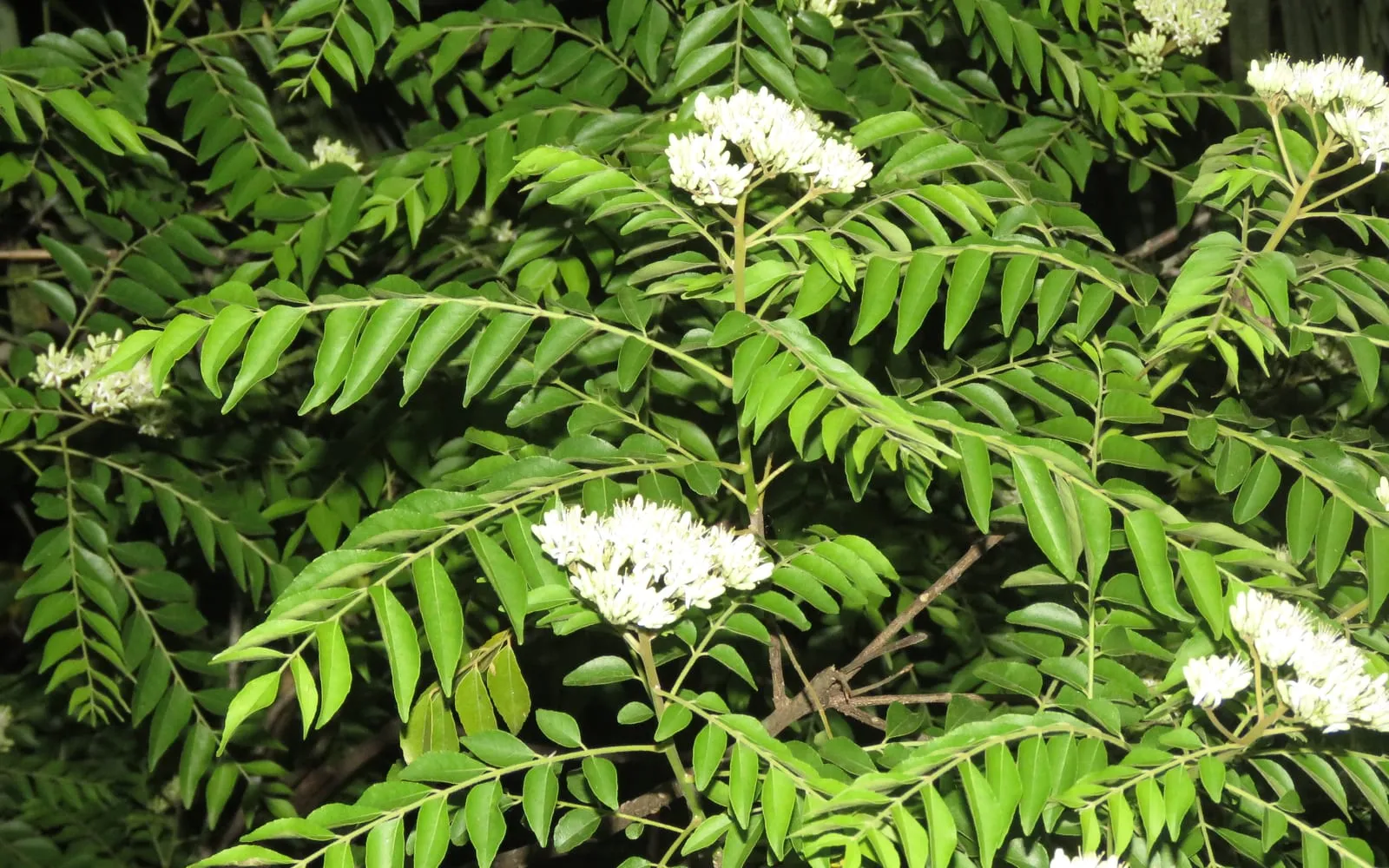
Leaves are pinnate, 15 to 30 cm long, with eleven to twenty-one small glossy leaflets arranged along a central stalk, each leaflet 2 to 4 cm and slightly toothed.
The whole leaf is the unit that gets used. Recipes calling for ten curry leaves mean ten leaflets rather than ten whole leaves.
Flowers are small, white and strongly fragrant, in loose terminal clusters, and they appear on mature plants in warm conditions.
Fruit follows as small berries turning from green to shining black, edible and sweet with a seed that is not.
The scent is unmistakable and unlike anything else in a temperate garden. Crushing a leaflet releases it immediately.
Where it is from
Curry leaf is native to India and Sri Lanka, growing wild in forest and scrub across the subcontinent and cultivated everywhere in between.
South Indian cooking depends on it. It goes into the tempering of oil, mustard seed and dried chilli that starts a great many dishes, and into sambar, rasam, chutneys and dosa batters. Sri Lankan and Malaysian cooking use it similarly.
Its Tamil and Hindi names, karuveppilai and kadi patta, both describe it as the leaf and nothing further, which reflects how central it is.
The plant is grown domestically across south Asia in courtyards and pots as much as in orchards, and most households with a garden have one.
It reached European horticulture through the Asian community rather than through the nursery trade, and plants are more often shared as suckers between households than bought.
How it grows
Grow it from a fresh seed or a sucker. Seed from a ripe berry germinates well and loses viability within days of the fruit being picked, so dried seed from a packet rarely works.
Alternatively separate a sucker from an established plant in spring, which is how most plants change hands.
Sow fresh seed in warm compost at 25 deg C, covering it with 1 cm. Germination takes two to four weeks.
Pot into free-draining slightly acid compost. A loam-based compost with added grit and some ericaceous compost suits it.
Grow it warm and bright. A conservatory or heated greenhouse is the right home, and the plant will stand outside from late June to early September.
Water carefully and never let it sit wet.
Feed with a balanced feed containing iron, since yellowing from iron shortage is the commonest complaint on a pot-grown plant.
Bring it in during September before the nights drop below 12 deg C.
Overwinter above 10 deg C, watering sparingly, and expect some leaf drop.
Prune in spring to keep it bushy. Cutting the leader encourages branching, which gives more leaf.
Through the seasons
Winter is survival indoors. Keep it above 10 deg C, water sparingly, and expect leaf drop. It looks poor from December to March, which is normal.
Spring brings new growth from April as the light returns. Prune, repot and start feeding.
Early summer is when growth accelerates. Move it outside in late June once the nights are reliably above 12 deg C.
Midsummer is the main harvest, and the plant grows fastest now.
Late summer may bring flowers on a mature plant.
Early autumn is the deadline. Bring it in during September, before any cold damage.
Care difficulty
Difficult, and it is the hardest of the tender leaf herbs to keep going outside the subtropics.
Cold is the main problem. The plant drops its leaves below 10 deg C and dies below about 3 deg C, so it needs a heated space for six months of the year and it will look miserable for most of that.
Leaf drop over winter alarms people into throwing plants away. A bare plant in February with green wood is dormant rather than dead. Scratch the bark and look.
Iron shortage is the other constant complaint. Pot-grown curry leaf yellows between the veins, and it needs a feed containing iron plus slightly acid compost.
Overwatering rots it, particularly in winter when the plant is barely growing.
Growth is slow. A plant takes several years to reach a useful size, and patience is part of the requirement.
Given a warm bright conservatory, careful watering and an iron-containing feed, it will crop for decades.
Watering
Water when the top 3 cm of compost is dry, and let the pot drain fully.
Water sparingly in winter, perhaps once a fortnight, since a cool plant that is not growing takes very little.
Never let it stand in a saucer of water. Cold wet compost is the fastest way to lose one.
Use tepid water in winter, and rainwater where the tap water is hard, since the plant prefers slightly acid conditions.
Water more generously through summer when it is growing fast.
Mist occasionally in a dry heated room over winter, which discourages spider mite.
Warning signs, diseases and pests
Leaf drop in winter is normal below about 12 deg C and it is the single most common cause of a plant being thrown away. Scratch the bark: green wood means a living plant.
Yellowing between the veins is iron shortage, which is very common in pots. Use a sequestered iron feed and slightly acid compost.
Scale insects appear as small brown limpets on the stems and leaf undersides, with sticky honeydew below and sooty mould on top of that. Rub them off with a damp cloth.
Spider mite produces fine stippling and webbing in a dry heated room. Raise the humidity and use a predatory mite.
Mealybug hides in the leaf axils as white waxy fluff. Dab with a cotton bud.
Root rot from cold wet compost blackens the base and kills the plant.
Very slow growth is normal. It is not a fast plant.
Growing environment
Under glass where summers are cool. A conservatory or heated greenhouse, with a summer outdoors from late June to early September.
Full sun and warmth. Minimum 10 deg C in winter, 20 deg C or more for growth.
Free-draining, slightly acid compost. A loam-based compost with grit and some ericaceous compost mixed in works well.
pH from 5.5 to 6.5.
A pot of 25 to 30 cm suits a young plant, potting on every second year.
Ventilation matters under glass, since scale and mealybug take hold in still warm air.
Feeding
Feed a balanced liquid feed fortnightly from May to August, and choose one containing iron or add sequestered iron separately.
Iron is the specific requirement. Pot-grown curry leaf yellows between the veins without it, and that is the commonest complaint about the plant.
Stop feeding from September so the growth firms before winter, and do not feed through the winter at all.
Repot into fresh compost every second spring, which does more than feeding an exhausted pot.
An ericaceous feed suits it, since it prefers slightly acid conditions.
Troubleshooting
All the leaves fell off in winter. Normal below about 12 deg C. Scratch the bark and look for green. A bare plant with green wood will releaf in spring. Keep it above 10 deg C and water sparingly.
The leaves went yellow between the veins. Iron shortage, which is very common in a pot. Use a feed containing sequestered iron and slightly acid compost, and water with rainwater in a hard water area.
Is it the same as curry powder? No connection at all. Curry powder is a spice blend. Curry leaf is the leaf of a citrus relative and its flavour is entirely its own.
Are dried curry leaves any good? Almost worthless. The aroma goes on drying, which is the whole argument for growing a plant. Freeze fresh leaves instead, which keeps far more of the flavour.
How do I use them? Fry the leaflets in hot oil at the start of a dish, along with mustard seed, until they crackle. That releases the aroma into the fat.
Nothing germinated from the seed I bought. Curry leaf seed loses viability within days of the fruit being picked. Use fresh seed from a ripe berry, or start from a sucker.
How many leaves does a recipe mean? Individual leaflets rather than whole compound leaves. Ten curry leaves means ten leaflets.