
Edible
True Cinnamon
Cinnamomum verum
Also known as Ceylon cinnamon, Sri Lanka cinnamon, Dalchini
How to grow true cinnamon, Cinnamomum verum. How the bark becomes a quill, why Ceylon cinnamon is not cassia, and the coumarin difference between them.
At a glance
- Difficulty
- Difficult
- Water
- Two or three times a week in summer, sparingly in winter
- Light
- Bright light with shade from the hottest sun
- Temperature
- Damaged below 12 deg C and killed below about 5 deg C
- Humidity
- High
- Hardiness
- USDA 10-12, RHS H1b, hardy to 10 C
- Type
- Tender evergreen tree
- Height
- Up to 15 m wild, 2 m in a pot
- Native to
- Sri Lanka and southern India
- Best month
- June and July in the Northern Hemisphere, December and January in the Southern Hemisphere
Wet lowland Sri Lanka. It is grown as a coppiced shrub rather than a tree, since the bark is stripped from young shoots. Constant warmth and humidity, and no frost.
Hardiness zones describe winter cold alone. Summer heat, humidity, rainfall and the length of the growing season decide as much, so treat the range as the outer limit rather than as a recommendation.
Every month named in this guide is for the temperate Northern Hemisphere. If you garden in the Southern Hemisphere, shift each one by six months, so June becomes December. Closer to the equator the wet and dry seasons matter more than the calendar, and the shift stops being a useful guide.
Not known to be toxic
- Safe to eat
- The inner bark and the leaves
Non-toxic in ordinary use. True cinnamon is a widely eaten spice and it appears on neither the RHS list of potentially harmful garden plants nor the ASPCA list. Coumarin is the point that distinguishes this species from cassia. Cassia bark contains substantial coumarin, which damages the liver in sustained high doses, and the European Food Safety Authority has set a tolerable daily intake for it. True cinnamon contains very little, which is why regulators and food writers keep drawing the distinction. Cinnamon essential oil and cinnamaldehyde are irritant in concentrated form and should not be applied undiluted to skin or given to animals. The spice on porridge is not a concern.
Sources: European Food Safety Authority on coumarin in food, RHS potentially harmful garden plants
About
True cinnamon is the inner bark of a tree from Sri Lanka, and the quills are made rather than found. Shoots are cut from a coppiced stool, the outer bark is scraped away, the inner bark is peeled off in long strips, and those strips are rolled inside one another as they dry, which is why a genuine Ceylon quill is made of many thin brittle layers.
Cassia, the other cinnamon, is a different species with a thicker bark that curls into a single hard tube. Most cinnamon sold in Europe and almost all sold in North America is cassia. The distinction has a health dimension, since cassia carries far more coumarin, which damages the liver in sustained high doses.
The tree is a tender evergreen and a temperate plant is a conservatory subject kept for its aromatic foliage. Harvesting bark needs a plant several years old and ends that stem.
Appearance and character
An evergreen tree reaching 15 m in the wild, coppiced to a stool in cultivation and kept to 1 to 2 m in a pot.
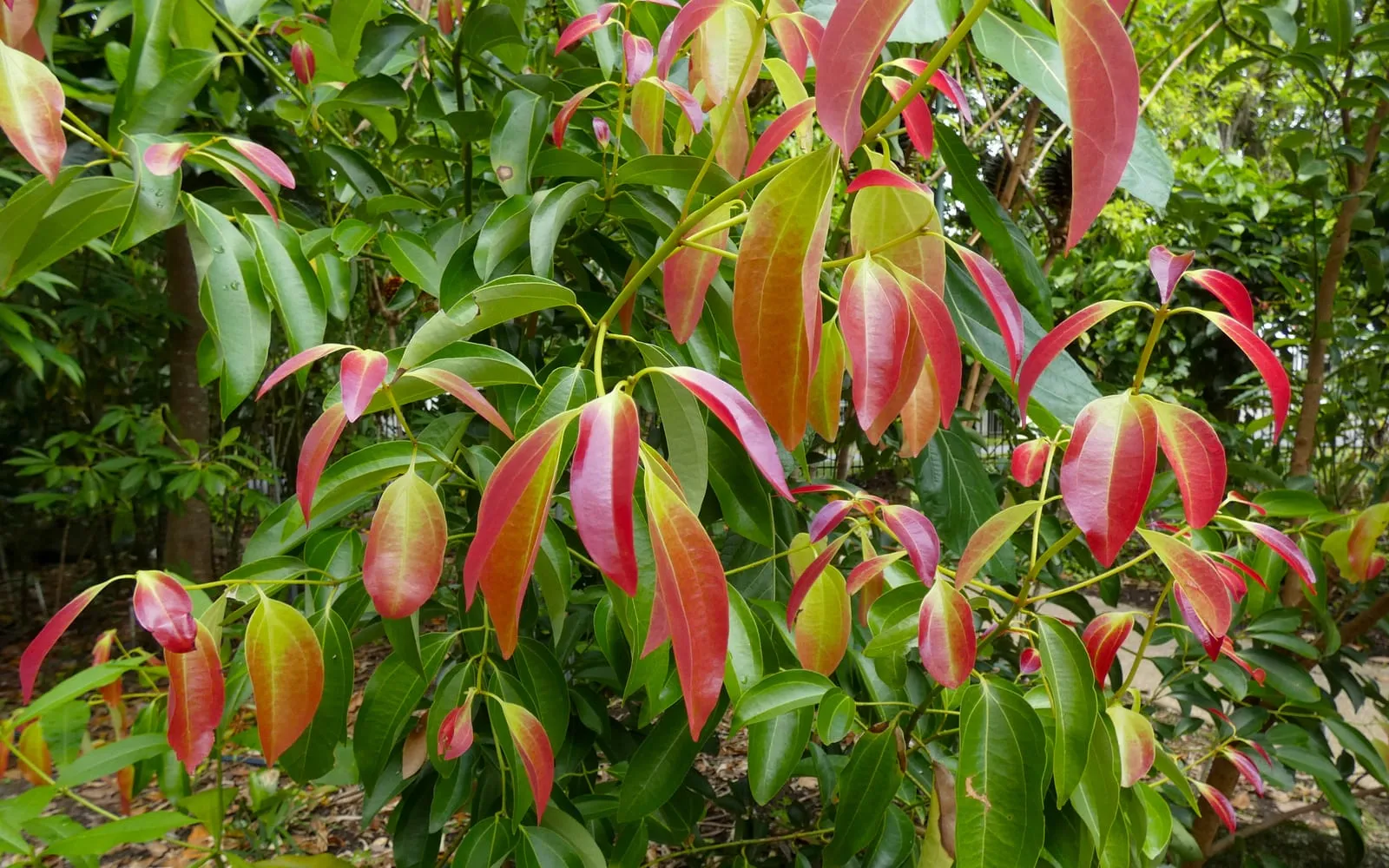
Leaves are the most attractive feature. Oval and pointed, 7 to 18 cm, thick and leathery, glossy dark green above and paler beneath, with three prominent veins running the length of the leaf from the base.
New growth flushes bright red or pink before hardening to green, which is a striking effect on a young plant.
Flowers are small, greenish-yellow and unremarkable, in loose clusters, with an unpleasant smell.
Fruit is a small dark berry.
The bark is the crop and it is aromatic in every part of the tree. Crushing a leaf gives a clove-like scent rather than a cinnamon one, because the leaf oil is dominated by eugenol while the bark oil is cinnamaldehyde.
Where it is from
True cinnamon is native to Sri Lanka and the Malabar coast of southern India, growing in lowland forest.
Sri Lanka has been the centre of the trade throughout recorded history and still produces the large majority of true cinnamon.
Its early trade was deliberately mystified. Classical writers repeated stories of cinnamon gathered from the nests of enormous birds, which Herodotus records, and those tales served the Arab middlemen who controlled the route by concealing its real source.
Portugal took Sri Lanka in the sixteenth century for the cinnamon, the Dutch took it from them in the seventeenth and enforced a monopoly, and the British took it in 1796.
Cassia displaced it commercially in most markets because it is cheaper and its flavour is stronger and coarser, and true cinnamon has become the specialist product.
How it grows
Grow from fresh seed, which loses viability within a week or two of the fruit ripening, or from semi-ripe cuttings with bottom heat.
Sow fresh seed at 25 deg C in free-draining compost, covering lightly. Germination takes two to four weeks.
Pot into free-draining slightly acid compost with grit and some ericaceous compost mixed in.
Grow it under glass at a minimum of 12 deg C, and preferably above 18 deg C.
Give it bright light with shade from the hottest midday sun, and high humidity.
Water regularly in summer and sparingly in winter.
Feed with a balanced feed containing iron, since pot-grown plants yellow between the veins without it.
Prune in spring to keep it bushy and manageable. Cutting the leader encourages side shoots.
Harvesting bark needs a stem two or three years old. Cut it, scrape off the outer bark, peel the inner bark in strips and roll them as they dry. That ends the stem, which is why the tree is coppiced commercially.
Through the seasons
Winter is survival under glass above 12 deg C, watered sparingly with humidity kept up.
Spring brings new growth from April, often in a red flush. Prune, repot and start feeding.
Early summer is the main growing period.
Midsummer is when the plant makes most of its wood.
Late summer is the point to stop feeding so the growth firms.
Autumn is when to reduce watering before the cold season.
Care difficulty
Difficult, and the barriers are heat, humidity and time.
It needs a minimum of 12 deg C and preferably above 18 deg C, which means a heated greenhouse or conservatory year round.
Humidity is the second requirement, and dry heated air produces the leaf browning and spider mite that finish most attempts.
Iron shortage is the common pot complaint, showing as yellowing between the veins. A feed containing sequestered iron and slightly acid compost prevents it.
Growth is slow, and a plant takes several years to reach any useful size.
As a foliage plant it holds its own, with glossy three-veined leaves and a bright red flush on new growth. That is the realistic reason to grow it.
Watering
Water two or three times a week in summer, letting the pot drain fully.
Water sparingly in winter, allowing the surface to dry between times.
Never leave it standing in water.
Use tepid water in winter and rainwater in a hard water area, since the plant prefers slightly acid conditions.
Raise the humidity by misting and by standing the pot on damp gravel.
Reduce watering from September.
Warning signs, diseases and pests
Yellowing between the veins is iron shortage and it is very common in pots. Use a sequestered iron feed and slightly acid compost.
Brown leaf edges mean dry air or cold.
Scale insects appear as brown limpets on the stems and leaf undersides, with sticky honeydew and sooty mould below. Rub them off with a damp cloth.
Spider mite shows as fine stippling with webbing in dry heated air.
Mealybug sits in the leaf axils as white waxy fluff.
Root rot from cold wet compost blackens the base.
Very slow growth is normal for the species and not a fault.
Growing environment
A heated greenhouse or conservatory. There is no outdoor option outside the tropics.
Minimum 12 deg C and preferably above 18 deg C.
High humidity.
Bright light with shade from the hottest midday sun through glass.
Free-draining, sandy, slightly acid compost with grit added.
pH from 5.5 to 6.5.
A pot of 25 to 30 cm for a young plant, potting on every second year, and prune to keep it within the space you have.
Feeding
Feed a balanced liquid feed fortnightly from May to August, and choose one containing iron.
Sequestered iron applied separately corrects yellowing between the veins, which is the standard pot problem.
Stop feeding from September so the growth firms before winter, and give nothing in winter.
Repot into fresh compost every second spring.
An ericaceous feed suits it, since it prefers slightly acid conditions.
Troubleshooting
What is the difference between cinnamon and cassia? True cinnamon, Cinnamomum verum, has thin brittle quills made of many rolled layers, a delicate sweet flavour and very little coumarin. Cassia, Cinnamomum cassia, has thick hard single-layer quills, a stronger coarser flavour and substantial coumarin. Most cinnamon sold in Europe and nearly all sold in North America is cassia.
Does that matter? For an occasional sprinkle, no. Coumarin damages the liver in sustained high doses, the European Food Safety Authority has set a tolerable daily intake, and anyone taking cinnamon in large quantities daily is better off using true cinnamon.
Why do the leaves smell of cloves? The leaf oil is dominated by eugenol, which is the clove compound. The bark oil is cinnamaldehyde. They are different oils from the same tree.
Can I harvest bark from my plant? Only from a stem two or three years old, and doing so kills that stem. Commercial trees are coppiced for exactly that reason.
The leaves went yellow between the veins. Iron shortage, common in pots. Use a feed with sequestered iron and slightly acid compost.
Can I grow it from a cinnamon stick? No. It is dried bark. Grow from fresh seed or a cutting.
Can I grow it outdoors? No. It is killed below about 5 deg C.