
Edible
Cross Berry
Grewia occidentalis
Also known as Four-corner, Cross-berry Raisin
How to grow cross berry, Grewia occidentalis. Why slicing the ripe berry reveals a cross-shaped cross-section, how a hard frost cuts new growth back to older wood, and the poor, stony soil it prefers over rich ground.
At a glance
- Difficulty
- Moderate
- Water
- Regularly while establishing; drought-tolerant once mature
- Light
- Full sun to light shade
- Temperature
- Damaged by hard frost; established plants take a light one
- Hardiness
- USDA 9-11, RHS H2-H3, hardy to -2 C
- Type
- Semi-deciduous to evergreen shrub, depending on climate
- Height
- 2-5 m
- Native to
- southern Africa
Native to the summer-rainfall regions of southern Africa, it grows through a hot, wet growing season and a dry, mild winter, and that rhythm rather than any tropical constancy is what its hardiness reflects. Established plants tolerate a light frost with some leaf scorch, though a hard frost cuts new growth back to older wood, and a genuine tropical wet season with no dry period at all suits it worse than its southern African climate does.
Hardiness zones describe winter cold alone. Summer heat, humidity, rainfall and the length of the growing season decide as much, so treat the range as the outer limit rather than as a recommendation.
Not known to be toxic
- Safe to eat
- Ripe fruit, eaten fresh, dried or made into jam
Cross berry does not appear on the RHS list of potentially harmful garden plants or on the ASPCA's toxic plant index. The ripe fruit is eaten across its native range, fresh off the shrub or gathered and made into jam, and the leaves are browsed by livestock and wildlife without documented ill effect. Nothing about the plant is reported as harmful to people, cats, dogs or horses.
Sources: RHS potentially harmful garden plants, ASPCA toxic and non-toxic plants
About
Cross berry grows wild across southern Africa as a sprawling, adaptable shrub, valued in cultivation for its star-shaped mauve flowers, its unusual four-lobed fruit and its tolerance of poor soil and a real dry season. It is a common garden and hedging plant across its native range and a butterfly-friendly choice wherever it is grown, since several species use it as a larval host plant.
Its common name comes from the fruit rather than the flower, a small, lobed berry that shows a clear cross shape in cross-section, which is also where the alternative name four-corner comes from.
Appearance and character
The shrub grows as a loose, arching mass of slender stems, dense enough to train into a hedge or screen but naturally sprawling if left unpruned, reaching 2 to 5 m depending on how it is managed.
Leaves are oval to lance-shaped, toothed along the margin and a fresh mid-green, turning yellow before falling where the climate is cool or dry enough to trigger a partial leaf drop.
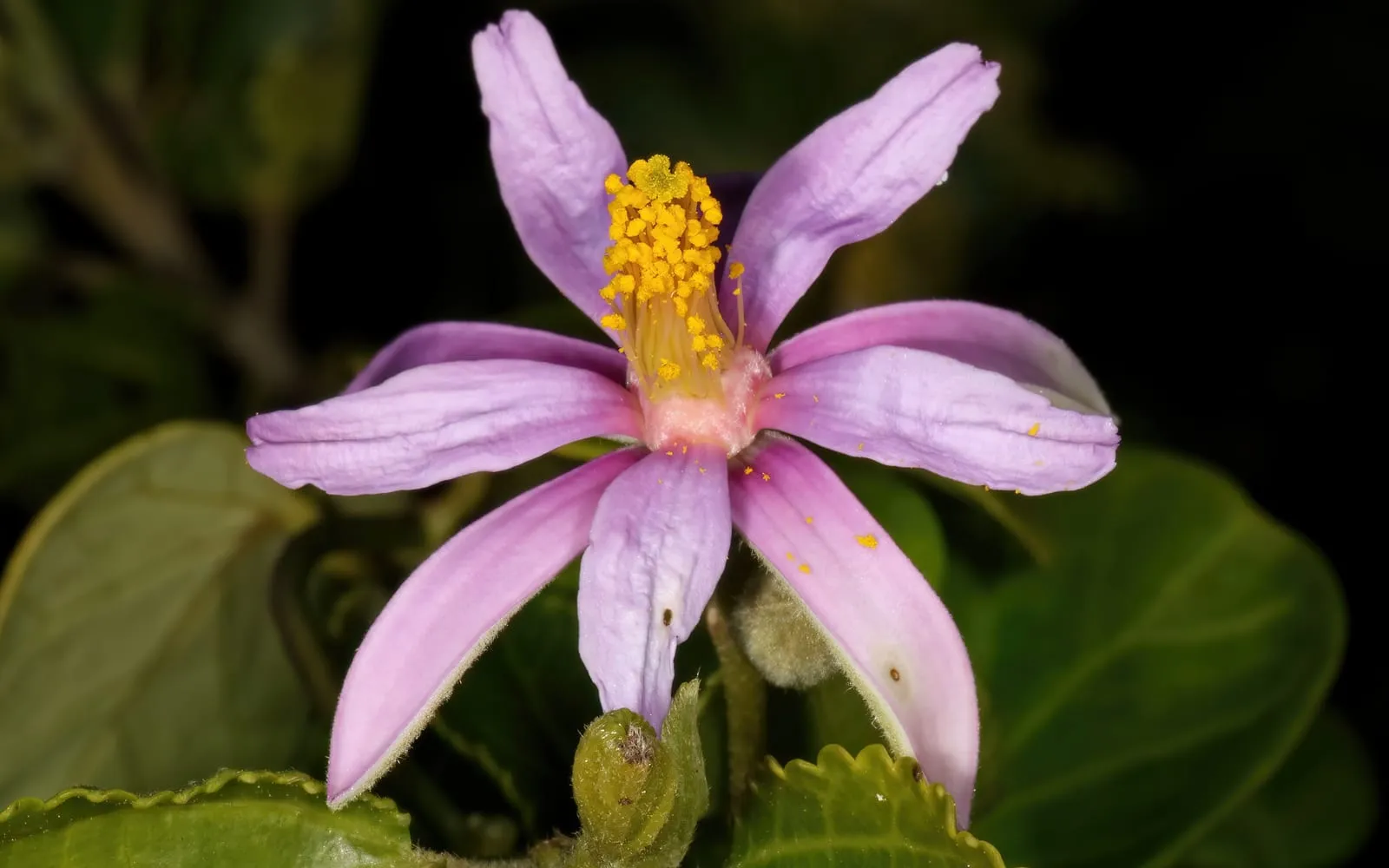
Flowers are the plant’s main ornamental feature, star-shaped, 2 to 3 cm across, in a soft mauve-pink with a paler centre, opening over a long season from spring into autumn in a warm climate. They are followed by small, four-lobed berries that ripen from green to a reddish brown, each lobe containing a single seed, and it is slicing the ripe berry across that reveals the cross pattern its common name describes.
Where it is from
Grewia occidentalis grows wild across southern Africa, from South Africa north into Mozambique, Zimbabwe and Eswatini, typically in bushveld, coastal scrub and along the margins of woodland rather than in deep forest shade.
Its native range experiences a summer-rainfall pattern, with most rain falling through the hot months and a dry, comparatively mild winter following. That rhythm, rather than the constant warmth and moisture of a true tropical climate, is what shapes the plant’s needs in cultivation: it needs a defined growing season with real water and a quieter, drier rest period rather than year-round dampness.
How it grows
Plant in well-drained soil in full sun to light shade, in a position that mirrors its native bushveld rather than a permanently damp or heavily shaded corner.
It tolerates poor, stony or sandy soil well, and in fact often performs better on lean ground than on rich, heavily improved soil, which can push soft, frost-tender growth at the expense of flowering.
Prune to shape after the main flowering flush, since the arching, sprawling habit benefits from occasional cutting back to keep a hedge or screen dense rather than open and leggy. It also responds well to hard pruning if a neglected plant needs rejuvenating.
Propagate from semi-hardwood cuttings taken in summer, or from seed, which germinates without much difficulty but produces a slower route to a flowering-size plant than cuttings do.
Through the seasons
Spring brings renewed growth and the start of the long flowering season in a climate with a defined winter rest.
Summer is the main growing and flowering period, coinciding with the wet season across most of its native range, and the time it needs the most water.
Autumn ripens the fruit and, in a cooler or drier climate, brings some yellowing and leaf drop as growth slows for the year.
Winter is a comparatively dry, quiet period. Established plants need little water and take a light frost without serious damage, though new growth is more vulnerable than older wood.
Care difficulty
Moderate. Cross berry is an easy, forgiving shrub within a reliably warm climate, tolerant of poor soil and drought once established, but its frost sensitivity limits where it can be grown outdoors year round and rules it out entirely for a cold-winter garden without protection.
Regular pruning is more a matter of shape than necessity, since the plant flowers and fruits reasonably well left to its own sprawling habit, but a hedge or screen use needs the discipline of an annual trim to stay dense.
Watering
Water regularly through the first year or two while the shrub establishes a proper root system, then reduce to occasional deep watering during dry spells once it is settled.
Through the main summer growing season, particularly in cultivation outside its native summer-rainfall climate, extra water improves both flowering and fruit set noticeably. In winter, an established plant needs very little and generally does better on the dry side than kept consistently moist.
Warning signs, diseases and pests
Aphids cluster on new shoot tips and flower buds, distorting growth and leaving a sticky residue behind them. A strong jet of water or an insecticidal soap clears a light infestation quickly.
Scale insects appear as small, immobile brown bumps along the stems, sapping the plant’s vigour gradually. Horticultural oil applied directly to the affected growth is the standard treatment.
Mealybug shows as small white, cottony tufts tucked into leaf axils and among new growth. Wipe them away with a damp cloth or treat with horticultural soap.
Sooty mould follows an infestation of any of the sap-sucking insects above, growing as a black, powdery coating on the honeydew they leave behind. Treating the underlying pest clears the mould in turn.
Growing environment
Full sun suits it best for the strongest flowering, though it tolerates light shade reasonably well, flowering somewhat less freely in return.
Well-drained soil of almost any type suits it, including poor, sandy or stony ground that would leave many other shrubs struggling. It performs poorly only in soil that stays waterlogged.
Shelter from hard frost matters where winter temperatures drop close to or below freezing, since while an established plant survives a light frost with minor leaf scorch, a hard freeze cuts new growth back significantly and can kill a young plant outright.
As a hedge, screen or informal specimen shrub, it suits a warm, dry garden far better than a damp, sheltered one, echoing the open bushveld it grows in naturally.
Feeding
Feed with a balanced fertiliser or well-rotted compost once or twice during the main growing season, enough to support flowering and fruiting without pushing excessive soft growth.
Avoid heavy or frequent feeding, particularly with high-nitrogen fertiliser, which encourages lush growth more vulnerable to frost damage and can reduce flowering in favour of leaf production.
An established plant in reasonable garden soil often needs no feeding at all beyond an annual mulch of compost around the root zone.
Troubleshooting
A hard frost cut my plant back to bare stems. Established cross berry generally regrows from older wood after frost damage, even where the dieback looks severe. Prune out the dead growth once new shoots confirm which wood has survived, and expect a full recovery over the following growing season.
It flowers well but sets very little fruit. Inconsistent watering during flowering, or a lack of pollinating insects, are the two most common causes. A plant grown in a sheltered, insect-friendly garden with steady water through summer generally sets fruit more reliably than one left to fend for itself in a dry, exposed spot.
Can I really eat the berries? Yes. They are eaten fresh across the plant’s native range, and also gathered and made into jam, though they are seedy and modest in flavour compared with a cultivated fruit, closer to a foraged treat than a garden crop grown for volume.
My plant has become leggy and sparse in the middle. Left unpruned for several years, cross berry naturally opens up. A hard prune in spring, cutting old stems back by a third to a half, encourages dense new growth from the base.
Can it be grown as a hedge in a cooler climate? Only where winters stay reliably above hard frost, or with real winter protection. Outside that range it is better suited to a container that can be moved under cover, or grown as a warm-season specimen rather than a permanent outdoor hedge.