
Edible
Coco Plum
Chrysobalanus icaco
Also known as Icaco, Paradise Plum
Practical guidance for growing coco plum, Chrysobalanus icaco, including salt tolerance, coastal hedging, ripe fruit, pruning, wet soil tolerance, and container growing.
At a glance
- Difficulty
- Easy
- Water
- Regular water while young; tolerant of both drought and wet soil once established
- Light
- Full sun to partial shade
- Temperature
- Frost-tender; damaged below about 0 C
- Hardiness
- USDA 10b-11, RHS H1b-H2, hardy to -1 C
- Type
- Evergreen tropical shrub or small tree
- Height
- 2-8 m depending on form
- Native to
- tropical American and African coasts
A coastal species that tolerates salt spray and constant onshore wind without protection, which is what most gardeners grow it for. It has almost no frost tolerance, so anywhere winter brings more than the lightest, briefest chill needs it in a container that can be moved under cover.
Hardiness zones describe winter cold alone. Summer heat, humidity, rainfall and the length of the growing season decide as much, so treat the range as the outer limit rather than as a recommendation.
Not known to be toxic
- Safe to eat
- Ripe fruit flesh, eaten fresh or made into preserves
Coco plum is not listed as harmful by the RHS or the ASPCA. The ripe fruit is a traditional food across the Caribbean, Central America and West Africa, eaten fresh or cooked down into a thick, sweet preserve. Inside each fruit is a single hard seed with an oily kernel that some regional cooking traditions roast and eat like a nut, a preparation that softens and cooks the kernel rather than eating it raw. No part of this plant needs to be kept away from children or pets on safety grounds.
Sources: RHS potentially harmful garden plants, ASPCA toxic and non-toxic plants
About
Coco plum is a dense, salt-tolerant shrub grown along tropical coastlines both as a hedge and for its small, plum-like fruit. It is unusually forgiving of the conditions that trouble most fruiting plants, taking sea spray, constant wind and sandy soil readily, and it copes just as well with occasional flooding as with a dry spell.
Two forms are widely grown: a low, spreading type used for clipped coastal hedging, and a taller, more open type that fruits more freely and is better suited to a specimen planting or an informal screen.
Appearance and character
Leaves are rounded, leathery and glossy, deep green on top with a paler underside, packed densely along the stems in a way that makes the shrub an effective windbreak and screen even before it flowers. New growth on some forms emerges tinged red or bronze before hardening to green.
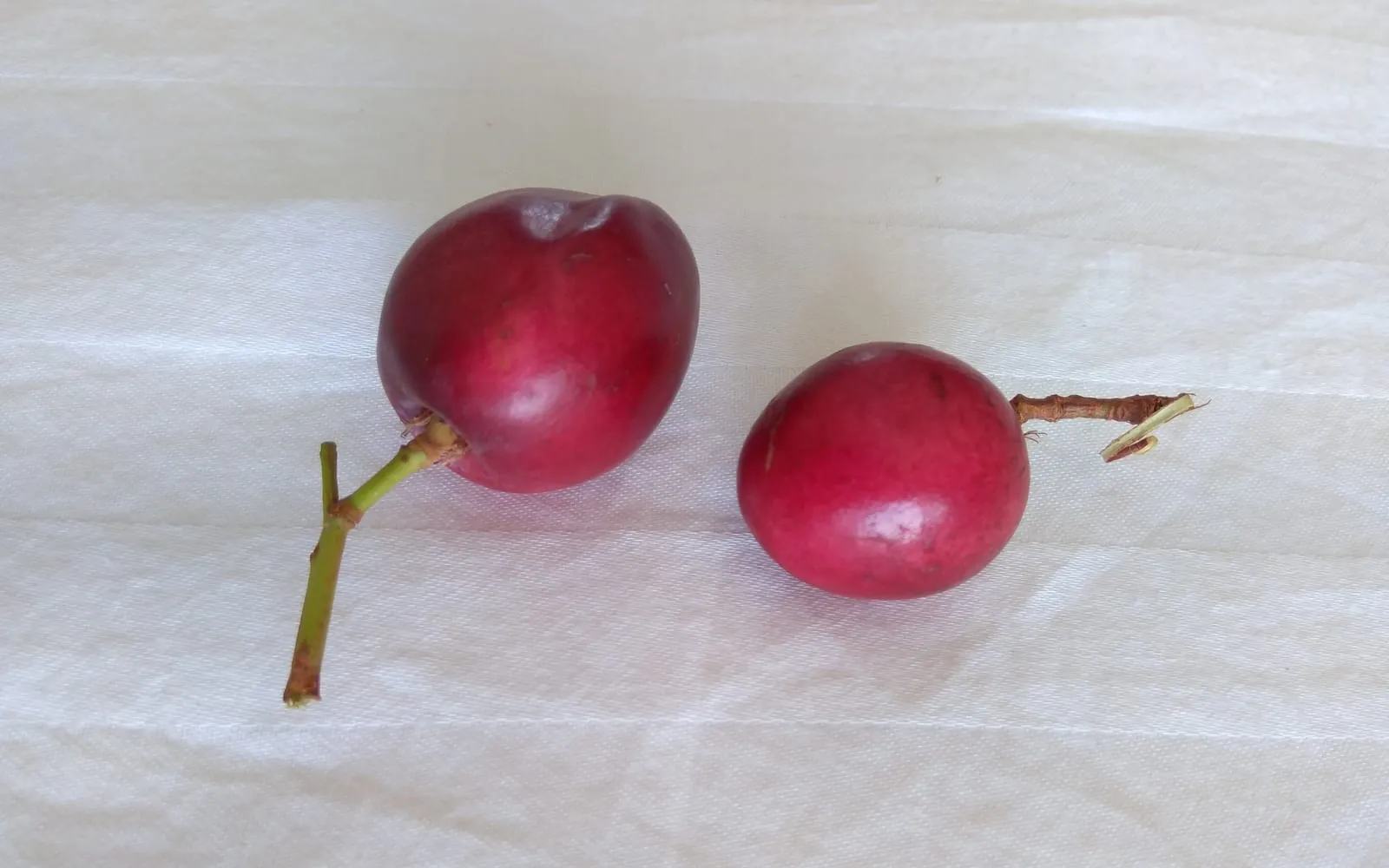
Small white flowers cluster along the stems through much of the year in a frost-free climate, unremarkable individually but produced in enough quantity to draw bees steadily. They are followed by oval fruit, ripening from green through pink to a deep purple-black, with thin, waxy skin over pale, cottony flesh and a single large seed at the centre.
Growth is naturally dense and shrubby without pruning, which is part of why it is planted as a hedge as often as it is grown for fruit.
Where it is from
Chrysobalanus icaco grows naturally along tropical coastlines on both sides of the Atlantic, from the Caribbean and the coasts of Central and South America to the shores of West Africa, always close to the sea and often rooted in loose, sandy or even seasonally flooded ground.
That double range across the Atlantic reflects a plant well suited to long-distance dispersal by water, since its buoyant fruit is able to survive a long soak in salt water and still germinate on reaching a distant shore. The same salt and drought tolerance that let it spread this way is what makes it such an easy coastal garden plant today.
How it grows
Plant in full sun to partial shade in sandy or loamy soil; it is one of the few fruiting shrubs equally happy in ground that dries out between rains and ground that floods after a storm. Coastal wind and salt spray need no special protection, since the plant is naturally adapted to both.
Where frost is a possibility, grow it in a large container that can be moved under cover for winter, or treat it as an annual foliage plant in a climate too cold to overwinter it outdoors at all.
Prune to shape after flowering, or clip regularly through the growing season if it is being kept as a formal hedge; it responds well to hard cutting back and regrows density quickly.
Propagate from seed, sown fresh since viability drops quickly once dry, or from semi-ripe cuttings taken in summer.
Through the seasons
Spring brings a flush of new growth and, in a frost-free climate, the first flowers of the year.
Summer is the main flowering and fruiting period, with ripening fruit present through much of the season.
Autumn continues fruiting in many climates, since flowering is not strictly seasonal where winters stay mild.
Winter slows growth in cooler climates and is when any container-grown plant needs to come under cover before the first frost.
Care difficulty
Easy, and among the most forgiving fruiting shrubs for a coastal or tropical garden. It needs no special soil preparation, tolerates both drought and periodic flooding, and tolerates wind and salt spray that would scorch most other fruiting plants.
The one firm limit is cold. Outside a frost-free or near frost-free climate it has to be grown in a container and moved seasonally, which adds real ongoing effort that the plant itself otherwise does not ask for.
Watering
Water regularly while a young plant establishes its root system, then let rainfall take over in most climates. An established coco plum tolerates an extended dry spell and periodic waterlogging equally well, which is unusual among fruiting shrubs and one reason it needs so little routine attention once settled.
During active fruit development, a deeper watering in an otherwise dry spell improves fruit size, though the plant survives without it.
Warning signs, diseases and pests
Scale insects attach along stems and leaf undersides as small, immobile bumps, weakening growth and excreting honeydew as they feed. Treat with horticultural oil or by scraping off light infestations by hand.
Mealybug shows as small white, cottony masses in leaf axils and new growth, feeding in the same way as scale. Treat the same way.
Sooty mould grows on the honeydew that scale and mealybug leave behind, coating leaves in a black film that blocks light rather than infecting the plant directly. Treating the insects responsible clears the mould over the following weeks.
Leaf spot appears as small brown or black spots on the foliage in humid conditions with poor air movement, particularly on a densely clipped hedge. Thinning growth to improve airflow and removing badly affected leaves usually controls it without further treatment.
Growing environment
Full sun produces the densest growth and the most flowers and fruit; partial shade is tolerated, particularly in the hottest climates.
Soil texture matters far less than for most fruiting plants. Sandy, loamy or even seasonally wet ground all suit it, and it needs no special amendment to grow well in poor coastal soil.
Wind and salt tolerance make it a natural choice for an exposed coastline where more delicate fruiting plants would need a windbreak of their own; here, it can be the windbreak.
Feeding
Feed with a balanced fertiliser formulated for tropical shrubs or fruiting trees two or three times through the growing season.
A plant grown in poor, sandy coastal soil benefits from feeding more than one in a fertile inland garden, since it has little natural reserve of nutrients to draw on beyond what is applied.
Troubleshooting
The hedge is thinning out at the base. Usually a light issue rather than a disease, since lower growth shaded out by the plants above it or by nearby structures thins over time. Prune the top and sides harder to let more light reach the base, and it should fill back in over a season.
The fruit never ripens past green. Most likely not enough heat or time. Coco plum fruit takes several weeks to ripen fully, moving from green through pink to deep purple, and a cool or short growing season can leave fruit stalled partway through that change.
My container-grown plant looks poor after winter indoors. Low light over winter is the usual cause, since the plant slows but does not stop growing and needs bright conditions even while resting. Move it to the brightest available spot for winter and back outside once frost risk has passed.
Can it survive a direct hit of salt spray from the sea? Yes, better than almost any other fruiting shrub grown in gardens. It is planted specifically for this tolerance along exposed coastlines, often as the first line of a windbreak planting.
Is the fruit worth growing for, or is this only a hedge plant? Both. The fruit is a genuine, traditional food crop, though a specimen grown hard as a clipped formal hedge fruits far less than one left to grow more naturally with an annual shaping cut.