
Houseplant
Retuse Haworthia
Haworthia retusa
Also known as Star Cactus, Aloe retusa
How to grow Haworthia retusa, the retuse haworthia, a star of fleshy leaves with translucent windowed tips that grows well in bright shade.
At a glance
- Difficulty
- Moderate
- Water
- After the mix has dried out fully
- Light
- Bright indirect light; a little gentle sun
- Temperature
- Warm to cool; keep above 5 deg C
- Humidity
- Undemanding; tolerates dry air
- Hardiness
- USDA 9-11, RHS H2, hardy to 5 C
- Type
- Evergreen succulent perennial
- Height
- 5 to 10 cm
- Native to
- South Africa
A small succulent from the dry southern Cape of South Africa, where it grows low among rocks and tufts of grass, often shaded and sometimes sunk into the ground so only its leaf tips show. Frost kills it, so hold it above about 5 deg C, and give it bright shade instead of glare. Cold, wet compost is the one thing it will not forgive.
Hardiness zones describe winter cold alone. Summer heat, humidity, rainfall and the length of the growing season decide as much, so treat the range as the outer limit rather than as a recommendation.
Not known to be toxic
Haworthias carry no recorded toxin and are absent from the ASPCA's toxic list. The name star cactus misleads on two counts, since the plant is neither a cactus nor poisonous, and a chewed leaf is unlikely to do serious harm. It is a safe little succulent for a home shared with pets or young children.
Sources: ASPCA toxic and non-toxic plants, RHS potentially harmful garden plants
About
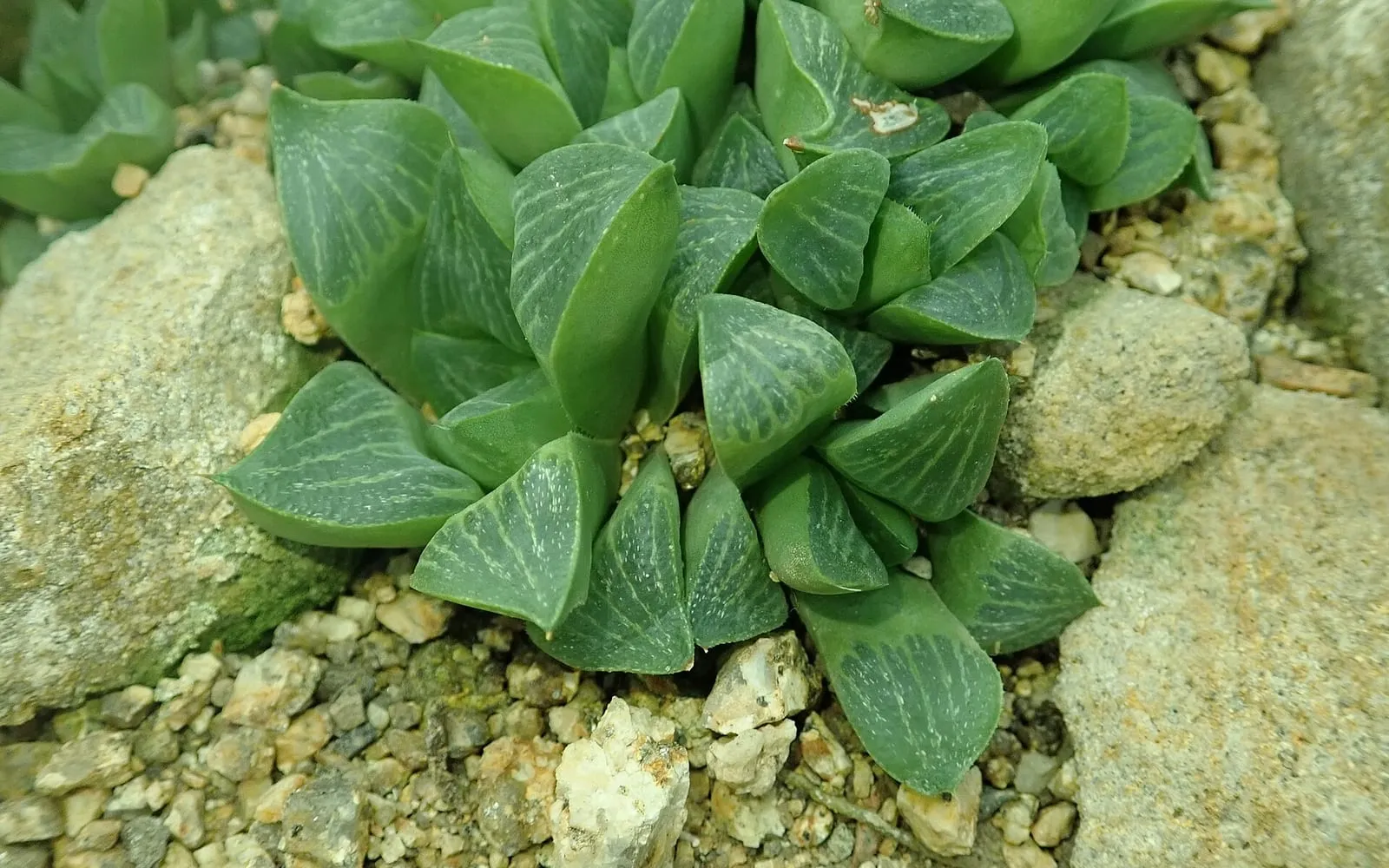
Retuse haworthia grows as a low green star of fat, angular leaves, each one bent sharply back on itself near the end so its flattened tip points at the sky. That upturned tip is glassy and part-transparent, a “window” of clear tissue that lets light reach into a leaf built to sit half-buried in the wild.
The old name star cactus is doubly wrong. There is no spine anywhere on it, and it is a soft-leaved relative of the aloes instead of a cactus, close kin to the zebra haworthia and grown in just the same undemanding way.
It stays tiny, with a single rosette rarely wider than a hand, so it suits a small pot in a bright but sunless spot where the windowed tips get plenty of light.
Appearance and character
The leaves are thick, fleshy and three-cornered, mid to dark green, each folding back near the tip so the blunt, glassy end faces upward. Those translucent tips, veined and softly clouded, are what set the plant apart.
They gather into a low, flat, star-shaped rosette no more than ten centimetres across, which presses close to the compost and slowly buds offsets to form a little cluster.
Flowering is modest: a thin stalk lifts well clear of the leaves and carries small white tubular blooms pencilled with brownish veins, easy to overlook beside the striking foliage.
Offsets crowd in around the base, and lifting a rooted one away is the simplest way to make a new plant.
Where it is from
Haworthia retusa is native to the dry southern Cape of South Africa, growing low among stones and grass, frequently shaded and often drawn down into the soil until only its glassy leaf tips lie at the surface. It usually grows with bright shade and fast drainage.
That part-buried, sheltered life is the reason for the transparent windows and the plant’s clear preference for bright, indirect light over a scorching sill. It needs an open, gritty root run and little water, with no frost and no wet crown.
How it grows
It grows slowly, adding leaves and budding offsets round its base, taking years to turn a single rosette into a clump. Nothing about it needs regular attention.
Pot it in a sharp, gritty cactus mix in a small container, and hold off watering until the mix has dried through. It rarely needs repotting except when you divide the offsets that gather.
Give it bright, indirect light, perhaps with a little soft morning sun, and shield it from harsh midday glare that reddens and marks the tips. Keep it above about 5 deg C and dry over winter, watering less instead of more whenever you hesitate.
Take rooted offsets in the warmer months, letting each cut surface dry for a day before you set it into gritty mix.
Through the seasons
Spring brings stronger light and fresh growth, making it the season to repot or divide off offsets.
Summer brings the bulk of its slow growth. Water only once the mix is bone dry and keep it out of a baking window.
Autumn eases growth back as light falls. Lengthen the intervals between waterings.
Winter is a dry rest. Hold it above about 5 deg C and give barely any water, since cold and wet together rot it.
Care difficulty
Moderate, tipping into easy once you water it lightly enough. It tolerates bright shade, dry air and long neglect, and the single reliable mistake is keeping it wet, which rots the roots. Treated as a small shade-tolerant succulent, it is remarkably patient.
Watering
Hold off until the gritty mix has dried out fully, then water it through and empty the saucer. In the coldest, darkest weeks give it next to nothing, since a resting plant in damp compost is likely to rot.
The plump leaves are its water store. When they lose their shine and pucker it is thirsty; when they turn soft and glassy all over it has had far too much.
Warning signs, diseases and pests
The usual trouble is rot from overwatering, betrayed by soft, see-through, yellowing leaves and a plant loose at the root. Stop watering, lift it to inspect the roots, and rescue it from healthy offsets if the base is lost.
Mealybugs hide down among the leaves and around the roots as tiny woolly white specks. Dab them off with a cotton bud or wipe with horticultural oil, and check the root ball whenever you repot.
A deep red or bronze flush with scorched patches signals sun that is too strong. Move the plant into brighter shade; a faint blush in good light is fine, but hard browning is not.
Growing environment
Bright, indirect light with maybe a touch of gentle morning sun keeps it compact and well-marked. Fierce midday sun scorches the tips, while deep gloom opens the rosette out and pales it.
Warmth is useful but not essential, and it tolerates cool, bright winters provided it stays above about 5 deg C and dry. Dry room air suits it and it needs no misting.
Set it in a gritty, free-draining mix in a small pot on a bright, sunless sill, grouped, if you like, with other haworthias and gasterias that enjoy the same light.
Feeding
Very little feeding is called for. A dilute cactus feed once or twice through the growing months matches its slow pace, and anything heavier only forces soft, weak growth.
Give none from autumn through winter while it rests, and use fresh mix to carry a newly potted plant through its first year.
Troubleshooting
Is it a cactus? No. Despite the name star cactus, it is a soft, spineless succulent related to the aloes, with none of a cactus’s spines or structure.
What are the clear patches on the tips? Translucent windows, a natural adaptation for a leaf that often sits buried, letting light reach down into the plant. They are a feature, not a flaw.
The leaves have gone soft and glassy. Overwatering. Cut back, check the roots, and root healthy offsets if the base has rotted.
Why has it turned red? Usually harsh sun. A light blush in bright conditions is normal, but scorched, browning leaves mean you should move it into brighter shade.
Is it safe for pets? Yes. Haworthias are not on the ASPCA’s toxic list, so it is a safe succulent for a home with animals, like the zebra haworthia.
Retuse Haworthia problem guides
Not sure what is wrong? See the common houseplant pests guide.