
Houseplant
Pinwheel Aeonium
Aeonium haworthii
Also known as Haworth's Aeonium, Kiwi Aeonium
How to grow Aeonium haworthii, the pinwheel aeonium, with blue-green red-edged rosettes on branching stems and a winter growing season.
At a glance
- Difficulty
- Easy
- Water
- When the mix has dried; less in summer dormancy
- Light
- Bright light, with some direct sun
- Temperature
- Cool to warm; keep above 5 deg C
- Humidity
- Undemanding; tolerates dry air
- Hardiness
- USDA 9-11, RHS H2, hardy to 5 C
- Type
- Evergreen branching succulent shrublet
- Height
- 30 to 60 cm
- Native to
- The Canary Islands
A frost-tender succulent from the Canary Islands, where the climate is mild, bright and dry in summer. It grows in the cooler, damper months and rests in the heat of summer, the reverse of most plants, so it often looks tired in a hot spell and starts growing again as things cool. Keep it above about 5 deg C, in bright light, and dry when it is resting.
Hardiness zones describe winter cold alone. Summer heat, humidity, rainfall and the length of the growing season decide as much, so treat the range as the outer limit rather than as a recommendation.
Not known to be toxic
Aeoniums are not listed as toxic by the ASPCA, and no harmful compound is recorded in them. A chewed leaf would cause no serious harm beyond the mild upset any plant material might. It is a safe succulent to grow around pets and children, though rough handling can still damage the rosettes.
Sources: ASPCA toxic and non-toxic plants, RHS potentially harmful garden plants
About
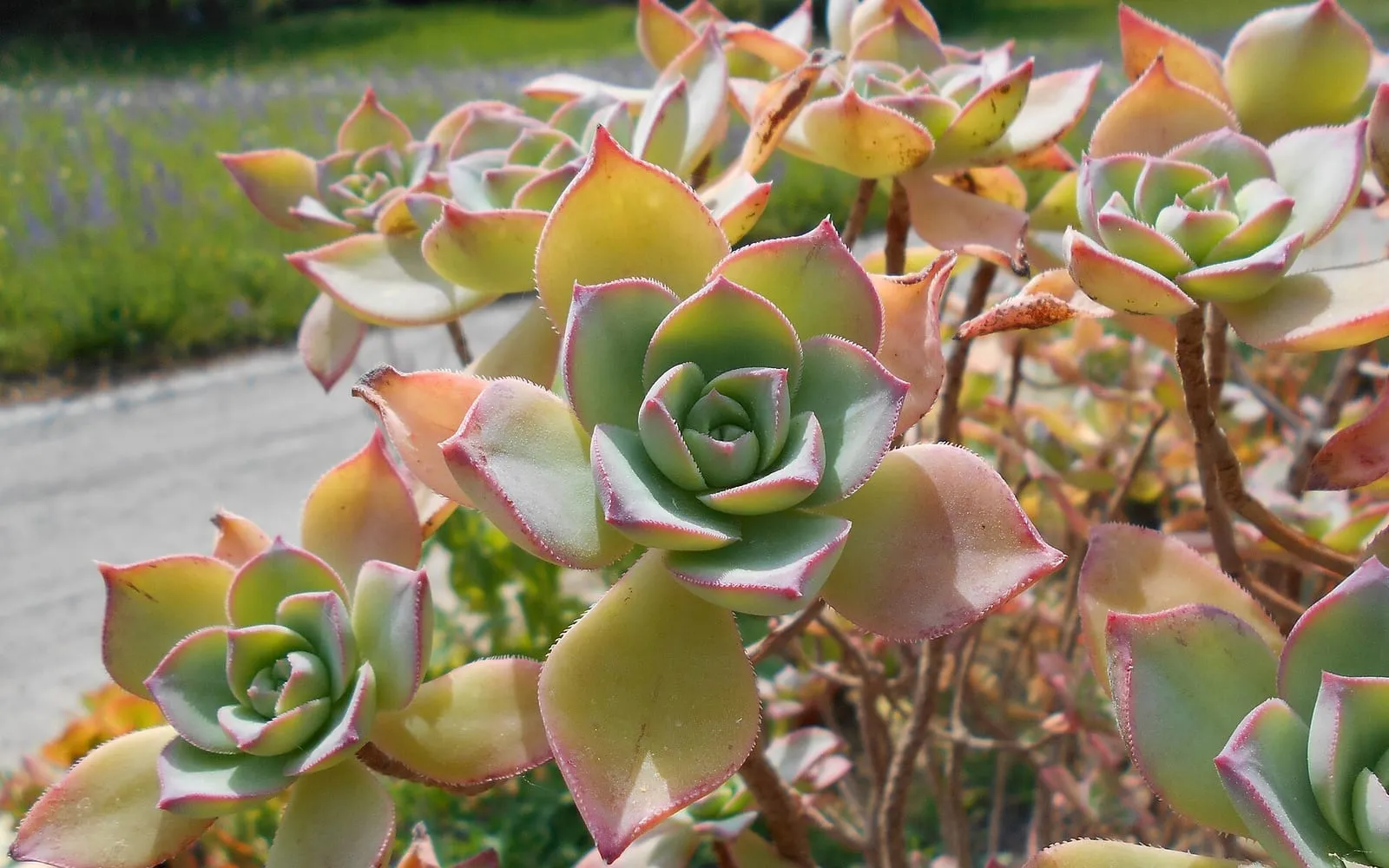
Pinwheel aeonium forms many small, neat rosettes of blue-green leaves, each leaf edged with a fine red line, carried on a low, branching, woody framework. Where the tree aeonium makes a single tall stem topped by one large rosette, this species branches freely into a rounded bush of dozens of little pinwheels.
It comes from the Canary Islands and follows their seasonal pattern, growing in the cool, damp months and resting through the heat of summer. That reversed season can catch out growers used to watering succulents hard in summer. This one should be kept much drier then.
It is one of the easier aeoniums and a good companion to the taller tree aeonium, making a bushy, many-rosetted plant for a bright windowsill or a frost-free patio.
Appearance and character
Rosettes are small and neat, five to ten centimetres across, made of spoon-shaped blue-green leaves, each with a thin red margin that deepens in bright light. A well-grown plant carries many of them at once.
The habit is low and branching, the rosettes held on slender woody stems that divide again and again into a rounded, bushy shrublet up to about sixty centimetres.
Flowers are small, pale yellow to cream stars in a loose cluster, borne from a rosette after some years. As with other aeoniums, a rosette that flowers then dies, though the branching plant carries on from its many others.
New rosettes and side branches appear steadily in the cooler growing months, and the plant is easily kept full and bushy by the occasional pinch or cutting.
Where it is from
Aeonium haworthii is endemic to Tenerife in the Canary Islands, growing on rocks, cliffs and dry slopes in a mild, bright, Mediterranean-type climate with cool, moist winters and warm, dry summers. It is used to strong light and sharp drainage.
Give it bright light, free-draining soil and water in the cooler months, and it copes with dry air easily. Hot, wet summer conditions are the main problem.
How it grows
It grows through the cooler months, branching and adding rosettes, and rests in the heat of summer, when the rosettes may close up and the plant looks tired. This is normal and not a sign of trouble.
Pot it in a free-draining, gritty cactus mix, in bright light with some direct sun, and water when the mix has dried during the growing months. Water very little through summer dormancy, since wet, hot compost then rots the roots.
Keep it above about 5 deg C and frost-free. It is happy outdoors in a mild, frost-free climate and makes an easy windowsill or conservatory plant elsewhere, brought in before the cold.
Pinch or take cuttings to keep it bushy, since stems can grow bare and leggy in poor light. Cuttings root readily in gritty mix, which is the simplest way to make more plants.
Through the seasons
Autumn starts the main growing season as the weather cools, when the plant branches and adds rosettes. Resume watering and feeding.
Winter is active growth in a bright, frost-free spot. Water when the mix dries, and keep it above about 5 deg C.
Spring continues growth and may bring flowers on older rosettes, which then die as the branching plant carries on.
Summer is dormancy. The rosettes close up and the plant rests, so water sparingly and keep it out of scorching sun. It will start growing again as autumn cools.
Care difficulty
Easy, once its reversed season is understood. It needs bright light, gritty soil, water in the cooler months and near-drought in summer, and it is otherwise undemanding. The common mistake is watering it hard in summer, which rots it while it is resting. Water it in the cool months instead and keep it much drier in summer.
Watering
Water when the gritty mix has dried during the cooler growing months, giving enough to moisten the roots and letting the excess drain. Through summer dormancy, water only enough to stop the rosettes shrivelling hard, since wet compost in summer heat rots the roots.
The rosettes store water and cope well with being left a little dry. Err on the side of too little, especially in summer, and always empty any saucer.
Warning signs, diseases and pests
Root rot from overwatering is the main danger, especially in summer when the plant is resting. Soft, blackening stems and collapsing rosettes are the signs. Cut back watering, improve drainage, and take healthy cuttings if the base has gone.
Mealybugs hide in the rosettes and leaf joints as small white woolly tufts. Dab them off with a cotton bud or treat with horticultural oil, checking the centres of the rosettes.
Bare, leggy stems mean too little light. Give the plant brighter light with some direct sun, and pinch or cut back the leggy growth to encourage a bushier plant.
Growing environment
Bright light with some direct sun suits it, keeping the rosettes tight and the red leaf edges strong. Too little light stretches the stems and pales the colour.
Warmth is not essential, and the plant tolerates cool, bright conditions well as long as it stays above about 5 deg C and dry in winter. It is untroubled by dry air and needs no humidity.
Give it a gritty, free-draining mix and a bright windowsill, conservatory or frost-free patio. It suits a pot of mixed aeoniums and other Canary Island succulents.
Feeding
Feed lightly, a few times during the cooler growing months, with a dilute cactus or balanced feed. The plant grows slowly and needs little, and heavy feeding forces soft, leggy growth.
Do not feed through summer dormancy, when the plant is resting. Fresh mix supplies enough for the first weeks after repotting.
Troubleshooting
It looks tired and shrivelled in summer. Normal summer dormancy. The plant rests in the heat and the rosettes close up. Keep it dry and out of scorching sun, and it will start growing again as autumn cools. Do not water it hard to try to perk it up.
The stems are bare and leggy. Too little light. Move it somewhere brighter with some direct sun, and pinch or cut back the leggy stems, rooting the tips as cuttings to make a bushier plant.
The base has gone soft and black. Rot from overwatering, often in summer. Cut back watering, improve the drainage, and re-root healthy cuttings in gritty mix if the base has gone.
A rosette flowered and then died. Normal for aeoniums. A rosette that flowers dies afterwards, but the branching plant carries on from its many other rosettes, so the plant as a whole survives.
Is it safe around pets? Yes. Aeoniums are not listed as toxic by the ASPCA, so it is a safe succulent for a home with animals, like the related tree aeonium.
Pinwheel Aeonium problem guides
Not sure what is wrong? See the common houseplant pests guide.