
Houseplant
Sydney Rock Orchid
Dendrobium speciosum
Also known as Dendrobium speciosum, Rock Lily, Thelychiton speciosus
How to grow Dendrobium speciosum, the Sydney rock orchid or rock lily, a hardy Australian orchid with stout canes and long sprays of fragrant cream flowers.
At a glance
- Difficulty
- Moderate
- Water
- Water freely in growth; keep drier over the cool winter rest
- Light
- Bright light with some direct sun
- Temperature
- Cool to warm; tolerates cool, near-frost nights
- Humidity
- Average
- Hardiness
- USDA 9-11, RHS H2, hardy to 3 C
- Type
- Evergreen epiphytic or lithophytic orchid
- Height
- 30 to 80 cm
- Native to
- Eastern Australia
A tough orchid from the rocks and trees of eastern Australia, growing in bright light on exposed cliffs and trunks. It needs bright light, an open, fast-draining root run and a cool, drier winter rest to flower, and it tolerates cool, near-frost nights better than most orchids. It is safest above about 3 deg C and rots in heavy, wet, airless compost.
Hardiness zones describe winter cold alone. Summer heat, humidity, rainfall and the length of the growing season decide as much, so treat the range as the outer limit rather than as a recommendation.
Not known to be toxic
A safe plant to keep around pets and children. Dendrobiums, like other orchids, are not listed as toxic by the ASPCA or the RHS, and hold no harmful compound. A pet or child that chewed a cane or leaf would come to no real harm, so this hardy orchid poses no hazard in a home with animals.
Sources: ASPCA toxic and non-toxic plants, RHS potentially harmful garden plants
About
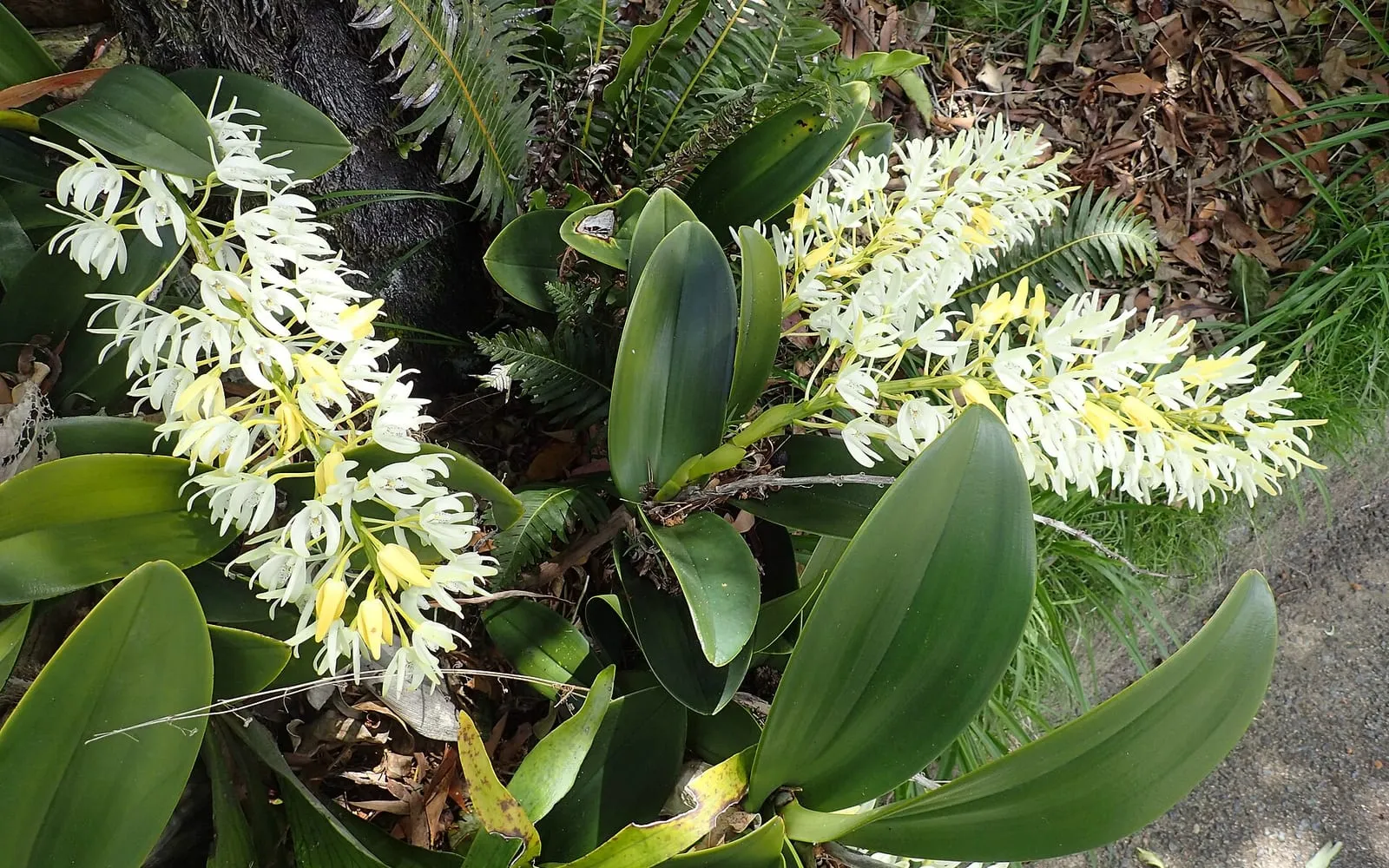
Sydney rock orchid is one of the toughest hardy orchids. It builds a bold clump of stout, ribbed canes, each topped with a few thick, leathery, dark green leaves, and in spring a mature plant produces long, arching sprays of many small, fragrant flowers in cream to golden-yellow, sometimes a hundred or more to a spike. The scent and the sheer number of flowers make a well-grown plant impressive in bloom.
It grows in eastern Australia on exposed rocks and tree trunks, often in bright, sunny positions on cliffs and boulders, so it is a bright-light, tough-constitution orchid instead of a shade-lover. It tolerates cool, near-frost nights better than almost any tropical orchid, and it needs a cool, drier winter rest to set its flowers.
Grown in a very open, coarse orchid mix, or mounted on rock or bark as it grows in the wild, and given bright light, free drainage and a cool, dry winter rest, it is a forgiving orchid. It is slow to reach flowering size and handles disturbance poorly, but a settled, mature clump flowers well and lives for many years.
Appearance and character
The canes, or pseudobulbs, are stout and ribbed, clustered into a bold clump, each topped with a few thick, leathery, dark green leaves, and they store water and food.
The flowers are small, cream to golden-yellow and fragrant, borne in long, arching sprays of many blooms, sometimes a hundred or more, in spring on a mature plant.
It grows on rock and bark in the wild, in bright, often sunny positions, so it is a tough, bright-light orchid that tolerates cool nights well.
It is slow to reach flowering size and handles disturbance poorly, but a settled, mature clump flowers well and is long-lived.
Where it is from
Dendrobium speciosum grows in eastern Australia, on exposed rocks, cliffs and tree trunks, often in bright, sunny positions with sharp drainage. It is a plant of bright light, open air and cool, dry winters.
Give it bright light with some direct sun, an open, fast-draining root run, generous water in growth and a cool, drier winter rest to flower. It tolerates cool, near-frost nights better than most orchids, and rots in heavy, wet, airless compost.
How it grows
It grows through spring and summer, building its stout canes, then takes a cool, drier winter rest that sets its spring flowers. Bright light, free drainage and that cool, dry rest bring the flowers; a plant kept warm and wet all year grows but seldom blooms well.
Grow it in a very open, coarse orchid mix in a pot, or mounted on rock or bark, and water freely in growth, keeping it much drier over the cool winter rest. It handles disturbance poorly, so repot only when necessary and let the clump build.
Give it bright light with some direct sun, cool to warm conditions with cool winter nights, and good air movement, above about 3 deg C. Patience is needed, since it is slow to reach flowering size.
Propagation is by division of a large clump, keeping several canes to a piece, though it handles disturbance poorly and is slow to re-establish.
Through the seasons
Spring brings the long, fragrant flower sprays and the start of strong growth. Water freely and resume feeding.
Summer is the main growing season, when the new canes build. Water and feed generously in bright light.
Autumn growth slows. Ease off water and feeding to begin the cool, drier winter rest.
Winter is a cool, drier rest above about 3 deg C, which sets the flowers. Water sparingly and give bright light and cool nights.
Care difficulty
Moderate, and tougher and more cold-tolerant than most orchids, given bright light, sharp drainage and a cool, dry winter rest. It grows readily but is slow to flowering size and handles disturbance poorly, so patience and a settled clump are needed. It rots in heavy, wet, airless compost, and it flowers poorly without a cool, dry winter. A mature plant is long-lived and flowers heavily.
Watering
Water freely through the growing season, since the stout canes take up plenty while building, but always in an open, fast-draining mix that never stays sodden. Use rainwater where the tap water is hard.
Keep it much drier over the cool winter rest, which both suits its dormancy and helps set the flowers. Cold, wet, airless compost is the main danger, so err drier in winter and more generous in summer.
Warning signs, diseases and pests
Heavy, wet, airless compost rots the roots and canes, shown by soft, blackening canes and roots. Repot into a very open, coarse orchid mix, water more carefully, and keep it airy.
Scale insects settle on the canes and leaves and can be wiped off and treated with horticultural oil. Failure to flower almost always means no cool, drier winter rest, or a plant not yet mature.
Shrivelled canes in winter usually mean it has been kept too dry even for its rest; give it a little water.
Growing environment
Bright light with some direct sun suits it, matching its exposed rocky home, and it takes more light than most orchids. Deep shade prevents flowering.
Cool to warm conditions with cool winter nights suit it, and it tolerates near-frost better than most orchids, though it is safest above about 3 deg C. Good air movement and average humidity suit it, and it can summer outdoors.
Grow it in a very open, coarse orchid mix in a pot, or mounted on rock or bark, in bright light with a cool, drier winter rest.
Feeding
Feed fortnightly at half strength with a dilute orchid feed through the growing season, since orchids resent strong fertiliser. Flush the roots with plain water now and then to clear salts.
Ease off in autumn and stop over the cool winter rest, resuming as growth restarts in spring.
Troubleshooting
It never flowers. Usually no cool, drier winter rest, too little light, or a plant not yet mature. Give it bright light and a cool, dry winter, and be patient, since it is slow to flowering size.
The canes are soft and blackening. Rot from heavy, wet, airless compost. Repot into a very open, coarse orchid mix, water more carefully, and keep it airy.
The canes are shrivelling in winter. It has been kept too dry even for its rest. Give it a little water through the cool winter rest.
Can it take cold? Yes, better than most orchids, tolerating cool, near-frost nights, though it is safest above about 3 deg C. It comes from exposed rocks in eastern Australia.
Is it safe around pets? Yes. Dendrobiums, like other orchids, are not listed as toxic, so it is safe with cats, dogs and children.
Sydney Rock Orchid problem guides
Not sure what is wrong? See the common houseplant pests guide.