
Houseplant
Pink Rock Orchid
Dendrobium kingianum
Also known as King's rock orchid
How to grow pink rock orchid as a houseplant. Its tough, drought-tolerant canes, why it flowers best pot-bound, and how to tell it apart from other Dendrobiums.
At a glance
- Difficulty
- Difficult
- Water
- Regular watering in the growing season, minimal in winter
- Light
- Bright light, several hours of direct sun
- Temperature
- 5-28 deg C; needs a cool, dry winter rest
- Humidity
- Moderate, 40 percent or more
- Hardiness
- USDA 9-10, RHS H2, hardy to 2 C
- Type
- Evergreen epiphytic and lithophytic perennial orchid
- Height
- 10-30 cm
- Native to
- Eastern Australia
Unusually tough and cold-tolerant for an orchid, growing naturally on exposed rock faces where it experiences real temperature swings between a warm day and a cold night. It needs a distinctly cool, dry winter rest to flower well, tolerating conditions that would trouble most tropical orchids, though it still has no tolerance for hard frost and needs protection in a cold winter.
Hardiness zones describe winter cold alone. Summer heat, humidity, rainfall and the length of the growing season decide as much, so treat the range as the outer limit rather than as a recommendation.
Not known to be toxic
Pink rock orchid has no toxicity listing from the RHS or the ASPCA and is considered safe around pets and children. There is no documented history of poisoning associated with this species.
Source: RHS
About
The pink rock orchid is one of the toughest orchids widely grown as a houseplant, native to exposed rock outcrops in eastern Australia where it survives baking sun, real temperature swings between day and night, and extended dry spells that would kill most other epiphytic orchids outright. Clusters of short, tapering, cane-like pseudobulbs carry fragrant pink to white flowers in spring, produced most freely once the plant has been left to build up a dense, congested clump over several years.
Unlike many orchids that resent being pot-bound, this species performs better the more crowded it becomes, and growers experienced with it often deliberately avoid repotting or dividing a thriving clump for as long as possible, since disturbing it tends to set flowering back rather than improve it.
Appearance and character
Short, thick, tapering canes, technically pseudobulbs, cluster tightly together and carry a handful of narrow leaves near their tip, with older canes losing their leaves over time but remaining part of the clump rather than being shed. New canes emerge from the base each growing season, gradually thickening the whole cluster into a dense, congested mound.
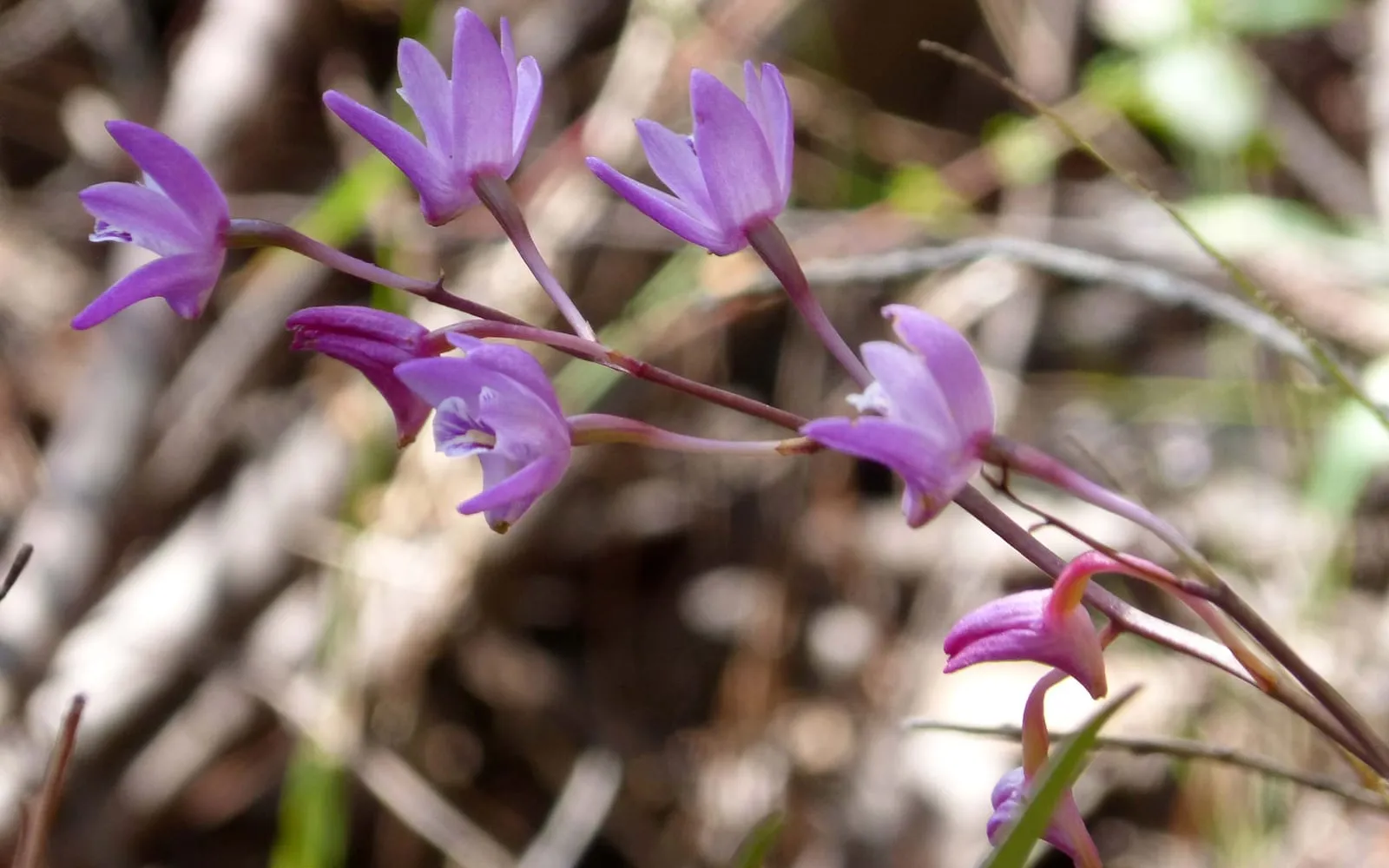
Flower spikes arise from near the top of mature canes in spring, holding several fragrant flowers in shades from pale to deep pink, occasionally white, each with a distinctive darker mark on the lip. A well-grown, densely clumped plant can produce a striking number of spikes simultaneously across its many canes.
Where it is from
Exposed rock faces and, less often, tree branches across a stretch of eastern Australia, where it experiences intense sun, real day-to-night temperature variation and a distinct dry season, conditions much harsher than the humid, sheltered forest most other commonly grown orchids come from.
That exposed, rocky origin explains both the plant’s unusual toughness and its need for very sharp drainage in cultivation; roots adapted to clinging to bare rock rot quickly in a compost mix that holds too much moisture around them.
How it grows
New canes form each year at the base of the expanding clump, and because this species tolerates and even benefits from crowded conditions, a clump left undisturbed for several years becomes an increasingly dense mass of canes at various stages of maturity, with the oldest, leafless canes still contributing stored reserves to the plant as a whole.
Flowering is closely tied to how well the plant has experienced its seasonal cycle, particularly a cool, dry winter rest; a plant kept warm and watered uniformly through the year tends to produce vegetative growth, sometimes even small plantlets called keikis along the canes, rather than flowers.
Through the seasons
Spring is the main flowering period, with fragrant pink flowers opening from mature canes across the clump.
Summer is the main growing season, with new canes developing. Water regularly, allowing the compost to dry between waterings, and feed every second watering.
Autumn growth slows as temperatures drop; begin reducing watering in preparation for the winter rest.
Winter provide a distinctly cool, largely dry rest, protecting the plant from any hard frost while still allowing it to experience real seasonal cold, which is central to reliable spring flowering.
Care difficulty
Difficult in terms of consistently triggering good flowering, though the plant itself is remarkably tough and hard to kill outright. The main skill is resisting the urge to repot, divide or overwater a congested clump, since this species performs best when left crowded and given a clear seasonal cycle rather than uniform warmth and moisture year round.
Watering
Water thoroughly during the growing season, allowing the compost to dry out fully between waterings, since this species tolerates drought far better than excess moisture at the roots. Reduce watering sharply over winter, keeping the compost close to dry, in keeping with the cool, dry rest this species needs to flower well.
Warning signs, diseases and pests
Scale insects and mealybug can colonise the densely packed canes, where they are easily overlooked in a crowded, mature clump, and are treated with careful manual removal or a horticultural soap for persistent infestations. Spider mites occasionally appear in warm, dry air, showing as fine speckling on the leaves.
Small plantlets, called keikis, sometimes develop along a cane instead of flowers, particularly on a plant kept too warm and wet through what should be its winter rest; this is not harmful to the parent plant and the keikis can be left in place or removed once they have developed their own roots to grow on as new plants.
Growing environment
Bright light with several hours of direct sun suits this species far better than the shadier conditions many other orchids prefer, reflecting its exposed rocky origin. Very free-draining compost, or mounting on rock or bark, is essential, and moderate rather than high humidity is generally adequate given the plant’s tolerance for drier air than a typical rainforest epiphyte.
Feeding
A balanced orchid fertiliser at quarter strength, applied every second watering during active growth, supports steady cane production. Stop feeding entirely during the winter rest, since the plant takes up little to nothing during this dry, cool period.
Troubleshooting
The plant produces canes and even small plantlets but few or no flowers. Almost always a winter that was too warm or too wet. Provide a cool, largely dry rest and expect improved flowering the following spring.
Small plantlets have appeared along a cane. These are keikis, a normal response in this species when conditions have not been distinctly seasonal enough to trigger flowering instead. They can be left in place or removed once rooted to grow on as separate plants.
A congested clump is spilling out of its pot. This is normal and generally tolerated well by this species; repot only when strictly necessary, since disturbing an established clump tends to set back flowering for a season or more.
Canes look shrivelled despite regular watering. Check that the compost is draining sharply enough between waterings, since this species’ roots are adapted to rock and rot easily in compost that stays too wet, paradoxically producing symptoms that can look like underwatering.
Pink Rock Orchid problem guides
Not sure what is wrong? See the common houseplant pests guide.