
Houseplant
Ecuador Philodendron
Philodendron verrucosum
Also known as Philodendron verrucosum, Verrucosum
How to grow Philodendron verrucosum, the Ecuador philodendron, with velvety heart leaves, wine-red backs and bristly stalks. It needs humidity.
At a glance
- Difficulty
- Moderate
- Water
- When the top few centimetres of mix have dried
- Light
- Bright indirect light
- Temperature
- Warm, 18 to 29 deg C; keep above 16 deg C
- Humidity
- High, above 60 per cent
- Hardiness
- USDA 10-12, RHS H1b, hardy to 16 C
- Type
- Evergreen climbing perennial
- Height
- 2 to 3 m with support
- Native to
- Central America, Northern South America
A tender climber from the cool, humid cloud forests of the northern Andes and Central America. It cannot take frost and stalls under about 16 deg C, and above all it needs the near-constant damp air of its mountain home. Dry rooms damage the velvet leaves faster than anything, and a cold, sodden pot rots the roots.
Hardiness zones describe winter cold alone. Summer heat, humidity, rainfall and the length of the growing season decide as much, so treat the range as the outer limit rather than as a recommendation.
Toxic if eaten
- Do not eat
- All parts, which contain calcium oxalate crystals
- Harm from
- Eating it and handling it
- Affects
- People, cats and dogs
The leaves, stems and sap all contain the arum family's calcium oxalate crystals, sharp microscopic needles that irritate soft tissue. A mouthful can make the lips, tongue and throat burn and swell, with heavy dribbling and, in a pet, retching; the sap can redden skin and sting eyes too. Cats and dogs are on the ASPCA's warning list for Philodendron. Because irritation starts at once, few swallow enough to be badly hurt, but the pain is real, so keep the plant beyond the reach of pets and toddlers and wash sap off at once.
Sources: ASPCA toxic and non-toxic plants, RHS potentially harmful garden plants
About
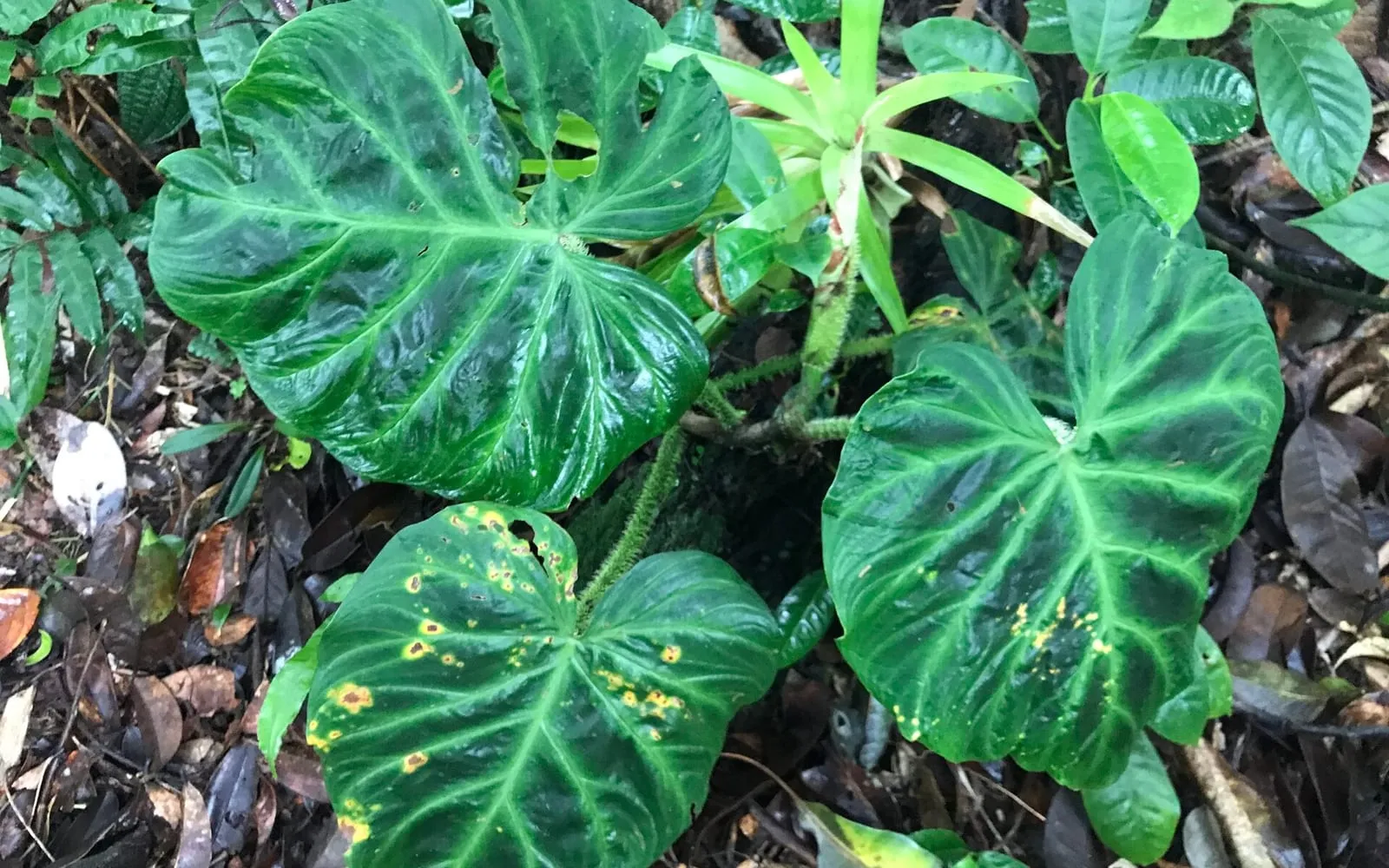
Ecuador philodendron is a velvet-leaved climbing philodendron. Its large heart-shaped leaves are deep, iridescent green with vivid pale-green veins, and the undersides are rich wine-red. The leaf stalks carry soft reddish scales, the verrucose texture behind the botanical name.
Like other climbing philodendrons, it makes its best leaves when it has height. Give it a moss pole and the leaves usually grow larger and more strongly coloured than they do on a trailing plant.
It comes from wet cloud forest on the flanks of the Andes and through Central America, and that origin makes humidity more important than it is for many philodendrons. In a humid, warm, softly lit spot it grows well; in ordinary dry room air the leaf edges brown and the plant struggles.
Appearance and character
The leaves are the main attraction, big and heart-shaped, velvety deep green above with bright pale veins, and flushed maroon to wine-red on the reverse.
The stalks identify it close up, with soft, hair-like reddish scales instead of the smooth stalks of most philodendrons.
It climbs by gripping a damp pole with aerial roots and can reach two to three metres with support. The largest, reddest-backed leaves come with height.
The flower is a plain green arum hood and is almost never seen on an indoor plant. The foliage is the main reason to grow it.
Where it is from
Philodendron verrucosum grows in the humid cloud forests of Ecuador, Colombia, Costa Rica and nearby, climbing mossy trunks in filtered light where the air rarely dries out. Cool, wet, constantly humid air is its native weather.
That cloud-forest habitat is why humidity matters here more than for most common philodendrons. Give it warmth, damp air, gentle light and a mossy pole, and it grows well. Let the air dry and the velvet leaves can crisp at the edges within days.
How it grows
It climbs in warm-season flushes, with aerial roots attaching to the pole and each new leaf often larger than the last. Growth slows in winter. Warmth, damp air and a support keep it growing.
Pot it in a coarse, quick-draining aroid mix of bark and perlite with a little compost, and stand a mossy pole for it. Wet the pole when you water, and water the compost once the top few centimetres have dried, always letting it drain freely.
Hold the room above about 16 deg C, keep the air humid, and give bright light out of direct sun. Avoid cold draughts and dry heat. Train the stem onto the pole so its mature leaves appear.
Propagate from stem cuttings, each with a node and, if you can, an aerial root, rooted in a humid, airy medium.
Through the seasons
Spring starts new climbing growth as light lengthens. Repot if needed, re-moss the pole, and begin feeding.
Summer is when the biggest, reddest leaves usually appear. Keep it warm, very humid and lightly but steadily watered, and feed monthly.
Autumn slows growth as the days shorten. Ease off the feed and let the mix dry a touch more, but keep the humidity high.
Winter is a rest in dimmer, drier, heated air. Keep it warm, humid and only lightly watered, away from draughts.
Care difficulty
Moderate, and fussier than most philodendrons mainly because it needs damp air. With warmth, high humidity, soft light and a pole it grows well. It struggles in dry room air, which browns the leaf edges, in cold, wet compost, which rots the roots, and in low light, which keeps the leaves small. A glass case or a very humid room takes most of the difficulty away.
Watering
Once the top few centimetres of the airy mix feel dry, water so the roots are moistened right through and the excess drains away. The open mix should never stay wet, since roots left cold and soggy in weak light soon rot.
Keep the pole damp for the climbing roots, and pay as much attention to the air as to the pot, since humidity is critical for this species. Water less in winter and empty the saucer.
Warning signs, diseases and pests
Crisp, browning leaf edges are the usual problem and nearly always mean the air is too dry. Raise the humidity with a case, a humidifier or close grouping, because this cloud-forest plant needs more moisture in the air than its relatives.
Warm, dry air also brings spider mites, which speckle the velvet and spin webs along the undersides. Raise the humidity, wipe the leaves over, and act early.
Cold, waterlogged compost rots the roots, with the big leaves yellowing and collapsing over a soft base. Move it to a fresher, open mix, cut the watering, and hold the warmth.
Growing environment
Bright but indirect light suits it, the sort of broken light it gets under cloud-forest canopy. Direct sun scorches the velvet, and deep shade slows it.
High humidity is essential for this plant, more so than for most philodendrons here. Push it past sixty per cent with a case, cabinet, humidifier or pebble tray, hold the warmth above about 16 deg C, and keep it clear of cold draughts.
Pot it in a chunky aroid mix against a damp moss pole, in a warm, very humid, softly lit spot. A glass case or a humid plant room suits it far better than an open shelf.
Feeding
Give a diluted balanced liquid at half strength once a month in spring and summer, to support the large velvet leaves. Taper it in autumn and stop through winter.
Weak feeding protects the fine roots, and an occasional flush of plain water rinses out the salts. A plant just repotted draws on the fresh mix for its first weeks.
Troubleshooting
The leaf edges keep crisping and browning. Dry air, the common problem with this cloud-forest species. Raise the humidity with a case or humidifier, since it needs more than other philodendrons.
The new leaves are small. The usual causes are no support or too little light. Give it a damp pole and brighter indirect light, and the leaves grow larger with height.
The velvet leaves look dull and speckled. Spider mites, drawn to warm, dry air. Mist up the humidity, wipe the leaves gently, and treat them before they spread.
The base is soft and the leaves are yellowing. Root rot from cold, wet compost. Repot into fresher, airier mix, ease off the water, keep it warm, and root a healthy tip if the crown has rotted.
Is it safe with pets and children? No. Every part holds the family’s calcium oxalate needles, which burn the mouth when they are chewed, so site it beyond a pet or toddler and rinse off any sap at once.
Ecuador Philodendron problem guides
Not sure what is wrong? See the common houseplant pests guide.