
Edible
Dragon Fruit
Selenicereus undatus
Also known as Night-Blooming Cereus, Hylocereus undatus
How to grow dragon fruit, Selenicereus undatus. Why the flowers open after dark and fade by morning, forcing same-night hand pollination, the second plant many varieties need to fruit at all, and the forest habitat that makes this cactus prefer some shade.
At a glance
- Difficulty
- Easy
- Water
- When the compost has dried out, roughly weekly in a hot summer
- Light
- Bright light, some direct sun; too much intense midday sun scorches the stems
- Temperature
- Above 10 deg C; ideally kept well clear of that minimum
- Hardiness
- USDA 10-11, RHS H1c, hardy to 0 C
- Type
- Evergreen climbing cactus, fruiting for many years
- Height
- 5-10 m given a tall support
- Native to
- Central America, Mexico
A tropical and subtropical forest cactus rather than a desert one, used to warm, humid conditions with some shade rather than the full, unbroken sun most cacti tolerate. It has no meaningful frost tolerance and is grown outdoors year round only in essentially frost-free climates, brought under cover elsewhere for winter or grown permanently as a container plant indoors or in a greenhouse.
Hardiness zones describe winter cold alone. Summer heat, humidity, rainfall and the length of the growing season decide as much, so treat the range as the outer limit rather than as a recommendation.
Not known to be toxic
Dragon fruit is a widely eaten commercial crop and carries no toxin; it does not appear on the ASPCA or RHS lists of harmful plants. Like many cacti, the stems carry spines or spine clusters that can cause a physical puncture wound to skin or, in a pet, to the mouth if chewed, which is a mechanical hazard rather than a chemical one and is worth keeping in mind when placing a plant with real reach in a home with a curious cat or a crawling toddler. The ripe fruit itself is entirely safe to eat and is sold and eaten worldwide with no reported toxicity concerns.
Sources: RHS potentially harmful garden plants, ASPCA toxic and non-toxic plants
About
Dragon fruit is a climbing cactus grown for its edible fruit and large night-opening flowers. The flowers usually open after dark and fade by the next morning, so hand pollination has to be done the same night if natural pollinators are absent.
The plant grows as long, three-angled stems that cling to a support with aerial roots. It is a tropical forest cactus rather than a desert cactus, so it needs warmth, bright light, a sturdy support and more moisture than many people expect from a cactus.
Appearance and character
Stems are thick, fleshy and three-angled in cross-section, bright to deep green, with shallow, wavy margins bearing small clusters of short spines at intervals along each edge.
Aerial roots emerge along the stems wherever they contact a support, clinging tightly to bark, trellis or a moisture-retentive climbing pole, which is how the plant scales trees and structures in the wild without any soil contact along most of its length.
Flowers are enormous, funnel-shaped and white, opening only at night and lasting a single evening before closing and beginning to fade by morning, carrying a strong, sweet fragrance that draws night-flying pollinators.
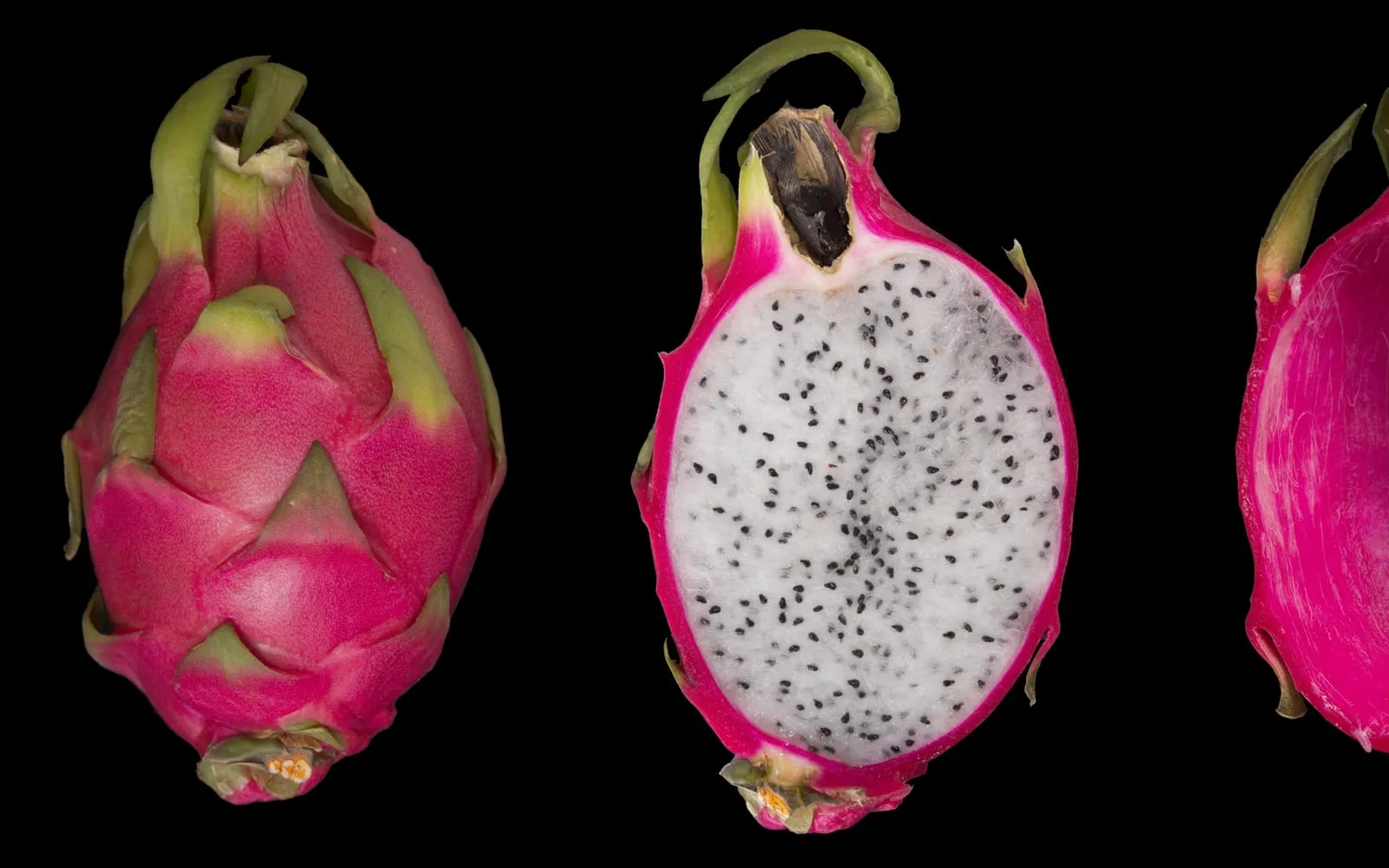
Fruit follows successful pollination, oval and covered in leaf-like bracts, with pink or yellow skin depending on variety and white or deep magenta flesh studded with tiny black seeds, ready to pick around a month after flowering.
Where it is from
Selenicereus undatus, long known as Hylocereus undatus, is native to Central America and Mexico, growing as an epiphytic to semi-epiphytic climber in tropical forest, scrambling up trees and rock faces and rooting into leaf litter and bark crevices rather than growing in open desert soil the way many cacti do.
That forest origin, rather than a desert one, explains why the species tolerates and even prefers dappled light rather than the harshest full sun, and why it grows better with more humidity and organic matter around its roots than a typical desert cactus would.
It has since been carried around the world as a commercial crop, and most fruit sold today comes from large-scale plantations in Vietnam and other parts of Southeast Asia rather than from its native range, a striking case of a crop plant’s commercial centre shifting far from where the species originated.
How it grows
Plant in a free-draining cactus compost, in a large pot or in the ground in a climate warm enough for it to stay outdoors year round.
Provide a sturdy, tall support from the start, since the plant needs something substantial to climb, root into and eventually cascade down from; a stout post wrapped in coir or a section of tree trunk works well, giving the aerial roots something to grip.
Grow at least two genetically different plants, or two different cultivars, for reliable fruiting, since many dragon fruit varieties are self-incompatible and need cross-pollination from a different plant rather than fertilising themselves. Where only one plant is grown, hand-pollination between flowers on the same night they open, using a soft brush, can sometimes substitute for a second plant or a natural pollinator.
Hand-pollinate after dark while the flower is open, transferring pollen from the male anthers to the female stigma with a soft brush, since the natural pollinators, moths and bats, are often absent in a garden or greenhouse setting far from the plant’s native range.
Through the seasons
Spring is the start of active growth after any winter slowdown. Resume regular watering and feeding as new growth appears.
Summer brings the main flowering and fruiting season, with flowers opening on warm nights and fruit developing over the following month.
Autumn slows growth as temperatures and light levels drop.
Winter is a rest. Water sparingly and keep the plant above its minimum temperature; growth largely pauses until spring returns.
Care difficulty
Easy in terms of general cultivation, since the plant tolerates a wide range of conditions and needs comparatively little routine care once established with a good support to climb. The real skill lies in getting fruit rather than healthy stems alone. Flowers open only at night, close by morning, and often need hand-pollination or a second plant to set fruit reliably, none of which is obvious from looking at a plant in a nursery pot.
Watering
Water when the compost has dried out, typically weekly in a hot summer and considerably less often in winter. Water thoroughly, then let the compost dry out again before the next watering.
It tolerates missed waterings well, being a cactus at heart despite its climbing habit, but a compost kept constantly wet leads to stem and root rot fairly quickly, so err on the side of underwatering rather than overwatering if in doubt.
Warning signs, diseases and pests
Mealybug hides in the joints between stem segments, showing as small white, cottony tufts. Wipe it away with a cotton swab dipped in alcohol.
Scale insects appear as small, flat bumps on the stems, treated the same way as mealybug.
Stem rot follows compost kept too wet, showing as soft, discoloured patches on the stems that spread if not addressed. Cut back to firm, healthy tissue, let the cut ends callus, and reduce watering frequency afterward.
Sunscald appears as pale, bleached or scarred patches on stems that were moved suddenly from shade into strong, direct sun. Acclimatise a plant gradually to brighter light over a week or two rather than moving it outdoors or to a sunnier spot all at once.
Growing environment
Bright light with some direct sun suits it well, though intense, unfiltered midday sun, particularly on a plant not acclimatised to it, can scorch the stems; dappled or filtered light through the hottest part of the day is closer to its native forest conditions.
Keep it above 10 deg C, and well above that for the best growth and flowering; it has no frost tolerance and even a light frost causes serious damage.
Humidity above what a typical desert cactus prefers suits it well, reflecting its forest rather than desert origins, though it is not as demanding on this point as many tropical houseplants.
Provide a tall, sturdy support from the outset, since retraining an established plant onto a new structure later is far harder than starting it right.
Feeding
Feed monthly through the growing and flowering season with a cactus and succulent fertiliser, switching to a fertiliser higher in potassium relative to nitrogen once the plant is mature and flowering, which supports fruit development over leafy growth.
Stop feeding in winter, when growth has largely paused and the plant has little use for extra nutrients.
Troubleshooting
It flowers but never sets fruit. Almost certainly a pollination problem. Many varieties need a second, genetically different plant for cross-pollination, or hand-pollination after dark while the flower is open, since the natural night-flying pollinators are rarely present in a garden setting.
A flower opened and had already closed by the time I checked the next morning. This is normal. The flowers open and close within a single night, so pollination, whether by hand or by a natural pollinator, has to happen during that window or the chance is lost until the next flower opens.
The stems have pale, scarred patches after being moved outdoors. Sunscald from a sudden move into strong sun. Acclimatise the plant gradually over one to two weeks next time, starting in shade and increasing sun exposure step by step.
Sections of stem have gone soft and discoloured. Likely stem rot from overwatering. Cut back to firm, healthy tissue, let the cuts callus over for a day or two, and water less often going forward.
Can I grow it indoors year round without ever putting it outside? Yes, provided it gets bright light and, ideally, some hours of direct sun through a window; it flowers less reliably indoors than in a bright greenhouse or outdoors in a warm climate, but it grows and survives well as a houseplant given a tall support to climb.