
Outdoor plant
Carnation
Dianthus caryophyllus
Also known as Clove pink, Gillyflower, Dianthus
How to grow Dianthus caryophyllus. The clove scent breeding lost and how to get it back, why the stems snap at the joints, and the difference between border and perpetual types.
At a glance
- Difficulty
- Moderate
- Water
- Weekly in dry summer weather, at the base
- Light
- Full sun, six hours minimum
- Temperature
- Hardy to about -10 deg C. Border types survive most temperate winters
- Hardiness
- USDA 5-9, RHS H5, hardy to -15 C
- Type
- Short-lived evergreen perennial
- Height
- 30-80 cm depending on type
- Native to
- Rocky ground in the Mediterranean, probably around Greece and Italy
- Best month
- July in the Northern Hemisphere, January in the Southern Hemisphere
Winter wet kills far more plants than winter cold. On sharp drainage it takes -15 C, and at the crown in heavy wet ground it rots several degrees above that, so grit, a raised bed or a gravel mulch under the collar buys more than a fleece does. It wants alkaline soil and full sun, and it grows poorly in shade or acid ground.
Hardiness zones describe winter cold alone. Summer heat, humidity, rainfall and the length of the growing season decide as much, so treat the range as the outer limit rather than as a recommendation.
Every month named in this guide is for the temperate Northern Hemisphere. If you garden in the Southern Hemisphere, shift each one by six months, so July becomes January. Closer to the equator the wet and dry seasons matter more than the calendar, and the shift stops being a useful guide.
Skin irritant
- Safe to eat
- The petals, with the bitter white heel removed
- Do not eat
- The foliage and stems
- Harm from
- Eating it and handling it
- Affects
- Cats, dogs and people
The ASPCA lists Dianthus caryophyllus as toxic to cats and dogs, causing mild gastrointestinal upset and mild dermatitis. The effect is vomiting or diarrhoea after a mouthful of foliage rather than anything more serious, and the sap can irritate skin on people who handle the plants a great deal, which is a recognised occupational complaint among commercial growers and florists. The petals themselves have a long culinary history. Clove pinks flavoured wine and ale in Britain for centuries, which is where the old name sops-in-wine comes from, and the petals appear in modern cooking as a garnish and in syrups. Remove the bitter white heel at the base of each petal before using them. Only use petals from plants you have grown without pesticide, since florist's carnations are treated as a cut flower crop rather than a food one.
Sources: ASPCA (Carnation, Dianthus caryophyllus), RHS potentially harmful garden plants
About
The carnation you buy in a supermarket has almost no smell. The carnation your great-grandmother grew smelled powerfully of cloves, which is why the plant was called the clove pink and why it was used to spice wine.
Breeding is what happened in between. A century of selection for long straight stems, uniform colour, and a vase life measured in weeks took the scent with it, because the traits are not linked and nobody was selecting for perfume.
Getting it back means choosing the older forms. Look for the border carnations and old clove-scented pinks rather than the perpetual-flowering types bred for the cut flower trade. Cultivars such as ‘Gina Porto’ and the old clove pinks still carry it, and a warm evening near a group of them is the point of growing the plant.
Appearance and character
Narrow grey-green leaves, almost grassy, in opposite pairs along stems that are noticeably swollen at each joint. Those swollen nodes give the genus its character and are where the stems snap when handled roughly.
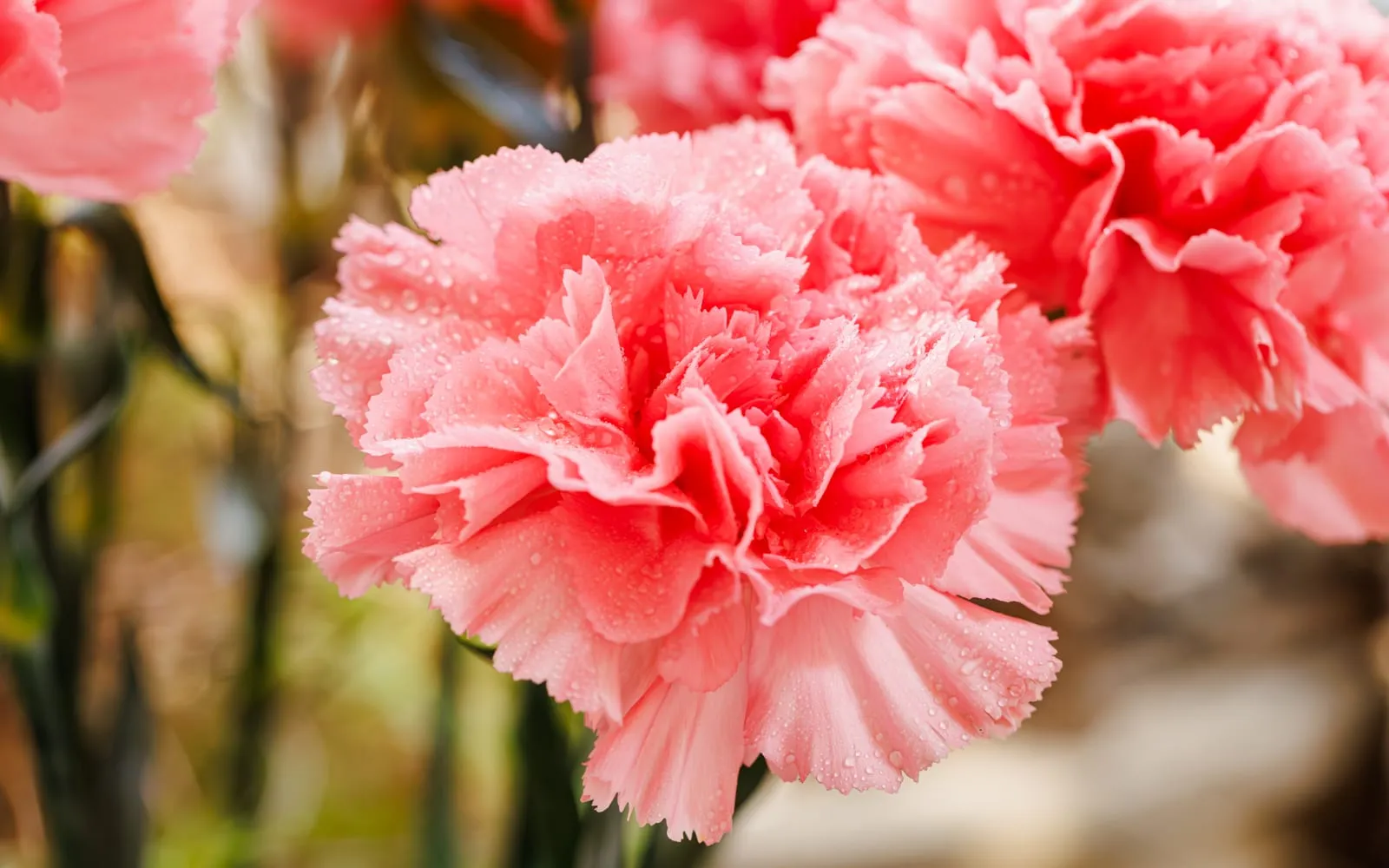
Flowers are double, densely packed with fringed or toothed petals, and sit in a tubular green calyx. Colours run through white, pink, red, salmon, apricot, yellow and purple, with picotee edges and stripes in the fancier forms.
Border carnations reach 40 to 60 cm, flower once in a heavy flush in July, and are hardy garden plants.
Perpetual-flowering carnations reach 80 cm or more, flower nearly all year under glass, and are grown as a greenhouse crop rather than a border plant.
The scent is a warm clove-and-pepper note, strongest in the evening and in warm weather.
Foliage is evergreen, so the plant makes a grey-blue tussock through winter.
Where it is from
Rocky ground around the Mediterranean, most likely originating in Greece and Italy, though it has been in cultivation for over two thousand years and its exact wild origin is uncertain.
Mediterranean limestone is the clue that matters. This plant wants sun, sharp drainage and alkaline soil, and it grows poorly on acid ground and badly on wet clay.
Summers there are hot and dry and winters are cool and wet but never waterlogged, because the ground is stony and drains fast.
The limiting factor is winter wet rather than cold. A carnation in free-draining soil survives -10 deg C without trouble, and the same plant in heavy clay dies at -2 deg C with its roots in water.
Full sun also drives the scent. The volatile oils are produced in proportion to warmth, so a plant in shade smells of very little even if the cultivar is a good one.
How it grows
A short-lived evergreen perennial. Individual plants last three or four years before going woody, bare at the base and shy of flowering.
That short life is worth planning for. Take cuttings every second year so you always have young plants coming on, and treat the parent as expendable.
Flower stems rise from the basal tussock, branching at the swollen nodes. Border carnations flower in one main flush in July, with a lighter second flush in September if deadheaded.
Cuttings, traditionally called pipings, are taken in summer. Hold a non-flowering shoot at the fourth or fifth node and pull sharply upward, and it separates cleanly at the joint. Push the piping into gritty compost and it roots within three or four weeks.
Layering works too, pegging a low stem into the soil with a nick in the underside.
Seed is available and gives variable results, which suits a border but not a particular cultivar.
Through the seasons
Spring brings new growth from the base. Cut back any straggly stems, feed as growth starts, and plant out new stock. Stake the taller border types early.
Summer is the flowering season, from late June through July. Deadhead promptly. Take cuttings in July while non-flowering shoots are available.
Early autumn may give a second lighter flush if the plant was deadheaded. Stop feeding by the end of September.
Winter needs drainage rather than warmth. The foliage stays through frost. Clear fallen leaves off the crowns to prevent rot, and avoid mulching over the centre of the plant.
Care difficulty
Moderate. The plant asks for little attention and a great deal from its position, and the two get confused.
Wet soil is the main killer. Carnations rot at the crown in a wet winter on any ground that holds water. Plant on a slope, in a raised bed, in a gravel garden or in a pot, and work grit into heavy soil before planting.
Acid soil is the second problem, and it shows as weak yellowing growth and poor flowering. Add garden lime if a soil test shows a pH below about 6.5.
The third is the short lifespan, which catches people out. A carnation that has gone woody and stopped flowering after four years has not failed; it has finished. Replace it from cuttings.
Watering
Water weekly in dry summer weather, giving a moderate soak at the base.
Water the soil rather than the foliage. Wet leaves in still air encourage rust, which is the disease most likely to spoil the plants.
Avoid watering in autumn and winter. Established plants need nothing, and wet crowns in cold weather rot.
Container plants need more regular watering through summer and must never stand in a saucer of water.
Established border carnations tolerate drought well. Under-watering is rarely the problem, and over-watering frequently is.
Warning signs, diseases and pests
Orange-brown powdery pustules on leaves and stems are carnation rust, the most common disease. It spreads in damp still conditions. Remove affected growth, improve airflow, and stop watering overhead.
Whole shoots wilting and dying while others look healthy, with brown staining inside the cut stem, is fusarium wilt. There is no cure. Remove and destroy the plant and do not replant dianthus in the same soil.
Yellowing lower foliage with a soft brown crown means rot from winter wet.
Buds that fail to open, or split calyces with petals bursting out sideways, come from irregular watering or a sudden temperature swing. Splitting is common in the large-flowered types.
Aphids cluster on buds and growing tips and distort the flowers.
Red spider mite is a serious pest of plants under glass, leaving a stippled dusty leaf surface and fine webbing.
Plants going woody and bare at the base with few flowers have reached the end of their lives. Take cuttings and start again.
Growing environment
Full sun, six hours minimum. Shade gives weak stems, few flowers and little scent.
Free-draining soil is essential. Work in grit on heavy ground and plant slightly proud so water runs away from the crown.
Neutral to alkaline soil suits it. Add garden lime on acid soils. This is one of the few garden plants that positively prefers chalk.
Hardy to about -10 deg C in dry soil. Border carnations come through most temperate winters outdoors, and perpetual-flowering types need a frost-free greenhouse.
Space plants 30 to 40 cm apart. Airflow between them is the best defence against rust.
Stake border carnations in spring with thin canes or ring supports, since the jointed stems snap in wind and under the weight of the flowers.
Avoid mulching over the crown. A gravel mulch around the plant is better than compost.
Feeding
Feed fortnightly through the growing and flowering season with a high-potassium fertiliser such as a tomato feed.
Avoid high-nitrogen feeds, which give soft leafy growth, weak stems and greater susceptibility to rust.
A dressing of garden lime every couple of years on acid or neutral soils suits the plant and improves flowering.
Stop feeding at the end of September so growth hardens before winter.
Container plants need feeding through the whole season, since they exhaust their compost quickly.
Troubleshooting
Mine has no scent. Most likely the cultivar. A century of breeding for the cut flower trade removed the clove scent from most modern carnations. Look for border carnations and old clove-scented pinks, and site them in full sun, since warmth drives the perfume.
The stems keep snapping. They break at the swollen joints, which is normal for the genus. Support the plants with ring stakes or canes early in the season and handle the stems by the internodes.
Orange spots all over the leaves. Carnation rust. Remove affected growth, space the plants further apart, and water at the base rather than overhead.
It flowered well for three years and now it is woody with nothing on it. Ordinary lifespan. Carnations are short-lived. Take cuttings in July and replace the parent.
The buds split open at the side. Calyx splitting, caused by irregular watering or a sharp temperature change. Water more evenly. Some large-flowered cultivars do it whatever you do.
How do I take cuttings? In July, grip a non-flowering shoot at the fourth or fifth joint and pull sharply upward. It comes away cleanly at the node. Push it into gritty compost and keep it lightly moist.
Can I eat the petals? Yes, from plants you have grown yourself without pesticides. Pull the petals free and cut off the bitter white heel at the base. They were used to flavour wine for centuries. Do not eat florist’s carnations.
It died over winter. Almost certainly wet rather than cold. Improve the drainage, plant proud of the surrounding soil, and keep mulch off the crown.