
Pest
Earwigs and ants
Also called Earwig, Black garden ant, Forficula
Earwigs often eat aphids as well as soft petals, and ants protect greenfly for honeydew rather than eating the plant. Control is rarely needed unless flowers, fruit or aphid colonies are being protected.
At a glance
- Type
- Pest
- Cause
- Insect
- Severity
- Cosmetic
- Affects
- Garden plants, Herbs and edibles
- Active
- April to October
- Established in
- Worldwide
What you are seeing
- Ragged holes eaten out of dahlia and chrysanthemum petals, found in the morning
- Earwigs falling out of a cut flower when it is brought indoors
- Columns of black ants running up and down a stem or a trunk all day
- Fine crumbly soil heaped through a lawn, between paving slabs or over the surface of a pot
- A plant in a pot wilting because ants have nested in the dry compost around its roots
- Aphid colonies thriving on a plant that ants are visiting
- Soft fruit and ripe apples with earwigs inside existing damage
Before you treat anything
Earwigs cannot harm you. The pincers are used against other insects and the old story about ears is a story. Black garden ants do not sting, though the flying ants of a July afternoon alarm a great many people who are in no danger from them.
Two reputations, both largely undeserved
Earwigs and ants between them account for a great deal of garden anxiety and very little garden damage. In most gardens the correct response to both is to leave them where they are.
Earwigs
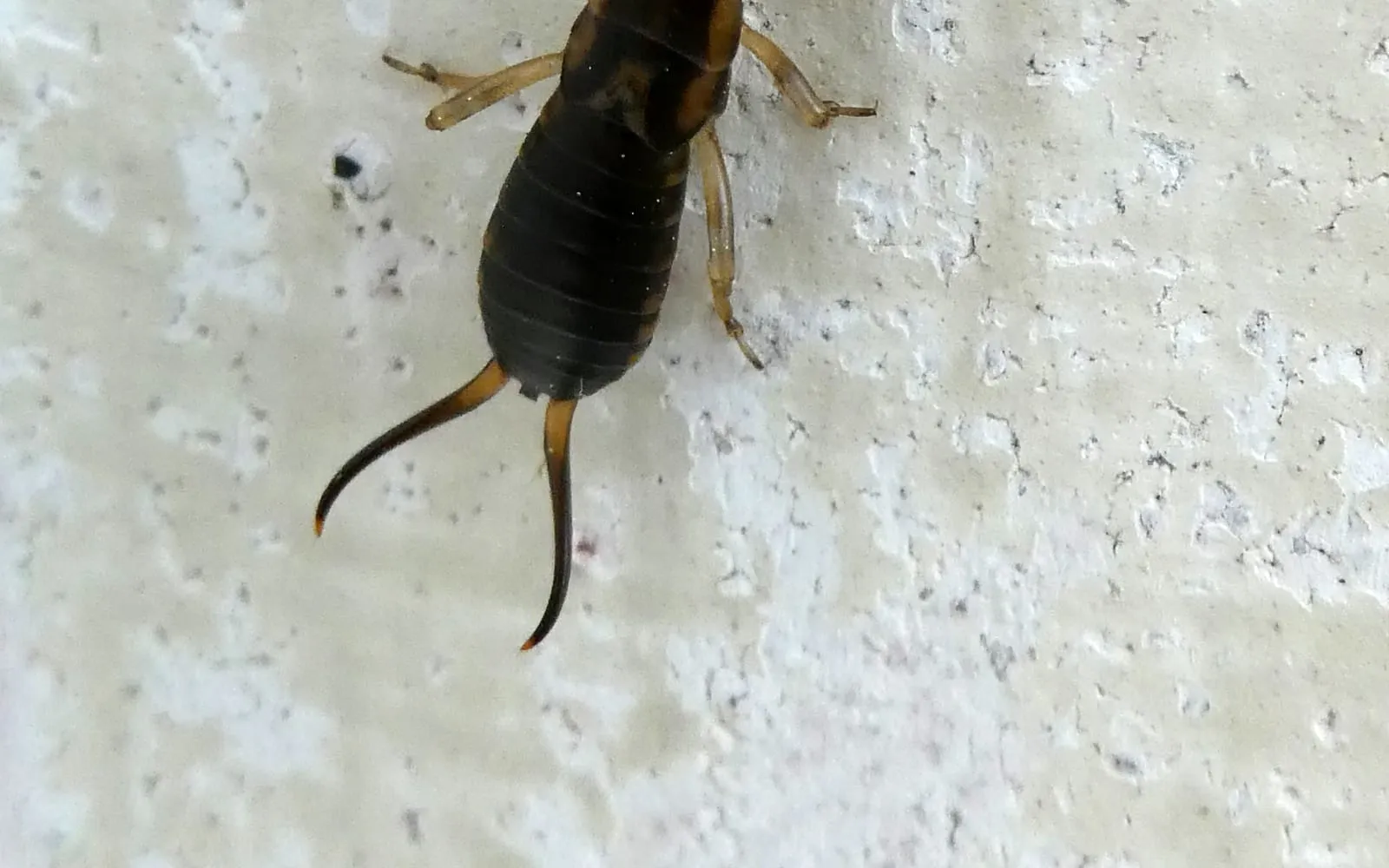
A shiny reddish-brown insect about 15 mm long with a pair of curved pincers at the rear end. It hides by day in anything dark and tight, which is why one falls out of a cut dahlia on the kitchen table, and feeds at night.
What it eats is mostly other insects. Aphids, woolly aphid, pear sucker, mites and the eggs of codling moth all feature heavily, and research in commercial orchards has repeatedly found earwigs to be among the most valuable predators an apple or pear tree has. Growers now put shelters up to encourage them.
They also chew petals, particularly on dahlias, chrysanthemums and clematis, and they will enlarge existing damage in soft fruit and ripe apples. On a plant grown for its flowers that matters, and it is close to the whole of the case against them.
The sensible response, where it matters at all, is to move them rather than kill them. An upturned pot stuffed with straw on a cane among the dahlias fills with earwigs by morning. Tip it out under the apple tree. The blooms are protected and the orchard gains.
The pincers cannot break human skin, and the name comes from an old belief about ears that has nothing behind it.
Ants
Ants do not eat plants. Nothing about an ant is equipped to.
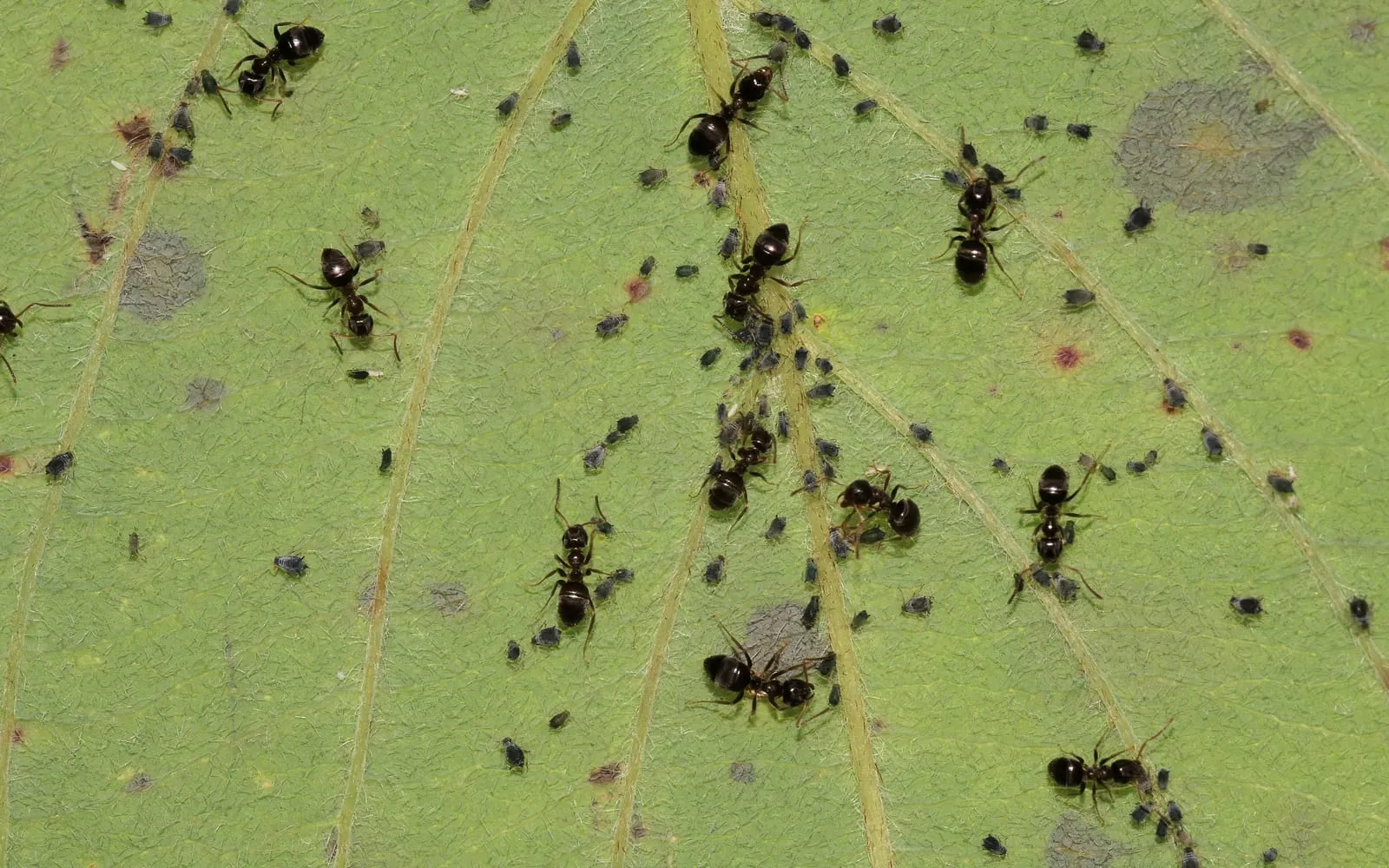
What they are doing on a stem is collecting honeydew, the sugary liquid that aphids, scale insects and other sap-suckers excrete. The relationship is a managed one: the ants take the honeydew, and in return they drive off ladybirds, lacewing larvae and hoverfly larvae that would otherwise be eating the aphids. Some species move aphids to better feeding sites and overwinter them in the nest.
The consequence for the gardener is real but indirect. A farmed aphid colony grows faster and lasts longer than one being predated, so the plant suffers more. The answer is to deal with the aphids, or to band the trunk so the ants cannot reach them, rather than to attack the ants.
Ants cause direct trouble in two places. Nesting in the dry compost of a container leaves roots in air pockets and the plant wilts, which a thorough soaking or a repot fixes. And nesting under paving undermines slabs and heaps fine soil into a lawn, which is a hard-landscaping problem rather than a plant one.
Set against that, they aerate soil, disperse seeds, and take large numbers of pest eggs and small caterpillars.
What to do about it
Leave earwigs alone everywhere except on show blooms, and trap and relocate them there.
Put an earwig shelter in the apple tree rather than trying to remove them from it.
When ants appear on a plant, look above them for the aphids and deal with those.
Grease band a fruit tree trunk to keep ants off the aphids in it.
Soak a pot that ants have nested in, or repot it.
Sweep out nests in paving rather than poisoning them.
Keep ant powder out of the borders.
What it gets mistaken for
Slugs and snails leave slime trails and rasp holes in foliage rather than petals.
Caterpillars leave dry pellets of frass and eat leaves.
Capsid bugs distort and perforate the newest leaves and are long gone by the time the damage shows.
Bird damage on flowers tears petals off rather than eating holes through them, and it happens in daylight.
Wasps eating ripe fruit make open craters, and the earwigs found inside those craters afterwards usually get the blame for a hole they did not make.
What to do, in order
Start here
Prevention, and the changes that stop the problem returning. Most of these pages should end at this tier.
- Leave the earwigs in the fruit trees
- Earwigs are among the most useful predators an apple or pear tree has. They work the bark and foliage at night taking aphids, woolly aphid, pear sucker, codling moth eggs and mites, and orchards that lose their earwigs get more of all of those. An earwig on an apple tree is doing you a favour and should be left there.
- Follow the ants to the aphids
- Ants do not eat plants. They climb a stem for the honeydew that sap-sucking insects excrete, and they defend those insects from ladybirds and hoverfly larvae in exchange, so a farmed aphid colony grows faster than an unfarmed one. Dealing with the aphids ends the ant traffic. Ant powder on a border does not, and it kills a good deal else.
- Water a pot whose compost has been colonised
- Ants nest in warm dry compost and the tunnelling can leave roots sitting in air pockets, which is why a colonised pot wilts. Stand it in water for an hour or two, repeat, and the colony moves out. Repotting works too.
- Take the wider view of both
- Ants aerate soil, disperse seed, and take large numbers of pest eggs and small caterpillars. Earwigs eat far more aphids than petals. A garden trying to be rid of either is spending effort against itself.
Then reach for a barrier
Netting, hand removal and water. Nothing here harms anything except the target.
- Trap earwigs off show blooms and move them
- Where dahlias or chrysanthemums are being grown for the flowers, invert a small flowerpot stuffed loosely with straw or newspaper on a cane among the plants. Earwigs shelter in it by day. Empty it each morning into the apple tree or a hedge rather than killing them, which protects the blooms and keeps the predator.
- Band a trunk to stop ants climbing
- Where ants are farming aphids up a fruit tree, a grease band or a sticky barrier around the trunk in summer keeps them on the ground and lets the ladybirds get on with it. Check nothing else bridges the barrier.
- Brush an ant nest out of paving rather than poisoning it
- Sweeping the heaped soil away regularly makes a site unattractive and the colony moves. Boiling water poured into a nest is sometimes suggested and it kills earthworms and everything else in that patch of soil, so it is worth avoiding in a border.
In pictures
Plants affected
Guides that name it among the problems to watch for. The list is the plants it is characteristic of rather than everything it will feed on.