
Edible
Chinese Yam
Dioscorea polystachya
Also known as Nagaimo, Shan yao, Cinnamon vine, Yamaimo
How to grow Dioscorea polystachya, the hardy yam that crops in a cool climate. Digging a tuber a metre long, growing it in a pipe instead, and keeping the bulbils under control.
At a glance
- Difficulty
- Moderate
- Water
- Through dry spells in the growing season
- Light
- Full sun to light shade
- Temperature
- Fully hardy, to about minus 20 deg C
- Hardiness
- USDA 5-9, RHS H6, hardy to -20 C
- Type
- Hardy herbaceous perennial climber from a deep tuber
- Height
- 3-5 m
- Native to
- China, Korea, Japan
- Best month
- April in the Northern Hemisphere, October in the Southern Hemisphere
It is the only yam hardy enough to grow outdoors in a cold climate, and that is exactly why it is a problem. Aerial bulbils drop, root and spread, and it is a listed invasive species across the eastern United States. Grow it where the bulbils can be gathered, and lift the tuber from a metre down.
Hardiness zones describe winter cold alone. Summer heat, humidity, rainfall and the length of the growing season decide as much, so treat the range as the outer limit rather than as a recommendation.
Every month named in this guide is for the temperate Northern Hemisphere. If you garden in the Southern Hemisphere, shift each one by six months, so April becomes October. Closer to the equator the wet and dry seasons matter more than the calendar, and the shift stops being a useful guide.
Skin irritant
- Safe to eat
- The tuber, raw or cooked, and the bulbils once cooked
- Do not eat
- The fresh sap, which irritates skin
- Harm from
- Eating it and handling it
- Affects
- People
The tuber is food and has been for a very long time. It is eaten raw in Japan as tororo, grated to a mucilaginous paste, and cooked across China and Korea, and NC State Extension lists Dioscorea polystachya without a toxicity section. It does not appear on the RHS list of potentially harmful garden plants and the ASPCA does not list it among plants toxic to dogs, cats or horses. The one thing to expect is skin irritation. The fresh sap makes many people's hands itch while peeling or grating, which is a well-known nuisance in Japanese kitchens and is dealt with by wearing gloves or rinsing the hands in vinegar water. Unlike several tropical yams, this species contains no compounds that need leaching or prolonged cooking to make it safe. It is a good idea to be certain of identification before eating any wild-dug yam, since other Dioscorea species are not edible raw.
Sources: NC State Extension, Dioscorea polystachya, RHS potentially harmful garden plants, ASPCA toxic and non-toxic plants
About
Chinese yam is the only yam that will crop outdoors in a cool temperate climate. The genus is tropical almost throughout, and this species comes from the cooler parts of China, Korea and Japan, survives minus 20 deg C as a dormant tuber, and produces a metre of edible root in a single cool summer. That combination has made it a favourite of people who like growing unusual food.
The tuber is the prize and the problem. It is club-shaped, white-fleshed and can run a metre straight down into light soil, which makes digging one out an excavation rather than a harvest. Growers get around it by planting into a buried length of drainpipe filled with sand, tipping the pipe out in autumn and lifting a clean straight tuber.
Grated raw, the flesh turns into a slippery white paste that Japanese cooking uses as tororo, poured over rice or noodles. Cooked it is mild and starchy and behaves like a potato with better manners. The vine that produces it is handsome, twining to four metres with heart-shaped leaves and small cinnamon scented flowers.
Appearance and character
The stems twine clockwise, thin and wiry, often flushed purple, climbing to three or four metres in a season on any support. They die back to the ground with the first frost and reappear in May.
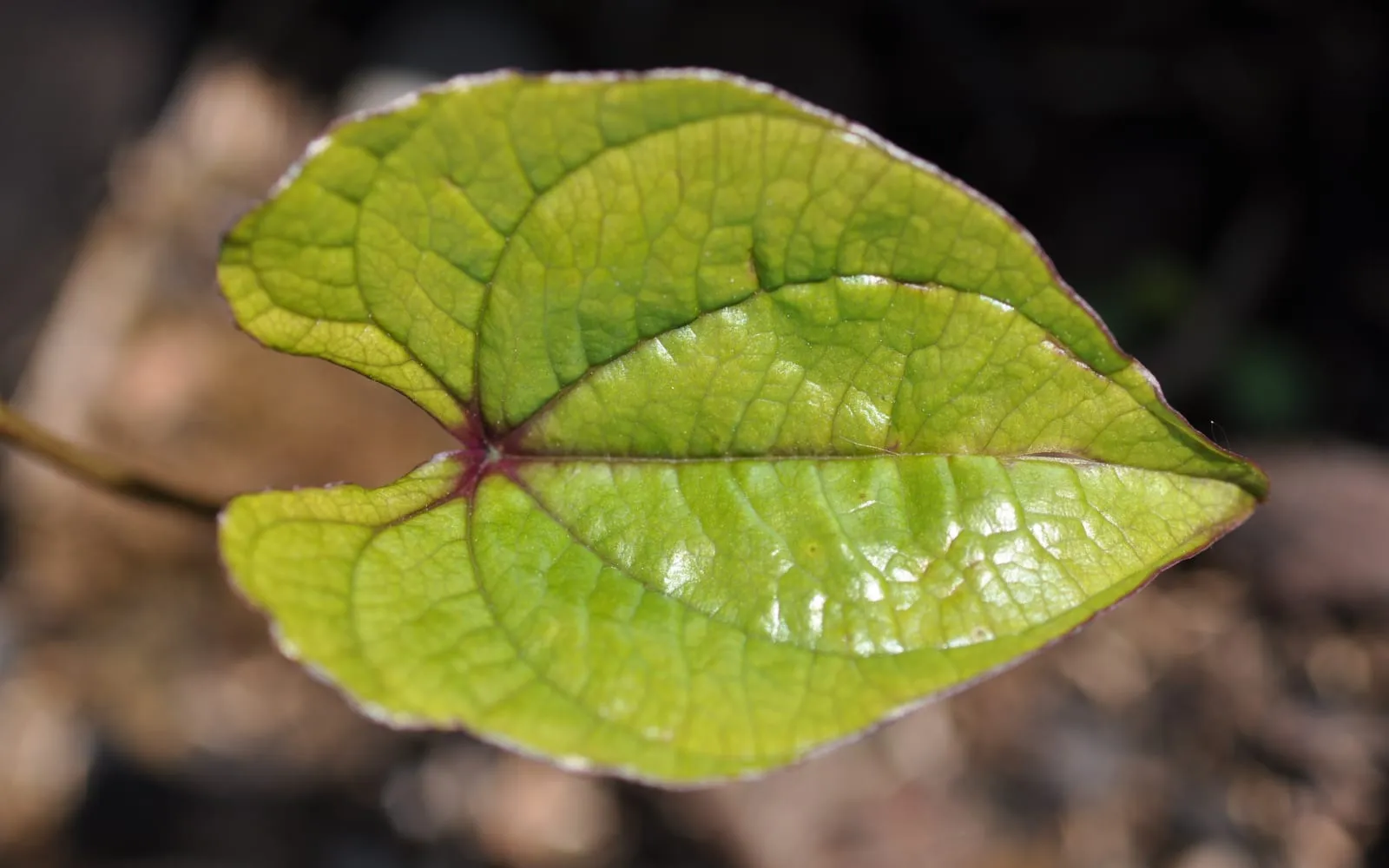
Leaves are the identifying feature. They are broadly heart-shaped to arrow-shaped with a deeply notched base and a drawn-out tip, glossy, 4 to 8 cm long, and mostly opposite on the stem, which separates the species from many relatives. Prominent veins run from the base to the tip.
Small greenish-white flowers appear in the leaf axils in summer, and their scent of cinnamon gives the plant one of its American names. Fruits rarely set outside its native range. What forms instead, in the leaf axils, are bulbils, small brown aerial tubers the size of a pea, which drop in autumn and grow into new plants.
Where it is from
The species is native to China, Korea and Japan, growing in scrub, on stream banks and in mountain woodland, and it has been cultivated in China for at least two thousand years under the name shan yao. It is both a food crop and one of the standard tonic items in Chinese medicine.
Its hardiness comes from that range, which extends well north into cold-winter country. The tuber sits deep enough to escape frost and the plant behaves as a herbaceous perennial rather than a tender one.
In the eastern United States it is a serious invasive weed, spreading by bulbils along waterways and smothering native vegetation, and it is listed as noxious in several states. Europe has seen nothing on that scale, though the mechanism is the same and is worth managing in a garden.
How it grows
Growth starts late. The vine emerges in May, well after the last frost in most gardens, then extends fast through June and July, and needs a support in place before it starts.
The tuber grows downward through the summer, replacing the previous year’s tuber rather than adding to it, so what you dig in autumn is one season’s growth. In deep light soil it runs a metre down. In heavy or stony ground it forks, stunts and becomes hard to lift whole.
Bulbils form in the leaf axils from August. Each is a complete plant in waiting, and they drop and root readily, which is both the easiest propagation method and the reason the species spreads where it is not wanted.
Through the seasons
Plant tuber sections or bulbils in April, 10 to 15 cm deep, into deeply dug sandy soil or into a buried pipe filled with sharp sand. Put a support in at the same time, since the vine climbs to four metres.
Shoots appear in May and climb hard through summer. Water in dry spells and feed with a potassium-rich liquid from July, which supports the tuber rather than the vine.
Collect bulbils in September if you want more plants, and pick up the rest to stop them rooting where they fall. The top dies down after the first frost. Lift tubers from October, or leave them in the ground over winter and dig as needed, since they are perfectly hardy.
Care difficulty
The growing is easy and the harvesting is not. A Chinese yam vine looks after itself once it is up and climbing, and the difficulty is entirely in getting a metre-long brittle tuber out of the ground in one piece.
Two approaches work. Plant into a pipe or a deep container of sand, which lets you tip the tuber out. Or dig a trench alongside the plant rather than trying to lift from directly above, and accept that you will break some.
The other consideration is the bulbils. They root where they land and a plant left to itself for a few years produces a colony. Collecting them in autumn takes ten minutes and prevents that.
Watering
Water through dry spells in June, July and August, which is when the tuber is bulking. A soak that penetrates deeply is worth more than frequent light watering, since the growing tip of the tuber may be 60 cm down.
The plant tolerates dry conditions once established and produces a smaller tuber for it. On light sandy soil, which is what it wants for shape, watering matters more than it would on loam.
Stop watering in September as the foliage yellows. Wet soil at harvest makes a brittle tuber harder to lift cleanly and encourages rot in stored roots.
Warning signs, diseases and pests
Slugs graze the emerging shoots in May and can set a plant back by weeks. Grit around the planting position and a check on damp evenings deal with it.
Red spider mite attacks plants grown under glass in a dry summer, showing as fine pale speckling on the leaves. Outdoor plants are rarely troubled by anything.
The real problems are physical rather than biological. A late May frost cuts the emerging shoots, and the plant regrows with a smaller tuber. Heavy stony soil forks and stunts the tuber. And waterlogged ground rots it, which is the one condition that kills the plant outright.
Growing environment
Full sun for the best crop, though the vine tolerates light shade and still produces. It needs a support, whether that is wires, a trellis, netting or an obliging shrub.
Soil is what determines the harvest. Deep, light, sandy and free of stones gives a long straight tuber. Clay, stones or a compacted layer at 30 cm all produce a forked stubby one. Growers who cannot offer that soil use pipes or deep containers of sand instead.
Hardiness is not a concern. The tuber survives minus 20 deg C in the ground and the plant reappears each May, which is why it can be left in the ground all winter and dug as needed.
Feeding
Dig plenty of well-rotted compost into the planting area the autumn before, avoiding fresh manure, which forks the tuber in the same way it forks carrots.
Feed with a potassium-rich liquid feed monthly from July, which supports tuber formation. High-nitrogen feeds produce a magnificent vine and a disappointing root.
In a pipe or a container of sand, feeding matters more, since sand holds nothing. A weekly dilute liquid feed through the growing season is appropriate there.
Troubleshooting
How do I harvest a tuber that goes down a metre? Plant into a buried length of drainpipe filled with sharp sand and tip it out in autumn, which is the standard trick. Otherwise dig a trench alongside the plant and work in from the side rather than lifting from above.
Is it hardy? Fully. The tuber survives minus 20 deg C in the ground, so it can be left in over winter and dug as needed.
What are the little brown balls in the leaf joints? Bulbils, which are aerial tubers. Each will grow into a new plant where it falls. Collect them in autumn for propagation and to stop the plant spreading.
Will it become a weed here? It is a serious invasive in the eastern United States, spreading by bulbils along rivers. A cool climate limits it, and the mechanism is the same, so collect the bulbils and do not plant it beside a watercourse.
Why does grating it make my hands itch? The fresh sap irritates skin, which is a familiar nuisance in Japanese kitchens. Wear gloves, or rinse your hands in water with a splash of vinegar.
Can I eat the bulbils? Yes, cooked. They are small and fiddly and taste like a floury new potato. Boil or roast them.
Why is my tuber forked and stubby? Stones, heavy soil or fresh manure. The tuber grows straight only in deep, light, stone-free ground, which is why the pipe method exists.