
Edible
Chaste Tree
Vitex agnus-castus
Also known as Monk's pepper, Agnus castus, Vitex
How to grow chaste tree, Vitex agnus-castus. The late-flowering blue spikes for a hot wall, pruning it hard each spring, and the monastery reputation behind its name.
At a glance
- Difficulty
- Moderate
- Water
- Weekly for the first two summers, then rarely
- Light
- Full sun, and a sunny wall where summers are cool
- Temperature
- Hardy to about -10 deg C. It cuts back in a hard winter
- Hardiness
- USDA 6-9, RHS H4, hardy to -15 C
- Type
- Deciduous shrub or small tree
- Height
- 2-5 m in a cool climate, more in a warm one
- Native to
- the Mediterranean, western Asia
- Best month
- August and September in the Northern Hemisphere, February and March in the Southern Hemisphere
It flowers on the current season's wood after a long hot summer, so a cool climate gives a healthy shrub and few flowers, and cutting it hard in spring makes the most of what heat there is. Winter cold kills it back and it shoots again from the base. Sharp drainage matters more than shelter.
Hardiness zones describe winter cold alone. Summer heat, humidity, rainfall and the length of the growing season decide as much, so treat the range as the outer limit rather than as a recommendation.
Every month named in this guide is for the temperate Northern Hemisphere. If you garden in the Southern Hemisphere, shift each one by six months, so August becomes February. Closer to the equator the wet and dry seasons matter more than the calendar, and the shift stops being a useful guide.
Edible, with limits
- Safe to eat
- The fruit, used as a peppery spice in small quantities
- Do not eat
- None in ordinary use, though the fruit is hormonally active
- Harm from
- Eating it
- Affects
- People
Chaste tree is not a poisonous plant and it appears on neither the RHS list of potentially harmful garden plants nor the ASPCA list. The fruit is used as a peppery spice and, far more widely, as a herbal preparation. The European Medicines Agency has assessed chaste tree fruit as a herbal medicine for premenstrual complaints. The relevant caution is that it acts on the hormonal system rather than that it is toxic: it affects prolactin release, and standard references advise against it in pregnancy and for anyone taking hormonal contraception or dopamine-related medication. Ordinary garden contact with the plant carries no risk, and the fruit used as a spice in cooking quantities is not the same thing as a standardised extract taken daily.
Sources: European Medicines Agency, Vitex agnus-castus, RHS potentially harmful garden plants
About
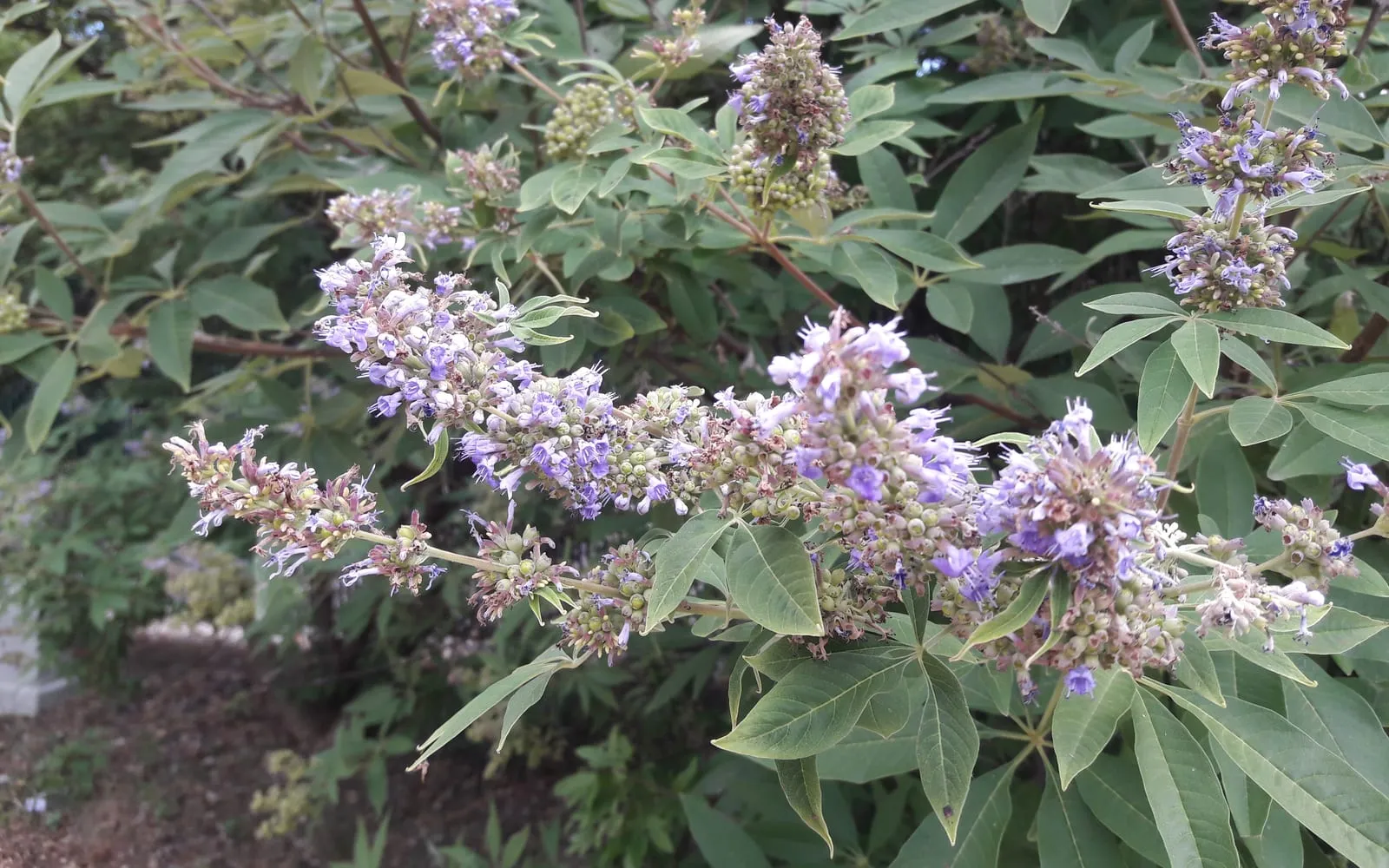
Chaste tree flowers in August and September, which is when a temperate garden most needs something new. The spikes are lavender-blue, held above hand-shaped aromatic leaves, and bees work them until the frosts.
Its name comes from a monastic reputation. The peppery fruit was believed to suppress desire, monks were said to use it for that reason, and monk’s pepper and agnus castus both preserve the idea. Whether it did anything of the sort is another matter; the fruit does act on the hormonal system, which is why it is still sold as a herbal preparation.
Growing it in a cool climate means giving it heat. It wants a south wall, sharp drainage and a hard prune each spring, and treated that way it will flower well in a mild district. Anywhere cooler it is a conservatory plant.
Appearance and character
An open upright shrub, 2 to 5 m in a cool climate and larger in a hot one, spreading with age into a broad crown.
Leaves are the recognition character. Divided like a hand into five or seven narrow pointed leaflets radiating from a single point, dark green above and grey felted beneath.
Flowers open from August to September in slender upright spikes 15 to 25 cm long at the shoot tips, in lavender-blue, occasionally pink or white in named forms.
Fruit is small, dark, hard and peppery, ripening in autumn and rarely doing so reliably where summers are cool.
The whole plant is aromatic. Crushed leaves smell sharply of sage and pepper.
Bark is grey-brown and the growth is soft and pithy at the tips, which is why young wood dies back in a hard winter.
Where it is from
Chaste tree is native to the Mediterranean and western Asia, growing along riverbanks, dry stream beds and coastal ground from Spain to Iran.
Greek writers describe it in detail. It appears in Homer, and the Athenian festival of the Thesmophoria used it for bedding, which is where the association with chastity begins.
Pliny and Dioscorides both record the belief that it suppressed desire, and that reading carried into medieval Europe, where monasteries planted it and the fruit was used as a pepper substitute.
The herbal trade kept it alive into the modern period. Chaste tree fruit extract is one of the more widely used herbal preparations in Germany and elsewhere for premenstrual complaints.
As a garden plant it arrived in Britain in the sixteenth century and has always been on the edge of hardiness here, grown against walls in the south and under glass in the north.
How it grows
Buy a plant, or take semi-ripe cuttings in late summer, which root readily in gritty compost with bottom heat.
Plant in spring rather than autumn, so the roots establish before the first winter.
Choose the hottest, sunniest, sharpest-drained position you have. A south-facing wall is the best outdoor site in a cool climate, and the reflected heat makes a real difference to flowering.
Add grit to heavy ground, or plant on a raised bed. Cold wet clay kills more of these than cold does.
Prune hard in spring, once new growth shows. Chaste tree flowers on the current season’s wood, so cutting the previous year’s growth back to two or three buds gives you stronger shoots and better spikes.
Do not prune in autumn. The old wood protects the plant through winter.
Mulch with gravel rather than compost, keeping the crown dry.
Expect it to cut back in a hard winter and to reshoot from the base. That is normal rather than fatal.
Through the seasons
Winter is bare wood and it looks dead until late. Chaste tree comes into leaf very late, often not until May, and gardeners write it off every spring.
Spring is pruning time, once growth shows in April or May. Cut last year’s wood back hard.
Early summer is rapid growth on the new shoots.
Late summer is flowering, from August, and it continues into September and sometimes October.
Autumn may ripen fruit in a hot year in the south. Leave the old wood on and do not prune now.
Care difficulty
Moderate in a mild district and difficult anywhere cooler, and the limiting factor is summer heat rather than winter cold.
Flowering depends on warmth. The plant needs a hot summer to ripen wood and set flower spikes, and in a cool northern garden it will grow and never flower well. A south wall is the practical answer.
Winter wet kills it. Sharp drainage matters more than shelter, and cold wet clay is the commonest cause of death.
Pruning is straightforward once understood. It flowers on new wood, so cut hard in spring and never in autumn.
Its very late leafing catches people out. A bare plant in April is normal, and plenty get dug up in the belief they are dead.
Beyond that it has few pests and needs little attention.
Watering
Water weekly through the first two summers while the plant establishes.
After that, water only in a genuine drought. It is drought tolerant once its roots are down.
Water thoroughly and infrequently rather than little and often.
Keep the crown dry over winter, which means drainage rather than reduced watering.
A container needs weekly watering in summer and should be kept on the dry side in winter. Use a large pot with gritty compost.
Do not water in autumn. Soft late growth is what the first frost destroys.
Warning signs, diseases and pests
Root rot in cold wet ground is the main killer. The plant fails to shoot in spring, or shoots weakly and collapses. Improve drainage before replanting.
Frost damage blackens the soft young wood in a hard winter. Cut back to live wood in spring and the plant usually recovers.
Scale insects appear on the stems in a warm sheltered position, showing as small brown limpets with sticky honeydew below. Rub them off or treat in the crawler stage.
Powdery mildew whitens the leaves on a crowded plant. Thin and improve airflow.
No flowers usually means too little sun and heat, or pruning at the wrong time. It flowers on new wood, so an autumn prune removes nothing but a spring prune improves the display.
A bare plant in April is normal. Chaste tree leafs out very late.
Yellowing leaves on chalk are usually waterlogging rather than a deficiency.
Growing environment
Full sun and as much heat as possible. A south-facing wall where summers are cool, and a conservatory or greenhouse border anywhere colder.
Sharply drained soil, poor to moderate in fertility. Grit worked into heavy ground, or a raised bed.
pH from 6 to 8. It grows on chalk and is not fussy.
Shelter from cold wind helps, and a warm wall provides both the shelter and the reflected heat.
It is a good late-season plant for pollinators, flowering in August and September when many gardens have finished.
In a cold or wet garden a large container under cover in winter is the realistic option, and the plant takes to pot culture reasonably well.
Feeding
Little is needed. Chaste tree grows on poor dry ground in the wild.
Mulch with gravel rather than compost, since compost against the base holds moisture where the plant does not want it.
A balanced feed once in late spring helps a young plant establish.
Avoid nitrogen. Soft growth flowers less and is what the first hard frost kills.
A container plant takes a balanced feed monthly through summer, stopping in August so the wood ripens before winter.
Potash in early spring is more use than nitrogen, since it firms the wood and improves flowering.
Troubleshooting
It looks dead in April. Chaste tree leafs out very late, often in May. Scratch the bark and look for green before doing anything.
It never flowers. Not enough sun and heat, most likely. Move it to a south wall. Check also that you are pruning in spring rather than autumn, since it flowers on the current year’s wood.
The tips died back over winter. Frost on soft young wood, which is normal at the cool end of its range. Cut back to live wood in spring.
It died in a wet winter. Root rot from cold wet ground rather than cold itself. Replant with grit, or on a raised bed.
When do I prune? In spring, once growth shows. Cut last year’s wood back to two or three buds. Never prune in autumn.
Why is it called chaste tree? From a classical and medieval belief that the fruit suppressed desire, and from its use in monasteries, which also gave it the name monk’s pepper.
Can I use the fruit? It is used as a peppery spice and, far more commonly, as a herbal preparation. It acts on the hormonal system, so it is not something to take casually, and it rarely ripens reliably in a cool climate in any case.