
Outdoor plant
Amur Maple
Acer tataricum subsp. ginnala
Also known as Siberian Maple, Acer ginnala
Practical guidance for growing Amur maple, Acer tataricum subsp. ginnala, including its fragrant spring flowers, extreme cold hardiness, hedge and shelterbelt use, and mild toxicity.
At a glance
- Difficulty
- Easy
- Water
- Regularly while establishing; drought tolerant once mature
- Light
- Full sun for the densest form and best autumn colour; tolerates part shade
- Temperature
- Extremely cold hardy; tolerates hot, dry summers once established
- Hardiness
- USDA 2-8, RHS H7, hardy to -40 C
- Type
- Deciduous, multi-stemmed shrub or small tree
- Height
- 3-6 m, sometimes wider than tall
- Native to
- northeastern Asia
Among the most cold-hardy maples grown, surviving winters that kill most other ornamental trees outright, which is why it is a fixture of prairie shelterbelts and cold-region hedging. The zone range does not describe its other limit: in the hottest, most humid parts of its growable range it can suffer more leaf scorch and a shorter, less vivid autumn colour season than it produces further north, since the display depends on a real cold snap rather than a gradual mild decline into winter.
Hardiness zones describe winter cold alone. Summer heat, humidity, rainfall and the length of the growing season decide as much, so treat the range as the outer limit rather than as a recommendation.
Not known to be toxic
Amur maple carries no compound documented as toxic to people, cats or dogs, and it does not appear on the ASPCA or RHS lists of harmful plants. A pet that chews a leaf or a fallen twig gets nothing more than mild, short-lived stomach upset from the fibre, if anything at all. The wider maple genus does carry a well-documented caution for horses, whose grazing on wilted leaves of certain maple species, most consistently red maple, can cause serious harm. That risk has not been reported for this species specifically, but a horse paddock is not the place to test the difference, so fencing grazing animals away from any maple and clearing fallen leaves from pasture is sound practice regardless of which maple is planted.
Sources: ASPCA toxic and non-toxic plants, RHS potentially harmful garden plants
About
Amur maple is a small, densely branched maple grown as much for its toughness as for its looks, tolerating cold that would kill most other ornamental trees and thriving in exposed, windswept sites where little else succeeds. It is usually grown as a multi-stemmed shrub rather than a single-trunked tree, which makes it a common choice for a clipped hedge or an informal screen as much as a specimen plant.
One feature sets it apart from almost every other maple grown in gardens: real fragrance. Its small spring flowers carry a sweet scent noticeable from several metres away, a trait most maples, pollinated mainly by wind rather than by scent-seeking insects, do not share.
Appearance and character
Leaves are smaller than on most garden maples, 4 to 8 cm long, three-lobed with the central lobe drawn out longer than the two side lobes, giving each leaf a narrow, almost willow-like shape rather than the broad palmate form of a Japanese or Norway maple.
Small clusters of pale yellow-white flowers open in spring alongside the unfurling leaves, and their sweet fragrance is strong enough on a mature plant to be noticeable from a distance, an unusual trait among maples. These are followed by red-tinged, winged seed pairs, or samaras, held at a distinctly narrow angle to each other rather than the wide V shape typical of many other maple species.
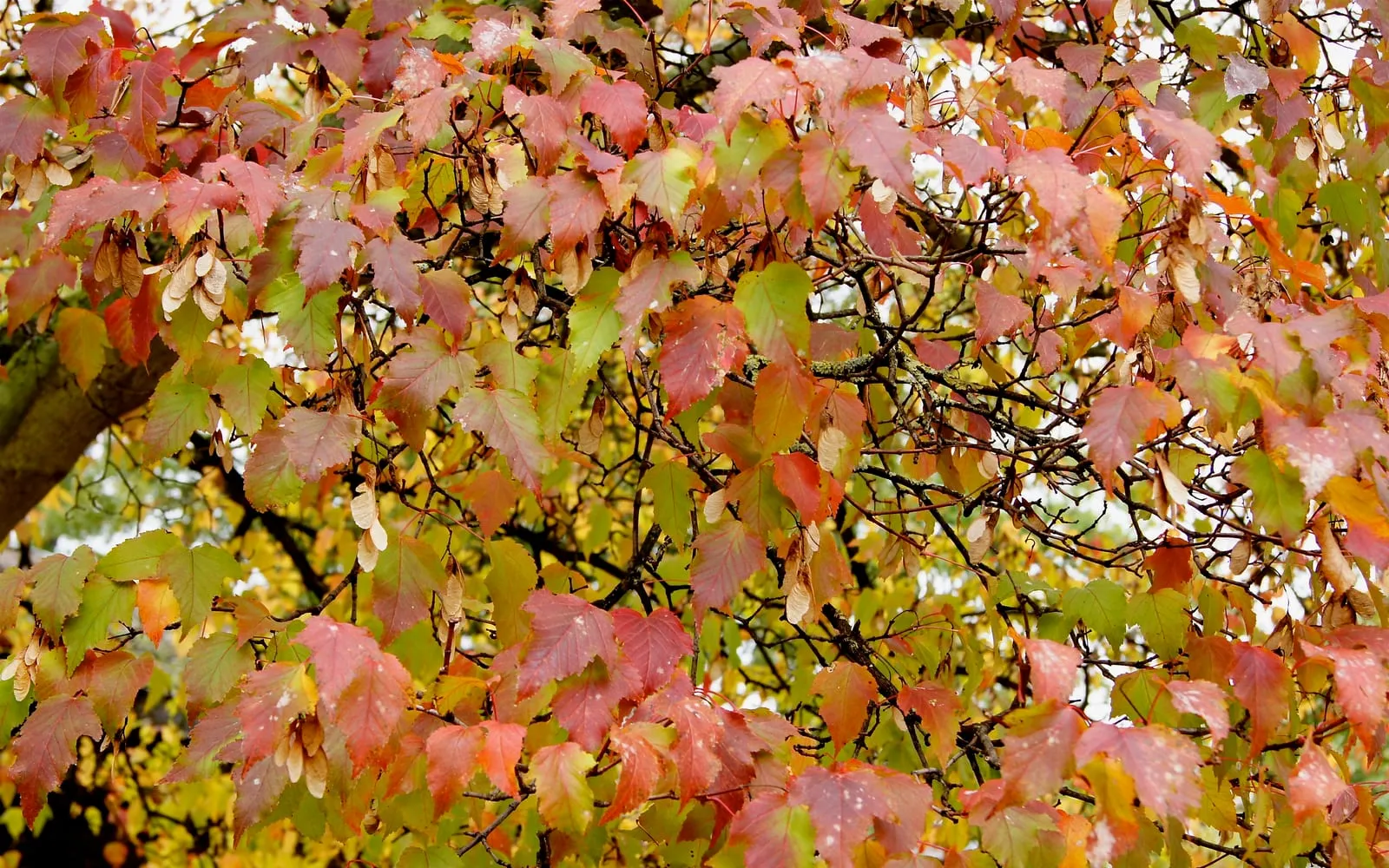
Autumn colour is a strong, often fiery red to orange, developing reliably even in climates too continental and short-seasoned for many other trees to colour well, since the display responds to a hard, early cold snap rather than a long, gradual autumn.
Where it is from
Acer tataricum subsp. ginnala, still widely sold as Acer ginnala, is native across northeastern Asia, through Manchuria, the Russian Far East, Korea and northern China, in a climate marked by brutally cold winters and a short, often hot summer growing season. Populations in that range experience some of the widest annual temperature swings any maple tolerates.
That continental climate gives the species its extreme cold hardiness and its tolerance of poor, alkaline or compacted soil. A tree adapted to a short growing season has to grow whenever conditions allow. It has become widely naturalised well outside cultivation in parts of North America, where its prolific seed production lets it spread readily into open ground, and it is regarded as invasive or a plant to plant with caution in several of those regions.
How it grows
Plant in any reasonably well-drained soil; Amur maple tolerates poor, alkaline or compacted ground far better than most ornamental trees and is not a species that needs soil improvement before planting.
Choose full sun for the densest habit and the best autumn colour, though it tolerates part shade acceptably, growing a little looser and colouring less vividly. Its tolerance of wind and cold makes it a reliable choice for an exposed site where more tender trees would need shelter.
Space plants 1.5 to 2.5 m apart for a hedge, closer for a dense screen, and prune after flowering in late spring rather than in winter, since pruning before flowering removes the flower buds and the fragrance display along with them.
Where self-seeding is a concern, particularly in a region where the species is known to naturalise readily, deadheading before the samaras ripen and disperse, or choosing a low-seeding cultivar, keeps a planted specimen from becoming an unwanted source of seedlings nearby.
Through the seasons
Spring brings fragrant flowers alongside the unfurling leaves, one of the few times of year this plant draws attention for scent rather than for form or colour.
Summer is steady growth, generally needing little attention beyond watering a young plant through any dry spell.
Autumn brings strong red to orange colour, often earlier and more reliable than many other trees manage, followed by leaf drop once a hard frost arrives.
Winter shows the plant’s dense, twiggy branching structure, which is part of what makes a mature specimen effective as a windbreak even once it has dropped its leaves.
Care difficulty
Easy, and about as low-maintenance as an ornamental tree or hedge gets. It tolerates cold, wind, drought once established, and poor soil without real complaint, and needs no routine feeding or winter protection anywhere within its already very wide hardiness range. The main task, where it applies, is managing self-seeding in a climate where the species spreads readily on its own.
Watering
Water young plants regularly through their first two to three growing seasons while the root system establishes, particularly during any extended dry spell.
Once established, it tolerates real drought without serious harm, needing supplemental water only in an unusually severe or prolonged dry period.
Warning signs, diseases and pests
Aphids cluster on new shoots and the undersides of young leaves, often leaving behind a sticky honeydew that sooty mould then grows on. A strong jet of water dislodges light infestations, and encouraging predators such as ladybirds usually keeps numbers down without further intervention.
Gall mites raise small, often reddish bumps scattered across the leaf surface, which look alarming but do little real harm to the plant’s health. No treatment is generally needed beyond removing badly affected leaves for appearance if it bothers you.
Verticillium wilt causes sudden wilting and dieback of individual branches, usually on a plant already under stress from drought or root disturbance. There is no cure once established; remove affected wood promptly and keep the rest of the plant well watered to reduce further stress.
Leaf spot appears as small brown or black spots on the foliage during wet, humid weather, rarely serious enough to need treatment beyond clearing fallen leaves in autumn to reduce the fungus overwintering nearby.
Growing environment
Full sun brings the densest habit, the most reliable flowering and the brightest autumn colour, though this species manages acceptably in part shade where full sun is not available.
Soil adaptability is a real strength here. It grows well in poor, sandy, clay or alkaline soil that would trouble many ornamental trees, provided drainage is reasonable and the ground does not stay waterlogged.
Wind and cold exposure, both of which limit the choice of many other garden trees, trouble this species very little, which is a large part of why it is planted as a shelterbelt and windbreak species across cold, exposed regions.
Feeding
Established plants in reasonable soil generally need no feeding at all, given how well this species tolerates poor ground well.
A young plant can be given a balanced, slow-release fertiliser once in spring for its first couple of seasons to support establishment, though this is a help rather than a necessity for a species this undemanding.
Troubleshooting
Seedlings keep appearing all around my established plant. This species seeds prolifically and germinates readily in open ground, and in some regions it is considered invasive for exactly that reason. Deadhead before the samaras ripen if this becomes a nuisance, and pull seedlings while they are young and easy to remove.
A branch has wilted and died suddenly while the rest of the plant looks fine. Likely verticillium wilt, especially if the plant has been under recent drought or root stress. Cut the affected branch back to healthy wood, sterilising tools between cuts, and keep the remaining plant well watered.
The leaves have small bumps or blisters across the surface. Gall mites, a cosmetic rather than a damaging problem in almost every case. No treatment is usually needed beyond removing the worst affected leaves if the appearance bothers you.
Can I grow it as a clipped hedge? Yes, and this is one of the most common ways the species is used. Space plants around 1.5 to 2 m apart, prune after flowering to shape it, and expect a dense, twiggy hedge that holds its shape well through winter.
Why did it not flower this spring? Usually a hard pruning done over winter or early spring, which removes the previous year’s wood carrying the flower buds. Prune after flowering in future rather than before it, and the display should return the following year.