
Outdoor plant
Jelly Palm
Butia capitata
Also known as Pindo palm
How to grow jelly palm, Butia capitata, outdoors. Its arching blue-grey fronds, edible fruit, and why it is one of the hardiest feather palms.
At a glance
- Difficulty
- Easy
- Water
- Regular watering while young, drought-tolerant once established
- Light
- Full sun
- Temperature
- Tolerates hard frost once established
- Hardiness
- USDA 8-11, RHS H4, hardy to -10 C
- Type
- Evergreen perennial palm
- Height
- 4-6 m
- Native to
- Brazil
One of the hardiest feather-leaved palms in general cultivation, tolerating brief spells well below freezing once established and grown successfully well outside the tropics in sheltered temperate gardens. Fruit production is more reliable in a warm summer than in a cool one, even where winter cold is not a limiting factor.
Hardiness zones describe winter cold alone. Summer heat, humidity, rainfall and the length of the growing season decide as much, so treat the range as the outer limit rather than as a recommendation.
Not known to be toxic
- Safe to eat
- The ripe fruit, eaten fresh or made into jelly and preserves, which is where the common name comes from
Jelly palm has no toxicity listing from the RHS or the ASPCA, and its ripe fruit is a real, widely used food source, harvested for jelly, jam and fresh eating across its native South America and in warm gardens elsewhere. The main practical hazard is the same sharp spines found on many feather palms, present along the leaf stalks and capable of causing painful puncture wounds during pruning.
Source: RHS
About
The jelly palm is grown for two things in about equal measure: its distinctive, gracefully arching, blue-grey fronds that curve back toward the trunk in a shape unlike almost any other cold-hardy palm, and its sweet, apricot-like fruit, which gives the plant its common name once cooked down into jelly or preserves. It is among the more cold-tolerant feather-leaved palms widely available, which has made it a familiar sight well outside the subtropics, in sheltered gardens across the milder parts of temperate regions on several continents.
Unlike many ornamental palms grown purely for their form, this species produces a practically useful crop for gardeners willing to deal with the mess of fallen fruit, which drops in quantity from a mature, well-fruited specimen and needs regular clearing if not harvested.
Appearance and character
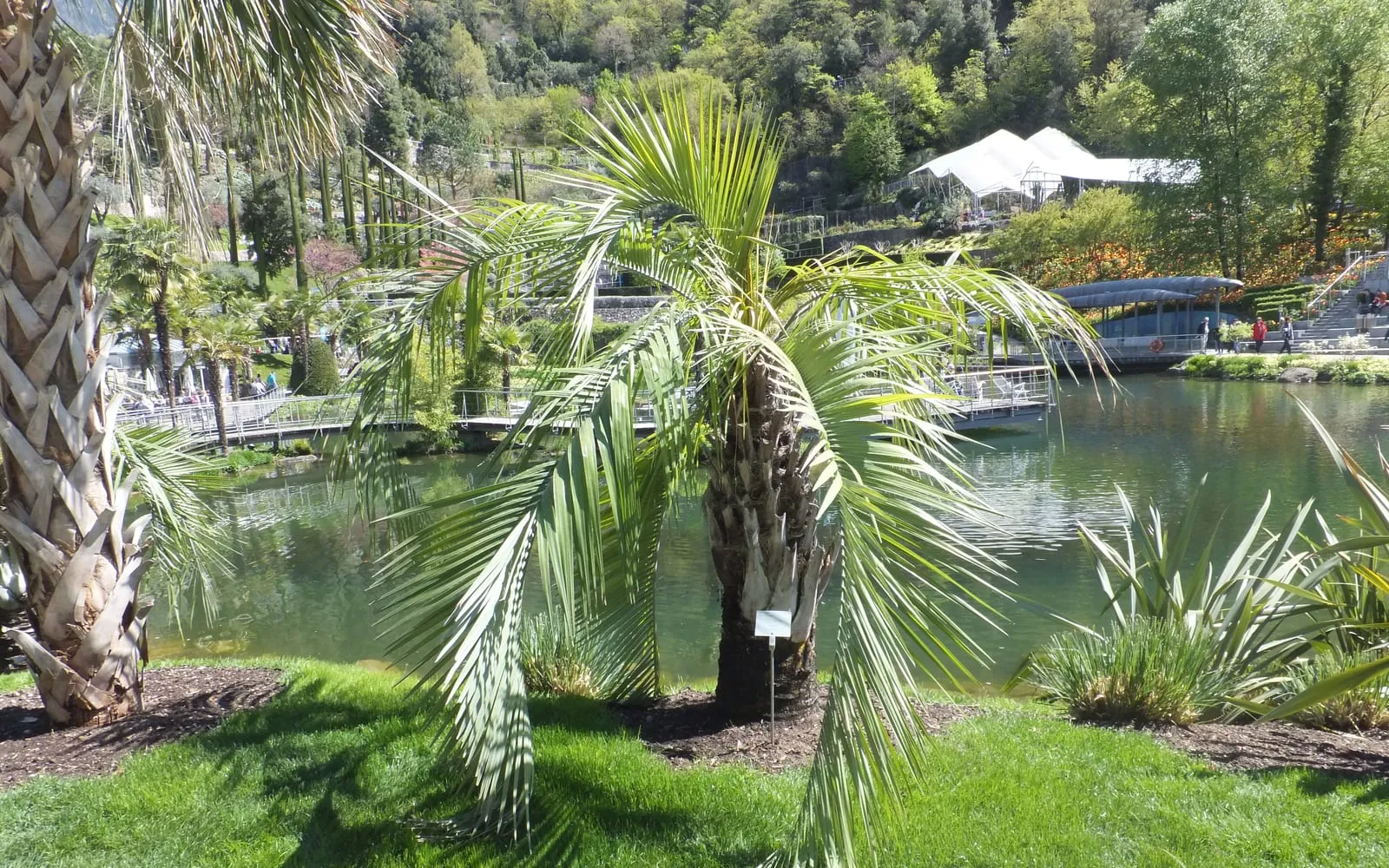
A stout, solitary grey trunk, patterned with the diamond-shaped scars of old fallen fronds, supports a dense crown of long, feather-shaped, blue-grey fronds that arch gracefully outward and curve back toward the trunk, giving the whole crown a distinctive rounded, almost fountain-like silhouette quite different from the stiffer, more upright crowns of many other feather palms.
Large, branched flower clusters emerge from among the fronds in summer, followed by heavy bunches of orange-yellow, apricot-flavoured fruit that ripen through late summer and autumn on a mature, well-established specimen growing in a suitably warm climate.
Where it is from
Open grassland and scattered woodland across southern Brazil, Uruguay and neighbouring parts of South America, in a subtropical climate with warm summers and mild to occasionally cool winters.
That native climate, warm rather than tropical, and with real seasonal variation, is a large part of why this palm tolerates cold so much better than palms from uniformly tropical, frost-free regions, and why it has proven adaptable to a wide range of temperate gardens well beyond its native range.
How it grows
An evergreen palm growing from a single crown, adding trunk height slowly and steadily over many years while producing a dense head of arching fronds. Growth is moderate rather than fast, and a specimen typically takes a decade or more to develop the substantial, well-proportioned crown for which the species is prized.
Flowering and fruiting generally begin once the trunk has reached a reasonable size, and a mature, well-sited specimen can produce a significant crop of fruit annually given a sufficiently warm summer to ripen it fully.
Through the seasons
Spring growth resumes with new fronds emerging from the crown.
Summer is the main growing and flowering season, with large flower clusters appearing among the fronds. Feed two to three times through this period.
Autumn fruit ripens to orange-yellow on a mature, fruiting specimen, and can be harvested for jelly or preserves, or left to fall and be cleared.
Winter established plants tolerate real cold, with some frond damage possible in the hardest frosts, generally not affecting the crown itself.
Care difficulty
Easy for an established plant in a suitable climate. Its notable cold tolerance for a feather palm and its reasonable drought tolerance once settled make it one of the more forgiving ornamental palms for a temperate garden, provided a warm enough summer is available to support good growth and, if desired, fruiting.
Watering
Regular watering supports strong establishment while young. Once established, it tolerates real drought, though watering during extended dry spells in summer supports better growth and more reliable fruiting than leaving it to fend for itself entirely.
Warning signs, diseases and pests
Scale insects occasionally colonise the fronds and are treated with a horticultural oil spray for significant infestations. Palmetto weevil, more commonly a risk to already stressed or damaged palms, can affect this species too, and a sudden, unexplained decline in an otherwise well-established plant is worth investigating for signs of weevil damage.
Fallen fruit left to accumulate around the base can attract wasps and other insects as it ferments, and regular clearing, whether by harvesting for jelly or sweeping it up, keeps this from becoming a nuisance through late summer and autumn.
Yellowing of older fronds, with new growth remaining a healthy green, is commonly a sign of nutrient deficiency, particularly magnesium or potassium, and is addressed with a palm-specific fertiliser rather than treated as disease.
Growing environment
Full sun is important for strong growth and reliable flowering and fruiting; in shade the crown becomes noticeably sparser and less symmetrical. Free-draining soil suits it well, and this species tolerates poor, sandy ground reasonably well once established, reflecting its native open grassland habitat.
Feeding
A palm-specific fertiliser containing adequate magnesium and potassium, applied two to three times through the growing season, supports healthy green fronds and good fruit production. Deficiency symptoms show clearly on older fronds first, making this an easy species to monitor and correct.
Troubleshooting
Older fronds are yellowing while new growth stays green. Usually a nutrient deficiency, commonly magnesium or potassium. Switch to a palm-specific fertiliser to correct it.
Fruit is not developing despite plenty of flowers. A cool summer often fails to ripen fruit fully even where the plant itself grows well, since this species needs sustained warmth to fruit reliably.
Fallen fruit is attracting wasps around the base of the tree. Clear fallen fruit regularly through late summer and autumn, either by harvesting it for jelly or sweeping it away before it ferments.
A previously healthy tree has declined suddenly. Check for signs of palmetto weevil damage, particularly if the plant was recently stressed by drought, physical injury or transplanting.
You want to harvest fruit for jelly but are not sure when it is ready. Fruit is ripe once it has coloured fully to orange-yellow and comes away from the cluster with a gentle tug; unripe fruit is noticeably firmer and more astringent. Harvesting in stages as fruit ripens, rather than waiting for the whole cluster at once, generally gives the best results.
Old frond bases have left a rough, patterned texture on the trunk. This is a normal feature of the species as it matures rather than a problem, and the diamond-shaped scar pattern is often considered part of its ornamental appeal.