
Houseplant
Needle Palm
Rhapidophyllum hystrix
Also known as Rhapidophyllum hystrix
How to grow Rhapidophyllum hystrix, the needle palm, a clumping fan palm and one of the world's hardiest, with dangerous needle spines.
At a glance
- Difficulty
- Easy
- Water
- When the top of the soil dries; keep evenly moist in growth
- Light
- Bright light to part shade
- Temperature
- Extremely hardy; tolerates hard frost
- Humidity
- Average to high
- Hardiness
- USDA 6-10, RHS H6, hardy to -20 C
- Type
- Evergreen clumping fan palm
- Height
- 1 to 2 m
- Native to
- Southeastern United States
One of the hardiest palms in the world, from the woodlands and swamp margins of the southeastern United States, surviving hard frost and snow to around minus 20 deg C. It grows in warm, humid summers and cold winters, wanting bright light or part shade and moist but free-draining soil. It needs no winter protection in most temperate gardens and tolerates far more shade and cold than a typical palm.
Hardiness zones describe winter cold alone. Summer heat, humidity, rainfall and the length of the growing season decide as much, so treat the range as the outer limit rather than as a recommendation.
Not known to be toxic
Needle palm is not listed as toxic by the ASPCA or the RHS, and no harmful compound is recorded for it. The serious caution here is physical: the plant is armed with long, sharp, black needle-like spines among the leaf bases, hard enough to inflict a deep, painful wound. Site it well away from paths and play areas, and wear thick gloves and take great care when working near the crown.
Sources: ASPCA toxic and non-toxic plants, RHS potentially harmful garden plants
About
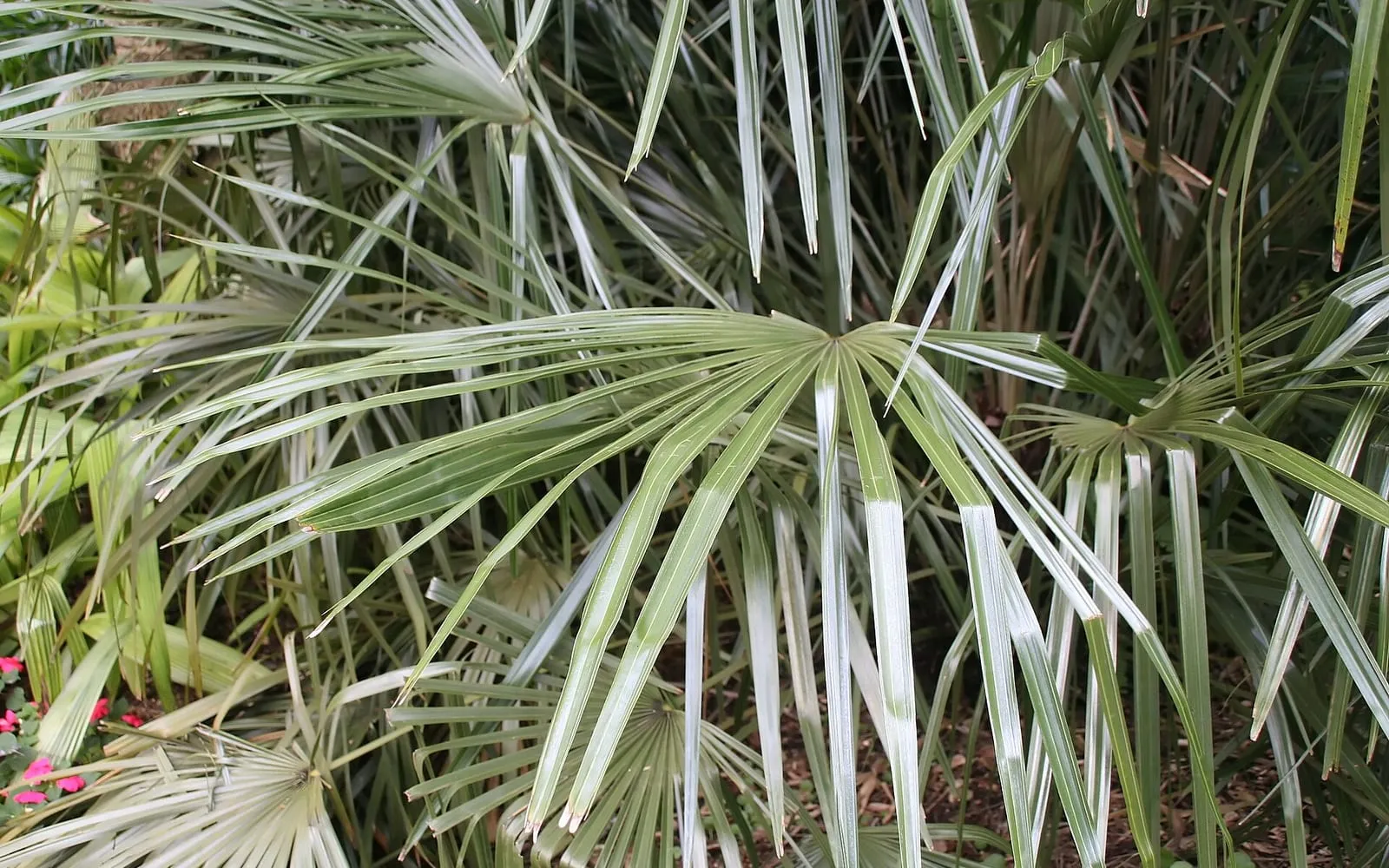
Needle palm is known for two things: surviving cold that would kill most palms, and carrying sharp spines. It is a low, clumping, trunkless fan palm, with deeply divided green leaves, silvery beneath, rising in a dense clump from the ground. Among the leaf bases are long, sharp, black needle-like spines that give the plant its name and make it one to site and handle with real care.
It comes from the woodlands and swamp margins of the southeastern United States, and it is among the hardiest palms in the world, taking hard frost and snow that few palms can. That cold tolerance, along with its tolerance of shade and moist soil, makes it useful in cold-climate gardens, where it can be grown outdoors year-round.
Slow, undemanding and adaptable, it needs bright light or part shade and moist but free-draining soil, and it needs no winter protection in most temperate gardens. Its main drawback is the hidden spines, so keep it away from where people pass. In a suitable spot it tolerates cold, shade and neglect well.
Appearance and character
The leaves are fan-shaped and deeply divided into stiff segments, deep green above and silvery beneath, rising on stalks from a low, clustering clump instead of a trunk.
Among the leaf bases and the short, matted stem are long, sharp, black needle-like spines, hard enough to pierce deeply. They are the plant’s defence and the reason for its name.
It grows as a trunkless, clumping palm, spreading slowly into a dense mound one to two metres high and wide, rather than forming a single trunk.
Its flowers are hidden, dull and low in the clump, and are seldom noticed; the plant is grown for its hardy, architectural foliage instead of any bloom.
Where it is from
Rhapidophyllum hystrix grows in the woodlands, ravines and swamp margins of the southeastern United States, in warm, humid summers and cold winters, in moist but not waterlogged ground, often in part shade. It is adapted to cold, shade and moisture.
Give it bright light or part shade and moist, free-draining soil. It tolerates hard frost, and rots only in heavy, stagnant, waterlogged ground. Cold and shade suit it far better than they would a tropical palm.
How it grows
It grows slowly through the warm months, adding a few fans a year and spreading gradually into a clump, and is fully hardy through winter. Warmth and moisture drive its growth; it tolerates cold and part shade that other palms cannot.
Grow it in free-draining but moisture-retentive soil in bright light or part shade, in the open ground or a large pot, and keep it evenly moist in growth. It is far more forgiving of moisture and shade than most palms.
Give it a sheltered or open spot as you like, since it takes both, and expect no need for winter protection in most temperate gardens. Never cut the growing points in the clump, and take great care of the spines when working near it.
Propagation is from seed, which is slow, or occasionally by dividing the clump, a spiny and awkward job.
Through the seasons
Spring starts growth as warmth returns. This is the best time to divide or pot on, carefully, and to resume feeding.
Summer is the main growing season. Keep the soil evenly moist, feed monthly, and it grows steadily in warmth.
Autumn slows growth. Reduce feeding and watering as the season cools.
Winter is a rest. The palm is fully hardy and needs no protection in most temperate gardens, though it should not sit in stagnant, waterlogged ground.
Care difficulty
Easy, and among the toughest and most adaptable palms, given its tolerance of cold, shade and moisture. It tolerates hard frost, part shade and neglect, and needs no winter protection in most temperate gardens. Its one weakness is heavy, stagnant, waterlogged soil. The main handling issue is its dangerous needle spines, which need careful siting and thick gloves.
Watering
Water when the top of the soil dries, keeping it evenly moist through the growing season, since it comes from moist woodland and swamp margins and is far more moisture-tolerant than most palms. It dislikes drying out hard.
It rots only in heavy, stagnant, waterlogged soil, so free-draining but moisture-retentive ground suits it. Ease off a little in winter, keeping the soil just moist instead of wet.
Warning signs, diseases and pests
Heavy, stagnant, waterlogged soil can rot the roots, shown by a soft, declining crown, though this is unusual in so moisture-tolerant a plant. Improve drainage if the ground stays sodden.
Scale insects settle on the leaves as small brown bumps and can be scraped off and treated with horticultural oil. Otherwise it is little troubled by pests.
The long, sharp needle spines at the leaf bases are the main hazard; site the plant away from paths and play areas, and wear thick gloves and take great care working near the crown.
Growing environment
Bright light or part shade both suit it, since it tolerates far more shade than most palms. It grows well in a sheltered woodland-edge spot as well as in the open.
It is one of the hardiest palms, tolerating hard frost and snow, so it grows outdoors year-round in most temperate gardens with no winter protection. Average to high humidity suits it, and it likes moist soil.
Grow it in free-draining but moisture-retentive soil in bright light or part shade, in the open ground or a large pot, sited well away from where its spines could catch anyone.
Feeding
Feed monthly through the growing season with a diluted palm or balanced feed, to support steady growth. Palms dislike over-feeding, so keep it dilute.
Ease off in autumn and stop in winter. Fresh soil supports a plant for the first months after potting on.
Troubleshooting
The crown is soft and declining. Rot from heavy, stagnant, waterlogged soil, unusual in this moisture-tolerant palm. Improve drainage if the ground stays sodden.
How hardy is it really? It is among the hardiest palms in the world, taking hard frost and snow to around minus 20 deg C, and needs no winter protection in most temperate gardens.
Can it grow in shade? Yes, far better than most palms. It tolerates part shade well, reflecting its woodland home, though it also grows in the open.
Why is it so spiny? The long, sharp black needle spines among the leaf bases are its defence and give it its name. Site it away from paths and handle it with thick gloves and care.
Is it safe around pets? Chemically yes, since it is not listed as toxic. The real hazard is the sharp spines, so keep pets and people from brushing against it.
Needle Palm problem guides
Not sure what is wrong? See the common houseplant pests guide.